Capítulo 1
The Transformative Power of Divine Love
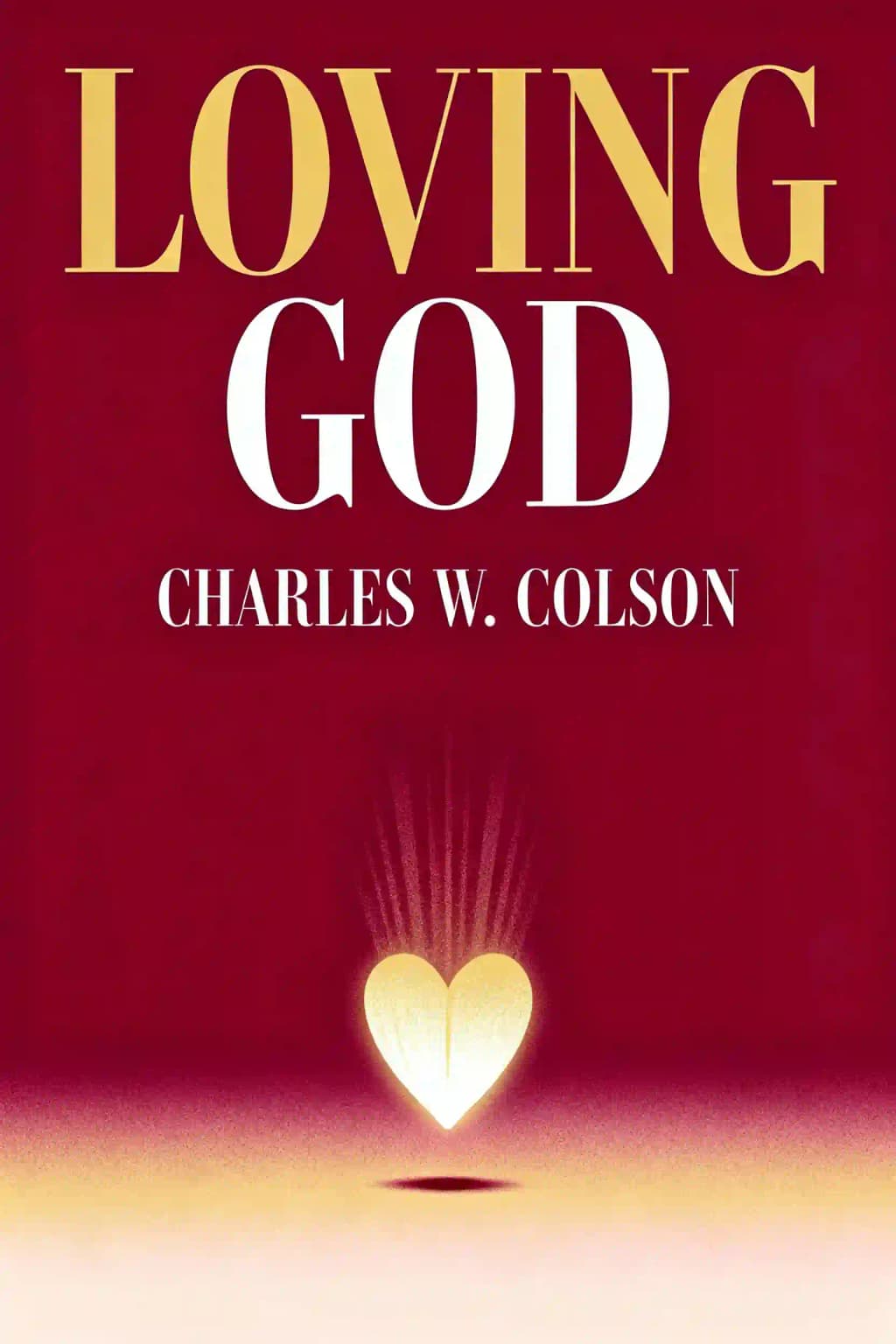
In the pantheon of spiritual literature, few works have sparked such profound personal transformation as Charles Colson's "Loving God." This masterpiece, born from the ashes of Colson's own dramatic fall from political power during Watergate, has become a touchstone for Christians seeking authentic faith. What makes this book particularly compelling is that its author walked both sides of power's divide-from the White House's corridors to a prison cell's confines. Oprah Winfrey once named it among her "books that made a difference," while countless political and religious leaders cite it as transformative to their understanding of faith. The book's enduring relevance speaks to its timeless wisdom: in an era increasingly dominated by secular values and self-focus, Colson's counter-cultural message about radical obedience to God continues to challenge and inspire readers across denominational lines and political divides.
Capítulo 2
The Search for Meaning in a Self-Obsessed Culture
Western society has become consumed by the search for self. What began as philosophical questions about life's meaning has evolved into a growth industry of self-improvement programs and movements, each with devoted followers until the next fad appears. This obsession has created counterfeit values where we worship fame, success, materialism, and celebrity, encouraging us to "look out for number one" and "win through intimidation."
Perhaps most troubling, the church has often bought into these same values, perverting its message with a what's-in-it-for-me gospel. Many Christians approach faith as consumers, asking what benefits they'll receive rather than how they might serve. This reflects a fundamental misunderstanding of what it means to love God.
Colson's own spiritual journey illuminates this problem. Despite his dramatic conversion during Watergate, he experienced a spiritual drought that only ended when he discovered R.C. Sproul's teachings on God's holiness. This sparked his quest to understand how to truly love God with all his heart, soul, and mind-a command many Christians struggle to explain in practical terms.
The answer begins with a paradox. In the kingdom of God, victory comes through defeat, healing through brokenness, and finding self through losing self. This truth became clear to Colson just as it did to Boris Kornfeld, a Jewish physician imprisoned in a Soviet gulag who found Christ through a fellow Christian prisoner. Despite enjoying better treatment than most prisoners as a doctor, Kornfeld's newfound faith changed his behavior. When he reported an orderly for stealing food meant for dying patients, knowing this would likely cost him his life, he demonstrated the ultimate paradox-giving up his life for what he believed.
The night before his murder, Kornfeld shared his spiritual journey with a young cancer patient, confessing: "There is no punishment that comes to us in this life on earth which is undeserved." That patient was Alexander Solzhenitsyn, who became a Christian and survived to tell the world what he had learned. Through Kornfeld's single-minded obedience, God used him to convert one of the world's most influential writers.
This pattern of faithful obedience without seeing results repeats throughout history. Old Testament figures died without witnessing the fulfillment of God's promises. Paul built tiny church outposts but never saw Christianity's eventual triumph. Cotton Mather prayed for revival daily for twenty years; the Great Awakening began the year he died. William Wilberforce's fifty-year campaign against slavery succeeded only as he lay dying.
Capítulo 3
The Living Power of Scripture
Augustine's spiritual crisis culminated beneath a fig tree where, in utter despair, he cried out to God. At this moment of complete surrender, he heard a child's voice chanting "Take up and read." Sensing divine direction, Augustine grabbed Paul's letters and read Romans 13, which commands believers to "clothe yourselves with the Lord Jesus Christ, and do not think about how to gratify the desires of the sinful nature."
These words pierced his heart with certainty-the truth he had long sought was found. For the next forty-four years, Augustine "took up and read" the Scriptures, becoming one of Christianity's most influential theologians. His conversion transformed his view of Scripture from mere philosophical texts to be critiqued to the authoritative voice of God that interprets its readers.
The Bible stands unparalleled in human history-banned, burned, yet beloved. Despite centuries of intellectual attacks and dictatorial suppression, it remains the world's best-selling book, with 500 million copies published annually and portions translated into over 1,800 languages. Its words have shaped civilizations, governments, and countless individual lives with transformative power.
The Bible's authority rests on its claim to be God's infallible Word, a proposition Colson initially struggled with as a lawyer seeking evidence beyond circular reasoning. His investigation led him to examine Jesus' own view of Scripture, which He consistently treated as authoritative and infallible, using it to announce His ministry, defend against Satan, and verify His identity.
This raises crucial questions: How do we know Jesus actually said these things? The New Testament's reliability is supported by its contemporary authorship, meticulous Hebrew recording traditions, and growing archaeological verification. But ultimately, Christ's authority about Scripture depends on His divine identity, which hinges on the historical reality of His resurrection.
Colson's experience with the Watergate cover-up provides unexpected insight here. Despite everything at stake-power, prestige, loyalty to the President they believed in-their conspiracy collapsed in just two weeks when no one's life was at risk. This contrasts sharply with the disciples, who maintained their testimony about the resurrection despite torture and death. As Pascal noted, "The human heart is singularly susceptible to fickleness, to change, to promises, to bribery," yet not one disciple ever recanted.
Capítulo 4
Confronting the Reality of Sin
Most people prefer to avoid thinking about sin, focusing instead on positive aspects of faith. Yet understanding our sinful nature is essential to loving God. The biblical concept of sin goes far deeper than mere wrongdoing-it reveals that humans are not morally neutral but inclined toward sin from birth.
Mickey Cohen, a notorious gangster, illustrates this reality. When Christian businessman Bill Jones led Cohen through the sinner's prayer, the evangelical community celebrated his apparent conversion. Cohen even attended Billy Graham's Madison Square Garden crusade. But when Jones urged him to separate from his criminal associates, Cohen replied indignantly: "You never told me I had to give up my career. What's the matter with being a Christian gangster? If I have to give up all that-if that's Christianity-count me out."
His question echoes millions who want to be Christianized versions of whatever they already are. True repentance isn't just for the "really wicked." The biblical word metanoia means "a change of mind"-a radical transformation that turns us from sin and changes our values as we see through God's eyes.
Yet repentance is rarely preached today because: 1) Modern evangelism seeks enlistment rather than repentance, offering "cheap grace" without cost; 2) We're unwilling to accept our own sinfulness, quick to judge others while justifying ourselves; 3) Our culture has written sin out of existence, blaming society instead of individuals, perpetuating the myth of human goodness.
Colson's own experience illustrates this truth. As a Marine lieutenant, he once ordered his sergeant to take an elderly man prisoner for "trespassing" when the man was selling cold drinks to his thirsty men. Though technically within military law, Colson never considered that those satchels might represent the man's life savings or that his order could mean a family might go hungry for months.
This incident, forgotten at the time, vividly returned to him in prison as he read Augustine's Confessions. Augustine saw in his seemingly minor theft of pears his true nature: in each of us there is sin itself, not just susceptibility to sin. As Solzhenitsyn discovered, "the line separating good and evil passes not through states, nor between classes, nor between parties either-but right through every human heart."
When we truly comprehend our own nature, repentance becomes not a frightening message but the key to liberation-the only real freedom we can ever know.
Capítulo 5
The Pursuit of Holiness
In Washington D.C.'s Anacostia ghetto, Mother Teresa arrived humbly with a small group of nuns to establish an outpost for her Sisters of Charity. Despite being a Nobel Prize winner who could have commanded grand welcomes, she chose this troubled neighborhood, telling reporters her mission was about "the joy of loving and being loved"-not requiring money but sacrifice.
Mother Teresa's power stems from her complete surrender to God. When a brother complained about rules interfering with his leper ministry, she gently corrected him: "Your vocation is not to work for lepers, your vocation is to belong to Jesus." This is true holiness-not rule-keeping but conformity to God's character and obedience to His will.
Holiness isn't reserved for saints like Francis of Assisi or Mother Teresa-it's the everyday business of every Christian, evident in our moment-by-moment decisions. Retired businessmen Kenneth Hooker and Donald Adcox demonstrated this when they established a rug factory in Haiti after seeing the desperate poverty there. Rather than just providing charity, they created opportunity by buying equipment, training Haitian church leaders, and eventually giving the entire business to the local church.
Scripture provides clear standards for holiness: the Ten Commandments, Christ's example, and Paul's explicit guidelines about truthfulness, forgiveness, sexual purity, and more. Holiness requires joint responsibility-God's grace and our will to be holy working together. We must constantly examine our actions and motives while guarding against self-focus.
William Wilberforce understood that personal holiness and social righteousness are inseparable, noting in his diary that God set before him "two great objects, the suppression of the slave trade and the reformation of manners." His campaign succeeded because he recognized that holy living would foster righteousness in society, while ending slavery would uplift the nation's moral character.
Today's church often seems schizophrenic-pious in prayer groups but indifferent to the world outside. From the beginning, God demanded His people uphold justice in society, not just personal piety. God holds us accountable not just for individual sins but for corporate sins like injustice, racism, and economic oppression.
Capítulo 6
Standing Against the Current
In Elkhart County, Indiana, Judge Bill Bontrager faced a profound moral dilemma. He had sentenced Fred Palmer, a Vietnam veteran with PTSD, to two-to-five years for burglary. Learning that Palmer's wife was suicidal and his children were being placed in foster care, Bontrager temporarily released Palmer on his own recognizance to arrange family care.
When the Indiana Supreme Court learned of this, they charged Bontrager with criminal contempt for releasing a convicted felon without authority. Bontrager argued that the law gave him discretion to act in the interests of justice, but the court disagreed. Facing imprisonment himself, Bontrager had to choose between his career and his conscience.
The case concluded unexpectedly when Bontrager resigned amid an unrelated controversy, choosing to protect the court's reputation rather than continue fighting. Palmer served twenty more months before being released by special clemency order. Though Bontrager now operates a struggling law practice, he sees his experiences as part of God's plan: "Since [surrendering myself to God] He has continued to teach me submission and patience... He has removed much of my anger; in short, I am at peace today, knowing Him-and that makes me count as gain all that the world might count as loss."
Political associates were particularly baffled why a conservative Republican would oppose fellow conservatives on the State Supreme Court. "Bontrager," one office holder sighs, "well, he's just gone radical, that's all."
"Radical" perfectly describes Bontrager's stance, though the term has taken on negative connotations. Its Latin root radix simply means "the root" or "the fundamental." In a world shaped by secular humanism, standing for God's fundamental truth is indeed radical.
Christianity has always had its radicals: John Wesley who argued there could be "no holiness but social holiness" and condemned his fellow Oxford faculty for weak faith; William Wilberforce who stood alone against the powerful slave trade for twenty years; and Dietrich Bonhoeffer who opposed Hitler at the cost of his life.
All my life I sought wealth, success, and fame as the keys to security and power, influenced by Depression-era memories and the American dream. In law school and practice, I came to see justice primarily as protecting property and serving those who could pay. Only in prison, through the "breakdown of power," did I finally understand both power and myself. Looking through prison bars rather than White House windows, I could truly see.
Capítulo 7
The Church as Holy Nation
During the 1977 energy crisis, Virginia's governor restricted energy use in "non-essential buildings," with churches heading the list. This reflected how the world sees churches-as underused buildings housing just another institution, like an arts society or civic club that most could live without. Sadly, the church has often allowed itself to become what others say it is.
But God's definition remains unchanged: the church is an organism, not an organization-a movement, not a monument. It isn't part of the community but a whole new community with radically different values. It doesn't draw people in but sends them out. Rather than settling comfortably alongside civic groups, the church should make society uncomfortable, functioning like yeast that unsettles the surrounding mass or salt that flavors and preserves.
The church comprises individual believers living in community. When we follow Jesus, we join what He called the "kingdom of God"-a "new commitment, a new companionship, a new community established by conversion." Aristides described early Christians to Emperor Hadrian as people who loved one another, helped widows, saved orphans, shared with the needy, and welcomed strangers as brothers-not through blood but "through the Spirit, in God."
In Seoul, Korea, despite Christians being a minority in a predominantly Buddhist country, Christian influence is everywhere. The Full Gospel Church grew from a tiny mission to over 150,000 members in twenty years. Pastor Cho explained that the massive Sunday gatherings weren't the church-"This is only where we all come together once a week. The church is in the home-10,000 cell groups which meet regularly all around this city."
The church's growth came not from Cho's strength but his weakness. Plagued by illness throughout his life, Cho developed the cell concept out of necessity, commissioning elders (including many women, breaking cultural norms) to lead neighborhood groups. These home churches evangelized neighborhoods, provided mutual aid, encouraged spiritual discipline, and multiplied rapidly.
This illustrates the first principle for the church: it must grow from the inside out in response to the Spirit. The second principle is that the church must equip believers to take the church into the world. The third principle is spiritual discipline-fervent prayer and serious Bible study. The fourth principle is that the church must break free of provincialism and work for unity in Christ.
Capítulo 8
Shared Suffering
Archbishop William Temple once described the church as "the only cooperative society in the world that exists for the benefits of its non-members." Yet too often, churches operate backward-building attractive edifices in safe suburbs far from crime-infested areas, organizing internal programs, then waiting for lost souls to come to them.
This approach fails because cultural barriers in American society are imposing. The typical middle-class congregation remains disconnected from families living one welfare check from disaster. When churches fail to break these barriers, both sides lose-those needing the gospel message don't receive it, while isolated churches end up merely entertaining themselves.
Unlike modern churches, Jesus didn't set up an office in the temple waiting for people to seek counseling. He went to them-to notorious sinners' homes and places where he would encounter the sick, handicapped, needy, and social outcasts.
In Jefferson City, Missouri, the "shadow people"-families of prisoners-traveled from across the state to visit their incarcerated loved ones. Living on welfare checks, they often couldn't afford lodging after spending their meager funds just getting there. They developed desperate strategies to pass the night-like the woman who arrived at 2 a.m. by Greyhound, then hid with her six-month-old in a hotel bathroom stall until the prison opened for visitors at 8 a.m.
Janice Webb, a Baptist laywoman, and Sister Ruth Heaney, a Catholic nun, formed the Agape House Board to address this need. The board, comprising Catholics, Presbyterians, Episcopalians, Methodists, and Baptists, united with enthusiasm despite having "not a nickel in the bank." They found an old rooming house just two blocks from the prison and transformed it into a welcoming space where visitors could stay for $3.00 a night-or free for those who couldn't afford it.
"We're in the business of planting seeds," explains Lu, one of the house managers. "We don't know when a lot of them will be harvested, but that's God's business." Though not everyone recognizes their sacrifice and love, Lu and her colleague Marietta continue providing care without calculating results. Through their simple ministry, they are loving God.
Capítulo 9
The Body of Christ in Suffering
During the Vietnam War, American POWs in North Vietnam demonstrated the power of faith in the most desperate circumstances. Captain Jeff Powell was captured after his F-105 Thunderchief was shot down. In one village, feverish and nauseated, he was hung from a banana tree as villagers mocked, stoned, and urinated on him.
Many POWs were brought to what American airmen called the "Hanoi Hilton"-a massive triangular prison where prisoners in solitary confinement could be heard crying out in pain. Major James Kasler arrived with a broken thighbone and endured brutal beatings from dawn until night for days. Despite his mouth being too bruised to open and a ruptured eardrum, he found that reciting the Lord's Prayer with intense concentration temporarily blocked his pain.
Howard Rutledge's isolation was broken by prisoner communication systems. The prisoners developed an elaborate tap code based on Morse code, allowing them to share Scripture, track fellow prisoners, and conduct Sunday worship services they called "church call."
After a failed American rescue attempt in 1970, prisoners were moved to the Hanoi Hilton's "Camp Unity," where conditions improved slightly. After years of requests, prisoners finally saw a Bible in December 1970. When the English-speaking interrogator brought one to cell 4, Jeff Powell read the Christmas story while James Ray memorized 1 Corinthians 13 during their brief two-hour access.
On Easter Sunday 1971, Captain Tom Curtis led a service for twenty-eight fellow prisoners, beginning with hymns like "The Old Rugged Cross" and "Amazing Grace." Using bread saved from previous rations and seaweed soup for communion, Curtis administered the sacrament, weeping as he considered how their suffering connected to Christ's. He realized their presence in that place, alive despite everything, demonstrated Christ's promise that "the gates of hell would not prevail against" His church.
The church remains vital and world-changing wherever believers obey Christ, live by His Word, and love Him-whether in the Hanoi Hilton or in a dreary Georgia nursing home where Myrtie Howell demonstrated extraordinary faith. Despite being 91 years old, confined to a walker, and living in a sparse apartment no larger than a modest hotel room, Myrtie corresponded with up to forty inmates at once, becoming a one-woman prison ministry.
When depression overwhelmed her and she prayed to die, God clearly spoke three words: "WRITE TO PRISONERS." Though afraid and lacking education, Myrtie obeyed. Her simple strategy: "When I get a letter... I pray: 'Lord, You know what You want me to say. Now say it through me.'" The inmates' grateful responses revealed lives transformed by her love.
Unlike the other nursing home residents waiting for death with anger and despair, Myrtie radiated joy and purpose. She had discovered life's central paradox: only by giving up her life did she gain His life. In her, Colson found the final link in understanding what loving God means: "To believe, to repent, to obey, to be holy, to bind up the brokenhearted, and to serve."
Capítulo 10
Living in the Arena
Dave Chapman deliberately worked late to avoid his wife Kay's Christian gatherings. Kay had become deeply involved in church activities since her conversion years earlier, hosting quarterly receptions featuring Christian speakers. During one such evening, Dave encountered theologian Dr. Jack Newman on his screened porch. Their conversation turned to Dave's spiritual struggles-his initial conversion during the "born again" movement of the Carter era and his subsequent disillusionment.
Newman suggested that loving God works like marriage-requiring commitment and obedience even when feelings fluctuate. "This is the love of God, that we keep His commandments," Newman advised, recommending Bible study as the starting point.
As Dave began studying the Psalms seriously, he was shocked to discover commands about defending "the cause of the weak and fatherless" and maintaining "the rights of the poor and oppressed." These directives challenged his comfortable worldview and political assumptions.
When Dave discovered his employee Jim Rutledge had a drinking problem affecting his work, he offered to pay for rehabilitation instead of firing him. Reading about Zacchaeus in Luke 19, he realized he needed to make restitution for money he had effectively stolen from his associates through manipulative accounting practices. Though terrified of financial insecurity, Dave made restitution, finding unexpected freedom and rekindling his relationship with Kay.
Later, Newman took Dave to visit a prison where they discovered fresh blood stains in the concrete-evidence of recent violence. Newman confronted Dave about the horrific prison conditions, challenging him to use his influence with the governor's campaign to force change. Dave deflected, claiming he'd already spoken to the governor who promised a post-election committee, though Dave admitted such committees rarely accomplished anything.
Newman then shared the story of Telemachus, a fourth-century monk who traveled to Rome and, horrified by the gladiatorial games, leapt into the arena crying "In the name of Christ, forbear!" Though struck down by a gladiator's sword, his sacrifice ended the brutal spectacle forever as spectators silently departed, never to return.
Standing by the bloodstained concrete, Dave finally acknowledged he couldn't ignore the suffering around him. Though terrified of the consequences, he remembered the psalm commanding him to "Defend the cause of the weak and fatherless; maintain the rights of the poor and oppressed." As Newman walked away, Dave was left with the agonizing question: "What am I going to do?"
This question remains our dilemma. What do we do? The Christian life cannot be lived alone, and neither can a book about it be written in isolation. Loving God means to believe, to repent, to obey, to be holy, to bind up the brokenhearted, and to serve. It means dying to self and finding life in Christ. It means standing in the arena, even when it costs us everything.