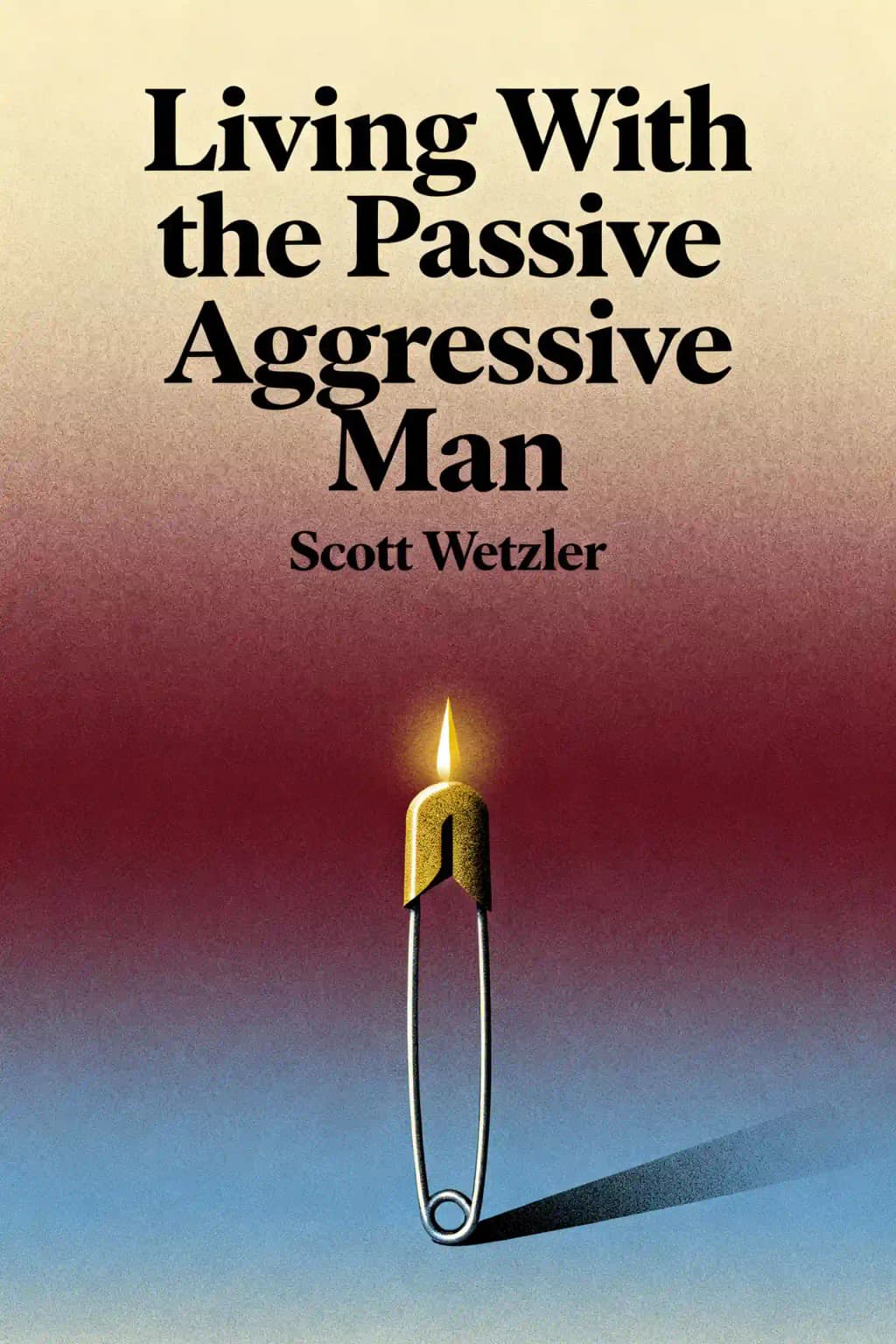
Unmask the silent saboteur in your life. Since 1993, Wetzler's psychological classic has helped thousands recognize passive-aggressive patterns that poison relationships. With a 4.04/5 Goodreads rating, it reveals: Are you unknowingly playing victim, manager, or rescuer in your own relationship drama?
Scott Wetzler, Ph.D., clinical psychologist and bestselling author of Living with the Passive-Aggressive Man, is a leading authority on relationship dynamics and passive-aggressive behavior. A professor of psychiatry at Albert Einstein College of Medicine and Vice Chairman of Psychiatry at Montefiore Medical Center, Wetzler combines decades of clinical experience with research to address communication challenges in personal and professional relationships.
His work extends beyond academia as CEO of University Behavioral Associates, where he oversees innovative behavioral health programs funded by institutions like the US Department of Health and Human Services.
Wetzler’s expertise has been featured in The Atlantic, where he advocated for government-funded relationship education, and his book has been translated into six languages, including German, Japanese, and Chinese. Recognized for blending actionable advice with psychological insights, he bridges clinical rigor with accessible self-help strategies. Living with the Passive-Aggressive Man remains a seminal resource, cited by therapists and recommended in media for its nuanced approach to understanding covert emotional patterns.
Living with the Passive-Aggressive Man by Scott Wetzler explores how to identify and address passive-aggressive behaviors in men through clinical case studies. It analyzes root causes like repressed anger and fear, offering strategies to improve relationships and workplace dynamics. The book emphasizes recognizing patterns like procrastination, indirect hostility, and emotional withdrawal.
This book is essential for partners, family members, or colleagues of men who exhibit avoidance, sarcasm, or covert defiance. It’s also valuable for therapists and HR professionals seeking frameworks to address passive-aggressive behavior in personal or professional settings.
Yes—with over 100,000 copies sold, the book provides actionable tools to break cycles of frustration. Readers praise its clear analysis of behaviors like the “catch-me-if-you-can” lover or manipulative coworker, coupled with tactics to set boundaries without escalating conflict.
Key concepts include:
Wetzler describes it as hostility masked by passivity, often expressed through procrastination, backhanded compliments, or silent treatment. He links it to unresolved anger and fear of confrontation, using examples like spouses delaying chores or coworkers undermining projects.
Some readers note the book focuses more on accommodating passive-aggressive men than holding them accountable. Others critique its heteronormative examples, though its principles apply broadly.
It teaches assertiveness techniques to counter indirect hostility, such as using “I” statements and refusing to engage in mind games. Wetzler emphasizes clarity over emotional reactivity to reduce misunderstandings.
Unlike broader conflict-resolution guides, Wetzler’s work specifically decodes male passive-aggression using clinical insights. It complements books on emotional intelligence but stands out for its focus on gendered behavioral patterns.
Yes—the book’s framework helps address issues like passive resistance to authority or guilt-tripping. However, adaptations may be needed for age-appropriate boundary-setting.
Passive-aggression remains prevalent in modern relationships and workplaces, especially in hybrid environments where indirect communication thrives. The book’s case studies mirror contemporary issues like ghosting or digital conflict avoidance.
Siente el libro a través de la voz del autor
Convierte el conocimiento en ideas atractivas y llenas de ejemplos
Captura ideas clave en un instante para un aprendizaje rápido
Disfruta el libro de una manera divertida y atractiva
Passive-aggression isn't simply alternating between passive and aggressive behaviors.
Passivity used as a power play can provoke as much anger as active hostility.
Have you ever questioned your own sanity in a relationship?
Once you doubt yourself, he seizes the upper hand.
Without you, he's just a man with personality problems; with you, he exercises emotional power.
Desglosa las ideas clave de Living with the passive-aggressive man en puntos fáciles de entender para comprender cómo los equipos innovadores crean, colaboran y crecen.
Experimenta Living with the passive-aggressive man a través de narraciones vívidas que convierten las lecciones de innovación en momentos que recordarás y aplicarás.
Pregunta cualquier cosa, elige tu estilo de aprendizaje y co-crea ideas que realmente resuenen contigo.

Creado por exalumnos de la Universidad de Columbia en San Francisco
"Instead of endless scrolling, I just hit play on BeFreed. It saves me so much time."
"I never knew where to start with nonfiction—BeFreed’s book lists turned into podcasts gave me a clear path."
"Perfect balance between learning and entertainment. Finished ‘Thinking, Fast and Slow’ on my commute this week."
"Crazy how much I learned while walking the dog. BeFreed = small habits → big gains."
"Reading used to feel like a chore. Now it’s just part of my lifestyle."
"Feels effortless compared to reading. I’ve finished 6 books this month already."
"BeFreed turned my guilty doomscrolling into something that feels productive and inspiring."
"BeFreed turned my commute into learning time. 20-min podcasts are perfect for finishing books I never had time for."
"BeFreed replaced my podcast queue. Imagine Spotify for books — that’s it. 🙌"
"It is great for me to learn something from the book without reading it."
"The themed book list podcasts help me connect ideas across authors—like a guided audio journey."
"Makes me feel smarter every time before going to work"
Creado por exalumnos de la Universidad de Columbia en San Francisco

Obtén el resumen de Living with the passive-aggressive man como PDF o EPUB gratis. Imprímelo o léelo sin conexión en cualquier momento.
Have you ever felt like you're fighting a ghost? That's the experience of dealing with a passive-aggressive man. The maddening dynamic involves loving someone who says "yes" while meaning "no," who promises connection while creating distance, and who turns every interaction into a power struggle while claiming innocence. Passive-aggression isn't simply alternating between passive and aggressive behaviors - it's a simultaneous blend where aggression is expressed through passivity. The passive-aggressive man renounces his hostility even as he delivers it, creating constant mixed messages that blur the line between appearance and reality. His communication resembles double-speak: "I can't live without you" while thinking "Why are you around all the time?" What distinguishes him from someone who's merely passive is the element of control. Passivity used as a power play can provoke as much anger as active hostility. He delivers small doses of hostility just large enough to irritate while maintaining plausible deniability. Behind the "Mr. Nice Guy" facade lies an angry man afraid of his own anger, simmering with resentment and fear.
The passive-aggressive man expertly engineers self-doubt in others. Like a milder version of gaslighting, he twists facts and denies the obvious, provoking otherwise rational women into irrational rage. Consider Susan, whose husband left window frames half-painted for years. When confronted, he deflected blame onto her, claiming she was demanding or unappreciative. These seemingly small issues accumulate: what he forgets, denies, won't hear, won't do, and how casually he lies. He plays on your empathy - if he's withdrawn, he'll signal for sympathy but be annoyed when you respond. When he wounds you, he'll deny intent and turn tables: "Why are you so sensitive?" Once you doubt yourself, he seizes the upper hand. He rarely offers sincere apologies, claiming any harm was inadvertent despite his unerring aim at your weak spots. Your emotional reactions - irritation, feeling let down - are your best warning signals. The blurring of boundaries in close relationships makes this manipulation especially effective, as his projected anger becomes indistinguishable from your legitimate response.
Every relationship has two players, and your role is as crucial as the passive-aggressive man's. Three common patterns emerge among women who find themselves repeatedly involved with passive-aggressive men. The Victim operates from poor self-worth, collecting abuse from men who give it. Though sensitive, Victims hesitate to communicate feelings, often apologizing for having them. Jane's case illustrates this pattern - engaged three times to essentially interchangeable self-involved men who made her feel unworthy. The Manager cannot take no for an answer. While claiming to want open communication, she actually fears true intimacy and turns to control instead. Audrey exemplifies this pattern with her husband Frank. Though she complains about his evasiveness, she often refuses to listen when he does speak. Their destructive pattern began early: she would demand something, he would refuse, she would insult him until he stopped responding altogether. The Rescuer acts as a custodian but with a less strident approach than the Manager. She appears as Earth Mother, the woman behind the man, the fixer who saves the passive-aggressive man from disaster. This maternal approach desexualizes the relationship, replacing equality and passion with overprotection.
The passive-aggressive personality develops through a complex interplay of temperament and environment. In childhood, these men often experienced contradictory parental dynamics-like Dan, whose mother maintained excessive physical control while providing care, as his father remained emotionally distant and uninvolved. By middle childhood, these boys typically witnessed parental conflict, often in households with alcoholism or unpredictable behavior. They faced an impossible choice: identify with a devalued father or align with mother at the cost of gender identity confusion and guilt. Many were manipulated as pawns in parental power struggles. Bill's story exemplifies this-his mother orchestrated academic competitions between him and his father, creating lasting psychological damage. This early pattern manifested in his adult life as self-sabotage, where declining promotions became a way to avoid competing with his internalized image of his "loser" father.
The passive-aggressive man exists in a fundamental conflict-desperately needing connection while simultaneously fearing dependency. Regardless of age, he requires constant contact with significant others yet hasn't embraced healthy mutual dependency where people willingly care for each other without emotional survival at stake. He unconsciously positions others as authority figures, placing himself in a powerless "one down" position that generates anger. To regain control, he employs tactics like procrastination, lying, withholding commitment, or sabotage. Every request feels like an attack on his adequacy, and cooperation registers as submission. This creates a cycle: he puts someone in control, rebels against their authority, then uses passive-aggressive behaviors to reassert dominance. This paradox typically manifests through "sins of omission"-withholding what you need most, whether attention, affection, or assistance. He's characteristically "an hour late, a dollar short or a block away" during crucial moments, backing away precisely when needed most.
Dealing with a passive-aggressive man's anger is challenging because he rarely acknowledges it directly. His anger forms the core of his passive-aggression, yet he simultaneously disguises it while drawing attention to it - creating what psychologists call "anger with a hook." The passive-aggressive man communicates hostility through subtle behaviors: putting you on hold during calls, making backhanded compliments, arriving late to important events, or attributing criticism to others while claiming neutrality himself. His fighting style resembles the Tar Baby from Uncle Remus stories - absorbing your emotional energy without engaging directly. What makes this pattern so frustrating is that he experiences his own hostility only through others' reactions, which he then perceives as unfair criticism. This self-involvement traps him in a childish bind where he remains unaware of his motivations while feeling perpetually misunderstood. The key to handling submerged hostility is bringing it into the open by convincing him that anger is acceptable. Using a "feelings report" approach - describing your emotional state rather than attacking him - works better than retaliation or sarcasm, which only escalates problems.
Understanding a passive-aggressive man doesn't make you responsible for his problems. While empathy matters, healthy boundaries remain essential. For relationships with growth potential, gently suggesting professional help is constructive when you've reached your limits. Therapy can help these men learn to assert themselves without hostility, overcome fears, and discover their authentic feelings instead of defaultly saying "no." Lasting change requires the man's genuine internal motivation - recognizing his patterns and their costs to relationships, career, and well-being. External pressure rarely produces sustainable transformation. Through committed therapy, he can learn to express emotions directly, heal childhood wounds, recognize self-defeating patterns, and develop emotional intelligence for fulfilling relationships. Both parties have freedom of choice and responsibility for their own growth. You can choose to stay, set boundaries, or move on if needed. By understanding these complex dynamics, you gain power to make conscious choices rather than remaining trapped in cycles of frustration. Often the most powerful step is simply recognizing the pattern - naming the invisible battle draining your emotional energy and reclaiming your right to direct communication and genuine connection.