Capítulo 1
The Art of Rebellion: Finding Freedom in a World of Conformity
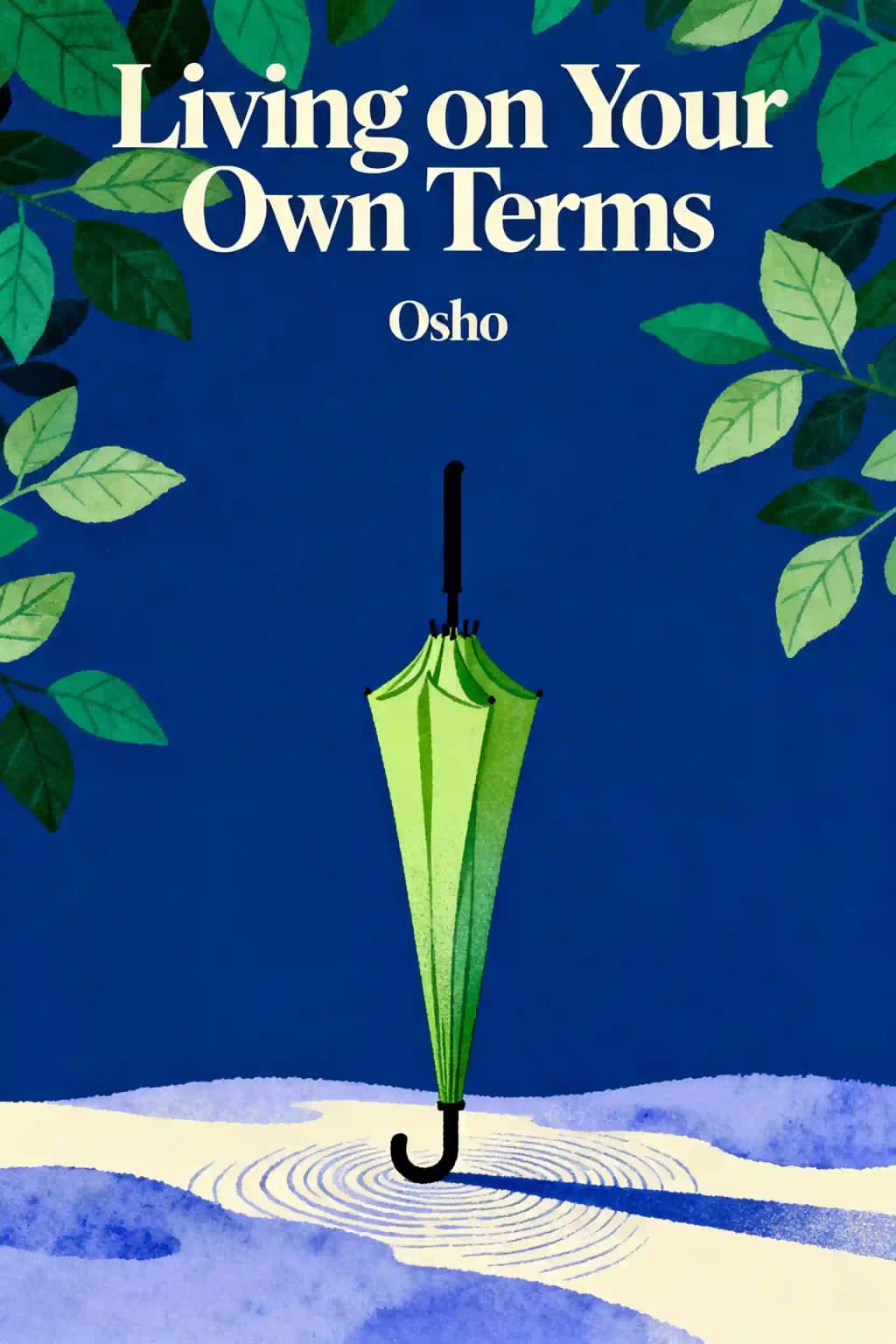
In a world where conformity is the norm and individuality is often suppressed, Osho's philosophy stands as a radical invitation to authentic living. His teachings have influenced millions worldwide, from Hollywood celebrities like Will Smith and Lady Gaga to tech pioneers like Steve Jobs. What makes "Living on Your Own Terms" particularly compelling is how it challenges our fundamental assumptions about freedom, rebellion, and personal truth. Unlike conventional self-help literature that offers quick fixes, Osho's approach demands a complete paradigm shift in how we view ourselves and society. As one of the most controversial spiritual teachers of the 20th century, his message continues to resonate decades after his death, particularly with those seeking liberation from societal expectations and conditioning. The book's enduring popularity speaks to our collective hunger for authentic existence in an increasingly artificial world.
Capítulo 2
The Multidimensional Rebel: Beyond Ego and Tradition
The rebel Osho describes is not the stereotypical revolutionary fighting against external forces, but rather a multidimensional being who has made a profound inner transformation. This rebel believes only in personal experience, rejecting prophets, messiahs, scriptures, and traditions not out of arrogance but from a place of humility. Unlike the egoist who stands alone out of pride, the rebel's non-believing stems from a desire to remain unpolluted by preconceived ideas and to discover truth firsthand.
The rebel holds a deep respect for independence-both their own and others'-seeing the entire universe as their temple and scripture. Rather than dwelling in the past or fantasizing about the future, they live consciously in the present moment. For them, awareness becomes not just a practice but their entire religion, philosophy, and way of life. Perhaps most importantly, the rebel harbors no lust for power or desire to dominate others, recognizing such impulses as the foundation of all wars and conflicts throughout human history.
In their inner search, the rebel approaches life with a scientific mind-employing doubt, skepticism, and inquiry to explore their subjective experience. They begin from a position of acknowledged ignorance, maintaining a childlike innocence that opens doors to life's mysteries. Though they create no organizations or followings, rebels may enjoy communion with fellow travelers, refreshing and nourishing each other's individuality while respecting everyone's inherent dignity.
This rebellion is spiritual rather than political. It doesn't organize against society but arises from the intelligence that recognizes our dying society cannot birth a new humanity. The rebel transforms themselves into the "new human" without fighting the old, which is already dying. Fighting only gives the old energy it doesn't deserve. Unlike revolutionaries who organize and mirror their opposition's violence, rebels work on themselves individually, creating transformation from within.
True rebellion honors individual uniqueness and absolute freedom. It shares ideas without imposing them, unlike religions and political ideologies that destroy individuality. The rebel invites but never converts, allowing others to choose freely what resonates with their hearts. This approach stands in stark contrast to our world's power structures that demand conformity and obedience at the expense of personal truth.
Capítulo 3
Breaking Free: The Courage to Say Goodbye to the Past
The rebel constantly says goodbye to the past, dying to each moment as it passes to live freely in the new moment that arrives. This continuous letting go is not merely philosophical but practical-it's the mechanism through which authentic living becomes possible.
Violence can never be part of the rebellious spirit because violence represents humanity's entire past-and the rebel seeks to break from this past completely. Violence fundamentally violates life and consciousness, while the rebel embodies reverence for life itself. The rebel is a creator, not a destroyer. Unlike reactionaries who remain tied to the past by opposing it, or revolutionaries who believe wrong means can achieve right ends, the rebel recognizes that peaceful societies cannot emerge from violent foundations. Seeds of violence inevitably produce violent flowers.
What society calls a "gut feeling" that you need to do something to be worthy is not natural but conditioning. This is a cunning tactic to make you feel unworthy, creating slaves rather than creators. If you were truly unworthy, you wouldn't exist at all. Osho is not against creativity-he wants you to be creative, but with a totally different intention. Create not to gain appreciation or as a means to reach God, but out of gratitude that you already exist. Paint, dance, sing with your totality as an expression of thankfulness, not to prove your worth.
Living in the moment without fixed notions of right and wrong becomes possible when you understand that conscience is a social deception; consciousness responds freshly to each changing circumstance. The truly conscious person cannot afford consistency-they flow with life rather than clinging to past certainties.
While rebellion typically suggests saying "no"-disobedience and doubt rather than trust-the rebellion Osho speaks of has a different nature. Yes, it includes saying "no" to the past's superstitions and all that has harmed humanity's growth of consciousness, but this isn't its fundamental aspect. The essential part of true rebellion is saying "yes"-yes to a new humanity, yes to new forms of love relationships, yes to a world without divisive families, nations and religions. Yes to humanity as one family. Yes to peace, love and joy-the basic components of religiousness. Yes to a world filled with songs, music, dance and creativity.
Capítulo 4
Understanding: The Path to Inner Freedom
Every society strengthens the mind to win over the heart, but each such victory brings misery-it's others winning over your true nature. When the mind serves external purposes rather than your own being, suffering inevitably follows.
The rebellion Osho speaks of isn't against anybody-not outer priests, nuns, parents, nor their inner reflections. It's not rebellion but understanding. Rebelling against your own mind would be reaction, not rebellion. Reaction comes from anger and moves to the opposite extreme-if your parents taught cleanliness as godliness, you might stop bathing entirely. Either way, they still control you. Rebellion is pure understanding-seeing what is without obsession.
The intelligent person is neither obsessively clean nor deliberately filthy but responds naturally as needed. Understanding your conditioning-how it shapes and influences you-brings balance and freedom. The real rebel doesn't fight in anger but grows in intelligence. When you understand how you're merely repeating programmed behaviors, they simply disappear without trace. In reaction, traces remain; in rebellion, there is utter freedom.
Humans are born with unknown potential-not a thing but a being, a process of becoming. Unlike a table or chair that simply is what it is, a child arrives empty, with no predetermined path. This openness makes the child vulnerable to those with vested interests. Politicians want followers for their power trips. Priests need believers to maintain their relevance. Parents want children to carry their traditions forward. Teachers want students who represent their teachings. Everyone invests in the child with conditions attached, none concerned with the child's authentic potential.
The helpless, dependent child quickly learns that asserting their true self brings punishment while pretense and hypocrisy are rewarded. The child learns politics from the beginning: truth is punished, lies pay. This distraction from one's original self happens through this fundamental dishonesty in how we raise children, forcing them to choose between authenticity and acceptance.
The problem isn't changing yourself but accepting yourself. When you accept yourself completely, change happens naturally. The mind trying to change itself creates an impossible situation-like an angry mind trying to become non-violent or a stupid mind trying to become intelligent. This self-improvement effort only deepens the split between who you are and who you think you should be. The key is acceptance-when you accept yourself, the split disappears and intelligence arises naturally.
Capítulo 5
The Birthright of Courage: Facing the Unknown
Compromise means standing on uncertain ground. Rather than compromising, find your roots, individuality, and sincerity of feeling. One who knows themselves cannot be harmed, while one who doesn't know trembles constantly, compromising with everyone for safety. But what are you trying to save when you don't have anything that needs saving?
The real question isn't about courage but understanding that the known is dead while the unknown is living. Clinging to the known is clinging to a corpse. What has your past given you but emptiness and frustration? The person of understanding dies every moment to the past and is reborn to the future. Courage isn't something given-you're born with it, but society has prevented it from asserting itself. Society wants sheep, not lions. They tell you "Be cautious" instead of "Be cowardly," encouraging submission to tradition for security.
You contain everything you need in seed form. The only way to truly live is to live on your own-an individual phenomenon of freedom, constantly unburdening the dead weight so life can grow. The rebel renounces the past but stays in society, fighting for transformation. A rebel renounces ideals, morals, religions, philosophies and superstitions of society-but not society itself. He is a warrior who fights to make paths for others to follow.
The rebel loves the world while fighting against society's flawed ideals. The world and society aren't the same thing. Traditional religious people renounced both, but the rebel fights society while loving the world-our very source of life. To renounce existence is anti-life. The rebel should be life-affirmative, bringing values that make the world more beautiful and rich.
The new terrifies us because it comes from beyond ourselves, threatening our comfortable past patterns. It's discontinuous with who we've been. The old is familiar though miserable, while the new is unfamiliar but potentially blissful. We waver between rejection and acceptance, creating anguish. Everyone wants newness yet shrinks from it when it arrives.
Growth requires extraordinary courage, but the world is full of cowards who've stopped growing, seeking substitute growths instead-bank balances, reputation, fame. Newness comes from existence itself, a gift from beyond. Though we've forgotten the beyond, it hasn't forgotten us. God continuously showers newness upon us, but our cowardice has made us insensitive. Anything new entering your life is a message from God-accepting it makes you religious; rejecting it makes you irreligious.
Capítulo 6
Creating Your Own Path: The Journey of Self-Discovery
When encountering beautiful sunsets or enlightened beings like Buddha, enjoy their beauty and truth but never become a follower. All followers are lost. Those whose names have inspired humanity-Lao Tzu, Bodhidharma, Socrates-were themselves never inspired by anyone. That's how they protected their originality and remained themselves.
Anarchy is a beautiful word meaning absence of authority-accepting people as independent individuals rather than slaves. People associate anarchy with lack of discipline because historically, discipline was imposed by authorities. Without external authority, true discipline becomes essential. True discipline creates integration and crystallization, making higher consciousness possible.
Osho shares personal experiences of defying authority, like swimming across a dangerous flooded river despite family prohibitions. In school, problems continued because he rejected all authority, even refusing to wear the required hat despite personally loving hats. The principal couldn't provide any argument that hats improved intelligence. He maintained this stance throughout school, influencing others to stop wearing caps too. Fighting against authority requires developing self-discipline-without it, one falls apart.
Discipline comes from a root meaning "learning"-a disciplined person remains open to learning without prejudice. When there's no external authority, you become the authority-a tremendous responsibility and freedom.
When told the world is in wrong hands, people immediately think politically about destroying those people rather than transforming themselves. Fighting makes you become like your enemies-choose enemies carefully, as they condition you deeply. Osho doesn't advocate revolution but rebellion-not political but spiritual. Rebellion means individually dropping out of the old system rather than fighting it. If millions simply withdraw from supporting politicians, the system would collapse naturally.
Instead of wasting life fighting, celebrate and enjoy your limited time. Live in society but without ambition, greed, and hatred. Be a loving nobody. Change the world through celebration, dancing, meditation and love-not struggle. The old must cease, but it's the old structure within your mind, not external society. A single transformed person creates space for others to change, becoming a catalytic agent.
The trouble with family is that children grow out of childhood, but parents never grow out of parenthood. When a child becomes a grown-up, parenthood should finish, but parents never withdraw from their children's lives, creating anxiety for both. Real parenting is an art-giving birth is ordinary, but being a parent is extraordinary. True parents give freedom rather than imposing themselves on the child's space.
Instead, most parents try to fulfill their own unfulfilled ambitions through their children, passing on their diseases and failed ideas from generation to generation. All parents are disappointed in their children-even Buddha's and Jesus's parents were deeply disappointed in them. Don't feel guilty about your parents' disappointment. Your life is yours to live according to your own light.
Capítulo 7
The Silent Guide Within: Finding Your Authentic Voice
Being will flow through your doing, making each act a prayer, an art, a deep fulfillment. When doing flows from being, each action has a different flavor, individuality, and fragrance, preventing you from getting fed up with repetitive actions.
Habit is nurture, not nature-learned through imitation and can be changed anytime. Nature cannot be changed. Nature expresses itself in four layers: instinct (body), intellect (mind), intuition (heart), and turiya ("the fourth"-being)-your ultimate essence where you meet universal nature. The perfect human being lives all four aspects in harmony, allowing nature to be their whole life with no space for habits.
Living naturally makes you authentic as a rose flower; living through habits makes you plastic and dead. Your body has its own wisdom to use; your mind can grow into a giant of intelligence; your heart has love that can fill the universe; and the fourth is your eternal life with all conceivable blissfulness. Habits destroy your truth and impose things never intended by nature to be your destiny.
The world has always had problems and always will. If you start trying to change circumstances, people, governments, or structures, you'll be lost in the trap called politics. The only person you can help right now is yourself. Many people distract themselves from their own problems by trying to help others, but how can you help when you're just like them?
Your first responsibility is to transform your own being. When your being is transformed, you become a light and people naturally find their paths through your light-no forcing required. Like Mulla Nasruddin said, it's "just plain ordinary psychology" not to poke your nose in others' affairs.
Nobody is born unworthy-everybody is equally unique in existence's eyes. The feeling of unworthiness torturing you comes from the people around you, a secret conspiracy by the crowd against individuals. The crowd hates individuals who stand alone in freedom; they might inspire others to revolt. From childhood, society encroaches on your freedom, wanting you to be somebody else.
This creates your feeling of unworthiness-you can never truly be somebody else, and deep down you feel you've betrayed yourself. If allowed to be yourself, you would never feel unworthy because that would be your natural growth. In nature, no flower feels inferior or superior-the marigold is happy being a marigold. Society wants everyone to be sheep, even if you have qualities of a tiger, lion or eagle.
None of the voices in your head come from the inner self. All voices come from the mind. When all voices are absent, the inner self inspires you in silence toward action or direction. It doesn't speak in words but gives a silent indication. This makes it easy to distinguish-no voice belongs to the inner self. When all voices have died down into utter silence, the inner self takes your hand and moves you. That's the moment to be in let-go, allowing it to guide you wherever it takes you.
Capítulo 8
Discovering Your Inner Light: The Ultimate Freedom
Gautama Buddha's last words to his disciples were "Be a light unto yourself." But there's a crucial difference between being and becoming. Becoming is a process; being is a discovery. Like a seed doesn't become a tree but already contains the tree within itself, you don't need to become a buddha-you already are one. This fundamental truth challenges our conventional understanding of personal growth and spiritual development.
The seed discovers itself by dying into the soil, dropping its outer shell to reveal its inner reality. Similarly, you are already a light in seed form. This isn't about learning or achieving something new, but about self-discovery-going within yourself to see what's already there. Just as a seed needs the right conditions - soil, water, sunlight - to manifest its inherent potential, we need the right environment of awareness and acceptance to realize our true nature.
The challenge is that we've been raised as extroverts, always looking outward for goals rather than inward for truth. Our education system, social media, and cultural conditioning constantly pull our attention outward, teaching us to seek validation, success, and meaning in external achievements. This outward focus creates a thick layer of noise that obscures our inner light.
Watchfulness is the key - observing your thoughts without judgment or identification, like watching traffic or clouds passing by. This practice requires patience and persistence, as our minds are habituated to constant engagement with thoughts. Through this simple practice of meditation, you discover your inner light, your true nature beyond all thoughts. As Buddha taught, watch your breath, your walking, anything-just remember you are the watcher, not what is watched. Whether it's observing emotions, bodily sensations, or daily activities, maintain the perspective of a witness rather than getting entangled.
There's no need to survive in this world of ambition, politics and ego-it's a madhouse. Life is beautiful precisely because it is insecure. Life is beautiful because there is death, because it can be missed. The very uncertainty of life gives it meaning and excitement. If everything were forced upon you, even life would become an imprisonment. Those who have tried letting go have found infinite protection, but not the kind of protection fear seeks. This protection comes from alignment with one's true nature, not from external security measures.
A dead body is absolutely protected-to be alive is a hazard. More alive means more adventure, more danger. "Live dangerously" because that's the only way to live. Never settle anywhere-to be settled is to die prematurely. Follow your inner nature, which might mean taking paths others consider risky or unconventional. Don't walk superhighways that are dead; instead, create your way by walking. Each person reaches God in a different way, alone, following their unique inner compass. God is wild and spontaneous, and loves spontaneity - expressing itself differently through each individual. Freedom has no name, while prisons have many names: conscience, morality, tradition, social expectations, cultural norms. All ideologies are prisons-even mine. True freedom lies in transcending all systems and finding your authentic expression.
Capítulo 9
Living as Zorba the Buddha: The Integration of Being and Doing
The OSHO International Meditation Resort in Pune, India, embodies the practical application of Osho's teachings. Set on forty acres of beautiful gardens, the resort welcomes thousands of visitors from over a hundred countries each year. The campus features zen gardens, meditation halls, a multiversity for personal growth workshops, and spaces designed specifically for both active engagement and silent contemplation. It offers a distinctive approach to living with greater awareness, relaxation, and creativity through its concept of "Zorba the Buddha"-balancing active participation in everyday life with silent meditation.
This concept represents Osho's vision for a new kind of human being-one who can enjoy both earthly pleasures and spiritual silence. The "Zorba" aspect embraces the sensual, celebrating food, dance, music, relationships, and creative expression. The "Buddha" element cultivates witnessing, awareness, and meditation. Rather than rejecting the world or becoming lost in it, this integrated approach celebrates life while maintaining inner awareness. The resort features a comprehensive daily schedule of meditations, including the signature OSHO Active MeditationsTM, designed to release accumulated stress before experiencing stillness. These methods incorporate dynamic movement, breath, sound, and silence to address modern tensions and psychological blocks.
Osho defies categorization as a thinker and spiritual teacher. His thousands of talks cover everything from individual meaning to urgent social issues, from ancient wisdom traditions to modern psychology, from jokes to profound philosophical insights. The Sunday Times in London named him one of the "1000 Makers of the 20th Century," while author Tom Robbins called him "the most dangerous man since Jesus Christ." His revolutionary approach to meditation acknowledges contemporary life's accelerated pace, creating methods that address modern humans' unique challenges, including stress, anxiety, and the constant bombardment of information.
The vision of "Zorba the Buddha" represents the ultimate integration-combining the celebration of life with deep meditation, the enjoyment of the material world with spiritual awareness, the dance of existence with the silence of being. This integration doesn't require renouncing the world or fighting against society, but transforming oneself to live authentically within it. At the resort, this philosophy manifests in activities that blend meditation with creativity, such as meditative painting, conscious dancing, and mindful work as meditation.
By becoming a light unto yourself, you discover that true rebellion isn't against anything external but is the courage to live according to your own inner nature. This involves developing discernment through meditation, learning to distinguish between societal conditioning and authentic desires. When all voices are silent, when all habits are dropped, when all conditioning is understood and transcended, what remains is your authentic being-the ultimate freedom that no external authority can ever take away. This state allows for spontaneous living, where actions flow naturally from awareness rather than reaction or programming.
The resort serves as a laboratory for this integration, where visitors can experiment with balancing meditation and celebration, silence and expression, aloneness and communion. Through various programs, workshops, and daily activities, participants learn practical tools for bringing this integrated approach into their everyday lives, making spirituality not an escape from life but an enhancement of it.