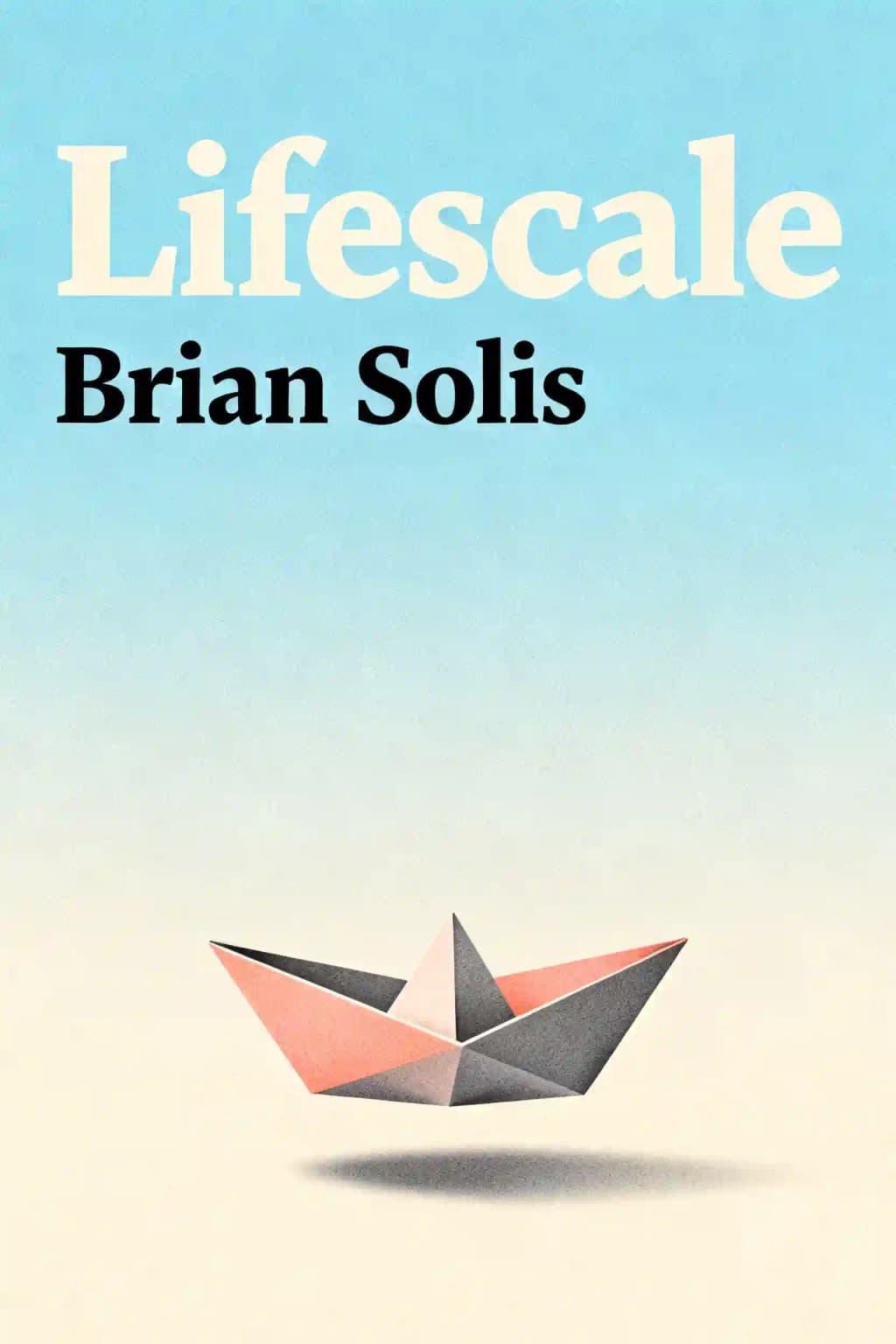
In "Lifescale," digital anthropologist Brian Solis offers a lifeline to those drowning in notifications. Using science-backed methods that reversed his own digital addiction, Solis created the productivity framework that business leaders now use to reclaim focus in our attention-hijacked world.
Brian Solis, author of Lifescale: How to Live a More Creative, Productive and Happy Life, is an 8x best-selling author, digital anthropologist, and globally recognized futurist. A Silicon Valley luminary and VP of Global Innovation Evangelism at Salesforce, Solis blends his expertise in technology, human behavior, and business strategy to explore themes of personal growth, digital well-being, and intentional living in this self-help manifesto. His insights stem from decades of researching disruptive technologies and advising Fortune 500 companies on innovation.
Solis’s influential works, including What’s the Future of Business and X: The Experience When Business Meets Design, have redefined customer experience and digital transformation. A prolific contributor to Forbes and Wired, he hosts a widely read blog and commands a loyal audience of over 700,000 across platforms.
Named among Silicon Valley’s “40 under 40” and hailed by Forbes as “one of the more creative and brilliant business minds of our time,” Solis’s books have sold millions of copies worldwide, with Lifescale offering actionable strategies to reclaim focus and creativity in an age of distraction.
Lifescale explores achieving digital wellness by balancing technology use with intentional living. Brian Solis addresses how digital distractions harm creativity, productivity, and mental health, offering frameworks like the "Digital Declutter" to reclaim focus and purpose. The book combines neuroscience, design thinking, and personal anecdotes to help readers realign their digital habits with meaningful goals.
Professionals, parents, and creatives struggling with screen addiction or burnout will benefit most. Solis targets those seeking to reduce anxiety from constant connectivity, improve work-life balance, and reignite creativity. It’s also valuable for leaders aiming to foster healthier digital cultures in teams.
Yes, particularly for its actionable strategies to combat digital overwhelm. Solis provides exercises to break addictive tech habits, prioritize deep work, and cultivate mindfulness in the digital age. Readers praise its blend of research-backed insights and practical steps for sustainable change.
Key concepts include:
Solis explains how apps use variable rewards (e.g., notifications, likes) to trigger dopamine loops, fostering compulsive use. He advises disabling non-essential alerts, scheduling "tech-free zones," and replacing scrolling with creative activities to rewire behavior.
This framework involves auditing digital habits, identifying distraction triggers, and designing personalized routines to prioritize creativity. Steps include setting analog daily goals (e.g., sketching ideas on paper), practicing monotasking, and using apps like Freedom to block distractions.
Unlike generic productivity guides, Lifescale specifically tackles digital-age challenges using behavioral science. Solis critiques superficial "detox" trends, advocating instead for systemic habit redesign. The book merges personal anecdotes with corporate case studies, making it applicable for individuals and organizations.
Solis recommends teams adopt "deep work sprints" (90-minute focused sessions), replace endless meetings with async updates, and use tools like Trello for mindful task management. Leaders are urged to model "email-free evenings" to reduce burnout.
Yes, Solis analyzes how platforms like Instagram and Twitter fragment attention and erode critical thinking. He suggests curating feeds to follow educational accounts, scheduling 10-minute daily check-ins, and using apps like Moment to track usage.
Some reviewers note it focuses heavily on personal responsibility without addressing systemic tech industry issues. However, its practical exercises for individual change are widely praised.
The book advises creating a dedicated workspace, using noise-canceling headphones for focus, and setting clear boundaries between work and leisure time. Solis also emphasizes the importance of "offline rejuvenation" (e.g., walks, hobbies) to prevent video-call fatigue.
Solis shares supplemental tools on his website, including a free "Digital Wellness Audit" and video courses on mindful tech use. He also collaborates with experts like Dennis Yu on certified coaching programs.
Siente el libro a través de la voz del autor
Convierte el conocimiento en ideas atractivas y llenas de ejemplos
Captura ideas clave en un instante para un aprendizaje rápido
Disfruta el libro de una manera divertida y atractiva
Sleep was their competitor, proudly declaring "we're winning!"
We've embraced distraction as a value, even taking pride in our ability to manage it.
We weren't put on this planet to validate our existence through strangers' approval.
Creativity isn't just for geniuses or the gifted-it's essential for everyone.
Every child is an artist. The problem is how to remain an artist once we grow up.
Desglosa las ideas clave de Lifescale en puntos fáciles de entender para comprender cómo los equipos innovadores crean, colaboran y crecen.
Experimenta Lifescale a través de narraciones vívidas que convierten las lecciones de innovación en momentos que recordarás y aplicarás.
Pregunta cualquier cosa, elige tu estilo de aprendizaje y co-crea ideas que realmente resuenen contigo.

Creado por exalumnos de la Universidad de Columbia en San Francisco
"Instead of endless scrolling, I just hit play on BeFreed. It saves me so much time."
"I never knew where to start with nonfiction—BeFreed’s book lists turned into podcasts gave me a clear path."
"Perfect balance between learning and entertainment. Finished ‘Thinking, Fast and Slow’ on my commute this week."
"Crazy how much I learned while walking the dog. BeFreed = small habits → big gains."
"Reading used to feel like a chore. Now it’s just part of my lifestyle."
"Feels effortless compared to reading. I’ve finished 6 books this month already."
"BeFreed turned my guilty doomscrolling into something that feels productive and inspiring."
"BeFreed turned my commute into learning time. 20-min podcasts are perfect for finishing books I never had time for."
"BeFreed replaced my podcast queue. Imagine Spotify for books — that’s it. 🙌"
"It is great for me to learn something from the book without reading it."
"The themed book list podcasts help me connect ideas across authors—like a guided audio journey."
"Makes me feel smarter every time before going to work"
Creado por exalumnos de la Universidad de Columbia en San Francisco

Obtén el resumen de Lifescale como PDF o EPUB gratis. Imprímelo o léelo sin conexión en cualquier momento.
What happens when a digital analyst-someone who championed social media's revolutionary potential-realizes he can no longer focus long enough to write an article about focus? This wasn't a hypothetical crisis. It was the breaking point that forced a reckoning with an uncomfortable truth: the very technologies designed to connect us have rewired our brains in ways we never anticipated. We've become participants in a grand experiment, trading our attention-our most precious resource-for dopamine hits disguised as connection. The average person's attention span has collapsed from three minutes to 45 seconds in just a decade. We didn't choose this. We weren't warned. Like early cigarette smokers unaware of addiction's grip, we embraced our devices as tools of liberation, never suspecting they'd become instruments of captivity. Our minds have been colonized by design. Netflix's CEO didn't mince words when he declared sleep their biggest competitor, proudly announcing "we're winning!" This isn't accidental-it's engineered. The same persuasive design techniques that make slot machines irresistible now power our apps. Intermittent variable rewards keep us checking notifications. Social reciprocity makes us feel obligated to respond instantly. Those three dancing dots indicating someone's typing? Pure psychological manipulation, triggering anticipation that floods our brains with dopamine. The cognitive toll is staggering. Our brains need nearly 24 minutes to fully refocus after a single interruption, yet we interrupt ourselves constantly. What we call multitasking is actually rapid toggling between tasks, each switch depleting our mental reserves. This isn't just inefficient-it's devastating. Productivity drops 40%. Mistakes multiply. Cortisol floods our system, creating chronic stress. We're not just distracted; we're chemically altered. Yet we've become complicit in our own hijacking. We wear our busyness like a badge of honor, mistaking constant activity for meaningful productivity. Distraction serves as anesthesia, numbing us to loneliness, fear, and the uncomfortable work of confronting who we've become. Blaise Pascal saw this centuries ago: "All men's miseries derive from not being able to sit in a quiet room alone." We've simply upgraded from restlessness to smartphones, but the avoidance remains the same. Awareness itself becomes the first step toward freedom.
Reclaiming focus isn't about willpower-it's about architecture. High-quality work emerges from the intersection of time and intensity. Your brain is literally bigger in the morning, fully hydrated with cerebrospinal fluid after rest. Yet most squander these peak hours on email, reserving creative work for mental depletion. Procrastination reveals itself as emotional avoidance-we delay tasks triggering anxiety or fear. The solution requires mental projection: vividly imagining completion's satisfaction rather than fixating on discomfort. Muhammad Ali captured this: "I hated every minute of training, but I said, 'Don't quit. Suffer now and live the rest of your life as a champion.'" Strategic breaks matter as much as focused work. When pausing, resist checking your phone. Instead, stretch, walk, or recall joyful memories. The Pomodoro Technique offers 25-minute work sprints with 5-minute breaks, while research suggests 52-minute sprints with 17-minute breaks optimize productivity. Creativity isn't reserved for artists-it's oxygen for the soul. In flow states, self-consciousness dissolves and problems solve themselves. Yet between childhood finger paintings and adult responsibilities, most abandoned this birthright. As automation threatens half the workforce, creativity has become essential. Technical skills are easily replicated; imagination remains distinctly human. Seniors pursuing creative activities are healthier and less depressed. A 2016 study revealed creative engagement creates an upward spiral where creativity and happiness continuously reinforce each other. Reconnect through intentional playfulness. Remember childhood delights. Schedule playtime-build sandcastles, fly kites, watch cartoons. Start creative projects regardless of talent. Paint badly. Write terribly. Play music off-key. The point isn't mastery; it's expression. Fear kills creativity; courage feeds it.
We've confused happiness with pleasure-mistaking temporary highs for lasting fulfillment. A great meal, a vacation, a bonus deliver chemical bursts that fade quickly, leaving us chasing the next fix. Social media weaponizes this confusion: we perform for validation, receive dopamine hits, then crash. Research shows that actively pursuing happiness often makes us less happy. The secret isn't chasing happiness but cultivating meaning. Martin Seligman explains: "Meaning comes from belonging to and serving something beyond yourself and from developing the best within you." Authentic happiness isn't a destination but a practice-a daily choice to appreciate meaningful experiences. Values serve as our internal compass, yet we rarely articulate them clearly. To clarify yours, recall moments of profound happiness-what were you doing? Who were you with? What values were present? Then examine your most difficult moments. What helped you move forward? Organize these insights thematically, identifying patterns. Narrow them to 5-10 core principles ranked by importance, then transform each into a commitment statement describing how you'll embody it. As Roy Disney noted, "It's not hard to make decisions when you know what your values are."
We live in what psychologist Srikumar Rao calls "me-centered universes," filtering every experience through "what's the impact on me?" This accidental narcissism leads to "a mediocre, frustrated existence, punctuated with flashes of pleasure." The escape requires finding causes larger than ourselves. While 95% of people believe they're self-aware, only 10-15% truly are. The culprit? We ask the wrong questions. "Why" questions-"Why is this happening to me?" "Why can't I focus?"-increase stress and depression, trapping us in backward-looking rumination. Self-aware people ask "what" questions instead: "What's important to me?" "What situations drain me?" These forward-looking inquiries move us toward solutions. Mental chatter-that relentless internal monologue-depletes our energy and fosters anxiety. Mindfulness offers the antidote. This isn't mystical spirituality; it's active, intentional attention on the present. Mindful people are happier, more empathetic, and sleep better. As Swami Rama explains, "From childhood onward, we have been educated only to examine and verify things in the external world. No one has taught us how to look within." A simple practice: find quiet space, sit with a straight back, focus on breath, and observe thoughts without reacting. This gradually clears mental complexes, creating space for what truly matters.
Most of us chase someone else's definition of success-job titles, income levels, status symbols-constantly raising the bar only to find each achievement becomes the new normal. Success without happiness is meaningless. Take inventory of your possessions and achievements. What did they mean when you acquired them versus now? Much becomes emotional baggage reminding us of lost family time and sacrificed leisure. As Thich Nhat Hanh said, "Letting go gives us freedom and freedom is the only condition for happiness." Redefining success requires asking: What does success mean to you? Money? Family? Helping others? Spiritual soundness? Matthew McConaughey challenged graduates: "Don't choose anything that jeopardizes your soul." Finding purpose isn't about waiting for serendipity-it's about looking within. With an average lifespan of 78.7 years (28,725 sunrises), how many do you have left? Purpose is the lifeforce that energizes you and separates mediocrity from greatness. Research shows clear purpose enhances self-esteem and connects us to something larger. Creating a purpose statement transforms reflection into actionable declaration-like Oprah's commitment to teaching and inspiring, or Richard Branson's dedication to enjoying life while bringing out the best in others. Make it specific and actionable. But purpose isn't static-it evolves as you evolve. Living purposefully means constant growth, using your purpose as your North Star.
Dreams require positive energy to materialize. While our brains naturally emphasize pain over joy, we can override this negativity bias through intentional optimism-acknowledging reality while focusing on growth. The benefits: increased productivity, decreased burnout, improved creativity, and better health. Through neuroplasticity, we reshape our brains with intentional thought patterns, creating mental models that recognize opportunities and guide actions. Psychologist Richard Wiseman's 10-year study found "lucky people" create and notice opportunities, trust intuition, maintain positive expectations, and transform setbacks into stepping stones. Amplify this through visualization-not just imagining outcomes but vividly envisioning the achievement process. Research shows people who write out goals and action steps are 80% more likely to achieve them. Transform visualization into creative productivity by mastering deep work-diving into meaningful creation rather than treading water amid distractions. Fiercely protect scheduled deep work time against the "cult of busyness." Establish a dedicated space, set specific session durations with clear output goals, and construct a creativity support system with necessary tools and comforts. These rituals build creative muscles that eventually allow focused work even in challenging environments. As capacity grows, try Cal Newport's "hub-and-spoke" model-working among people with diverse skillsets while maintaining individual focus. Building focus is like holding your breath-practice increases capacity. With rigorous deep work time, you create conditions for flow: complete involvement, inner clarity, confidence, timelessness, and intrinsic motivation.
This isn't the end-it's the beginning of continuous evolution. Lifescaling sparks imagination and inspires brighter futures. Creativity becomes not just what you create but why you create, guided by purpose, values, self-reflection and consciousness. These elements unlock hidden experiences and opportunities. Lifescaling is personal exploration into what clouds your being and an endeavor toward discovery and vitality. It's a covenant to see, learn and practice what allows you to live your best life. The more you know, the more you grow; the more you create, the more you want to create. Each iteration of yourself sees and feels things the previous version could not. In a world that commodifies your attention and sells distraction as connection, reclaiming your focus is rebellion. Defining your purpose is revolution. Living by your values is freedom. The choice has always been yours-you just needed to remember how to choose. Start now. Your 45 seconds are already ticking.