Capítulo 1
The Elusive Art of Balance: Finding Your Way in a Demanding World
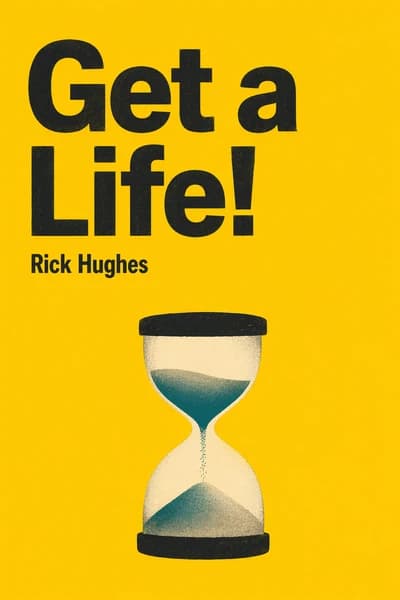
Ever felt like you're constantly juggling too many balls, with work demands in one hand and personal life in the other, desperately trying not to drop either? You're not alone. In our hyper-connected, always-on society, the quest for work-life balance has become something of a holy grail. Rick Hughes' "Get a Life!" cuts through the noise with practical wisdom that has resonated with everyone from corporate executives to mental health professionals. The book has gained particular traction among millennials and Gen Z professionals who increasingly prioritize wellbeing alongside career success. Even celebrities like Emma Watson have praised its approach to mindfulness and balance. What makes Hughes' perspective so compelling is his background as a psychological counselor who has witnessed firsthand the toll that imbalance takes on individuals across all walks of life. His message is clear: balance isn't a luxury-it's essential for sustainable success and genuine fulfillment.
Capítulo 2
The Foundation: Understanding Your Personal Development Needs
The journey toward work-life balance begins with understanding ourselves-our needs, tendencies, and what truly helps us recharge. Despite recognizing the importance of rest, few of us can identify what genuinely helps us relax. We exist in a perpetual state of adrenaline overdrive, bombarded by information and demands. Even supposedly relaxing activities like watching television often contain stress-inducing content rather than providing true restoration.
Most of us never learned proper relaxation techniques. The key is discovering activities that provide personal nourishment against life's frenetic pace. Consider Susan, a high-powered executive who discovered her salvation came not from constant busyness but from walking in botanical gardens, creative writing, and swimming. Another client found relaxation in "purposeless knitting"-creating without pressure or expectation. The secret is consciously building these moments into our daily schedules and recognizing them as deliberate acts of self-care.
Mindfulness offers another pathway to balance by helping us be fully present, suspending the internal chatter that pulls us away from the now. Drawing from both Eastern and Western philosophies, mindfulness involves bringing conscious awareness to our thoughts, feelings, and bodily sensations. The practice centers on attending to your senses-what you see, hear, touch, smell, and taste. Start by controlling your breathing (in for five, hold for four, out for six), then consciously orient yourself to your surroundings through each sense. This grounds you in the present moment, as demonstrated by Roger, a pharmaceutical company director who takes 15 minutes daily to mindfully connect with his senses, finding the practice refreshes his mind for the afternoon ahead.
When life's demands exceed our capacity, balance comes from recognizing this conflict is temporary and making incremental changes. Accepting ourselves with both strengths and weaknesses allows us to resist the impossible quest for perfection. This acceptance extends to our creative potential, which can flourish beyond work. Creating successful work-life balance isn't always about separating domains but allowing them to nourish each other. Creative passions discovered in non-work settings can revitalize our professional lives, while work skills can enhance personal pursuits.
As we move through different life stages, our work-life balance constantly shifts, requiring regular recalibration. Every major life change-from starting school to job promotions to relationships-involves both sacrifices and new opportunities. Acknowledging both aspects helps us process transitions healthily and celebrate achievements. Major life events like bereavements can dramatically shift our values and priorities, as illustrated by Nicky, who reassessed her work-life balance after her mother's death, making more time for family while maintaining her retail career.
Our emotional intelligence profoundly affects work-life balance. The foundation of emotional regulation is understanding our personal emotional repertoire and developing accurate empathy for others. This requires systematic self-reflection: examining how and why we respond emotionally in different situations. The goal is moving from spontaneous reactions toward thoughtful, considered emotional responses. Our emotional vocabulary gives us precision in understanding what we're experiencing in any given moment. Rather than using broad terms, we can identify specific emotional intensities-from high (fuming, ecstatic, terrified) through medium (annoyed, cheerful, afraid) to low (irked, content, uneasy).
Capítulo 3
The Social Fabric: Relationships as Balance Builders
Our work-life balance is fundamentally connected to our relationships. Healthy relationships contribute to overall wellbeing and allow for positive focus in both work and personal life, while dysfunctional relationships can distract us at work or cause worry at home. Managing these relationships becomes crucial to achieving work-life balance, as they serve as essential facilitators when functioning well.
Being single is a valid life choice that many happy people embrace, despite societal pressure suggesting relationships are the only path to happiness. Singles can prioritize independence, work, children, aspirations, or healing from past relationships. Being single provides an excellent opportunity for self-discovery and emotional intelligence development before entering relationships.
For those in relationships, they typically begin with an exciting "honeymoon" period before evolving into routine aspects of life. Each person has 50% responsibility, with imbalances potentially leading to resentment or apathy if prolonged. Relationships involve juggling two careers, families, and friend groups, requiring compromises and nurturing additional relationships. The term "settling down" misleadingly suggests relationships reach a static state. In reality, relationships are more like plants requiring ongoing nurturing and attention to prevent deterioration.
When romantic relationships end, the experience can be devastating, feeling like a bereavement that affects the core of who we are. Some might throw themselves into work as a coping mechanism, while others need to step back, regroup, and practice self-care. This needs to be factored into our current work-life balance, possibly requiring time out and seeking counsel from supportive people.
For parents, balancing work and children remains almost mysterious, yet possible. Every parent aspires to perfection but usually ends up seeking mere survival! The secret is being "good enough"-more real and achievable. We each have our own complex matrix of variables, resources, and opportunities affecting this balance. Nurturing children means allowing them to develop independence and autonomy, making their own decisions and learning about risk and responsibility. We develop resilience through life experience, so exposing children to managed risks gives them practice handling different situations.
Beyond immediate family, our broader social networks help maintain work-life balance while ensuring relationships remain balanced. Sometimes, like Mohammed after his mother's death, we need to reassess friendships and possibly distance ourselves from those that are dysfunctional or destructive. Our family frameworks are unique, with growing interest in genealogy expanding these networks further. Like friendships, family relationships require nurturing but can range from warm and affectionate to fractious and toxic.
Though not people, pets offer a rich source of work-life balance. From traditional dogs and cats to unusual choices like pot-bellied pigs or reptiles, pets require time and effort but provide comparable value in return. Research suggests dogs can reduce cardiovascular risk by providing social support and motivation for physical activity. The companionship of animals creates opportunities for bonding, nurturing, and love.
Capítulo 4
Professional Identity: Finding Purpose in Your Work
Beyond financial motivation, humans need purpose-a reason to get up in the morning. Work provides structure through routines that help us prepare for and decompress from our day. We often fail to recognize our daily achievements, lumping everything as just "work." Reconnecting with why we do what we do can rekindle enthusiasm, as illustrated by Rico, a council supervisor who rediscovered meaning by remembering the impact of his work on tenants.
Finding purpose is deeply personal. While some pursue high-paying careers like law or medicine, most are driven by belief in what they do rather than money alone. There's no simple formula for finding purpose-it requires openness to various experiences. In the work context, purpose allows us to develop skills and find appropriate challenges.
Beyond our formal employment contract lies the psychological contract-the informal expectations between employee and employer. While our job description outlines essential criteria and conditions, the psychological contract encompasses elements that create meaning and value. These unwritten expectations might include training opportunities, advancement potential, and development possibilities that motivate us. The danger comes when this implicit contract is breached-when we invest more than we receive in return.
Being politically astute means understanding the micro-politics of everyday life-the unspoken signals and dynamics that influence our professional identity and relationships. Developing this intuition can help prevent breaches in the psychological contract. There's no rulebook here; it's about learning how people behave, recognizing that sometimes people don't tell the complete truth. We develop this awareness by watching and listening-observing what's happening both formally and beneath the surface.
Professional development isn't just about climbing the corporate ladder-it's about keeping pace with changing processes, advancing technology, and evolving company needs. Having the right skills helps us work better and faster, directly impacting our work-life balance. When planning professional development, consider whether to improve weaknesses or enhance strengths for maximum impact.
Being "the new kid" takes significant effort as we learn what to do and how to do it. While showing enthusiasm matters, we must pace ourselves to avoid burnout. Beyond the job itself, we're navigating workplace dynamics and building relationships from scratch. Most workplaces carry emotional baggage-team disagreements, redundancy fallout, organizational change-creating potential toxicity.
Change is life's one constant, especially at work, and how we handle it directly impacts our work-life balance. Despite its inevitability, most of us resist change, preferring what's familiar and safe. We often fear change more than the actual experience warrants. When change happens to us, getting clear facts helps reduce the emotional burden of uncertainty. While we can't always control change itself, we can choose our response to it.
Perfectionism creates a destructive cycle where we're never quite good enough. Often rooted in childhood experiences where approval came only through achievement, perfectionism ties our self-worth entirely to accomplishments rather than inherent value. This defensive mechanism against criticism drives us to unrealistic standards we inevitably fail to reach, which only intensifies our determination to perform better next time.
Capítulo 5
Mastering Productivity: Working Smarter, Not Harder
Creating successful work-life balance requires working smarter, not harder-focusing on quality over quantity. Most people don't actively manage time but merely react to demands. When phones ring or emails ping, we instinctively respond, regardless of effectiveness. Modern technology has created expectations of immediate response, though this isn't always necessary.
The trap is believing everything is equally important and urgent, creating frustration when we inevitably can't accomplish everything. Taking a step back allows perspective, as Marylee discovered when overwhelming work and family demands required tough decisions about priorities. The Eisenhower Principle offers a practical solution with its four-quadrant matrix: prioritize tasks that are both urgent and important; plan those that are important but not urgent; delegate urgent but unimportant tasks; and question whether non-urgent, non-important tasks need doing at all.
Effective time management requires recognizing our limitations and delegating appropriately. Many struggle with delegation due to control issues or perfectionism, believing no one can match their standards. This perfectionism threatens work-life balance by creating unrealistic expectations that trigger guilt and self-blame. Learning to trust others often requires a leap of faith but can reduce workload and prevent burnout.
The Western world, particularly the US and UK, perpetuates a culture of "putting in the hours" that values presence over productivity. This fixation on quantity rather than quality creates an artificial eight-hour workday standard regardless of task requirements. A more flexible approach would allow employees to complete work efficiently and then pursue life-enriching activities, ultimately improving work quality through better balance.
Presenteeism occurs when employees attend work but with reduced productivity, often due to ill-health. According to the Sainsbury Centre for Mental Health, presenteeism costs UK employers 15.1 billion annually (605 per employee)-nearly twice the cost of absenteeism (8.4 billion). Beyond physical illness, presenteeism includes "organizational malaise" where employees are physically present but mentally disengaged.
Job satisfaction is crucial for work-life balance and morning motivation. True satisfaction combines validation (acknowledgment for achievements), fulfillment (task completion), and a feel-good factor (positive emotional response). Paradoxically, satisfaction requires effort and challenge-if everything came easily, achievements would feel hollow.
Personal efficiency means injecting the appropriate level of concentration to complete tasks in the best way in the quickest time. Some people excel at multitasking-attending to several demands simultaneously-which can evolve out of necessity rather than being purely hard-wired. Procrastination, that nagging feeling when avoiding necessary tasks, often stems from not knowing where to start or perfectionism preventing action. The simple solution is to start doing something-anything-as inactivity perpetuates procrastination.
Flow occurs when we're so engrossed in an activity that we lose all sense of time-a concept championed by psychologist Mihaly Csikszentmihalyi. It's the opposite of apathy and boredom, emerging when we're engaged at both high-skill and high-challenge levels. The absence of either prevents achieving flow.
Capítulo 6
The Wellbeing Imperative: Psychological and Physical Health
While our external environments change as we move between work and home, we remain constant as individuals. Our character, identity, and personality significantly shape how we create and manage our work-life balance. Though influenced by upbringing, life events, and experiences, maintaining our physical and mental health requires understanding our unique personal factors and how they affect our wellbeing across all life domains.
We need some pressure for motivation and challenge, but excessive demands can overwhelm us. Stress occurs when coping mechanisms become insufficient to handle pressures. The Human Performance Curve shows performance increases with stress only to a point before declining. Ideally, we function best in the "engaged/motivated" zone-below this we become apathetic, beyond it we risk burnout. Our stress tolerance varies individually and between life domains. Without proper stress management skills, our work-life balance inevitably suffers.
Effective work-life balance requires minimizing dysfunctional thinking that skews our interpretation of life. Negative thinking acts like a boat's anchor, keeping us stationary and stuck. While it's appropriate to feel emotions like sadness, disappointment, or regret in proportion to situations, these should be temporary. Common negative thinking patterns include biased blame, catastrophizing, conditionality, negative bias, generalizing, using critical words, emotionality, future bias, past block, and making assumptions.
Anxiety is a primal emotion that evolutionarily alerts us to danger, triggering fight, flight, or freeze responses. However, when anxiety becomes disproportionate to actual threats or habitual, it wastes time and creates unnecessary distress. The "Don't worry, be happy" model challenges us to consider the purpose of our worries-if we can do something about what worries us, we should take control; if we can't do anything about it, worrying won't help.
Anxiety and worry act as stalling blocks to effective work-life balance, often paralyzing us more than the anxiety trigger itself. Self-belief becomes a crucial accelerator for success-if we believe we can achieve something, we probably will. The fear of failure typically exceeds the actual experience of failure, and resilience emerges from accepting difficulties while recognizing our capacity to adapt.
Happiness is a positive, subjective wellbeing experienced in the present moment. While many cultures obsess over happiness as a panacea, it's distinct from pleasure, which occurs in short-term bursts. Creating successful work-life balance requires a fluid, calibrating mechanism since happiness faces challenges from difficult experiences. When defining happiness, distinguishing between needs and wants is crucial. Needs are necessities for survival or completing tasks-like having shelter or resources to do our job. Wants are desires that might enrich life but aren't essential.
Mental health is as crucial to wellbeing as physical health, with both significantly impacting each other. Despite one in four people experiencing mental health issues yearly, only about 13% of NHS England funding goes to mental health services. Many people struggle to recognize deteriorating mental health due to stigma and misconceptions. The author emphasizes three vital strategies: communicate, communicate, communicate. Talking about feelings creates connection, while checking in on others helps combat isolation.
Physical health encompasses everything happening in our body beyond our mind. Like complex machines, our bodies require proper maintenance to function optimally. Understanding our unique physiology helps us achieve maximum efficiency, including knowing when to relax and recharge. Since we only have one body, proper care is essential for maintaining work-life balance and generating the energy needed to meet daily demands.
Capítulo 7
The Practical Realm: Environment, Finances, and Technology
Our homes reflect our personalities and significantly impact our work-life balance. The physical environment affects our mood and wellbeing-whether we prefer orderliness or "controlled chaos." Some find cleanliness and organization essential for mental clarity, while others are less concerned. Visual touches like wall art, decoration choices, and even garden spaces can dramatically influence our sense of sanctuary.
Living with partners, family, or friends introduces the challenge of balancing different home needs and wants. Conflicting living habits can disrupt our sense of comfort and calmness, affecting routines crucial to work-life balance. Common household tensions arise from different standards of tidiness, organization, and responsibility. When home feels frustrating rather than sanctuary-like, our work-life balance suffers.
Working from home offers flexibility and eliminates commuting, benefiting work-life balance especially for those with long travel distances, health conditions, or caregiving responsibilities. Organizations benefit too by reducing office space, utility costs, and carbon footprints. However, the transition requires planning, focus, and appropriate space. Working from home can create isolation from colleagues that video conferencing doesn't fully replace, and may require extra effort to maintain connections.
Starting and running your own business demands intense time commitment and can severely impact work-life balance. Beyond administrative requirements like tax registration and banking, entrepreneurs face questions about savings, timing, customer understanding, and product viability. The personal investment goes beyond finances to include emotional investment, with success or failure feeling deeply personal.
Financial stability-earning more than we spend-is fundamental to work-life balance. Money problems create stress that can sabotage our equilibrium, especially when we take additional jobs to make ends meet or spiral into debt. Many struggle to differentiate between needs and wants, purchasing luxury items at the expense of necessities. Financial intelligence involves responsible money management, including careful use of credit cards and understanding your financial position.
We live in an era where technology has transformed our lives, offering new choices but also presenting fresh challenges. IT can enhance work-life balance by increasing efficiency, but creates expectations of constant availability. Remember your computer's three key functions-sleep, shut-down, and restart-which parallel our own needs. Home computing setups often lack the ergonomic considerations of workplace stations, leading to fatigue and frustration.
Social media offers wonderful platforms for connection but can reduce face-to-face interaction. Despite concerns about cyber-bullying and hate crimes, social media enables global connections, building communities with shared interests and helping distant families stay in touch. The challenge is engaging with it in a necessary and sufficient way rather than letting it feed distraction and procrastination.
Capítulo 8
Crafting Your Personalized Balance
Creating successful work-life balance requires considering options, evaluating priorities and needs, then making conscious choices about how we want to live. Balance is fluid and constantly changing, with numerous factors influencing each other-sometimes harmoniously, sometimes creating conflict. While we may face circumstances beyond our control, we always retain some capacity to manage how we think, feel, and act in response to these situations. The key is working with change rather than against it.
After analyzing your work-life balance scores across personal development, relationships, professional issues, productivity, wellbeing, and practical factors, it's time to consider strategic changes. Should you prioritize areas with the lowest scores first or focus on aspects easier to improve? How will you maintain successes rather than letting them slip? Consider potential conflicts or obstacles that might impact improvement efforts.
Your work-life balance is the wheel of your future-constantly evolving and changing. Return to these tools and scoring systems regularly-monthly, quarterly, or whatever interval suits you best. Assess whether your changes have been successful, identify continued areas for improvement, and celebrate achievements. The most important thing to remember is that by starting this journey, you've already taken the first step toward creating a successful work-life balance.
Remember that sometimes external support can be valuable. Whether through crisis helplines, financial advisors, relationship counselors, bereavement support groups, or professional coaches, reaching out for specialized guidance can help address specific challenges affecting your work-life balance. The journey to balance isn't one you have to walk alone-resources exist to support you through every aspect of creating harmony between your professional and personal worlds.
Capítulo 9
The Balanced Life: A Continuous Journey
Balance isn't a destination but a continuous journey of adjustment and recalibration. As life circumstances change-new jobs, relationships, children, health challenges-our approach to balance must evolve accordingly. What worked in your twenties likely won't serve you in your forties. The beauty of Hughes' approach is its flexibility and personalization-recognizing that each individual must find their own unique equilibrium.
The pursuit of work-life balance isn't about achieving perfection in every domain simultaneously. Rather, it's about making conscious choices that align with your values and priorities at each life stage. Sometimes work will demand more attention; other times, personal life will take precedence. The key is maintaining awareness of these shifts and ensuring that neither domain consistently dominates at the expense of the other.
As you implement changes to improve your balance, remember that small, consistent adjustments often prove more sustainable than dramatic overhauls. Whether it's establishing a mindfulness practice, setting boundaries on work hours, nurturing key relationships, or creating financial stability, each positive change builds upon the others to create a more balanced, fulfilling life. The journey may not always be easy, but as Hughes demonstrates throughout his book, the rewards of a well-balanced life-greater satisfaction, improved health, stronger relationships, and enhanced performance-make it undoubtedly worthwhile.