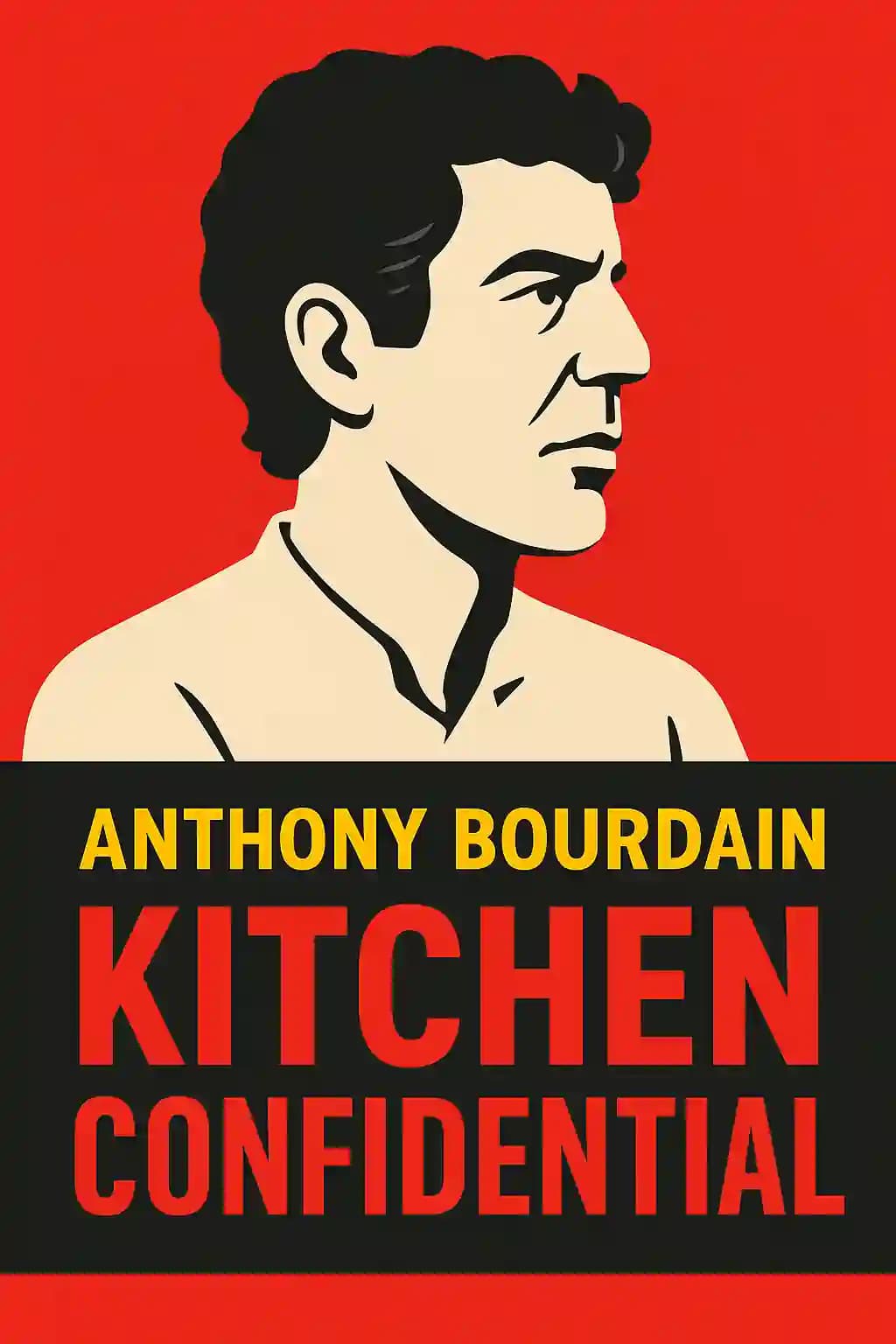
Bourdain's raw expose of restaurant secrets revolutionized how we dine. This NYT bestseller warns against Monday fish, reveals kitchen debauchery, and sparked industry-wide reflection on toxic culture. Why did his brutally honest culinary confessions captivate millions worldwide?
Anthony Michael Bourdain (1956–2018), acclaimed chef and bestselling author of Kitchen Confidential: Adventures in the Culinary Underbelly, revolutionized food writing with his unflinching memoir exposing the hidden realities of restaurant culture.
A graduate of the Culinary Institute of America, Bourdain drew from his decades as a New York City chef—including his role at Brasserie Les Halles—to craft this genre-defining work, blending dark humor, industry secrets, and personal struggles with addiction. The book’s themes of culinary authenticity and systemic kitchen challenges stemmed from his 1999 New Yorker essay “Don’t Eat Before Reading This,” which catapulted him to fame.
Bourdain later hosted Emmy Award-winning travel series like No Reservations and Parts Unknown, exploring global cuisines and cultural narratives. His other works, including Medium Raw and A Cook’s Tour, further cemented his legacy as a storyteller bridging food and human experience.
Kitchen Confidential has sold millions of copies worldwide, been translated into over 30 languages, and inspired a television adaptation, remaining a cornerstone of modern food literature.
Anthony Bourdain's memoir exposes the brutal reality behind restaurant kitchens, blending career anecdotes with industry revelations. It chronicles his journey from culinary school to New York kitchens, revealing drug-fueled chaos, kitchen hierarchies, and unsanitary practices like serving dropped food. The book originated from his viral 1999 New Yorker essay "Don't Eat Before Reading This".
Food enthusiasts, aspiring chefs, and anyone curious about restaurant culture will find value. Bourdain’s gritty storytelling appeals to readers seeking unfiltered insights into culinary workplaces, though his descriptions of drug use and kitchen vulgarity may unsettle casual diners.
Yes – it remains the definitive insider account of professional kitchens. While some criticize its glamorization of toxic behavior, Bourdain’s sharp wit and industry critiques make it essential for understanding restaurant culture’s evolution post-#MeToo era.
Bourdain portrays chefs as "brigades of pirates, degenerates and thieves" – skilled but self-destructive antiheroes surviving on caffeine, nicotine, and adrenaline. He emphasizes their masochistic dedication to craft despite low pay and brutal conditions.
The book reveals:
Unlike romanticized food writing, Bourdain’s memoir focuses on kitchen labor rather than cuisine. Its unvarnished style contrasts with Gabrielle Hamilton’s Blood, Bones & Butter but shares Eric Ripert’s focus on kitchen intensity.
Key lessons include:
The book:
“The uniform is a sign of shared suffering.” This epitomizes Bourdain’s view of kitchen work as battlefield camaraderie. Other notable lines:
He details his heroin use and kitchen drug culture without moralizing, framing substance abuse as both coping mechanism and career hazard. Later writings show regret for normalizing this aspect of kitchen life.
Critics argue:
Siente el libro a través de la voz del autor
Convierte el conocimiento en ideas atractivas y llenas de ejemplos
Captura ideas clave en un instante para un aprendizaje rápido
Disfruta el libro de una manera divertida y atractiva
Food had power.
Food wasn't just sustenance - it was adventure, rebellion, and identity.
Messy station equals messy mind.
Your body isn't a temple, it's an amusement park - enjoy the ride.
Good eating involves risk.
Desglosa las ideas clave de Kitchen Confidential en puntos fáciles de entender para comprender cómo los equipos innovadores crean, colaboran y crecen.
Experimenta Kitchen Confidential a través de narraciones vívidas que convierten las lecciones de innovación en momentos que recordarás y aplicarás.
Pregunta cualquier cosa, elige tu estilo de aprendizaje y co-crea ideas que realmente resuenen contigo.

Creado por exalumnos de la Universidad de Columbia en San Francisco
"Instead of endless scrolling, I just hit play on BeFreed. It saves me so much time."
"I never knew where to start with nonfiction—BeFreed’s book lists turned into podcasts gave me a clear path."
"Perfect balance between learning and entertainment. Finished ‘Thinking, Fast and Slow’ on my commute this week."
"Crazy how much I learned while walking the dog. BeFreed = small habits → big gains."
"Reading used to feel like a chore. Now it’s just part of my lifestyle."
"Feels effortless compared to reading. I’ve finished 6 books this month already."
"BeFreed turned my guilty doomscrolling into something that feels productive and inspiring."
"BeFreed turned my commute into learning time. 20-min podcasts are perfect for finishing books I never had time for."
"BeFreed replaced my podcast queue. Imagine Spotify for books — that’s it. 🙌"
"It is great for me to learn something from the book without reading it."
"The themed book list podcasts help me connect ideas across authors—like a guided audio journey."
"Makes me feel smarter every time before going to work"
Creado por exalumnos de la Universidad de Columbia en San Francisco

Obtén el resumen de Kitchen Confidential como PDF o EPUB gratis. Imprímelo o léelo sin conexión en cualquier momento.
What happens when a spoiled, angry teenager slurps down a raw oyster on a French fishing boat and discovers his entire future in that single briny moment? Anthony Bourdain's journey from rebellious college dropout to culinary legend begins with this transformative bite-a taste of seawater, flesh, and possibility that would shape decades of obsession. Before he became the globe-trotting storyteller we knew from television, Bourdain was just another line cook with scarred hands and a drug problem, navigating the brutal, profane, and strangely beautiful world behind restaurant kitchen doors. His 2000 memoir didn't just chronicle a chef's life; it detonated a truth bomb that forever changed how we think about the people who cook our food. Enrollment in culinary schools spiked after publication, even as diners grew wary of Monday fish specials and hollandaise sauce. This wasn't sanitized Food Network fantasy-it was raw, honest, and utterly captivating.
Who's really preparing that Instagram-worthy dish? Not the pristine-clad chef, but a "dysfunctional, mercenary lot" of fringe-dwellers-often immigrants who clawed up from dishwashing. These cooks fall into three tribes: the Artists (high-maintenance specialists needing constant validation), the Exiles (those who can't function in normal society), and the Mercenaries (professionals who show up, execute flawlessly, and collect their check). Bourdain preferred the latter-give him reliability over temperamental "genius" any day. Line cooking resembles ballet performed at gunpoint. During Saturday rushes, there's no democracy, only chain of command. A cook's mise-en-place is sacred-an extension of their nervous system. "Messy station equals messy mind." The best cooks remain clear-headed while juggling twelve temperatures simultaneously, tuning out screaming chefs and demanding waiters. The physical toll is devastating. Burns, cuts, chronic pain-simply part of the job. Line cooks develop hands so scarred they can grab hot metal without flinching. They stand twelve to sixteen hours in sweltering heat until their bodies break down: bad backs, arthritic hands, varicose veins, alcoholism from self-medicating. Yet they return daily, driven by strange pride in enduring what others cannot.
Never order fish on Monday - most seafood arrives Thursday or Friday, making Monday's "fresh catch" four days old. Those specials? Thursday's leftovers with fancy sauce. One bad mussel triggers violent illness. Sunday brunch seafood is weekend leftovers repackaged. Menu euphemisms like "Beef Parmentier" hide old food. Filthy bathrooms signal worse kitchens. Busy restaurants with high turnover offer fresher ingredients. Tuesday through Thursday are optimal - chefs are rested, working with fresh product. Weekend diners are viewed as one-timers who won't notice corner-cutting. Well-done meat? That's where questionable cuts go. Yet Bourdain's philosophy persists: your body isn't a temple, it's an amusement park - enjoy the ride. The innovators who discovered foie gras and sushi were daredevils. Eat without fear, try everything once. The secret to restaurant-quality home cooking? Skip knife sets - buy ONE excellent chef's knife. The real magic: shallots, butter (always first and last in the pan), fresh herbs, and homemade stock reduced to demi-glace. Simple food with quality ingredients separates restaurant cooking from home cooking.
Opening a restaurant has terrible odds - only one in five see returns. Yet dreamers keep lining up: the retired dentist who throws great dinner parties and imagines himself as Rick from Casablanca, or mid-life crisis cases seeking adventure. When business falters, these unprepared owners panic, desperately tinkering until the unmistakable odor of death permeates the dining room. Success demands living on premises for years, working seventeen-hour days with total involvement in every aspect: Spanish fluency, health codes, tax law, fire regulations, environmental protection, building codes, OSHA, hiring practices, zoning, insurance, liquor licenses, trash removal, grease disposal. Meanwhile, sewage backs up, staff creates legal problems, underage drinking threatens your license, vermin lurk - all while your life savings hang in the balance. The pattern repeats: owners fall in love with concepts without understanding markets. They design beautiful dining rooms but skimp on kitchen equipment. They hire friends rather than professionals. Within six months, they're making desperate moves - changing concepts, slashing prices, firing the chef. The restaurant business rewards only those who control costs fanatically, know their market intimately, and maintain absolute consistency.
Between rushes, Bourdain absorbed his crew's banter-an international language of crude insults flowing between his French sous-chef, American pastry chef, Mexican line cooks, Bengali runner, and Dominican dishwasher. Kitchen talk follows rigid rules: all comments revolve around involuntary rectal penetration, penis size, or physical flaws. "Cabrone" can mean your wife is cheating or "my brother" depending on tone. "Fuck" functions as a comma. "Suck my dick" means "hang on a second." This crude environment might seem hostile, but kitchens need people who can hold their station without taking things personally. Your actual sexuality or background doesn't matter-it's how well you handle criticism and dish it back. Kitchens have professional jargon too. "86" means unavailable or fired. Being "weeded" means you're behind. "Meez" is mise-en-place-your setup. Kitchen Spanish is essential: "Cachundo" (piece of ass) for someone homely, "Rayo" (flash) for slowpokes. "Motherfucker" and "cocksucker" are terms of endearment-though "asshole" signals genuine anger, and family insults are strictly off-limits. Bourdain grew to love this crude poetry, the variations on classic insults like jazz riffs.
Sunday morning, 8 AM. Bourdain lies in bed after a brutal Saturday night, hands and feet radiating pain. Lighting his Zippo takes three tries. He examines his hands-the hands he always wanted since a cook named Tyrone taunted him years ago. The inch-and-a-half diagonal callus at the base of his right forefinger, yellowish-brown where knife heels have rested-his professional badge. The permanently deformed pinky from poor whisk handling. Recent scrapes, punctures, dried animal blood under cuticles, a black bruise under the thumbnail, a beveled-off fingertip from a pepper-cutting accident. Twenty-seven years since he walked into the Dreadnaught kitchen with hair halfway down his back and a bad attitude. He got the hands he deserved. He loved making cassoulet, chive-mashed potatoes with wild mushrooms, perfectly reduced sauces. He loved seeing his boss's face light up at a perfect pot-au-feu-that look of wonder when cynical bastards disappear before a simple plate of food. Food made sense to him in a way people never had. Sometimes a sliced tomato with parsley transported him back to his aunt's garden table in France-the distant sirens, the rooster's call, sand between his toes. He'd left destruction in his wake and closed many restaurants. But his loyal crew showed up daily: Franck, Eddy, Carlos, Omar. His wife Nancy somehow stayed through late nights, drunkenness, and obsession with prep lists. Bourdain showed us the truth-cooking is brutal, beautiful, and utterly human. It's about scarred hands and aching feet, crude jokes and fierce loyalty, the simple magic of transforming ingredients into something that makes hardened cynics weep. Your next meal carries this hidden story: the immigrant cook who showed up despite the flu, the dishwasher who stayed until 3 AM. They didn't do it for glory. They did it because food became their entire world-and they wouldn't have missed it for anything.