Capítulo 1
A Small Town's Deadly Secret
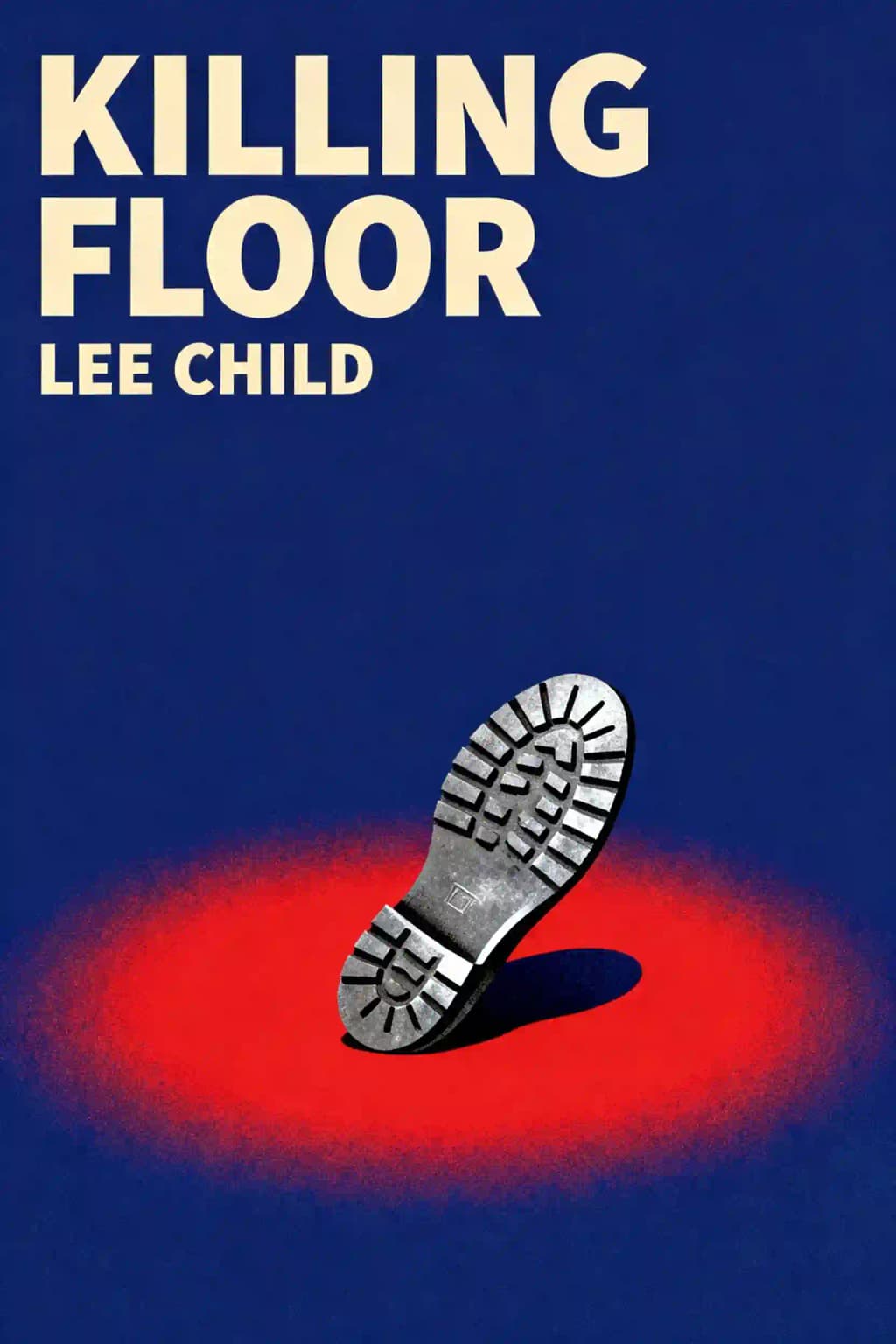
Lee Child's debut thriller has become a cultural phenomenon for good reason. First published in 1997, "Killing Floor" introduced the world to Jack Reacher, a character who would go on to star in over 25 bestselling novels and inspire both a film franchise starring Tom Cruise and a recent Amazon Prime series with Alan Ritchson. This wandering ex-military policeman with his spartan lifestyle, formidable physical presence, and unwavering moral code has captivated millions of readers worldwide. Even celebrities like Bill Clinton and Margaret Atwood have professed their addiction to the Reacher series. What makes this first installment so compelling is how it establishes Reacher's essential character while thrusting him into a deeply personal investigation in a seemingly perfect small town hiding monstrous secrets.
Capítulo 2
Wrong Place, Wrong Time
Jack Reacher's life takes an unexpected turn with what should have been an inconsequential decision. After spending six months adjusting to civilian life following his exit from the Army, Reacher makes an impulsive choice to step off a Greyhound bus in the small, pristine town of Margrave, Georgia. His motivation seems almost whimsical - following up on a decades-old story his brother Joe once told him about a blues guitarist named Blind Blake who supposedly died there. This simple decision launches him into a nightmare scenario that will test all his military training and investigative skills.
Within hours of arriving in this seemingly peaceful town, Reacher finds himself surrounded by local law enforcement, their shotguns and revolvers trained on him at a local diner. The arrest is conducted with an unusual level of force for a small-town police department, suggesting something more significant than a routine arrest. Chief Morrison, the head of local law enforcement, displays an inexplicable determination to pin a murder on Reacher, despite the obvious holes in the accusation.
The absurdity of the situation isn't lost on Reacher - he's being accused of committing murder in a town he's never visited before, at a time when he was verifiably on a bus traveling from Tampa. Only the presence of Detective Finlay, a Harvard-educated investigator with a more methodical approach, prevents the situation from escalating further. Throughout the interrogation, Reacher demonstrates the disciplined behavior ingrained during his years in military law enforcement, maintaining strategic silence except when directly questioned - a technique he learned can be more effective than defensive protestations.
When pressed about his background, Reacher reveals an unconventional life story that reads like a global travelogue. Born on a Marine base in West Berlin to a French mother and career Marine father, his childhood was spent moving between military bases across the world. This nomadic upbringing shaped his adaptable nature and keen observational skills. After graduating from West Point, he served thirteen distinguished years as a Military Police major before being caught in a post-Cold War downsizing - a detail that adds another layer of complexity to his current civilian status.
His stated reason for being in Margrave - searching for information about a blues musician who died six decades ago - seems flimsy even to Reacher himself, but it's the truth. Despite the weakness of the accusation against him and his clear alibi, the local authorities decide to hold him at Warburton state prison for the weekend while they verify his story. Before being transported, Reacher demonstrates his remarkable deductive abilities to Detective Finlay, accurately identifying not only the detective's Harvard education but also personal details like his recent divorce and the exact month he quit smoking - April. In a final display of his investigative instincts, Reacher suggests they recheck the victim's fingerprints, sensing an irregularity in their identification process that others have missed.
Capítulo 3
Prison Nightmare
At Warburton Penitentiary, Assistant Warden Spivey executes a calculated move that reveals his sinister intentions. Instead of placing Reacher and Paul Hubble - a clean-cut local banker who inexplicably confessed to the same murder - in the standard holding area for unconvicted prisoners, he deliberately assigns them to Cell Block D. This maximum-security wing houses hardened lifers, many serving multiple life sentences with nothing left to lose. Reacher, drawing from his years of military police experience, immediately recognizes the deliberate nature of this "administrative error" and begins mentally mapping escape routes and defensive positions within their cramped 8-by-12 cell.
The first challenge arrives within hours when three musclebound inmates - each easily weighing over 250 pounds and covered in prison yard muscle - approach their cell demanding a "residency tax" from Hubble. They've clearly marked the banker as easy prey. Reacher intervenes not from any sense of heroism but from cold pragmatism - Hubble's weakness would make them both targets. With the precision honed through years of military combat training, Reacher times his response perfectly. He launches forward with a devastating headbutt that catches the leader just above the nose, dropping him "like an ox in a slaughterhouse." The other two inmates back away as Reacher calmly demands not only the return of Hubble's stolen sweater but replacement Ray-Ban sunglasses for the ones they destroyed.
This initial victory establishes Reacher's reputation, but it's merely a prelude to the real threat. In the communal bathroom - a tactical nightmare of blind corners and hard surfaces - five members of the Aryan Brotherhood spring their coordinated attack. Each sports distinctive swastika tattoos and carries improvised weapons. The ensuing fight is savage and efficient. Reacher fights with brutal economy, using the confined space to his advantage. He drives his knee into the first attacker's groin with crushing force, systematically breaks another's fingers against the porcelain sink, and, in a particularly gruesome moment, partially gouges out a third man's eye with his thumb. The precision and coordination of the attack confirms Reacher's suspicions - Spivey had orchestrated their placement specifically for this attempted murder.
During their imprisonment, Hubble's facade of corporate composure crumbles as he reveals the true depth of the threats against him. His voice trembling, he describes the explicit warnings he's received: "They'll break into my house at night," he explains, terror evident in every word. "They'll nail me to the wall. They'll cut my genitals off. They'll make my wife eat them. Then they'll cut their throats in front of my children. Then they'll do things to my children which I can't even say out loud." The specific, horrific nature of these threats suggests not random intimidation but a sophisticated criminal organization with a history of following through on such promises.
Capítulo 4
A Personal Vendetta
On Monday morning, Reacher is released when his exhaustive alibi checks out. Officer Elizabeth Roscoe - a sharp-minded, attractive female officer who'd methodically worked through the night to secure his release - picks him up in her department-issued vehicle. She methodically explains how they've confirmed his story by tracking down and interviewing multiple bus passengers and the driver who all corroborated his whereabouts. During their conversation, she mentions a crucial detail that immediately triggers Reacher's investigative instincts: his fingerprints took fourteen hours to find in the FBI database, yet Detective Baker had definitively stated the murder victim wasn't in the system after merely six hours - a timeline that simply didn't add up.
At the station, Reacher receives news that shatters his world - the fingerprint match reveals the murder victim was his brother Joe. The identification becomes irrefutable when Reacher identifies a distinctive star-shaped scar on the victim's neck, a permanent reminder of a childhood accident involving a broken bottle during a family vacation in Okinawa. What had begun as a case of mistaken identity transforms into something devastatingly personal. Despite not having seen each other for seven years - their lives having diverged with their different career paths in the military - the unshakeable bond forged through their shared military upbringing and family loyalty remains steadfast. Reacher feels not just compelled, but duty-bound to investigate his brother's murder.
Through his initial inquiries, Reacher discovers Joe had transitioned from Military Intelligence to a position with the Treasury Department - a career move that now seems significantly more suspicious given the circumstances. This revelation, coupled with the mysterious and sudden disappearance of Paul Hubble, points toward a far-reaching conspiracy. When Reacher and Roscoe visit Hubble's impressive mansion, they encounter his wife Charlie and their two young children living in apparent luxury, but Hubble himself remains conspicuously absent. The visit raises more questions than answers about Hubble's connection to Joe's death. Following this unsettling encounter, Reacher and Roscoe's professional partnership evolves into something more intimate, leading to them spending a passionate night together at her modest home.
The next morning, Reacher makes an unwavering decision - he will stand up for Joe and complete whatever unfinished business led to his brother's death, regardless of the personal cost or danger involved. "This was about Joe," he reflects, his determination evident in every word. "My brother. I'd spent the first twenty years of my life growing up with him, sharing everything from military bases to family secrets. I'd spent the six months after our mother died grieving with him, understanding loss together. I'd spent the seven years since then thinking about him, wondering about his life. I wasn't going to spend the rest of my life failing him - not now, not ever." This personal vendetta becomes Reacher's driving force, transforming him from an accidental visitor into an unstoppable force seeking justice.
Capítulo 5
Escalating Horror
The investigation takes a devastating turn when Chief Morrison and his wife are discovered brutally murdered in their home - a crime scene so grotesque it shakes even the most seasoned investigators. Morrison's body had been methodically secured to the wall with heavy-duty carpentry nails driven through his hands and arms in a crucifixion-like display. The killer had taken particular care to inflict maximum suffering, mutilating Morrison's genitals before finally slitting his throat. His wife endured equally barbaric treatment, her body bearing similar signs of torture and ritualistic positioning.
The methodical nature of the murders becomes apparent through forensic details. The killers had worn rubber overshoes and surgical gloves, leaving distinct treaded footprints in the expanding pools of blood. These precautions suggest professional killers who knew exactly how to work a crime scene while leaving minimal evidence. The precise, almost theatrical arrangement of the bodies indicates the murders were meant to send a message.
This horrific tableau precisely mirrors the threat Hubble had described to Reacher during their brief time in prison - down to the smallest detail - confirming Morrison's involvement in the criminal enterprise. Reacher develops a theory that Morrison's execution was retribution for a critical oversight: failing to thoroughly search Joe's shoes during processing, shoes that had contained vital evidence the organization needed to recover.
As Reacher and Finlay pursue their investigation, they uncover troubling inconsistencies in Hubble's background. Despite maintaining an elaborate facade of employment, Hubble hasn't actually worked in banking for eighteen months - a discovery that raises serious questions about his true source of income. Their probe also reveals crucial information about Sherman Stoller, the second murder victim found beneath the highway. Stoller had been a truck driver for Island Air-conditioning, making regular runs to Florida hauling what were ostensibly air conditioning units.
The investigation's trajectory shifts dramatically when Mayor Teale assumes control of the police department following Morrison's death. Teale's leadership is marked by subtle but persistent attempts to redirect and impede their progress, raising red flags for Reacher. The web of corruption appears to extend throughout Margrave's power structure, with all paths leading back to the Kliner Foundation - a supposedly philanthropic organization that has systematically transformed Margrave through strategic donations and community investments. The Foundation's generosity, Reacher suspects, serves as an elaborate front for more sinister operations.
This pervasive corruption leaves Reacher convinced they can trust only a select few: himself, Finlay, and Roscoe. Everyone else in Margrave seems to be either actively involved in or unwittingly connected to the criminal enterprise operating beneath the town's pristine surface.
Capítulo 6
The Perfect Town's Dark Secret
Margrave appears unnaturally perfect - immaculate streets, freshly painted buildings, pristine lawns, and gleaming sidewalks that seem more like a movie set than a real Georgia town. Crews of gardeners and maintenance workers, all in matching uniforms driving trucks marked "Kliner Foundation," meticulously maintain this facade day and night. The level of upkeep is far beyond what a typical small town could afford or would need. Even the local diner's chrome fixtures sparkle with an artificial brilliance that makes Reacher increasingly suspicious.
The first crack in this pristine veneer appears when Reacher investigates the local barber's finances. The man receives $1,000 weekly from the Kliner Foundation - not annually as would be expected for legitimate community support. This excessive payment, multiplied across dozens of local businesses and individuals, suggests the entire town is being systematically bought off. The foundation's "charitable giving" amounts to millions annually in a town of just 1,000 people.
Following his brother's trail, Reacher visits Sunrise International Bank in Atlanta, where he uncovers troubling details about Hubble's employment history. As their currency manager, Hubble had overseen billions in international transactions before being abruptly laid off eighteen months ago when they closed their retail division. Most significantly, despite his expertise and stellar reputation, Hubble hadn't worked anywhere in banking since - he'd dropped completely out of professional sight, as if deliberately trying to stay invisible.
The investigation takes a deadly turn when Molly Beth Gordon, a Treasury Department employee with possible romantic ties to Joe, agrees to bring his investigative files to Atlanta. Her involvement suggests Joe was closing in on something big. Before she can deliver the crucial documents, she's brutally murdered at Hartsfield Airport, managing only to whisper with her dying breath, "Got to get in before Sunday" - a cryptic clue that points to an imminent deadline.
The breakthrough comes when Reacher and Finlay discover hidden files that Chief Gray, Morrison's predecessor, had carefully concealed with the local barbers before his suspicious "suicide" - which now appears certainly to have been murder. These meticulously detailed files reveal the entire operation: the Kliner Foundation is completely bogus, spending millions with zero legitimate income sources. More disturbingly, connected police reports from New Orleans detail eight professional executions, all bearing the same signature method, tied to a Mississippi textile plant owner named Kliner and his psychopathic son. The executions suggest a pattern of systematic elimination of potential witnesses or threats to their operation.
Capítulo 7
The Counterfeit Empire
The full picture finally emerges in stunning detail: Kliner has masterminded one of the most sophisticated counterfeiting operations in U.S. history. Perfect counterfeit hundred-dollar bills are printed at his state-of-the-art chemical plant in Venezuela, leveraging the country's lax oversight and corrupt officials. The bills are shipped via unmarked vessels to Florida's countless small ports, then transported in seemingly innocent freight trucks to Margrave - a small town specifically chosen for its strategic location and corrupt local government. From this unlikely hub, the fake currency flows outward for distribution across America. When mapped, the operation resembles a menorah - Florida to Margrave forms the central stem, with distribution routes branching out to major metropolitan centers: Los Angeles on the west coast, Chicago dominating the midwest, Detroit controlling the rust belt, and New York and Boston managing the eastern seaboard.
The operation's recent behavior reveals a critical vulnerability. For the past twelve months, they've been operating solely on their stockpile, with no new currency entering the system - explaining their increasing paranoia about exposure and the desperate urgency in Molly's final words about "getting in before Sunday" when imports would resume. A coordinated Coast Guard anti-smuggling initiative had inadvertently disrupted their supply chain, forcing them to deplete their warehouse reserves and raising tensions within the organization.
The true genius of the scheme, which Reacher uncovers through meticulous analysis of Hubble's encrypted banking records, lies in their solution to counterfeiting's most persistent challenge: obtaining the distinctive paper that makes U.S. currency nearly impossible to replicate. Kliner developed an innovative chemical process to bleach genuine one-dollar bills, stripping them completely clean while preserving the essential security features - the embedded threads, watermarks, and unique cotton-linen blend that makes detection so difficult. This breakthrough transformed the fundamentals of high-level counterfeiting.
The investigation reaches its climax when Reacher and Finlay discover damning evidence in the Stollers' garage: dozens of boxes containing approximately a hundred thousand dollars in single bills, awaiting processing. Just as they believe they've assembled the final pieces of the puzzle, their trusted colleague FBI Agent Picard reveals his true colors as the operation's tenth conspirator. He holds them at gunpoint while Kliner and Teale arrive, wielding their ultimate leverage - recordings of Roscoe and Charlie Hubble pleading for their lives, trapped somewhere in Margrave's corrupt underbelly.
Capítulo 8
Final Showdown
With Roscoe and the Hubble family held captive in the sprawling warehouse complex on the outskirts of Margrave, Reacher faces his most challenging mission yet - locating Paul Hubble, who has masterfully staged his own death and gone into hiding. After a brutal confrontation on Highway 23, where Reacher methodically eliminates Picard and his three Hispanic enforcers using precise military tactics, he finally tracks down Hubble through a network of safe houses and convinces him to help devise a rescue strategy with Finlay.
The warehouse, an innocuous-looking building from the outside, harbors an incredible secret. When Reacher and his team breach the facility under cover of darkness, they encounter a surreal sight that stops them in their tracks - a colossal mountain of currency stretching nearly to the ceiling, representing hundreds of millions in counterfeit bills. In the center of this paper fortress, Roscoe and Charlie Hubble are being forced at gunpoint to methodically pack stacks of bills into reinforced shipping boxes while Teale and Kliner supervise with loaded shotguns, their fingers twitching on the triggers.
The ensuing battle erupts with explosive violence. Reacher, moving with calculated precision, takes out Teale with a clean headshot from his borrowed .38 Special. The warehouse erupts into chaos as Kliner and a bloodied Picard - who survived the earlier encounter - engage Reacher in a deadly game of cat and mouse among the towering stacks of currency. When Kliner's wild shotgun blast tears into the mountain of bills, the dry paper ignites like kindling, creating an inferno of burning money. Despite taking buckshot to his shoulder and having his clothes catch fire, Reacher fights through the pain and smoke to reach Roscoe and Charlie, while Finlay provides crucial covering fire from the catwalks above.
Their escape becomes a race against time as the warehouse transforms into a massive furnace. The structure finally gives way in a spectacular explosion that lights up the Georgia night sky, launching a pyrotechnic display of burning banknotes that drift through the darkness "like orange stars" across a quarter-mile radius. The response is unprecedented - dozens of state police units, FBI tactical teams, Treasury Department investigators, and National Guard personnel descend on Margrave within hours. For days afterward, locals comb through fields and woods, collecting partially burned bills scattered by the wind, while federal agents attempt to calculate the true scope of Kliner's counterfeiting operation. The final tally suggests hundreds of millions in fake currency went up in flames that night, marking the end of one of the largest counterfeiting operations in U.S. history.
Capítulo 9
The Wanderer's Road
Despite their passionate reunion after her rescue, Reacher and Roscoe's relationship faces insurmountable obstacles. The psychological aftermath of her captivity leaves invisible scars that create distance between them. More telling is her barely perceptible flinch when he describes dispatching Kliner's men - a reaction that speaks volumes about their different perspectives on violence and justice. Their core philosophies about life prove fundamentally incompatible: her belief in building community and working within the system clashes with his inherent need for freedom and movement.
Their final conversation becomes a study in mutual respect and impossible choices. She asks him to stay, painting a picture of a life together in Margrave - a house, a future, perhaps even a family. He counters by asking her to join his life on the road. Both recognize the futility of their requests even as they make them.
"Her world of elections and committees and planning wasn't for me," Reacher reflects, understanding the fundamental truth of their situation. "And my world of cheap motels and diners and wandering wasn't for her." The gap between their worlds proves too wide to bridge, despite their genuine feelings for each other.
Before departing, Reacher meticulously arranges Joe's funeral, showing a rare moment of rootedness and responsibility. He coordinates with Finlay, ensuring proper military honors, and brings together an unlikely group: the Hubbles, who've found their courage; the barber brothers, who've become unlikely allies; and most poignantly, the elderly blues singer who will honor Joe with the same voice that once accompanied Blind Blake sixty-two years ago - a touching connection between past and present.
Dawn breaks over Margrave as Roscoe drives him to the bus station, the town now transformed into a media circus. Government vehicles crowd the streets, their lights flashing in the early morning gloom. Television trucks broadcast "the counterfeiting case of the century" to a national audience, while federal agents swarm the scene that Reacher is leaving behind. At the depot, Roscoe hands him an envelope - inside is Joe's photograph with her phone number written on the reverse. Though he's already committed the number to memory, the gesture speaks to both their hope and their acceptance of reality.
Dressed in new clothes - a rare concession to civilization - Reacher boards a westbound bus to California with uncharacteristic tears in his eyes. The killing floor of Margrave has irreversibly changed him, tempering his natural wanderlust with purpose. The experience has forged him into something harder yet more defined - a nomadic guardian who will roam the country's highways and backroads, standing up for those who cannot defend themselves. The cost to himself no longer matters; he has found his calling in the spaces between destinations.