Capítulo 1
The Courage to Find Yourself in a World That Wants You Lost
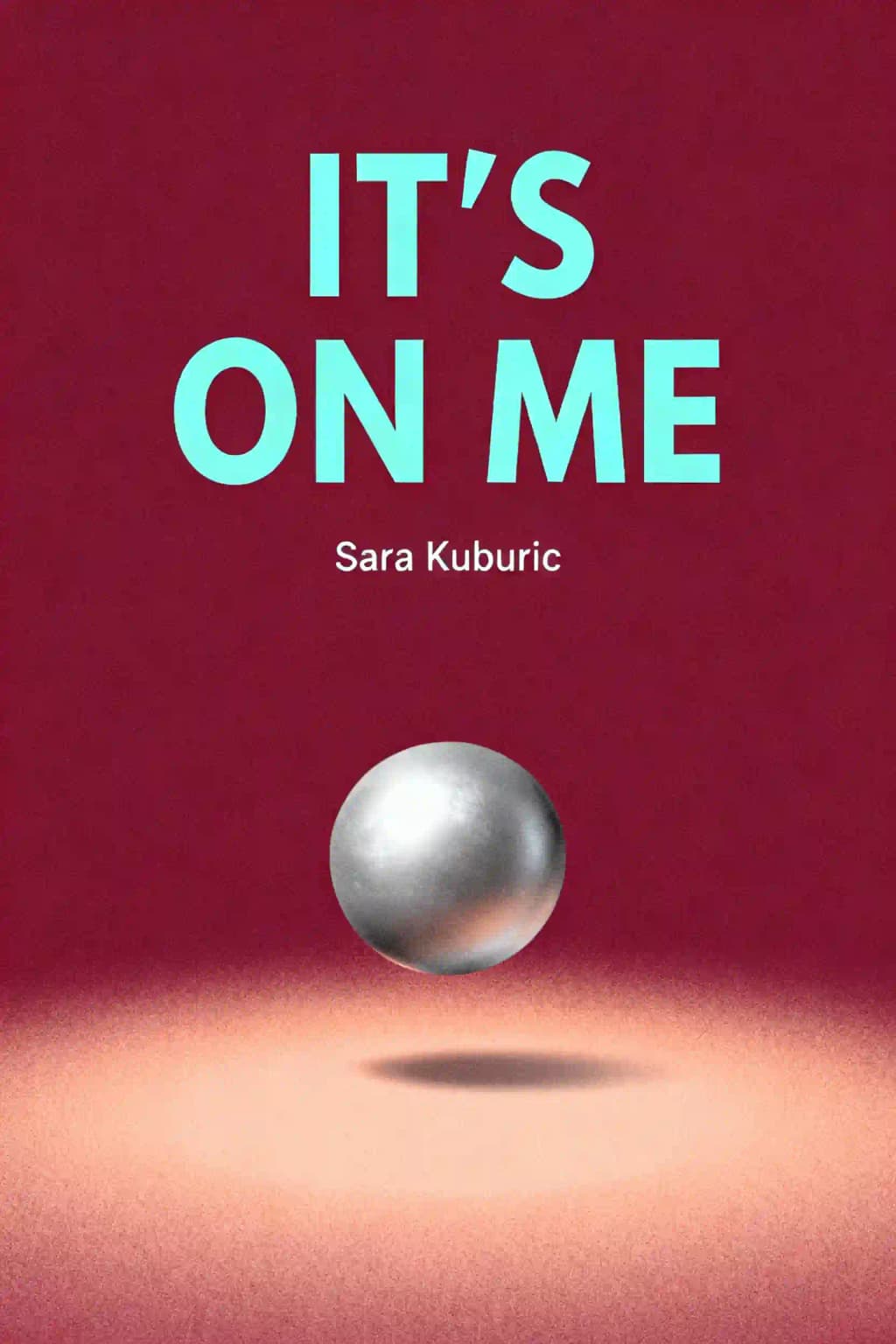
Have you ever caught yourself staring at a stranger in the mirror, wondering how you became so disconnected from your own life? This was Sara Kuburic's reality at twenty-four, when a simple question from a college friend-"Are you happy?"-shattered her carefully constructed facade. Despite surviving war and having privilege, she found herself drowning in an inauthentic existence: trapped in a loveless marriage, struggling through graduate school, and maintaining exhausting pretenses. Her journey from that breaking point to becoming a renowned existential psychotherapist forms the backbone of "It's On Me," a book that tackles the epidemic of self-loss plaguing our society. The book has resonated deeply with celebrities like Selena Gomez and Miley Cyrus, who have publicly praised its insights on authenticity. In an age where social media encourages performance over presence, Kuburic's work stands as a counterculture manifesto, inviting readers to embark on the most important journey of all-the one back to themselves.
Capítulo 2
The Mystery of Self-Loss: When You Become a Stranger to Yourself
Self-loss is a peculiar kind of suffering-it causes little stir in the world yet devastates us internally. It's the feeling of being estranged from and lacking congruence with who we truly are. Imagine sitting alone in a burning room, surrounded by flames creeping up the walls, yet continuing with mundane activities while ignoring the danger. This powerful visualization illustrates how we face existential danger through everyday choices that disconnect us from our authentic selves.
Consider Alex, who starts her day mindlessly scrolling social media, comparing herself to others, rushing to prepare herself for others' gazes, and neglecting her basic needs. Her day continues in disconnection-putting on a fake smile at work, barely tasting her food, exercising from self-hatred rather than self-care, and ending her day staring at screens until exhaustion. Alex has become comfortable living in this burning room, sinking deeper into self-loss with each passing day.
Self-loss manifests in five major areas: emotions (either suppressing them completely or being overwhelmed by them), the body (misunderstanding our physical needs and using our body as a tool rather than an extension of self), relationships (entering unhealthy dynamics because we can't discern what aligns with our true needs), and inner consent (our inability to say "yes" to our authentic thoughts, values, and purpose). When we lack inner consent, we can't stand behind the person in the mirror or feel at peace with our actions.
What makes self-loss particularly insidious is that no one intentionally loses their Self, but the intention becomes irrelevant in the face of consequences-like a house fire that still needs extinguishing whether it started accidentally or deliberately. The origin of our self-loss matters less than what we decide to do about it now.
Despite its commonality, self-loss shouldn't be normalized. Without our true Self, we merely endure life rather than living it. Pain serves as a crucial signal-like pulling your hand from a flame-alerting us something isn't right and motivating change. The healing journey often worsens before improving as awareness initially intensifies pain, but self-loss can become reorientation-a space for transformation and creating wholeness.
Remember: who you are in this moment-whether on a plane, sitting at your kitchen table, or on your bed-IS who you really are. If you don't like who that is, it's up to you to do something about it. And it's never too late to be you.
Capítulo 3
Understanding the Self: The Foundation of Authentic Living
It's impossible to discuss self-loss without understanding what the Self actually is. Who exactly are we looking for when we feel lost? The universal question "Who am I?" reflects our innate need for self-understanding, though we typically only dive deep when challenges push us into this inquiry.
While "self-discovery" is the promoted path when feeling lost, this concept has two distinct interpretations: either finding something that already exists (a predetermined Self we're "meant" to be) or actively creating who we are through being and doing. This philosophical divide dates back to Aristotle and Plato, who proposed essentialism-the idea that each person has inherent core properties necessary to be themselves. In contrast, existentialism suggests we first exist, then determine who we are through our choices.
As an existential psychotherapist, Kuburic views the Self through Sren Kierkegaard's lens: "the self is a relation that relates to itself." This means the Self manifests through expression-our understanding of who we are informs our actions, and our actions shape our self-perception. The Self cannot exist independently from its expression.
Like Julia Roberts' character in Runaway Bride who always adopted her partners' egg preferences, many of us lose ourselves by conforming to others. Her journey of cooking eggs every way to discover her own preference illustrates how we must exercise our freedom and responsibility to determine who we truly are.
Freedom comes with an inherent burden: responsibility. As Sartre put it, we are "condemned to be free"-there's no escape from making choices that define who we are. This constant decision-making is exhausting, which explains why we often seek relief by asking others to make choices for us.
We frequently surrender our freedom to institutions, families, or religions that tell us who we should be. Sartre called this "bad faith"-self-deception where we pretend to be something we're not. We also use past traumas to justify harmful behaviors, refusing to acknowledge our freedom to change. But while we can't change certain "givens" (our height, past experiences, ethnicity), we retain what Viktor Frankl called "the last of human freedoms"-choosing our attitude toward our circumstances.
The Self consists of three essential elements: freedom, choice, and responsibility. We create our sense of Self through our choices, how we approach responsibility, and how we use our freedom despite constraints. Authenticity means finding peace within ourselves-that deep, intuitive feeling of rightness in our being. It's when we can say "yes" to who we are in any given moment.
The Self isn't something to discover once but a continuous process of becoming. We are impossible to pin down completely, as our essence is always "ahead" of us. Yet the Self maintains consistency through our alignment with our beliefs and self-perception.
Capítulo 4
Finding Meaning: The Compass for Authentic Living
I begin with a story from my undergraduate moral philosophy class, where a professor posed a single-word exam question: "Why?" After twenty years of lengthy student responses, one student finally earned an A+ with a two-word answer: "Why not?" This exemplifies how meaning isn't about finding concrete answers but embracing possibility.
As Nietzsche said, "If you have your why for life, you can get by with almost any how." Determining why you want to live shapes how you live and who you are-meaning isn't just the cherry on top, it's the batter.
Our awareness of limited time both threatens our Self and gives life meaning. Meaningful actions emerge when we participate in life fully aware of its finiteness. When I ask friends how they would live if they had only three months left, they often describe a completely different existence than their current one-yet they resist living that meaningful life now, falsely believing they have endless time.
What if meaning comes from creating it through living rather than just finding it? This perspective suggests that meaning emerges through our actions and how we live, not just what we believe. While productivity and meaning are often conflated, they're not the same-you can be successful and busy without any sense of meaning. True meaning requires balance: if we focus only on productivity, the world becomes merely a tool for our desires; if we focus only on the world, we lose ourselves.
Frankl suggests that meaning is specific to each person and each moment-it's not about grand existential questions but about acknowledging meaning in everything we do right now. Small, meaningful decisions reveal who we are more than big philosophical questions. Meaning can be found in perfect moments like stargazing in the desert, where we feel simultaneously small yet important in the universe's tapestry.
During graduate school, I encountered a shocking therapeutic approach when reading about a therapist who asked a suicidal client: "Okay then, why don't you kill yourself?" This provocative question wasn't insensitive but profound-it was asking "Do you have something to live for?" As Dostoyevsky wrote, "the secret of men's being is not only to live but to have something to live for."
Facing existential questions is difficult. Many fear not just finding answers but asking the questions themselves. But existential angst isn't pathological-it's the tension that gives our existence shape. As Frankl explains, what humans need isn't a tensionless state but "the striving and struggling for a worthwhile goal."
Capítulo 5
The Roots of Self-Loss: Tracing the Origins of Disconnection
There are two types of people: those who had a sense of Self and lost it, and those who never understood or experienced their true Self. Regardless of which category we fall into, the discomfort feels the same once we're lost. The path forward requires facing our loss and tracing its origin: When, how, and why did it happen?
Self-loss always has a reason or trigger-no one intentionally relinquishes their Self. In clinical work, three common causes emerge: life-altering events, modeled behavior and family rules, and self-betrayal.
Certain events fundamentally change our relationship with our Self by creating barriers to understanding or embodying who we are. After such events, we typically experience one of three outcomes: we begin to self-identify with the pain/event; we struggle to reconcile our pre-event and post-event selves; or we develop mental health struggles that disconnect us from ourselves.
The impact of events varies greatly between individuals. For Kuburic, war triggered her initial self-loss, while marrying before she was ready deepened it. For others, it might be relocation, medical diagnosis, loss of a loved one, or having a child.
Our understanding of self is also shaped by the rules and modeled behaviors we grew up with. These rules shape how we understand ourselves, and when they clash with our authentic experience, we often seek our sense of self in external approval rather than internal alignment. Many of us unknowingly repeat behaviors modeled by parents who struggled with their own sense of self.
Self-betrayal occurs when we deny parts of ourselves-our needs, thoughts, and feelings-for the sake of another person, relationship, or external entity. It's shifting loyalty from ourselves to something external, not merely compromising on trivial matters but taking actions that compromise who we fundamentally are.
Existential analysis asks: "What gets lost when I do things that are not me?" The answer: "I get lost. I become a stranger to myself." This betrayal often manifests most prominently in romantic relationships, where we might change ourselves to please partners, deny relationship problems, silence our intuition, accept less than we deserve, or compromise our values.
To truly face our self-loss, we need three essential elements: self-awareness, honesty, and safety. Safety is particularly crucial-we must feel secure enough to bear the weight of truth. Without internal safety, we try controlling everything external to neutralize perceived threats.
Ultimately, we must become the protagonists of our own lives. Being the protagonist isn't about being self-centered but about self-awareness and self-attunement. Even when progress feels slow, the time spent rebuilding a relationship with our Self is never wasted.
Capítulo 6
Society's Role in Self-Loss: The Pressure to Conform
Sam, in her late thirties, appeared to be an "ideal" therapy client-punctual, enthusiastic, articulate, and diligent with homework. Yet beneath this perfect exterior, I sensed something performative. She would apologize for crying or swearing, worried about how she "should" behave.
As our therapeutic relationship developed, I realized Sam was following a life script centered around being a "good girl." Her adoptive parents had emphasized obedience and selflessness above all else. For Sam, this meant deriving value from being helpful to others, staying silent when boundaries were crossed, concealing wounds, always giving more than taking, and embodying what others needed her to be.
She learned contradictory expectations: be attractive but innocent, sexy but not sexual, achieve greatly but never mention it, be confident but not threatening, educated but restrained from speaking her mind. Even in her thirties-married with three children-Sam still lived by these rules. There is no expiration date for conformity; societal expectations persist throughout our lives, merely changing form to reflect different life stages.
To develop an authentic sense of Self within such structures, we must find clear mirrors-people willing to reflect us accurately and give us permission to be ourselves. We need to intentionally choose who impacts us, and be willing to both receive and offer three prerequisites for selfhood: attention, appreciation, and justice.
We all need to be truly seen. Genuine attention means being acknowledged and recognized for who we really are by people who know us-not merely being noticed. The difference parallels looking versus seeing; looking happens without registration, while seeing involves looking with intention and understanding.
Appreciation goes beyond mere acknowledgment-it's not just being noticed but being valued. Unfortunately, our society typically appreciates us for what we can do rather than who we are. We're valued for our usefulness instead of our humanity. This utilitarian appreciation puts us at risk of morphing into someone we're not as we begin identifying ourselves in comparison to others, for others, and as directed by others.
To fully embrace our humanity, we need to be seen, appreciated, and treated fairly. Justice means being in alignment with oneself, taking oneself seriously, and receiving fair treatment from both self and others. While we increasingly discuss societal injustice, we often overlook how unfairly we treat ourselves. We deny ourselves the kindness and forgiveness we readily offer others, put ourselves last, set impossible expectations, and refuse to allow ourselves the humanity we grant everyone else.
Living and creating our authentic Self is inherently rewarding and fulfilling. Yet such bravery-or perhaps audacity-often meets resistance, isolation, and grief. Every decision, even an authentic one, comes with a cost.
Capítulo 7
Boundaries: Where You End and Others Begin
From age nine when Kuburic immigrated to Canada, she grew up in the Pacific Northwest. When people learn this, they immediately make assumptions based on regional stereotypes-expecting her to be outdoorsy, health-conscious, dressed in activewear or natural fabrics, tending a garden, and either loving or scorning Starbucks.
These assumptions bothered her not just because they were wrong, but because people seemed disappointed when she showed up as herself. They acted as if she had inconvenienced them by having her own values and preferences, responding with frowns, eye rolls, or passive-aggressive comments.
In her late twenties, she decided to express her philosophy-reading, city-loving, croissant-eating, photograph-taking, tennis-playing, fashion-watching, nomadic Self. If people still didn't see her, she knew it was because they didn't want to. Surprisingly, showing her Self wasn't about having more heart-to-hearts or sharing painful experiences. It was about setting boundaries-a vital form of self-expression.
Boundaries are guidelines, not ultimatums, that enhance understanding and safety in relationships. They're a way to care for ourselves that must be clearly communicated and often come with consequences if violated. Boundaries span six main areas: physical, sexual, emotional, intellectual, material, and time.
Most teachings on boundaries miss something crucial: the relationship between boundaries and our sense of Self. We cannot separate them because healthy boundaries literally outline who we are. They don't just protect us-they define us, creating a silhouette of our humanity that helps others see and understand us.
Many people struggle with boundaries despite reading books and taking workshops because they don't truly know themselves. We can't outline something if we don't know where the edges are. Boundaries reveal our beliefs about ourselves, our work, relationships, family, faith, and body. People can lie, but boundaries seldom do.
Poor boundaries often indicate a weak sense of Self. The two biggest obstacles to setting boundaries are lack of self-understanding and lack of seriousness (often stemming from not respecting ourselves). For boundaries to be meaningful, we must feel aligned with them and they must be practical. Our Self is a work of art; our boundaries are the frame.
When someone violates our boundaries, we typically respond with resentment, disappointment, hurt, or anger. We might initially justify their behavior, blame ourselves, feel ashamed, or doubt our decisions. But when their actions impede our ability to be ourselves-when we feel unseen, unappreciated, or treated unfairly-we draw boundaries as protection.
These reflexive boundaries or coping reactions fall into four categories: distancing (withdrawing from threatening situations), overactivity (constantly doing visible activities to gain recognition), aggression (becoming intolerant or demanding as a plea for acknowledgment), and freezing (experiencing paralysis or loss of feelings when neglected).
Instead of these reflexive responses, we can set conscious boundaries by asking ourselves why we're setting them, what our goals are, whether they promote our well-being and healthy relationships, and if they resonate with who we are. Boundaries aren't rejection but a sketch we offer others to deepen their understanding of our Self.
Capítulo 8
Mental Decluttering: Creating Space for Authenticity
I began my journey to minimalism after a humiliating experience in Berlin, struggling with oversized luggage on cobblestones and train stairs while no one helped. This physical burden became my metaphor for life-I was carrying too much baggage. As I purged my external possessions to fit in one suitcase, I discovered I had more internal space. Mental decluttering meant eliminating anything that no longer served me-thoughts, beliefs, assumptions, roles, habits, fears, relationships, or possessions.
Minimalism isn't about restriction but freedom. Space gives us the power to choose our response between stimulus and reaction. Without space, we lose our autonomy and Self. When we feel spaceless, we stop offering space to others, becoming reactive rather than deliberate.
We struggle to let go because we assign meaning to possessions that doesn't belong there. This is particularly difficult for those who experienced scarcity-like Kuburic's family during wartime. Their grip on possessions wasn't about material value but avoiding the trauma of being without.
In college, she filled her dorm with unnecessary items because they represented safety during transition. That candle reminded her of home, that blanket of falling in love, that wooden boat of a rare vacation with her father. She needed proof of her experiences, souvenirs of versions of herself that no longer existed.
Now if asked what she'd save from a burning house, her answer is "nothing." Her house is her soul, not brick and mortar. Decluttering feels threatening because it's a form of deconstruction-unraveling what comprises who we are. But we must first deconstruct to choose how we want to construct our Self. The only way to create our Self is to make space for who we are.
To challenge and declutter the "shoulds" in your life, ask if expectations resonate with who you are, bring you closer to your desired future, promote well-being, respect your needs, are realistic, who you're doing them for, and who imposed them. If we focused as much on gaining our sense of Self as we do on our "shoulds," how differently would we structure our days?
In romantic relationships, Kuburic abandoned herself most completely-pretending to like hockey, dressing "sexy," being "chill" about partners' ambitions, feigning higher sex drive, enjoying their friends, accepting snide remarks about her work, tolerating their unresolved feelings for exes, and accepting control over her friendships. She pretended so long she believed her own lies, confused by her nightly frustration and tears.
We often embrace mistakes as our entire identity-becoming a "victim," "cheater," "dropout," or "divorcee" rather than recognizing these as just parts of our experience requiring healing or forgiveness. We get lost in labels, allowing our past to define rather than inform us.
Our wounds and faults are real-not to be denied but recognized as parts, not the whole, of who we are. Most mistakes occur because we don't know who we are, not because they reveal who we are. Letting go isn't pretending pain never happened; it's changing our relationship to pain through awareness and choice.
Capítulo 9
Reconnecting with Your Body: The Foundation of Self-Awareness
I've never met anyone who rejected their body yet maintained a close relationship with their Self. When we ignore our body, we ignore a crucial aspect of who we are. Building a healthy relationship with our body is challenging for countless reasons-unrealistic expectations from media and culture, being taught to ignore our bodies, never feeling at home in them, using them to earn acceptance, experiencing abuse, suffering chronic pain, or battling illness. These challenges often lead to disconnection from, preoccupation with, or fear of our bodies.
Most of us only give our bodies attention when they're in pain or not functioning as desired. We feel entitled to our body's cooperation and service, treating it as an object rather than building a relationship with it. This objectification stems from dualistic thinking that separates mind from body, creating a false hierarchy where the mind is "virtuous" and the body "sinful." But there is no hierarchy within the Self-it's about cohesion and alignment.
When Kuburic asked her Instagram followers when they feel most like themselves, the overwhelming theme in their responses was embodiment-activities like hiking, dancing, stretching, breathing, crying, and sex that engage the body. These moments of embodiment create authenticity.
Our sense of personal agency, cohesion, and continuity in time is based on embodiment. Remove the body, and you remove access to the Self. Life enters through our bodies; the body is power. As philosopher Maurice Merleau-Ponty wrote, "the body is our general medium for having a world" and "Inside and outside are inseparable." By experiencing our body, we experience and know our Self.
Existentially speaking, we don't just have a body-we are our body. A body is more than flesh and a beating heart. It's not merely a tool used by our spirit but represents a dynamic between subjective Self (mind) and objective Self (body) that mutually shape each other.
Many of us have been taught to disconnect from our bodies. We spend hours streaming or scrolling, releasing dopamine while becoming unaware of our physical presence. This "disappearing" happens when our body is reduced to a simple machine rather than the source of understanding our relationship with others and Self.
This disconnection can develop gradually through societal conditioning or suddenly through trauma. The challenge is we're often unaware of being unplugged from our physical form. When we don't consult our bodies, we ignore crucial experiences and struggle to recognize our needs.
Rebuilding our relationship with our bodies requires more than cognitive understanding-we need to experience and embody them. Monitor your self-talk, be curious about your body's signals, identify and fulfill your body's needs, move and interact with your body, scan your body for tension and relaxation, and practice dynamic breathing. You can't reject or ignore your body and still have a close relationship with your Self. Your body has a lot to say. Listen.
Capítulo 10
Embracing Your Emotions: The Pathway to Authentic Living
As a society, we're deeply uncomfortable with emotions-both our own and others'. Being "emotional" has become synonymous with being "unreasonable" or "out of control." We judge not only expressions of anger or sadness but also unbridled joy or excitement, thinking "That's a bit much" when someone has a happiness meltdown.
Most people struggle with emotions because they simply don't know what to do with them. Our society, families, and educational institutions have failed to teach us how to healthily interact with and express emotions. Instead, many of us learned harmful lessons-being told we're too dramatic, too sensitive, or instructed to stop crying before anyone bothered to understand why we were upset.
Children praised for being "mature" were often those suppressing their emotions or managing their caregivers' feelings. These same children grow into adults struggling to prioritize their own emotional needs. In clinical work, Kuburic observed that clients suffering from self-loss typically had caregivers with unhealthy relationships to emotions. Their feelings were ignored, suppressed, or punished, and they rarely witnessed healthy emotional expression.
Our emotions are directly tied to our values-the things we perceive as subjectively worthy or unworthy. Values are what we deeply care about and explain why we prefer one thing over another. When our emotions resonate with our values, we're directly participating with our Self. Strong emotions mark what's important to us, giving those things greater presence in our lives. In order to be our Self, we must feel.
Observing our emotions is the first step toward understanding them. Rather than evaluating emotions as "good" or "bad," we should see them as messengers of our inner world-our lived experience stemming from encountering the world around us. Instead of asking "Should I be feeling this way?" we should wonder what beliefs prevent us from embracing emotions, what they're trying to tell us about ourselves and our engagement with others.
When feeling overwhelmed by a strong emotion, try identifying other emotions that are also present. Though counterintuitive, recognizing multiple emotions can actually dilute the power of the consuming one while offering a more realistic representation of your experience.
Our feelings represent our subjective reality, not always facts. Feeling rejected doesn't necessarily mean someone is rejecting you. Feeling insecure doesn't mean you lack skills. Feeling sad doesn't mean there's objectively a loss. This doesn't invalidate feelings, but recognizes their limitations.
We often don't notice emotions until they overwhelm us, cleverly sidestepping or ignoring feelings until we can't anymore. Without observing our emotional patterns, we're unlikely to change them. To prevent being overwhelmed, regularly check in with yourself: What am I feeling? What emotions are present? What are they communicating? Are there contradictory emotions? What is my body telling me?
Emotions are never the problem; they simply are. How we respond to them can be problematic-crying during difficult conversations isn't an issue, but smashing someone's car window in anger certainly is. The context, timing, and outlet matter.
Turning toward means offering genuine attention that creates resonance-an openness to be moved internally. It requires surrender, allowing the "other" to affect us directly. This makes life palpable, creating deep connections and fulfillment. Let's stop fighting our emotions-they aren't ill-willed but the only way to be ourselves. Emotions move like tides regardless of permission. Instead of fighting the current, allow their power to carry you toward your Self.
Capítulo 11
The Art of Being Your Self: Living Authentically in Every Moment
As Claire sits in my therapy office, complaining endlessly without pause, she suddenly says, "I don't even know what I want or who I am." I sit up alert. "Let's start there," I say eagerly. Though Claire and I have discussed her avoidance of solitude-how she keeps a packed schedule to avoid facing her reality-she remains terrified of meeting herself.
To demonstrate how simple self-connection can be, I guide her through an exercise with a chair. After she settles comfortably, we breathe deeply together. I ask her to sense what she's sitting on, what it feels like, and then pose the question that makes her eyes fly open: "What is the chair trying to tell you?"
With closed eyes, Claire engages with increasingly profound questions about her relationship with the chair. Tears begin flowing. When she finally opens her eyes, she appears shocked but speaks calmly, thoughtfully. She realizes she never puts her full weight on any chair-just as she never allows anyone in her life to fully support her. She admits to rarely listening to others, instead making quick assumptions. Speaking back to the chair felt scary but empowering, as she'd never felt she could "talk back to life" before.
This exercise helped Claire develop a phenomenological attitude-moving from outward perception to internalized understanding. Phenomenology means gaining knowledge by simply looking at what appears and personally relating to what is perceived, approaching life with openness rather than preconceptions. It's our devotion to genuinely being-in-the-world.
Being our Self means seizing life's fleeting moments with mindful openness, allowing ourselves to be touched by everything the world shows us. The observer becomes part of the observed, helping us understand where we end and others begin. Everything we encounter becomes a gateway to understanding both our world and ourselves.
Recovering from self-loss feels like being home-grounded in profound alignment and rightness. Remember Alex from the beginning of the book? Now her days are full of intention. She checks in with herself each morning, dresses boldly, works purposefully, and addresses emotions as they arise. She pursues interests like reading and crochet, and when someone she's dating doesn't text, she simply calls them instead of anxiously waiting.
Being your Self means living each day on purpose. Observe, feel, and try life. Let everything inform you. Ask daily: What did I learn about my Self today? Trust yourself to make decisions that serve you. The discomfort and effort are worth it-nothing is more valuable than your sense of Self.
Imagine yourself in a cozy room with a vintage lamp and crackling fireplace. As you sip your warm drink, you notice an ember land on your rug. You immediately understand that unless you act, your whole existence is in danger. Nothing takes precedence-you get up and extinguish it. The next day, a faint mark remains, reminding you of that time you almost lost everything but didn't, because you were aware and deliberate. Allow your Self to exist in the here and now. Become. Be.