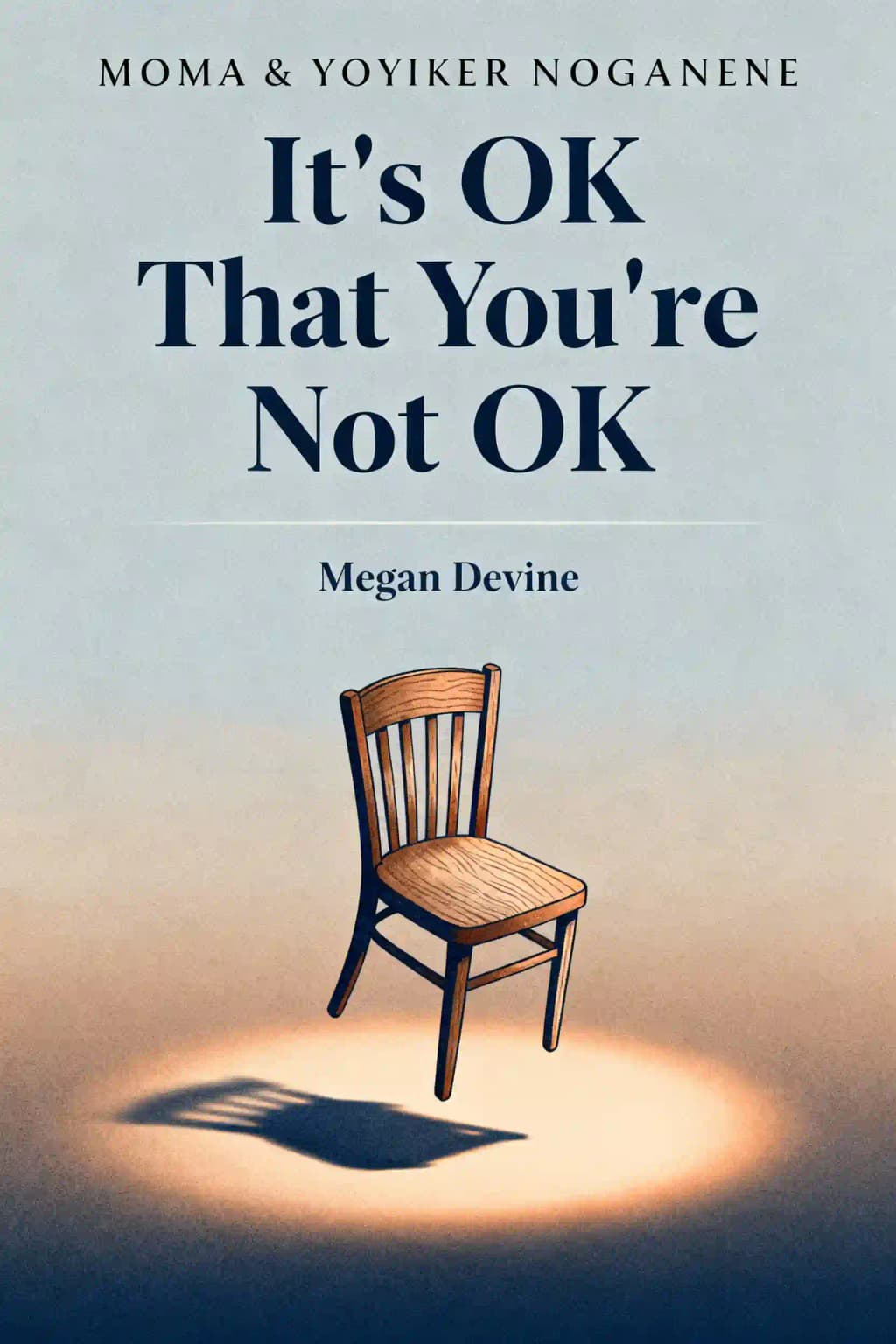
In "It's OK That You're Not OK," Megan Devine revolutionizes grief support by challenging our rush-to-heal culture. Drawing from personal tragedy, she offers what countless readers call "permission to grieve authentically." Why has this compassionate manifesto become essential reading for therapists and the heartbroken alike?
Siente el libro a través de la voz del autor
Convierte el conocimiento en ideas atractivas y llenas de ejemplos
Captura ideas clave en un instante para un aprendizaje rápido
Disfruta el libro de una manera divertida y atractiva
Your grief isn't a sign of weakness but evidence that love has been part of your life.
Desglosa las ideas clave de It's Ok That You're Not Ok en puntos fáciles de entender para comprender cómo los equipos innovadores crean, colaboran y crecen.
Destila It's Ok That You're Not Ok en pistas de memoria rápidas que resaltan los principios clave de franqueza, trabajo en equipo y resiliencia creativa.

Experimenta It's Ok That You're Not Ok a través de narraciones vívidas que convierten las lecciones de innovación en momentos que recordarás y aplicarás.
Pregunta lo que quieras, elige la voz y co-crea ideas que realmente resuenen contigo.

Creado por exalumnos de la Universidad de Columbia en San Francisco
"Instead of endless scrolling, I just hit play on BeFreed. It saves me so much time."
"I never knew where to start with nonfiction—BeFreed’s book lists turned into podcasts gave me a clear path."
"Perfect balance between learning and entertainment. Finished ‘Thinking, Fast and Slow’ on my commute this week."
"Crazy how much I learned while walking the dog. BeFreed = small habits → big gains."
"Reading used to feel like a chore. Now it’s just part of my lifestyle."
"Feels effortless compared to reading. I’ve finished 6 books this month already."
"BeFreed turned my guilty doomscrolling into something that feels productive and inspiring."
"BeFreed turned my commute into learning time. 20-min podcasts are perfect for finishing books I never had time for."
"BeFreed replaced my podcast queue. Imagine Spotify for books — that’s it. 🙌"
"It is great for me to learn something from the book without reading it."
"The themed book list podcasts help me connect ideas across authors—like a guided audio journey."
"Makes me feel smarter every time before going to work"
Creado por exalumnos de la Universidad de Columbia en San Francisco

Obtén el resumen de It's Ok That You're Not Ok como PDF o EPUB gratis. Imprímelo o léelo sin conexión en cualquier momento.
Grief is perhaps the most misunderstood human experience. We live in a society that expects grief to follow a tidy timeline, resolve quickly, and ultimately transform us into better, wiser people. But real grief doesn't work that way. It's messy, unpredictable, and refuses to follow any prescribed path. When profound loss enters our lives, we're often met with well-intentioned platitudes: "everything happens for a reason" or "they're in a better place now." These seemingly comforting phrases carry an unspoken message: "...so stop feeling so bad." This cultural discomfort with pain creates a terrible isolation. When we're grieving, we discover that many people simply don't know how to be present with our suffering. They offer advice, judge our process, or urge us to move on before we're ready. The problem isn't that grieving people are doing it wrong - it's that our culture hasn't equipped us with the skills to approach grief with compassion and patience. Even the medical establishment pathologizes normal grief responses, considering grief lasting longer than six months to be potentially disordered. In practice, the timeline is even shorter - many professionals consider being deeply affected after just a couple of weeks to be problematic. This medicalization of a normal, sane response to loss serves no one and adds unnecessary suffering to those already in pain.