Experience World War I through the eyes of the Desert Fox himself. Rommel's tactical masterpiece influenced General Patton and military academies worldwide. At Mount Matajur, he captured 9,150 prisoners with minimal casualties - could his revolutionary speed-over-force approach transform your strategic thinking?
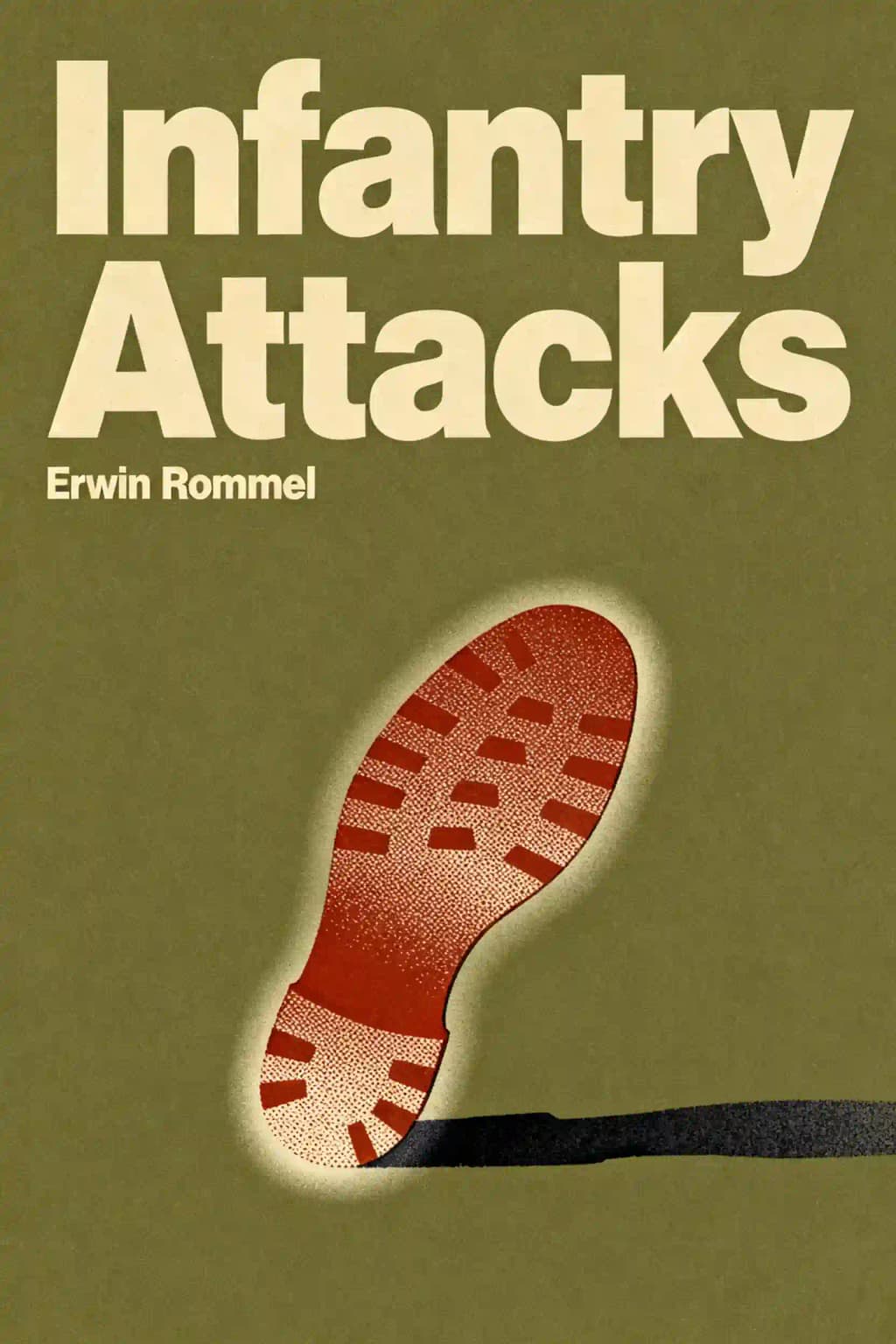
Johannes Erwin Eugen Rommel (1891–1944) was a German Generalfeldmarschall and the author of Infantry Attacks, a classic military tactics manual that established him as one of the most innovative strategists of the 20th century. Published in 1937, the book draws on his decorated service in World War I, where he earned Germany's highest military honor, the Pour le Mérite, for his daring leadership on the Italian Front.
Infantry Attacks synthesizes Rommel's firsthand combat experiences into practical lessons on mobile warfare, aggressive leadership, and tactical flexibility. The book became a bestseller and caught the attention of Adolf Hitler, who later appointed Rommel to command positions that would make him legendary.
Before achieving fame as a field commander, Rommel served as a military instructor at the Infantry School in Dresden and the War College in Potsdam, where his lectures formed the foundation of this influential work. His expertise in armored warfare and rapid maneuver tactics, particularly during the North African campaign where he earned the nickname "The Desert Fox," demonstrated the enduring relevance of the principles he outlined in his writing. The book remains required reading in military academies worldwide and has been translated into multiple languages.
Infantry Attacks is Erwin Rommel's classic military tactics book detailing his World War I combat experiences as a young officer. Written in the mid-1930s, the book chronicles Rommel's innovative Stoßtruppen (shock troops) tactics across six campaigns, from Belgium and France to the Italian front. It emphasizes speed, deception, deep penetration, and terrain exploitation to overwhelm enemy forces while minimizing casualties and resource expenditure.
Erwin Rommel was a German field marshal who gained fame as the "Desert Fox" during World War II's North African Campaign. He wrote Infantry Attacks in the mid-1930s as a lieutenant colonel to document his WWI tactical innovations and leadership principles. The book emerged from his experiences commanding mountain infantry and shock troops, where he earned Germany's highest military honor, the Pour le Mérite.
Infantry Attacks is essential reading for military officers, tactical leaders, and students of military history seeking timeless combat principles. Modern military professionals will find relevant insights on mission command, combined arms coordination, and small-unit leadership that remain applicable today. History enthusiasts and those interested in WWI tactics, leadership under pressure, and the development of modern warfare will also benefit from Rommel's detailed battlefield accounts.
Yes, Infantry Attacks remains remarkably relevant despite being nearly a century old. The book's principles on terrain analysis, logistics constraints, mission command, and adaptive leadership transcend their WWI context and apply directly to modern military operations. Readers consistently note that without dated nomenclature, many passages could describe contemporary warfare, making it a timeless military leadership text valued by professionals and historians alike.
Infantry Attacks introduces Stoßtruppen (shock troops) tactics emphasizing speed, deception, and surprise. Rommel's approach involved using small diversionary forces to simulate expected attacks while main assault elements infiltrated enemy flanks and rear positions. This combined surprise with psychological warfare, often intimidating enemies into surrendering without costly frontal assaults. The tactics prioritized careful terrain exploitation, reconnaissance, and flexible mission command over rigid adherence to original plans.
Rommel attributes his tactical successes to meticulous map analysis and reconnaissance to exploit even the smallest terrain irregularities. In Infantry Attacks, he demonstrates using draws, ditches, and berms to penetrate defenses at minimal cost, such as during the Mount Cosna capture. He also describes indirect terrain effects—delaying attacks when rocky ground would slow enemy entrenchment, or directing artillery onto cliffs to rain stone fragments on enemies below.
Infantry Attacks emphasizes front-line leadership and personal reconnaissance, with Rommel consistently sharing risks with his men to earn their loyalty. The book illustrates disciplined initiative and mission command, showing how junior leaders must understand complete operational plans to make safe deviations when circumstances change. Rommel demonstrates calculated disobedience when necessary—once ordering an immediate forward attack instead of a withdrawal that would have exposed his troops to devastating fire.
Infantry Attacks repeatedly illustrates how ammunition and artillery support constrained WWI operations. Rommel recounts numerous last-minute plan abandonments due to unavailable resources, forcing adjustments to less optimal approaches relying on sheer surprise and violence. The book emphasizes how psychological suppression from indirect fires was critical to infantry success, and how losing artillery priority or machine gun ammunition before counterattacks created contingencies that remain relevant in modern warfare.
Infantry Attacks is divided into six chronological chapters covering Rommel's WWI service. These include the 1914 movement war in Belgium and Northern France, 1915 Argonne forest battles, 1916 position warfare in the High Vosges and Romanian campaign, August 1917 fights in the Southeastern Carpathians, the 1917 Caporetto offensive (Tolmein attack), and the pursuit along the Tagliamento and Piave rivers.
Infantry Attacks provides insights that transcend its WWI context, addressing command post survivability, combined arms coordination challenges, and NCO leadership principles still relevant today. The book's descriptions of mission command execution across diverse environments—mountains, forests, trenches, and urban centers—offer timeless lessons on synchronized operations and disciplined initiative. Modern readers find the tactical decision-making frameworks and logistical considerations directly applicable to contemporary small-unit leadership and operational planning.
Rommel planned to write Panzer Greift An (Tank Attacks) about armored warfare tactics, gathering extensive material during the North African Campaign. However, he never completed this successor work due to his forced suicide in October 1944 following his perceived involvement in a failed assassination attempt against Adolf Hitler. This incomplete sequel would have documented Rommel's evolution of Blitzkrieg tactics and desert warfare innovations that earned him the "Desert Fox" nickname.
Infantry Attacks stands out for its first-person combat narrative and granular tactical detail rather than strategic theory. Unlike armchair analyses, Rommel writes from direct battlefield experience, providing specific examples of split-second decisions, terrain exploitation, and leadership under fire. The book's enduring value lies in its timeless principles presented through vivid storytelling, making complex tactical concepts accessible while maintaining professional military depth that continues educating officers nearly 90 years after publication.
Siente el libro a través de la voz del autor
Convierte el conocimiento en ideas atractivas y llenas de ejemplos
Captura ideas clave en un instante para un aprendizaje rápido
Disfruta el libro de una manera divertida y atractiva
"Is there anything finer," he would later write, "than marching against an enemy at the head of such soldiers?"
He showed no hesitation in personally leading small units into danger.
Modern combat, he realized, required increased dispersion.
"The 124th Regiment will die in its positions," their colonel had ordered.
Desglosa las ideas clave de Infantry attacks en puntos fáciles de entender para comprender cómo los equipos innovadores crean, colaboran y crecen.
Experimenta Infantry attacks a través de narraciones vívidas que convierten las lecciones de innovación en momentos que recordarás y aplicarás.
Pregunta cualquier cosa, elige tu estilo de aprendizaje y co-crea ideas que realmente resuenen contigo.

Creado por exalumnos de la Universidad de Columbia en San Francisco
"Instead of endless scrolling, I just hit play on BeFreed. It saves me so much time."
"I never knew where to start with nonfiction—BeFreed’s book lists turned into podcasts gave me a clear path."
"Perfect balance between learning and entertainment. Finished ‘Thinking, Fast and Slow’ on my commute this week."
"Crazy how much I learned while walking the dog. BeFreed = small habits → big gains."
"Reading used to feel like a chore. Now it’s just part of my lifestyle."
"Feels effortless compared to reading. I’ve finished 6 books this month already."
"BeFreed turned my guilty doomscrolling into something that feels productive and inspiring."
"BeFreed turned my commute into learning time. 20-min podcasts are perfect for finishing books I never had time for."
"BeFreed replaced my podcast queue. Imagine Spotify for books — that’s it. 🙌"
"It is great for me to learn something from the book without reading it."
"The themed book list podcasts help me connect ideas across authors—like a guided audio journey."
"Makes me feel smarter every time before going to work"
Creado por exalumnos de la Universidad de Columbia en San Francisco

Obtén el resumen de Infantry attacks como PDF o EPUB gratis. Imprímelo o léelo sin conexión en cualquier momento.
In the fog-shrouded dawn of August 22, 1914, a young German lieutenant led his platoon through the Belgian village of Bleid. As visibility improved, he spotted fifteen to twenty French soldiers casually drinking coffee in the road, completely unaware of his presence. Rather than fetching reinforcements, he made an instantaneous decision-with just three men at his side, he opened fire from twenty yards, killing several instantly while others scrambled for cover. In the ensuing close-quarters firefight, he exchanged shots with a Frenchman mere yards away, finally hitting his opponent after a tense exchange. This baptism of fire for Lieutenant Erwin Rommel revealed the qualities that would define his military career: aggressive initiative, personal courage, and tactical opportunism. The Belgian campaign taught him that modern combat required increased dispersion, immediate entrenchment, and thorough reconnaissance. When his regiment suffered 25% officer casualties that day, he observed firsthand how quickly the realities of war could shatter peacetime assumptions. What's striking about Rommel's early experiences is how quickly he adapted. While many officers clung to outdated doctrines, he immediately recognized the deadly mathematics of machine guns and artillery. A single shell could wipe out two entire squads caught bunched in the open-a lesson in dispersion and concealment that would influence his approach to deploying forces throughout his career.
By 1915, Rommel had developed a distinctive tactical approach emphasizing infiltration over frontal assault. During one operation, he moved his company through communication trenches, assembled just 100 yards ahead, then charged forward. They pursued fleeing French soldiers through three defensive lines without a single casualty. After establishing a foothold at "Central," they found themselves surrounded with ammunition running low. Ordered to withdraw without support, Rommel faced two poor options: retreat through a narrow passage under heavy fire with likely 50% casualties, or surrender after depleting ammunition. Instead, Rommel chose a third option: attack. Though outnumbered, he knew French infantry consistently broke under assault. His reserve platoon drove right, recaptured a blockhouse, and pushed forward. As the enemy broke, they withdrew through wire entanglements with minimal casualties. This exemplifies Rommel's signature style - when caught between bad options, he changed the dynamics by finding a third way. This refusal to accept problems as given became his hallmark in both trench warfare and later desert campaigns.
The harsh Romanian mountains severely tested Rommel's leadership. In October 1916, his battalion occupied Hill 1794 during heavy rain that became a cloudburst at nightfall. Soaked and unable to light fires with wet pine, they bivouacked at 4,950 feet, enduring a freezing night. When a blizzard hit the next day, sector command threatened court-martial if they withdrew, ignoring Captain Gossler's pleas. By morning, forty men needed evacuation for frostbite. Only after 90% required medical treatment were they finally relieved. This brutal introduction to mountain warfare taught Rommel the importance of proper equipment and realistic operational planning - lessons he later applied to desert warfare logistics. The experience deepened his commitment to his men's welfare, strengthening trust bonds that enhanced his units' effectiveness. How often do today's leaders push forward despite clear warning signs? Rommel learned that respecting environmental conditions wasn't weakness but essential to preserving fighting strength for battles that mattered.
In summer 1917, Rommel fought for Mount Cosna on the Romanian front. Despite an arm wound, he personally positioned machine guns before the assault. During the attack, he was wounded again yet maintained command, captured the hill and organized its defense. The next day, despite injuries, he led six companies against Mount Cosna itself. Moving through dense forest, they slipped between enemy sentries undetected. With communication lines cut, Rommel ordered a precise attack sequence: silent approach, thirty seconds of machine-gun fire, then silent breakthrough. When faced with fierce resistance and enemy counterattacks with artillery support, Rommel deployed his last reserves in a surprise flanking maneuver, forcing the Romanians to abandon their position. Most remarkable was Rommel's mental clarity under extreme stress - his ability to make rational decisions while wounded and under fire demonstrated the exceptional discipline that distinguished him from ordinary officers.
October 1917 saw Rommel's battalion join the offensive against Italian positions along the Isonzo River. His column advanced stealthily through rain, seizing positions from the rear as defenders surrendered. Rather than waiting for counterattacks, Rommel prepared his own offensive, coordinating artillery and positioning machine guns before launching assaults. He led four companies down a camouflaged ridge toward Ravna with extraordinary speed, capturing bewildered Italians who had no time to resist. The next day, despite heavy fire, he outmaneuvered the Italians by leading teams behind their position, catching them by surprise. An entire regiment-37 officers and 1,000 men-surrendered. Without pausing, Rommel continued toward Mount Matajur with just a hundred riflemen and six machine-gun crews. When they encountered another regiment, he attacked from an unexpected direction, prompting 1,200 more men to surrender. In just fifty-two hours, his small detachment had defeated five Italian regiments, capturing 150 officers, 9,000 men, and 81 guns. This exemplifies effective leadership: maintaining momentum when others would pause, recognizing opportunities others miss, and pursuing bold solutions with limited resources.
After their breakthrough, Rommel's battalion pursued retreating Italian forces across northern Italy on horseback and bicycles. They faced the formidable Vajont ravine - a two-mile gorge with 400-600 foot vertical walls and a bridge 500 feet above a mountain stream. When they found the enemy had destroyed a bridge spanning a lateral gulch, they climbed across the chasm and raced to the main Vajont bridge. There, their cyclists engaged an Italian demolition crew. At another rigged bridge, Rommel had Sergeant Bruckner cut wires while others removed fuses, preserving this crucial crossing. After several skirmishes and withstanding a major Italian counterattack with artillery, they reached Longarone where an entire Italian division - over 10,000 men - surrendered. They captured 200 machine guns, 18 mountain cannon, and hundreds of vehicles and pack animals, while suffering only 6 dead and 21 wounded. This pursuit showed how Rommel's relentless pressure prevented retreating forces from establishing effective defenses, despite being significantly outnumbered.
Rommel's experiences revealed that well-led soldiers achieve extraordinary results when pushed beyond normal endurance, with enemy forces often collapsing from psychological rather than physical defeat. Infantry Attacks' core lesson concerns mindset, not tactics. Rommel consistently rejected conventional limitations-improving "impossible" positions, attacking when ordered to retreat, and creating impressions of strength through boldness when outnumbered. This problem-solving approach extends beyond military applications. In business, relationships, or personal challenges, we typically accept problem parameters as fixed. Rommel challenges us to seek unexpected angles, maintain momentum when others hesitate, and recognize psychological factors often outweigh material ones. This explains the book's broad influence. It's not merely a tactical manual-it's a testament to human ingenuity under pressure, demonstrating that leadership means taking responsibility rather than making excuses, and proving initiative and courage can overcome seemingly impossible odds.