Capítulo 1
Reimagining Global Governance for a Neo-Medieval World
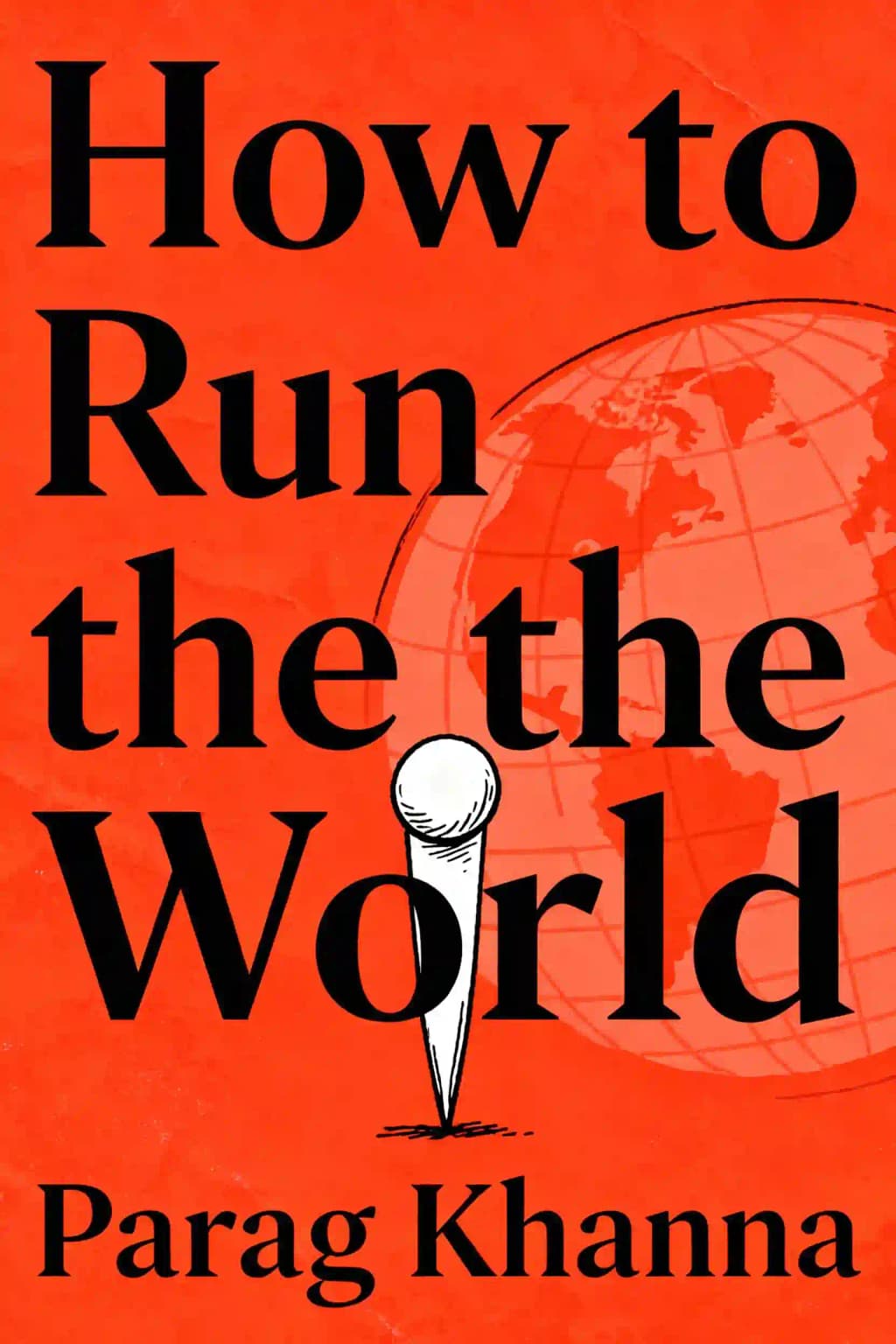
When Andry Rajoelina seized power in Madagascar in 2009 at just 34 years old, his first act was canceling his predecessor's deal with South Korean corporation Daewoo to lease vast tracts of farmland. This "underage coup d'etat" perfectly symbolizes our current global reality-a world where traditional diplomacy fails, where Generation Y impatiently challenges the old order, and where corporate interests clash with sovereign decisions. In Parag Khanna's provocative analysis "How to Run the World," this moment exemplifies our return to a neo-medieval landscape of competing powers and authorities.
The book has become required reading in diplomatic academies and corporate boardrooms alike, praised by luminaries from Zbigniew Brzezinski to Richard Branson. What makes Khanna's vision so compelling is his rejection of both nostalgic nationalism and utopian globalism in favor of a pragmatic approach to our fractured reality. As climate change accelerates, terrorism evolves, and poverty persists despite technological advances, Khanna offers a roadmap for navigating what he calls "the turbulent teens" of the 21st century through a new form of "mega-diplomacy."
Capítulo 2
The New Middle Ages: Power Beyond Borders
Today's world bears striking resemblance to medieval times-not in technology or living standards, but in how power operates. The neat Westphalian system of sovereign nation-states has given way to something more complex and fluid. Cities, not nations, form the building blocks of global activity. Dubai partners with Hamburg, Abu Dhabi with Singapore, Shanghai with London-no one waits for Washington's permission anymore. These city-states function as autonomous economic powerhouses, creating their own trade networks and diplomatic channels.
We must distinguish between states and governments, with the latter becoming mere filters between domestic priorities and international demands. Few citizens still expect governments to deliver basic services, which increasingly come from civic groups, religious charities, and corporations. In countries like Lebanon, private generators supply electricity; in India, private schools educate millions; and in African nations, mobile companies provide banking services. Power boundaries blur in Medici-like fashion: Gazprom oligarchs control the Kremlin, billionaires like Trump become heads of state, and mega-philanthropists like Gates and Branson govern borderless empires of influence spanning health, education, and climate change.
Corporations deploy their own diplomatic corps, with half of the world's hundred largest economic entities being companies. Walmart's annual revenue exceeds Sweden's GDP, while Apple's market capitalization surpasses the combined GDP of several European nations. Their global presence often constitutes a country's diplomatic presence - McDonald's in Russia served as an unofficial American embassy during Cold War tensions. Technology and finance have severed the relationship between borders and identity. Diasporas wield growing political and economic power, with over a hundred countries offering external voting rights. The Indian diaspora influences Silicon Valley's tech sector while Chinese overseas communities shape Pacific Rim economics.
Religious loyalties strengthen as Islam spreads rapidly across Europe and Africa, while Christianity reroots in Africa, Latin America, and China, where underground churches flourish despite state control. We live again in an age of superstition, fearing pandemics like COVID-19, terrorism's random violence, and natural disasters intensified by climate change. Economic chaos, social unrest, and religious hysteria lurk beneath our veneer of sophistication, as evidenced by QAnon conspiracies and vaccine resistance movements.
NGOs and corporations constitute a new colonialism, with super-NGOs running hospitals, schools, and refugee camps across continents. Organizations like Medecins Sans Frontieres operate in war zones where governments fear to tread. They're not just gap-fillers but agenda-setters, with Oxfam directing UK policy and the Gates Foundation outweighing the WHO in global health initiatives. The Red Cross manages refugee camps housing millions, while CARE International shapes development policies across Africa. This neo-medieval world may eventually resolve into a Renaissance rather than world war, but establishing a new architecture could take decades. The transition period witnesses hybrid forms of governance, where traditional state power coexists with corporate influence, religious authority, and technological sovereignty.
Capítulo 3
Mega-Diplomacy: The New Rules of the Game
Running the world requires mega-diplomacy-the key that unlocks resources from governments, corporations, and NGOs to solve local problems. Unlike traditional diplomacy conducted in smoky back rooms between state representatives, mega-diplomacy creates unity across communities to manage our collective space. Action-oriented networks have become the cornerstone of twenty-first-century diplomacy, replacing rigid state-to-state protocols with flexible, multi-stakeholder engagement.
Mega-diplomacy operates on three fundamental principles: inclusiveness (multi-stakeholder involvement from grassroots to global levels), decentralization (spreading capabilities and decision-making authority close to where problems exist), and mutual accountability (building communities of trust through transparent actions and shared responsibilities). The Internet serves as the premier example of successful public-private collaboration-governed by ICANN, a small nonprofit sustained by corporate funding and distributed networks, rather than unwieldy bureaucracies. This model has proven more effective than traditional top-down governance structures.
We must cast aside rigid ideologies and embrace diversity, trial and error, and bottom-up solutions. Modern legitimacy derives from the "diplomacy of the deed"-proving effectiveness through concrete actions rather than formal authority. While specialized UN agencies like the World Food Programme (WFP), UN Refugee Agency (UNHCR), and UNICEF continue to save lives in regions overlooked by great powers, many traditional international bodies face obsolescence unless they fundamentally reform their operations and governance structures.
Accountability in the mega-diplomatic world comes from the strategic use of shame and public pressure, which has historically ended practices from slavery to exploitative child labor. While traditional media provides crucial transparency, its bandwidth remains limited. Social media and digital platforms have emerged as powerful tools for exposing wrongdoing and mobilizing public opinion. The guiding principle of "Govern globally, act locally" recognizes that global issues-from climate change to human trafficking-are fundamentally rooted in local injustices requiring locally-tailored solutions.
Generation Y, having grown up in an interconnected world, intuitively understands this new reality. People under thirty-comprising most of the world's population-have never known a pre-globalization world, with 9/11 serving as their defining geopolitical moment. Their worldview is shaped more by technology and digital connections than by geographic boundaries. Their ability to rapidly mobilize through smartphones and social media platforms has become a powerful force that concerns authoritarian regimes. Unlike previous generations who typically remained in one sector, they move fluidly between public service, private enterprise, and nonprofit work throughout their careers. They view diplomacy as a distributed network of influence and action rather than a traditional hierarchical structure, making them natural practitioners of mega-diplomacy's collaborative approach.
Capítulo 4
The New Diplomats: Beyond Government Channels
If you think you're far removed from diplomacy's back rooms, think again. Globalization has empowered ambitious entrepreneurs, academics, activists, and celebrities to deploy their own strategies on the world stage. These visible avatars of mega-diplomacy change how issues make it onto the global agenda and how policies are formulated and implemented.
George Soros operates as a pole of power in his own right-a "stateless statesman" who sets his global strategy independently. Through his Open Society Institute and Soros Foundation, he's given away nearly $10 billion, funding anti-apartheid students, establishing the Central European University, supporting the Rose and Orange Revolutions, and sending backpacking medics to Myanmar.
Celebrity diplomats possess diplomatic prestige and emotional appeal that transcends bureaucracy. Hollywood raised as much money for Haiti as any government, while Madonna put Malawi on the map. Bono practices shuttle diplomacy between capitals while shaming corporate executives about AIDS funding, while Bob Geldof simply screamed "Give us the fucking money!" at Live Aid.
Super-NGOs like Oxfam deploy their resources strategically-supplying radios to UN peacekeepers, buying pharmaceutical shares to influence vaccine policy, and publishing climate policy reports. Their legitimacy stems from expertise, impartiality, representativeness and transparency.
The World Economic Forum has revolutionized diplomatic gatherings through sophisticated "flash mobs" of experts. Unlike traditional diplomatic gatherings, WEF summits foster immediate collaboration among complementary organizations. It allows participants to maintain multiple identities-Bill Gates appears both as Microsoft CEO and foundation head, George Soros as both fund manager and democracy activist.
Each September, the Clinton Global Initiative runs parallel to the UN General Assembly in New York, creating a diplomatic duel over global governance approaches. While UN attendees struggle to recall their annual theme, "Clintonpalooza" delivers clear results under mottos like "Actions speak louder than words." The Clinton model connects the world's top billion with the bottom billion through practical initiatives-not through socialist redistribution but by expanding corporate focus toward wide-scale opportunities.
Capítulo 5
Redrawing the Map: Making Borders Irrelevant
Border disputes remain humanity's greatest threat to peace. As Freud and Einstein debated in their correspondence on "Why War?", communities naturally struggle for identity and territory, fueling global militarization even in nations that can barely afford it. This "cartographic stress" manifests in conflicts from Indonesia-Malaysia island disputes to India-China mountain standoffs.
The arbitrary postcolonial borders we've inherited rarely fit the peoples they contain. Sometimes creating more clearly defined states is the path to transcending borders altogether-as Wilson envisioned after WWI. The European Union demonstrates this paradox: nations merged economically only after separating politically.
Africa bears the most artificial straight-line borders from the 1884 Berlin Conference, which divided the continent along latitude and longitude rather than natural or ethnic boundaries. These colonial scars have led to fifteen of the world's twenty worst failed states being African.
Sudan, Africa's largest country, exemplifies this problem as a forced biracial crucible suffering three simultaneous civil wars: the "slow-motion genocide" in Darfur that killed 300,000 between 2003-2005, the north-south conflict over oil fields, and eastern rebel resistance to central control. Similarly, the Democratic Republic of Congo represents an obsolete colonial legacy with sixty-seven million people across two hundred ethnic groups sharing little national identity.
The Arab world has suffered particular cartographic trauma since the 1916 Sykes-Picot agreement divided Arabic-speaking nations between British and French control. These artificial borders disrupted the unity once enjoyed under mighty caliphates that fostered prosperous relations among great cities.
The solution lies in both clearer border demarcation and cross-border infrastructure projects like the Trans-Asian Railway Network-drawing lines that ultimately make borders irrelevant. Africa's greatest hope lies in physical connectivity across its internal borders. The continent needs economic lifelines through shared governance and infrastructure development. Every sub-Saharan border could become a trans-boundary conservation park with the motto "make safari, not war."
Capítulo 6
The New Colonialism: Better Than the Last
The postcolonial world is fragmenting into a neo-medieval labyrinth as globalization fills the void with 21st-century colonialism-strong states, international agencies, NGOs, and companies that prevent failing states from complete collapse while also preventing true sovereignty. Building global stability requires getting this new colonialism right, creating hybrid states rather than forcing antiquated models.
While post-WWII reconstruction of Japan and Germany provides a tempting template for modern state-building, today's challenges are fundamentally different-we're building states where none truly existed. European colonialism created the international system we take for granted, forcing modernization and creating administrative structures worldwide. But beneath the veneer of sovereign equality after decolonization, true statehood never materialized in many places.
Today, around fifty countries from Congo to Afghanistan are states in name only, their governments' power rarely extending beyond capitals. They're experiencing "postcolonial entropy"-decaying infrastructure, corrupt civil services, and fraying national identities.
The new colonialism differs fundamentally from the old. Rather than perpetuating dependency, it aims for "responsible sovereignty." It's not intentionally exploitative or condescending, but often unintentionally so. At its best, it lends global resources to make local politics progressive.
Afghanistan exemplifies the challenges of rebuilding failed states amid competing agendas. The counterinsurgency effort finally recognized that "the local is everything," supporting Afghan community forces and traditional governance structures like jirgas and shuras that handle 90% of legal claims. The National Solidarity Program has shown success by disbursing grants directly to 28,000 villages with transparent processes.
Afghanistan needs competent provincial security and administration rather than a bloated Kabul government-central government without centralized government. Infrastructure development is crucial, but locals must build it themselves: "If you sweat for it, you'll protect it." The country represents a new normal of hybrid public-private governance with Western consultants and Chinese businessmen pursuing separate agendas amid chaotic politics.
Capítulo 7
By Any Means Necessary: Finding Economic Success
Poor countries often have abundant people and natural resources but manage neither well. The challenge lies not just in having resources, but in deploying them strategically. To succeed, nations must find their niche in the global marketplace. The essential ingredient is doing one thing well-like China becoming the world's factory floor, India its back office, Russia its gas station, and Brazil its farm. Vietnam, for instance, has emerged as a manufacturing powerhouse by focusing on electronics and textiles, while Morocco has positioned itself as Africa's automotive manufacturing hub.
These "BRICs" didn't follow Western prescriptions but started with one strength and expanded. China began with low-cost manufacturing before moving up the value chain to electronics and artificial intelligence. India leveraged its English-speaking workforce to dominate IT services before expanding into pharmaceuticals and space technology. Now corporate labels capture investors' imagination more than World Bank endorsements, with countries like Malaysia explicitly branding themselves as "Malaysia Incorporated" to emphasize their business credentials. Singapore similarly transformed itself from a fishing village to a global financial center through strategic planning and specialization.
The Persian Gulf statelets exemplify this public-private cooperation, with Dubai's airport handling 40 million passengers annually and Qatar becoming a hub for Western universities while building the world's largest natural gas liquefaction terminals. Abu Dhabi has diversified into renewable energy through Masdar City, while Bahrain positions itself as a financial technology hub. Most developing countries should aim to be the "next best thing"-not the next Dubai but perhaps the next Tunisia or Mongolia, focusing on achievable goals aligned with their resources and capabilities.
Work keeps us from "boredom, vice, and need," as Voltaire's Turk wisely observed. The developing world desperately needs jobs, with the World Bank estimating 90% of economic growth comes from small and medium enterprises in labor-intensive sectors. Countries like Bangladesh have successfully created millions of jobs in garment manufacturing, while Rwanda has positioned itself as a technology hub for East Africa. Despite popular misconceptions, poor countries have benefited substantially from free trade and open investment. The problem isn't unfair trade but insufficient trade-just 8% of global commerce involves the bottom 130+ nations.
China has become Africa's top investor alongside the US and EU, doubling both aid and trade to $100 billion annually. Its Belt and Road Initiative has funded crucial infrastructure projects across the continent, from railways in Kenya to ports in Djibouti. Unlike Western institutions, China imposes no environmental or human rights restrictions, making deals more efficient. While 85% of Africa's exports to China come from just five resource-rich countries, China claims it's helping nations find their niche: Zambia as its "metals hub," Mauritius its "trade hub," and Tanzania its "shipping hub." Ethiopia has emerged as a manufacturing center, while Kenya has become a technology and financial services leader for East Africa.
Capítulo 8
The Case Against Poverty: Pragmatic Solutions
We live in paradoxical times where unprecedented wealth coexists with extreme poverty. Despite development efforts, nearly two billion people live below the $1.25-a-day poverty line, with population growth, financial crises, and political instability ensuring this reality will persist for decades.
Rather than focusing on abstract concepts like global inequality, we should address specific needs: food, water, healthcare, shelter, and education. The disparity between rich and poor will always exist-the assets of the world's top three billionaires exceed those of the poorest 600 million people-but we need not have such vast poverty. The solution isn't making the rich poorer but extending opportunity to the poor.
Traditional aid programs have become ossified bureaucracies with stale strategies. The proliferation of aid agencies (now numbering 230 worldwide) creates administrative nightmares in recipient countries, with Uganda managing over 1,050 aid programs in just three years. Instead of following development fads, agencies should focus on doing one thing well and measure success by concrete outcomes: factories started, jobs created, doctors trained.
Dozens of "orphan states" exist where aid makes the difference between life and death. Countries like Burkina Faso, Central African Republic, Gambia, Tuvalu, East Timor, Haiti, and Sierra Leone receive little attention from investors but depend on international support for at least half their annual budgets. Most citizens in these nations earn less than $500 per year.
Migration represents the most visible face of globalization, with 3% of the world's population living as migrants. These migrants send home remittances exceeding $500 billion annually-five times more than all rich world foreign aid budgets combined. India is the world's top recipient of remittances (3% of GDP). In Kerala state, almost every family is connected to someone in the Persian Gulf.
The remittance market has sparked competition among financial institutions. Western Union transformed from a telegraph operator into a $5 billion company tracking migration patterns and advertising in dozens of languages. In Kenya, Safaricom has pioneered mobile banking, making remittances virtually free compared to the $700 cost of opening a bank account in many African countries.
Capítulo 9
Your Planet, Your Choice: Environmental Mega-Diplomacy
Al Gore's 1992 book warning about global warming was titled Earth in the Balance. If there were a sequel two decades later, it would have to be called Earth Out of Balance. Most people recognize climate change is happening, but few believe they can affect it. This is our fundamental problem.
Environmental catastrophes loom in our near future: Indonesian rainforests dwindling to a few million hectares, the Nile reduced to silt sludge, and OPEC pushing a pedal with no oil gushers responding. The only question is when-ten, twenty, or thirty years-but these scenarios are inevitable given current trends.
The environment infiltrates all aspects of human activity. Geopolitically, controlling natural resources-oil, gas, timber, uranium, gold-has become the new "Great Game" with both democratic India and authoritarian China hunting resources globally. Global warming could even create an independent Greenland rich with minerals beneath melting glaciers, plus access to Arctic oil and gas reserves that Russia, Canada and America are already competing for.
Environmental responsibility resonates personally in ways other issues don't, particularly with younger generations. From seventh-graders competing to reduce carbon footprints on CarbonRally.com to Paul McCartney's "Meat Free Monday" campaign and Hong Kong's "re-sack-le" recycled rice sacks, sustainable transitions require "thousands of heroes at every level of human society."
We cannot negotiate with nature. Solving environmental problems depends less on diplomatic targets and more on scaling practical behavioral changes. The planet doesn't care about 2015 or 2020 targets if energy consumption doubles by 2030. What matters are initiatives addressing the main emissions sources: electricity generation, heating, transportation, resource extraction, and deforestation.
Environmental protection often requires bold individual action when authorities fail. Ted Turner buys vast wilderness tracts in Montana and Argentina as private reserves. Anthony White offered Blackwater millions to protect whales from Japanese harpoons. NGOs like Survival International physically block logging companies from destroying indigenous Amazon territories.
The sustainability movement has evolved through four waves: from the 1960s green movement that prompted government regulations, through the 1980s citizen activism following industrial disasters, to the 1990s focus on international regulations like the Kyoto Protocol. We've now entered the fourth wave-a truly global effort blending NGO activism, corporate innovation, and emerging economies' participation.
Capítulo 10
Toward the Next Renaissance: Building a Better World
More than two centuries after Kant claimed history follows "a hidden plan of nature" toward perfect political constitution, we face not enlightenment but the "turbulent teens"-a decade marked by profound confusion between tradition and modernity. Traditional diplomacy and grand global schemes consistently fail to address our fundamental need for local control and self-determination. This disconnect has become particularly evident in areas like climate change policy, international trade agreements, and refugee management, where top-down solutions often ignore local realities.
For the first time in history, the historically disenfranchised have unprecedented access to transformative tools: information through smartphones and social media, communication platforms that transcend borders, digital banking and cryptocurrencies, and revolutionary organizing tools that enable them to demand real change. From Latin American labor unions organizing across digital platforms to Arab youth leveraging social media for political mobilization, from Asian tribal groups using blockchain for land rights to African farmers accessing global markets directly - a bottom-up awakening systematically challenges out-of-touch governments and international organizations.
Jean Monnet's vision for European unity offers a compelling model for 21st century diplomacy, rather than attempting to recreate an idealized world of strong sovereign nations that never truly existed. As the first genuine multistate diplomat, Monnet understood that rebuilding Europe on traditional national sovereignty would inevitably lead to disaster. Instead, he architected pan-European institutions where diplomats work alongside transnational networks of industries, regulators, unions, and civil society groups. The European Union, despite its challenges, demonstrates how shared governance can work across traditional boundaries.
The contemporary world exists in a unique state - neither the orderly Westphalian system of sovereign states nor a unified global government, but rather a neo-medieval landscape where authority increasingly derives from capability rather than sovereignty. Cities often have more practical influence than nations, corporations frequently possess more resources than governments, and NGOs sometimes command more moral authority than traditional institutions. In this complex environment, mega-diplomacy emerges as our best hope for addressing global challenges through flexible coalitions of governments, businesses, civil society organizations, and technological platforms.
As Khanna emphasizes, the fundamental question isn't about who should lead global change - we are all collectively part of the dam preventing the flood of chaos and conflict. We constitute the new global architecture through our interconnected actions and choices. The world isn't run by any single entity, government, or organization but by all of us, working across borders, sectors, and traditional boundaries to build a more sustainable and just global order. Success in this new era belongs to those who understand this networked reality and learn to navigate its complexities through the art of mega-diplomacy, combining traditional diplomatic skills with technological literacy, cultural intelligence, and the ability to build coalitions across diverse stakeholder groups.