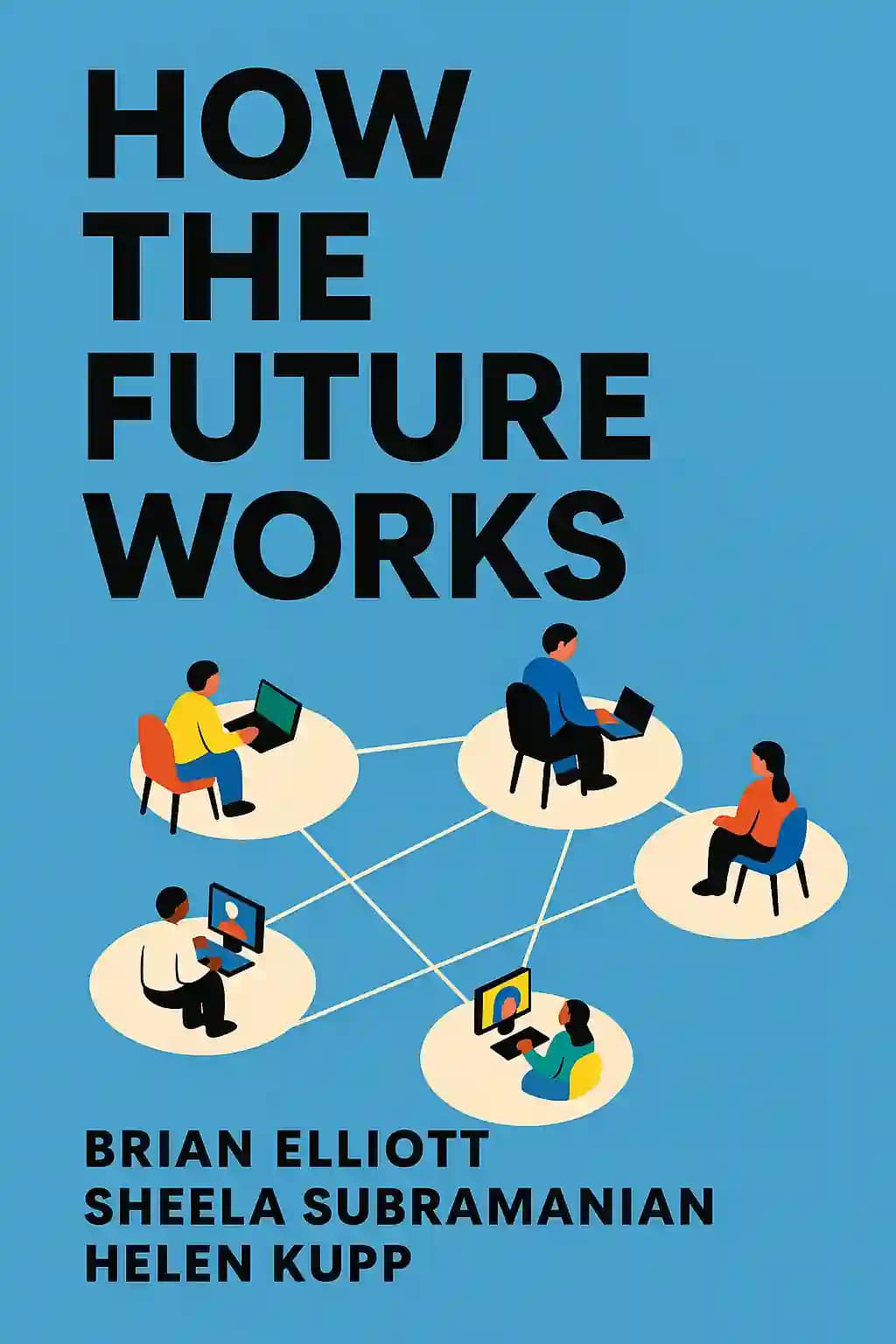
In "How the Future Works," Slack executives reveal the blueprint for flexible work backed by Fortune 500 success stories. As 77% of employees now demand flexibility, this guide shows leaders how to build trust-centered teams that outperform traditional models - without sacrificing connection.
Siente el libro a través de la voz del autor
Convierte el conocimiento en ideas atractivas y llenas de ejemplos
Captura ideas clave en un instante para un aprendizaje rápido
Disfruta el libro de una manera divertida y atractiva
Something remarkable happened when the world shut down in 2020. Executives braced for productivity collapse. Instead, work continued-and often improved. This wasn't just survival mode; it was a revelation that decades of workplace assumptions might be fundamentally wrong. Companies like IBM, Dropbox, and Levi Strauss discovered what many employees had suspected all along: the traditional office wasn't the productivity engine we believed it to be. This forced experiment exposed a truth business leaders had resisted for years-flexibility isn't a perk, it's a performance accelerator. Yet as offices reopened, a curious tension emerged. Despite overwhelming evidence, many organizations rushed back to old patterns, clinging to industrial-era work models designed for assembly lines, not creative thinking. Picture Henry Ford's factory floor in 1926. Workers arrive at 9 a.m., punch time cards, and leave eight hours later. Nearly a century later, knowledge workers-people whose jobs involve thinking, not manufacturing-follow essentially the same schedule. This makes no sense. Our current work model traces back through layers of history: Benjamin Franklin's "time is money" philosophy, agricultural rhythms dictated by daylight, and factory schedules optimized for machines. Ford standardized the eight-hour day after observing that exhausted workers made costly mistakes. The 1938 Fair Labor Standards Act codified these practices into law. But here's the thing-these systems were designed for physical labor in specific locations at specific times. Knowledge work operates under completely different rules. You can't schedule creativity for 2 p.m. on Tuesday, yet we pretend you can.
Desglosa las ideas clave de How the Future Works en puntos fáciles de entender para comprender cómo los equipos innovadores crean, colaboran y crecen.
Destila How the Future Works en pistas de memoria rápidas que resaltan los principios clave de franqueza, trabajo en equipo y resiliencia creativa.

Experimenta How the Future Works a través de narraciones vívidas que convierten las lecciones de innovación en momentos que recordarás y aplicarás.
Pregunta lo que quieras, elige la voz y co-crea ideas que realmente resuenen contigo.

Creado por exalumnos de la Universidad de Columbia en San Francisco
"Instead of endless scrolling, I just hit play on BeFreed. It saves me so much time."
"I never knew where to start with nonfiction—BeFreed’s book lists turned into podcasts gave me a clear path."
"Perfect balance between learning and entertainment. Finished ‘Thinking, Fast and Slow’ on my commute this week."
"Crazy how much I learned while walking the dog. BeFreed = small habits → big gains."
"Reading used to feel like a chore. Now it’s just part of my lifestyle."
"Feels effortless compared to reading. I’ve finished 6 books this month already."
"BeFreed turned my guilty doomscrolling into something that feels productive and inspiring."
"BeFreed turned my commute into learning time. 20-min podcasts are perfect for finishing books I never had time for."
"BeFreed replaced my podcast queue. Imagine Spotify for books — that’s it. 🙌"
"It is great for me to learn something from the book without reading it."
"The themed book list podcasts help me connect ideas across authors—like a guided audio journey."
"Makes me feel smarter every time before going to work"
Creado por exalumnos de la Universidad de Columbia en San Francisco

Obtén el resumen de How the Future Works como PDF o EPUB gratis. Imprímelo o léelo sin conexión en cualquier momento.