Capítulo 1
From Google to Samosas: A Culinary Revolution Begins
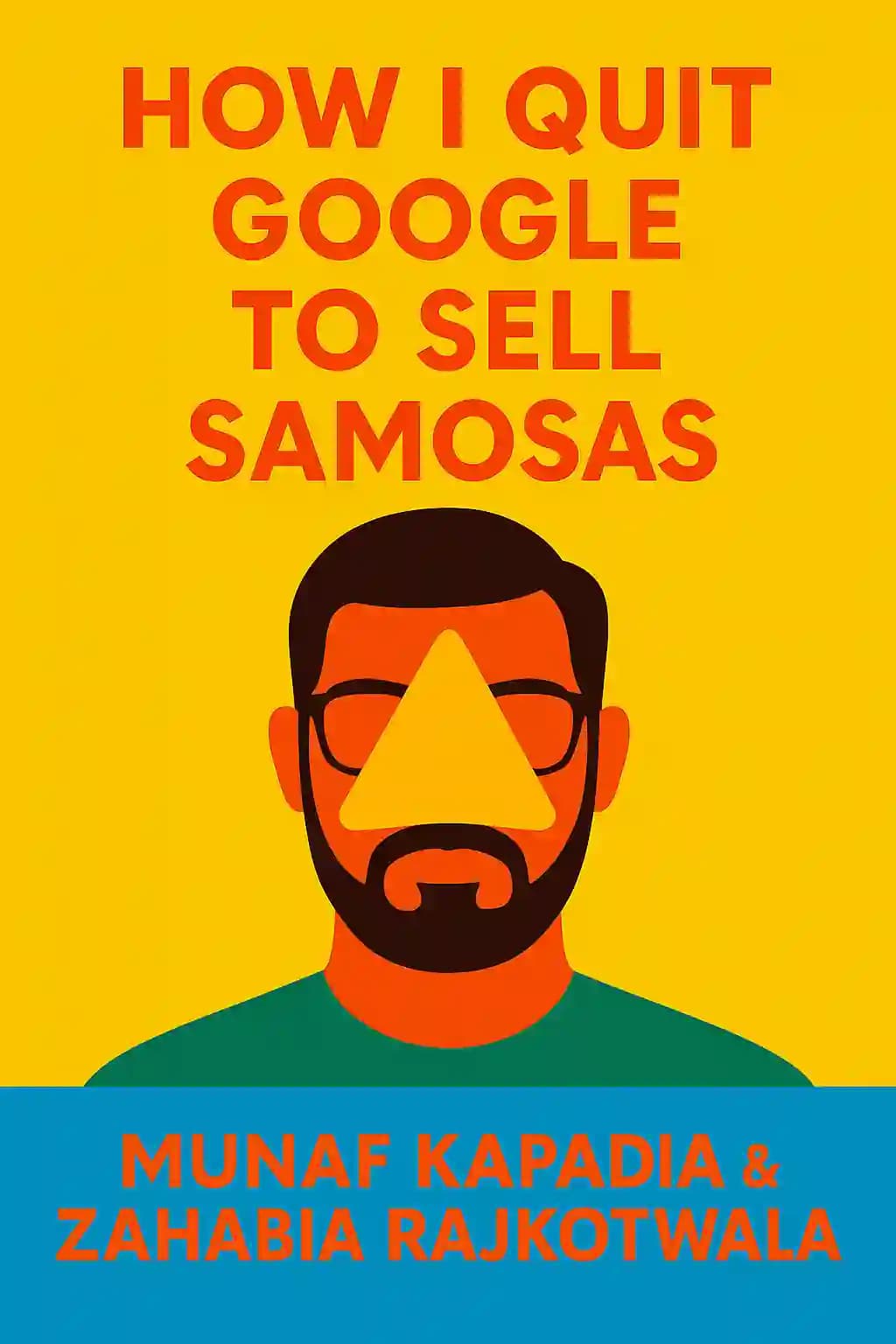
When Munaf Kapadia walked into a conference room with his Google super boss Vikas Agnihotri in June 2015, he expected to be reprimanded for running a weekend food business. Instead, Vikas wanted to discuss his plans for The Bohri Kitchen (TBK), the home dining experience Munaf had been operating with his mother for eight months. This unexpected conversation would change the trajectory of his life. What began as a small weekend project showcasing his mother's exceptional Dawoodi Bohra cuisine had already gained significant traction in Mumbai's food scene. The venture would eventually be featured on international airlines, attract Bollywood celebrities like Rishi Kapoor and Farah Khan to their home, and land Munaf on Forbes India's 30 Under 30 list. His journey from Google executive to "the samosa guy" would inspire countless aspiring entrepreneurs and even become the subject of a book that food critic Rashmi Uday Singh would call "a riveting personal story and blueprint for entrepreneurs." Munaf's bold decision to trade corporate security for culinary entrepreneurship resonated deeply in a culture where stable employment is highly prized, making his story both revolutionary and relatable to a generation seeking meaning beyond conventional career paths.
Capítulo 2
The Unexpected Entrepreneur's Journey
Munaf's path to entrepreneurship was anything but straightforward. After graduating from NMIMS business school in 2011, he followed the traditional MBA route, joining Wrigley India as a management trainee. His three-month stint in rural Mysore proved transformative, tasked with selling chewing gum to local retailers in the sweltering heat. This experience taught him a crucial lesson that would shape his future decisions-he needed to genuinely believe in a product to sell it effectively. Despite the comfortable salary package and promising career trajectory at Wrigley, an underlying restlessness began to surface. When Google India reached out with an opportunity at their Hyderabad office, the allure of working for a Silicon Valley tech giant proved irresistible, even though it meant taking a substantial forty percent pay cut.
The entrepreneurial seed was planted early by Munaf's father, Turab Kapadia, whose own story was a testament to perseverance and innovation. Starting with nothing more than a handcart in the bustling streets of Mumbai, Turab had methodically built a successful plastics business through sheer determination and business acumen. His journey from street vendor to business owner, navigating countless setbacks and challenges, would later provide Munaf with both inspiration and practical wisdom. This living example of determined self-reliance would eventually give Munaf the courage to pursue his own entrepreneurial dreams.
The Bohri Kitchen's origin story began almost serendipitously in December 2014. What started as a casual idea to invite friends over to experience his mother's exceptional cooking turned into a proper dining experience, with Munaf charging 700 rupees per person. The first event's menu was carefully curated to showcase family favorites, including the aromatic Kaju Chicken served with freshly made hot parathas and what would become TBK's signature dish - Mom's Smoked Mutton Kheema Samosas, prepared using a closely guarded family recipe passed down through generations.
After hosting two successful events that garnered enthusiastic feedback and repeat requests, Munaf finally revealed the venture to his father. The conversation was delicate - his father initially struggled with the concept of turning their home into a restaurant and transforming "guests into customers," viewing it as potentially diminishing their traditional hospitality. However, when Munaf reframed the venture as an opportunity to showcase their rich Bohri community's culinary heritage and traditions, his father's perspective began to shift. The turning point came during a conversation with Vikas Agnihotri, a senior Google executive, who provided clarity by presenting two clear scenarios: Munaf could either fail within a year and return to corporate life, or succeed and embark on an entirely different life journey. This binary framework helped crystallize the decision. Quitting Google wasn't an impulsive move but rather a calculated risk-one that Munaf knew he had to take, guided by his growing conviction that "the things we don't do haunt us more than the things we do."
Capítulo 3
The Cultural Feast: Experiencing Dawoodi Bohra Cuisine
The heart of TBK's appeal lay in its authentic cultural immersion. Dawoodi Bohras, a subsect of the Ismaili branch of Shia Islam, developed a distinctive cuisine that blended their Middle Eastern roots with Indian ingredients after their religious leadership transferred from Yemen to Gujarat in 1567. The centerpiece of Bohra dining is the thaal-a large steel platter three feet in diameter placed on a kundli, around which seven or eight guests sit cross-legged, often shoulder-to-shoulder with strangers, creating an intimate dining experience.
At TBK Home Dining Experience, guests were welcomed with a signature Nariyal Paani Cooler and received name tags to break the ice. The meal followed Bohra tradition: beginning with salt from the neemak daani, followed by alternating kharaas (savory) and meethas (sweet) courses. The menu featured their famous Smoked Mutton Kheema Samosas, Nariyal Kebab, Malai Khaja, Legendary Raan in Red Masala, and either Kaari Chawal or Bohra Dum Biryani, finishing with hand-churned Sancha Ice Cream and Gundi Paan.
Throughout the meal, Munaf explained each course and the cultural traditions behind them. This educational component was crucial-guests left not just with full stomachs but with knowledge about Bohra culture and traditions. This authentic cultural immersion became TBK's unique selling proposition. As Munaf's MBA and Google experience had taught him, the world's best brands are built on authenticity and uniqueness.
The experience also transformed Munaf's understanding of his own cultural identity. While growing up Bohra meant many things, food remained central to community connection. As TBK gained popularity, he found himself fielding countless questions from guests about Bohra culture, traditions, and practices. He felt responsible to represent his community authentically, especially since for many guests, he was the only Bohra they'd ever meet. After hosting nearly four thousand diners-roughly 90% non-Muslim-Munaf became convinced that food serves as a powerful cultural ambassador, helping people forge connections with communities they might otherwise never engage with.
Capítulo 4
Building a Brand: From Home Kitchen to Cultural Phenomenon
Before hosting the first TBK event, Munaf had already meticulously crafted a distinctive brand identity. He chose a font called Pseudo Saudi that perfectly conveyed their Islamic roots while creating a unique visual personality - balancing his narcissistic tendencies with his parents' warmth. This duality became central to the brand's appeal. Despite operating from their modest home kitchen, he approached every detail with professional precision, from carefully designed invites to elegantly printed menus and sophisticated communication channels, positioning TBK as a premium dining experience from day one. They initially charged 700 per seat, a bold move for a home-based operation, but gradually increased to 1,500 as demand surged. Rather than viewing their home setting as a limitation, Munaf brilliantly transformed it into an exclusive asset, creating an aura of scarcity by strictly limiting bookings and treating each dinner as a curated experience.
By early 2015, TBK's reputation had grown significantly, leading to collaborations with luxury brands on high-end dining experiences priced between 3,500-6,000 per seat. These partnerships, including events with premium automobile manufacturers and fashion houses, established TBK as Mumbai's most sought-after culinary experience. The brand's success was built on Munaf's concept of "three-dimensional branding" - where the exceptional food formed the first dimension, their striking visual identity the second, and the emotional connection with guests the third. Their social media strategy was equally innovative, creating organic buzz through clever initiatives like offering their signature khajur chutney in exchange for Facebook check-ins, cultivating an exclusive "Samosa Beta" WhatsApp community for early access to bookings, and maximizing visibility through speaking engagements at food festivals and cultural events.
TBK's media presence exploded organically, accumulating approximately 6 crore worth of coverage without ever engaging a PR agency. This remarkable achievement stemmed from two key factors: the inherent appeal of introducing relatively unknown Bohra cuisine to a wider audience, and Munaf's strategic brand positioning through authentic relationship building with food critics, journalists, and influencers. He maintained unwavering focus on three core elements: crafting a compelling narrative, consistently sharing their story across platforms, and evolving the brand narrative to stay relevant while maintaining its authenticity.
The true genius of their success lay in creating a multidimensional story that transcended mere culinary excellence. It wasn't just about introducing Bohra cuisine to new audiences; it was about the relatable human drama of a mother-son relationship, their playful fights over the TV remote, and Munaf's mission to help his mother discover her purpose beyond traditional household roles. This authentic narrative struck a chord with both customers and media, creating deep emotional connections that transformed TBK from a dining experience into a cultural phenomenon. The brand became a testament to how personal stories, when told authentically, can create lasting business success.
Capítulo 5
Scaling Challenges: From Home Dining to Cloud Kitchens
Despite TBK's branding success, scaling the business proved challenging. After their successful debut at The Bombay Local event in May 2015, Munaf became obsessed with growing beyond home dining experiences. They participated in pop-ups, including their first out-of-city event in Chennai, while exploring restaurant possibilities and retail options for their signature samosas.
In December 2015, Munaf took a massive gamble at a Pune music festival-attempting to outsource production without his mother's direct involvement. Despite having his mother write down exact recipes and assembling a team of kitchen helpers, everything went wrong. The kitchen was four hours from the venue, their food stall was poorly positioned, and most critically, the food quality suffered without his mother's touch. His formulaic approach to cooking failed miserably, tripling his respect for his mother's technique.
Looking for more sustainable growth, Munaf developed a plan to expand TBK into food delivery. While a restaurant seemed the natural progression, two factors held them back: intensive capital requirements and lack of commercial hospitality experience. After consulting with home chefs and restaurant operators who highlighted the risks of opening a restaurant in Mumbai, he decided delivery was more promising from both investment and branding perspectives.
He optimized their menu for delivery by focusing on both mainstream items like samosas and biryani while maintaining labor-intensive specialties as pre-order options. To preserve the thaal experience, he created a "Thaal-in-a-Box" meal featuring one appetizer, one main course (typically biryani), and dessert, complete with instructions on proper eating etiquette. However, scaling operations with his mother as head chef proved unsustainable as it took a physical toll on her.
Their first cloud kitchen in Worli's BDD chawl faced numerous challenges-inconsistent food quality, technical problems with kitchen equipment, unreliable internet, and devastating customer reviews that threatened their hard-earned reputation. After several failed attempts with different chefs and even outsourcing their biryani production, Munaf finally found a suitable head chef who could properly execute his mother's recipes.
Capítulo 6
The Emotional Toll of Entrepreneurship
By December 2016, Munaf was financially broken. The stark reality of going from a six-figure Google salary to having no stable income hit him hard. The transition was particularly jarring - from the structured environment of a tech giant with regular paychecks to the unpredictable world of entrepreneurship where income was never guaranteed. His first "crying fit"-an unexpected emotional breakdown-occurred late one night while working on financial projections, marking just the beginning of recurring anxiety attacks that would plague him for years. Despite reassuring his parents it was a one-time incident, these episodes persisted, manifesting in increasingly concerning physical symptoms including severe skin disorders, chronic digestive issues, persistent body pain, and noticeable premature graying at just 27 years old.
Munaf had become completely identified with his business, channeling everything that happened with TBK into his sense of self-worth. Every negative review felt like a personal attack, every cancelled booking like a rejection of his worth. Though he felt alone in his struggles, believing other entrepreneurs handled stress better, the reality was quite different. After months of suffering in silence, he finally sought therapy and learned his "crying fits" were actually severe panic attacks - a common but rarely discussed challenge among entrepreneurs. Just when he was ready to shut down TBK, having drafted a closure announcement multiple times, he received news that he'd made Forbes India's 30 Under 30 list-recognition that validated his work despite the business struggles.
Making the cover of Forbes India alongside other notable entrepreneurs and celebrities was a surreal experience that brought its own kind of stress. Despite maintaining a calm exterior during the professional photoshoot, he was wrestling with intense anxiety and excitement, having never been professionally photographed or profiled in a business magazine. The day the list was published became a family celebration, with his father proudly buying thirty copies to distribute among relatives and friends. Messages flooded in from former colleagues, school friends, and even distant acquaintances who had once questioned his decision to leave Google.
But the pressure to live up to this recognition quickly set in, adding another layer of stress to his already fragile mental state. Munaf felt an overwhelming need to prove he deserved the accolade by making substantial commercial gains through TBK. The validation came with expectations - both internal and external - to scale the business rapidly. Chef Ranveer Brar, who had been supportive since featuring them on his show "The Great Indian Rasoi" in 2014, provided crucial insight during a chance meeting: "The Bohri Kitchen is like a bicycle. Your PR and marketing pedal is spinning out of control, while your operations and production pedal is stuck." This analogy perfectly captured his dilemma-he'd created huge demand for Bohra cuisine through excellent marketing but had limited infrastructure and resources to fulfill it, creating a constant state of tension between expectations and reality.
Capítulo 7
Star Power: When Bollywood Came to Dinner
In early 2015, when reporters asked about his vision for The Bohri Kitchen, Munaf would consistently respond with "I want Shah Rukh Khan to come home" rather than giving typical MBA answers about revenue targets, restaurant chains, or expansion plans. This seemingly whimsical response actually reflected his authentic approach to building a brand through genuine connections and memorable experiences. Their first major Bollywood encounter arrived unexpectedly in March 2017 when Aditya Chopra, one of India's most successful film producers, called about catering his wife Rani Mukerji's birthday celebration. Initially hesitant since they hadn't attempted "Travelling Thaal" catering before, Munaf almost declined until the caller clarified that "Adi" was indeed the legendary filmmaker behind Yash Raj Films.
The experience of meeting the Chopras at their Juhu residence completely transformed Munaf's preconceptions about film industry personalities. Rather than encountering the stereotypical Bollywood attitude, they were welcomed by an incredibly down-to-earth family who treated them with genuine warmth and respect. Despite Munaf's initial nervousness, his mother took charge of the production with her characteristic calm efficiency. They served two elaborate thaals - a vegetarian spread featuring their signature dal chawal palida and a non-vegetarian feast showcasing their famous raan in berry pulao. Adi's mother, Pam aunty, became such an enthusiastic advocate of their food that she would regularly order their signature dishes, particularly the smoked mutton samosas.
This successful event triggered a chain reaction within Bollywood circles. Veteran filmmaker Rahul Rawail soon booked them for a family gathering, and positive word-of-mouth began spreading through the industry's close-knit community. In a bold move characteristic of his entrepreneurial spirit, Munaf approached director Farah Khan at a restaurant, introducing himself and TBK. This led to her requesting their home dining experience, which became one of their most memorable events. Farah's quick wit and easy rapport with Munaf's father, particularly their animated discussions about old Hindi films, created an atmosphere that perfectly embodied TBK's vision of food bringing people together.
Their Bollywood connections expanded significantly when acclaimed director Sanjay Leela Bhansali visited. Munaf, a huge admirer of films like "Black" and "Devdas," anticipated a serious, intense evening given Bhansali's reputation for perfectionism. Instead, they discovered a jovial guest who delighted in every course and shared entertaining industry stories, further reinforcing their belief in home dining's unique ability to break down barriers. They also experienced unexpected celebrity encounters, like when actress Aditi Rao Hydari dined incognito wearing sunglasses throughout the meal, only to later surprise them by tagging TBK in an Instagram post visible to her four million followers. Soon, celebrities like Deepika Padukone and Huma Qureshi became regular delivery customers, often ordering their signature biryani and dabba gosht.
These celebrity associations brought particular joy to Munaf's mother, who finally received widespread recognition for culinary skills that their family had long taken for granted. Without the benefit of PR agencies or pre-existing industry connections, TBK's authentic approach to food and hospitality naturally attracted Bollywood's elite, encouraging them to explore opportunities for larger brand collaborations while staying true to their core values of intimate, high-quality dining experiences.
Capítulo 8
Funding Dreams: The Capital Chase
When Munaf first discussed raising funds with his father, he asked what investors would get in return. Munaf explained "equity," to which his father asked about the interest rate, not understanding that equity is actually the most expensive form of capital-granting investors permanent decision-making influence in exchange for cash.
In 2017, Munaf began exploring fundraising options without clear objectives. He contacted Apoorv Ranjan Sharma at Venture Catalyst (V Cats), who had previously shown interest in TBK. He also reached out to former Googler-turned-investment banker Mihir Mehta, who offered advice despite his payment being only Mom's Smoked Tur Dal Samosas. Mihir helped him navigate fundamental questions: Did he want to give equity? Raise debt? What was his valuation? How much money did he need and for what purpose?
To demonstrate TBK's brand value to investors, Munaf worked with PR expert Aakanksha Gupta to calculate how much another business would need to spend to achieve their media coverage. The result was an impressive 6 crore in equivalent PR value-a figure that became central to his investor pitch.
For his presentation at V Cats' investor meetup, Munaf brought his mother's fresh samosas to make a memorable impression. Despite most investors being vegetarian while his presentation featured meat dishes, he confidently told their story, introducing himself as "the guy who quit Google to sell samosas" and sharing their mission "to make Bohra food exciting for non-Bohras."
The fundraising process was enlightening but stressful, forcing Munaf to confront difficult questions about his long-term commitment. When the bids came in, they were oversubscribed, allowing him to select strategic investors including renowned chef Rahul Akerkar and legal titan Bahram Vakil. On July 13, 2017, he successfully raised 1 crore at a pre-money valuation of 9 crore, assembling an impressive cap table including Anirudh Damani, Abhishek Agarwal, Riyaaz Amlani, and others who brought both capital and strategic value to TBK.
Capítulo 9
Full Circle: Finding Purpose Beyond Profit
By August 2019, TBK operated five delivery kitchens across Mumbai, averaging 200 orders daily-a dramatic improvement from their 20-25 orders in 2016. Their monthly revenue grew from 6 lakh in 2017 to 35 lakh by August 2019, supported by a team that had grown to over forty employees.
At their first town hall that June, seeing his entire team gathered in one place reminded Munaf of Google Mumbai's Christmas parties. While TBK still didn't pay him enough and delivering Biryanis didn't solve global warming, he felt immense pride in creating employment for so many people. With his parents as chief guests, that moment meant everything to him.
But by late 2019, Munaf needed Series A funding or both he and his wife Zahabia would need jobs. When a promising HNI investor who appreciated their brand's authenticity entered the picture, his enthusiasm revived. Unlike other investors, this person valued their less-scalable aspects-the dining experience, catering, and pre-orders-but didn't believe in their on-demand delivery model. Despite multiple presentations and great conversations, he ultimately backed out.
Now desperate for funds to sustain operations rather than scale, Munaf approached existing investors for a modest 1 crore. Two largest investors offered 25 lakh on condition that others contribute the remaining 75 lakh, but none agreed. Facing financial reality in December 2019, he stopped chasing valuations and outside money, consolidating the business by closing new outlets, letting go of their central office and 70% of staff. With just fifteen employees including his right-hand man Kadir and his wife Zahabia, they refocused on building a self-sustaining business emphasizing large pre-orders, catering, and their signature Home Dining Experience.
When COVID-19 hit in March 2020, Munaf suspended TBK's operations hoping for a brief lockdown, but a year later they were just beginning recovery. The temporary suspension became permanent as they couldn't maintain kitchen rentals or bring back staff. Surprisingly, he wasn't devastated despite five years of dedication. He'd learned not to fear failure, knowing he'd given TBK everything possible.
In January 2020, Munaf took Zahabia to Google's Mumbai office, where they met a senior colleague planning his own entrepreneurial journey-inspired by Munaf's! Later, catching up with his ex-boss Vikas Agnihotri who was leaving Google for Softbank, Munaf realized something profound: TBK isn't his identity. While its story connects to his, the brand has become its own entity. The legacy he sought by chasing scale and funding was already created, though not yet financially rewarding.
The greatest irony of TBK's story is that while the world believes it was born from a son's desire to help his mother realize her dreams, it actually became about his mother helping him realize his-yet again. What began as a weekend project to showcase his mother's cooking had evolved into a journey of self-discovery, cultural celebration, and entrepreneurial growth. Though the pandemic may have paused operations, the impact of The Bohri Kitchen-on Munaf, his family, and the thousands who experienced Bohra cuisine through their efforts-remains indelible. After all, as Munaf would say, #BOHRIFOODCOMA remains a dangerous affliction.