Capítulo 1
Finding Home Within: The Journey to Everyday Happiness
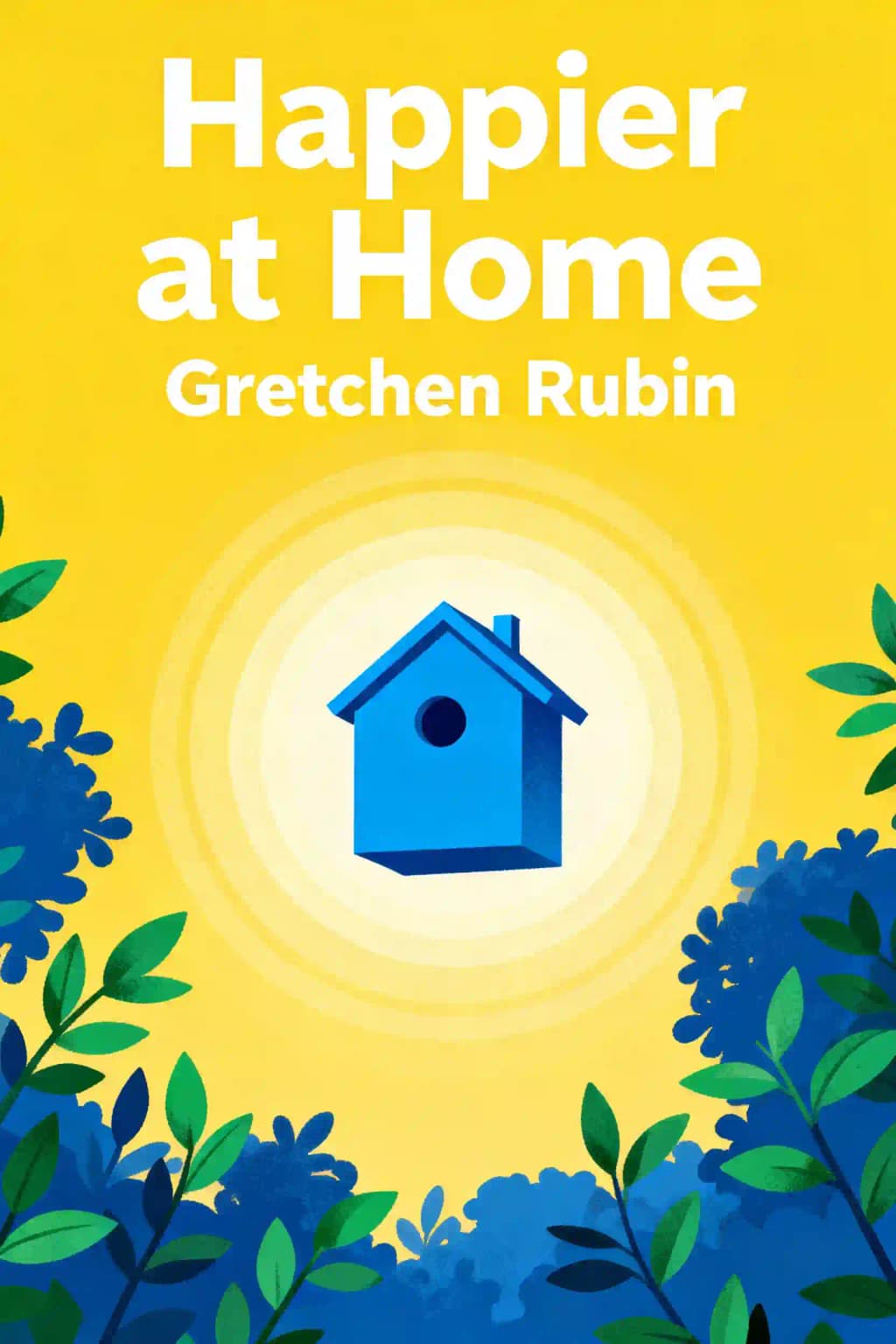
What if the key to a happier life isn't waiting in some distant adventure but hidden within the walls of your own home? When Gretchen Rubin found herself unloading the dishwasher one ordinary Sunday evening, she experienced a strange wave of homesickness-despite being in her own kitchen with her family nearby. This moment of "prospective nostalgia" became the catalyst for a nine-month experiment that would transform her relationship with home. "Happier at Home" has resonated with millions seeking authentic contentment in their everyday lives, earning praise from figures like Brene Brown and becoming a New York Times bestseller. Unlike the countless happiness guides promising dramatic transformations through exotic experiences, Rubin's approach is refreshingly accessible: finding greater joy exactly where you are, with what you already have.
Capítulo 2
The Architecture of a Happiness Project
The foundation of any happiness project consists of three essential stages: preparation (identifying what brings joy or guilt), making resolutions, and keeping them. For Rubin, this second happiness project focused specifically on home-not just as a physical space but as the center of her emotional life. Rather than seeking adventure in faraway places, she committed to finding greater happiness within her everyday routine, recognizing that the most profound transformations often occur in familiar settings.
This approach acknowledges the paradoxes of happiness that extensive research has revealed: we must accept ourselves while expecting more from ourselves, find freedom through establishing limits, and understand that happiness doesn't always feel conventionally happy. Rubin's "Four Splendid Truths" capture these complexities: we need to feel good, feel bad, and feel right in an atmosphere of growth; making others happy makes us happy; the days are long but years short; and we're not happy unless we think we're happy. These truths emerged from both scientific research and personal experience, offering a framework that balances emotional wisdom with practical application.
What makes Rubin's approach particularly effective is its emphasis on practicality and measurability. Instead of pursuing vague aspirations like "be more loving," she creates concrete, measurable resolutions and tracks them on a chart inspired by Benjamin Franklin's Virtues Chart. For example, rather than "improve family relationships," she might resolve to "give genuine compliments daily" or "plan one family activity each weekend." This methodical approach acknowledges that happiness isn't entirely genetic (30-50%) or circumstantial (10-20%), but largely influenced by our conscious thoughts and deliberate actions.
The project's structure-tackling one life area each month for nine months-creates a manageable framework for transformation. Beginning with possessions in September (decluttering, organizing, creating peaceful spaces) and concluding with neighborhood exploration in April (discovering local attractions, building community connections), each month builds upon the previous ones, creating a holistic approach to home-centered happiness. This gradual progression allows for sustainable change rather than the short-lived enthusiasm of most self-improvement attempts. Each monthly focus area includes specific daily and weekly tasks, reflection periods, and measurable outcomes.
The architecture of the project also incorporates flexibility within its structure, acknowledging that different individuals might need to adapt the framework to their specific circumstances. Rubin emphasizes that while the overall structure provides necessary scaffolding, the specific resolutions and implementation methods should be personalized to align with individual values, personalities, and life situations. This balance between structure and adaptability helps ensure the project's success across diverse contexts and personal circumstances.
Through this carefully designed architecture, the happiness project becomes not just a self-help exercise but a sustainable system for personal growth and lasting contentment. The framework provides both the structure needed for consistent progress and the flexibility required for personal adaptation, making it a practical tool for anyone seeking to enhance their daily happiness through intentional living.
Capítulo 3
Decluttering: Finding True Simplicity Among Possessions
Why start a happiness project with possessions? Not because they matter most, but because they often block our view of what does. Before tackling deeper challenges like marriage and parenthood, gaining control over our stuff creates mental space for more significant work.
Though some argue possessions shouldn't matter to happiness, they undeniably do. Our relationship with our things reflects and affects our mental state. When we feel engaged with our possessions, they enliven us; when disengaged, they burden us. Engagement comes through use (wearing that special coat, consulting a map) and through response (cherishing handmade gifts from loved ones).
The goal isn't minimalism for everyone-people have different tolerance levels for possessions. Some thrive in sparse environments while others genuinely enjoy collections. The key is identifying your natural tendency and creating an environment that supports rather than fights it. For Rubin, who recognized her tendency toward excessive simplicity born of indifference rather than thoughtfulness, this meant being more deliberate about what she kept.
Her "shrine" concept offers a brilliant framework for organizing possessions meaningfully. Rather than simply tidying, she created areas of "super-engagement"-a Shrine to Family showcasing cherished photos, a Shrine to Work with inspiring tools, a Shrine to Children's Literature organizing beloved books. These shrines transform mundane storage into celebrations of values and passions.
The shelf-by-shelf approach provides a manageable method for decluttering. Instead of becoming overwhelmed by the entire home, focusing on one shelf at a time makes progress visible and sustainable. This method reveals the psychological challenges of decluttering, like the "endowment effect" (valuing things more once we own them) and the difficulty of parting with sentimental items.
For parents, the memorandum box concept offers a practical solution to the avalanche of children's artwork and mementos-keeping select treasures rather than everything. This acknowledges both the importance of memories and the reality that excessive preservation diminishes rather than enhances their value.
The final piece-"Read the manual"-extends beyond literal instruction booklets to a metaphor for proper preparation. Like the cooking concept of mise en place, taking time to understand our tools creates a mental state where work flows more easily.
What if the solution to feeling overwhelmed isn't getting rid of everything, but creating an environment where each possession serves either a practical purpose or brings genuine joy?
Capítulo 4
Marriage: The Heart of Home
If home is where we belong unconditionally, marriage forms its emotional core. After sixteen years with Jamie, Rubin recognized they were in "middle marriage"-children at home, midcareer, homeownership-a stage she wanted to appreciate before it slipped away unremarked.
Her approach to marriage improvement demonstrates the Sixth Splendid Truth: "The only person I can change is myself." Rather than trying to fix Jamie, she focused on her own behavior, following resolutions like "Kiss in the morning, kiss at night," "Give gold stars," and "Make the positive argument."
The kissing schedule might seem preposterous, but it acknowledges that making time for what's important sometimes means treating intimacy with the regularity of toothbrushing. These brief moments ensure actual connection amid rushed lives. Similarly, giving "gold stars"-making a fuss about accomplishments, thanking for chores, speaking positively about your spouse to others-creates an atmosphere of appreciation.
The "positive argument" technique brilliantly counters our tendency toward criticism. When Rubin catches herself thinking "Jamie isn't thoughtful," she deliberately argues the opposite: "Jamie IS thoughtful." Immediately, evidence supporting this view comes to mind, actually shifting her opinion. This combats "unconscious overclaiming," where spouses overestimate their contributions relative to their partner's.
Perhaps most revealing is Rubin's decision to confront her driving fear. Though not typically fearful, driving terrified her-a fear she'd accommodated by letting Jamie drive everywhere. Taking lessons with instructor Attila demonstrated that happiness sometimes comes from facing fears rather than avoiding them. While she never grew to love driving, conquering enough fear to share the responsibility lightened their marriage's imbalance.
These marriage resolutions reveal a profound truth: acting more loving makes us feel more loving. By behaving tenderly and romantically, Rubin created the tender, romantic atmosphere she desired. When she changed, their relationship changed, and Jamie changed too-becoming less sarcastic, more thoughtful, more outwardly loving.
Have you noticed how focusing on your partner's positive qualities tends to bring those qualities more prominently into your relationship?
Capítulo 5
Parenthood: Creating a Loving Atmosphere
For November, Rubin turned her attention to parenthood, recognizing that while she couldn't make her daughters happy directly, she could create conditions conducive to happiness. Her resolutions-"Underreact to problems," "Enter into others' interests," "Go on Wednesday adventures," and "Give warm greetings and farewells"-reflect profound insights about family dynamics.
"Underreact to problems" acknowledges that our responses often amplify situations unnecessarily. When Eliza accidentally spills purple nail polish on the carpet, Rubin's calm reaction spares everyone "a session of pointless anger." Similarly, using humor to defuse tension-like creating a lighthearted rule against "deliberate provocation" (DP)-transforms potential conflict into connection.
"Enter into others' interests" recognizes children's deep need to be taken seriously. By engaging with her daughters' passions-from SpongeBob episodes to pop music-Rubin discovers that acting interested often leads to genuine interest. This principle extends to all relationships: people getting along harmoniously make efforts to show interest in each other's lives.
The "Wednesday Adventures" with eleven-year-old Eliza create precious one-on-one time. Despite feeling guilty about sacrificing prime work hours, Rubin recognizes these moments are fleeting, guided by her Third Splendid Truth: "The days are long, but the years are short." Their outings range from tourist attractions to quiet museum visits to simply staying home with hot chocolate and Lego projects-discovering that sometimes "home was adventure enough."
The family resolution to "give warm greetings and farewells" transforms daily transitions into moments of genuine connection. Each day brings several opportunities for real acknowledgment-proper hugs goodbye, "family love sandwiches," and sincere welcomes when someone enters. Though challenging when deep in work, these brief interactions prove more important than crossing items off a to-do list.
These parenthood resolutions share a common thread: presence. Being fully present-responding calmly rather than reactively, engaging sincerely with interests, creating dedicated time together, acknowledging arrivals and departures-creates the loving atmosphere children need to flourish.
What small daily rituals might you establish to ensure your family members feel truly seen and valued?
Capítulo 6
Interior Design: Building Happiness From Within
December brings focus to "Interior Design"-not of home but of self. Rubin seeks what Bob Dylan called "built-in happiness"-emotional self-sufficiency that doesn't depend on others for validation or mood elevation. This addresses a fundamental tension captured in her Seventh Splendid Truth: "Happy people make people happy, but you can't make someone happy, and no one can make you happy."
Her resolutions-"Resist happiness leeches," "Dig deep for patience," "Respond to the spirit of gifts," and "Abandon my self-control"-tackle internal obstacles to happiness. The happiness leeches concept identifies three types who drain joy: grouches (chronically negative), jerks (disrespectful), and slackers (who don't do their fair share). Rather than trying to fix them, Rubin develops strategies to minimize their impact, like avoiding being alone with them or communicating through email rather than face-to-face.
"Dig deep" addresses her tendency toward quick irritation, particularly with her children. Despite her best intentions, she struggles to maintain composure during Eleanor's tantrums, revealing that controlling her sharp tongue remains a daily challenge. This honest acknowledgment that happiness requires ongoing effort, not perfect achievement, makes her approach accessible and realistic.
"Respond to the spirit of a gift" transforms her reaction when Jamie buys a charm bracelet instead of the ring she'd requested. By appreciating his thoughtfulness rather than focusing on the gift itself, she discovers genuine gratitude for the carefully selected charms, especially a book-shaped one engraved with "The Happiness Project" and their family's important dates.
Perhaps most counterintuitive is "Abandon my self-control." Drawing on research showing willpower as a limited daily resource, Rubin employs external strategies-abstinence and convenience-rather than depleting her willpower. As an "abstainer" who finds it easier to give up something entirely than to indulge moderately, she decides to eat no sweets whatsoever during the holidays. Similarly, she makes temptations less accessible by wrapping treats in foil and placing them on high shelves.
These interior design resolutions reveal that happiness often requires paradoxical approaches: sometimes abandoning control creates greater self-mastery, and acknowledging our limitations leads to greater strength.
Isn't it fascinating that creating external structures that make bad habits difficult can be more effective than constantly battling our impulses through willpower alone?
Capítulo 7
Time: Creating an Unhurried Atmosphere
January brings focus to "Time" with the theme word "Bigger"-challenging Rubin to think expansively rather than simplistically. She identifies three flavors of hurry plaguing modern life: treadmill hurry (never stopping), to-do-list hurry (racing through tasks), and put-out-the-fires hurry (constant emergencies). Rather than slowing down, she seeks a deliberate pace that feels neither rushed nor slow.
Her resolution to "Control the cubicle in my pocket" addresses our smartphone addiction. By establishing boundaries-no checking email after dinner, no carrying her phone while walking around the apartment-she reclaims mental space. Similarly, "Guard my children's free time" resists the cultural pressure to overschedule, ensuring they have unstructured hours for creativity and self-direction.
"Suffer for fifteen minutes" brilliantly tackles procrastination. By committing to just fifteen minutes of dreaded tasks, Rubin often breaks through resistance, finding herself continuing beyond the time limit. This approach acknowledges that starting is usually harder than continuing.
Her desire for "monthly adventures with Jamie" reveals the challenge of balancing connection with reality. Studies show married people with children spend less time alone together than in the past-down from 12.4 hours weekly in 1975 to just 9.1 hours by 2000. Despite understanding the benefits of novelty for relationships, Jamie's hesitation about committing to regular adventures teaches Rubin an important lesson: if adventures feel like a burden rather than a treat, they won't enhance happiness.
These time-focused resolutions reveal that happiness doesn't come from having more time but from experiencing time differently-being fully present, creating boundaries between work and home, tackling dreaded tasks directly, and respecting the natural rhythms of family life.
Have you considered how your relationship with time-whether always rushing or procrastinating-might be affecting your experience of happiness at home?
Capítulo 8
Body: Experiencing the Experience
February shifts focus to "Body" with the theme "Experience the Experience"-anchoring happiness in physical reality. Rubin discovers the powerful influence of sensory experiences on mood, beginning with scent. After noticing her daughter Eleanor's heightened sensitivity to smells, she creates a "Shrine to Scent" with unusual fragrances and makes efforts to appreciate everyday scents like baby lotion and fresh laundry. This simple, free pleasure requires no planning, has no calories, and instantly connects her to the present moment.
"Ask for a knock, give a knock" extends beyond literal door-knocking to relationship "bids" for attention. Research shows happily married couples respond to each other's bids for connection far more often than unhappy couples. By explicitly requesting Jamie's full attention for important conversations and better acknowledging his bids rather than responding distractedly, Rubin strengthens their connection.
"Celebrate holiday breakfasts" introduces manageable festivity into family life. For Valentine's Day, she creates a special breakfast with heart-shaped plates and red-dyed peanut butter on heart-shaped toast. Though Eleanor seems uninterested at home, she excitedly tells everyone at school about her "special breakfast," confirming that even simple traditions make ordinary days memorable.
"Jump" adds physical exuberance to daily life after Rubin realizes her exercise routine never involves her feet leaving the ground. The sheer goofiness of skipping to the drugstore or doing jumping jacks makes her feel cheerier, confirming her personal commandment that "Act the way I want to feel" works: "The energy of the gesture made me feel more energetic."
These body-focused resolutions reveal that happiness has a physical dimension often overlooked in purely psychological approaches. By engaging our senses, acknowledging others' bids for connection, creating simple celebrations, and literally jumping for joy, we connect more deeply with our immediate experience.
What if the path to greater happiness includes not just changing your thoughts but also how you physically move through and experience your environment?
Capítulo 9
Family: The Foundation of Home
March focuses on family as the most important element of happiness at home. Rubin reflects on the swift passage of time, triggered by her daughter Eleanor's kindergarten "Hundred Day" celebration, and considers how to strengthen bonds with both immediate and extended family.
Her "threshold ritual" cultivates gratitude by pausing each time she enters her building to think, "How happy I am, how grateful I am, to be home." This simple practice helps her appreciate her family and their current stage of life, recognizing that the period with young children at home is fleeting.
Though happiness doesn't always make us feel happy, sometimes our happiness is best served by uncomfortable undertakings. Rubin initiates a difficult but necessary conversation with her parents about advance directives and powers of attorney. While these conversations aren't enjoyable, they're manageable because her family shares similar values and communicates well.
Studies show we react more strongly to unexpected pleasures than anticipated ones. Rubin creates small surprises for her family-mini-cupcakes for "un-birthday" celebrations, audiobooks from the library for Eleanor, deep cleaning for Jamie, and an inexpensive necklace rack for Eliza. These thoughtful gestures strengthen her feelings of tenderness toward her family, proving that acting loving increases feelings of love.
Her creative collaboration with sister Elizabeth on a YA book series about the Eleusinian Mysteries fulfills her resolution to work with her sister. Beyond the creative satisfaction, the project creates regular opportunities to connect, strengthening their relationship. Rubin realizes this opportunity emerged from her "Be Gretchen" philosophy-by following her genuine interests in children's literature, she created conditions for this fulfilling project to develop.
These family-focused resolutions reveal that strengthening bonds requires both everyday rituals and special efforts-expressing gratitude, having difficult conversations when necessary, creating pleasant surprises, and finding meaningful ways to collaborate.
Might your own happiness increase by finding small ways to acknowledge and celebrate your family relationships each day?
Capítulo 10
Neighborhood: Expanding the Sense of Home
April expands the concept of home beyond apartment walls to the surrounding neighborhood. As weather warms, Rubin can enjoy leisurely walks rather than rushing from door to door to avoid cold. Though not naturally drawn to travel, she recognizes that new experiences contribute to happiness and resolves to "Be a tourist without leaving home."
Reading guidebooks about Manhattan architecture and sculpture, browsing the Encyclopedia of New York City, and following local news more closely helps her see familiar surroundings with fresh eyes. She adopts strategies like going "off the path" to visit new neighborhood places and indulges in what she calls "The New Yorker magazine meditation"-buying a book of covers that evoke both the real and imagined New York of her dreams.
Rather than performing random acts of kindness, which can make recipients suspicious, she advocates for nonrandom acts that are thoughtfully targeted. She becomes more attentive to others' needs, picks up litter in the subway, acknowledges "familiar strangers" she sees regularly, connects people professionally, and promotes others' work online.
As she deepens her involvement with organ donation advocacy, she pushes beyond her comfort zone. Unexpectedly, Jamie becomes involved too, bringing valuable connections and expertise. This collaboration gives them a chance to work together outside of family matters, reminiscent of their early marriage. Even her in-laws join the effort, each making key contributions.
After visiting the Whitney Museum with Eliza, Rubin is captivated by Charles Simonds's "Dwellings"-a miniature clay landscape tucked into a corner. This discovery sparks an epiphany: she wants to create a hidden miniature scene in their apartment. This project reinforces her Secret of Adulthood: "I do best what comes naturally"-when she follows genuine interests rather than what she thinks she should enjoy, progress comes easily.
These neighborhood-focused resolutions reveal that expanding our sense of home beyond our walls creates new opportunities for connection, contribution, and creativity.
How might you become a "tourist" in your own neighborhood, seeing familiar surroundings with fresh eyes?
Capítulo 11
Now is Now: The Essence of Home Happiness
As May brings her happiness project toward conclusion, Rubin experiences an epiphany while walking home from the library: Laura Ingalls Wilder is the best writer about home! She recalls five-year-old Laura's reflection on the final page of "Little House in the Big Woods": "This is now." Laura thought the cozy house with Pa and Ma couldn't be forgotten "because now is now. It can never be a long time ago." But Rubin knows what the child Laura didn't-now is now, and now is already a long time ago.
This realization crystallizes her entire happiness project: "Now is now. Here is my treasure." Her home will be serene, festive, loving and welcoming only if she brings that spirit to it. To feel more at home, she must carry her treasure within her.
Throughout her project, Rubin has discovered that true happiness comes from embracing her authentic self-"Be Gretchen"-acknowledging both her interests and limitations. This self-knowledge has made her home more genuinely hers and created a happier atmosphere for her family too.
The paradox of happiness emerges clearly: happiness doesn't always make us feel happy. Though she dreads driving, she pushes herself to continue, finding satisfaction in conquering fear. Similarly, her resolution to "Dig deep" for patience with her children remains a daily struggle, yet essential to creating the loving atmosphere she desires.
In the end, Rubin's happiness project reveals that home is not just a place but a state of mind-one we create through deliberate attention to our possessions, relationships, time, bodies, and neighborhoods. The ordinary moments-unloading the dishwasher, greeting family members, reading bedtime stories-contain the extraordinary treasure of our lives if only we pause to notice.
As you cross your own threshold today, what if you paused to think: "How happy I am, how grateful I am, to be home"? In that moment of awareness, you might discover that you already possess the happiness you've been seeking.