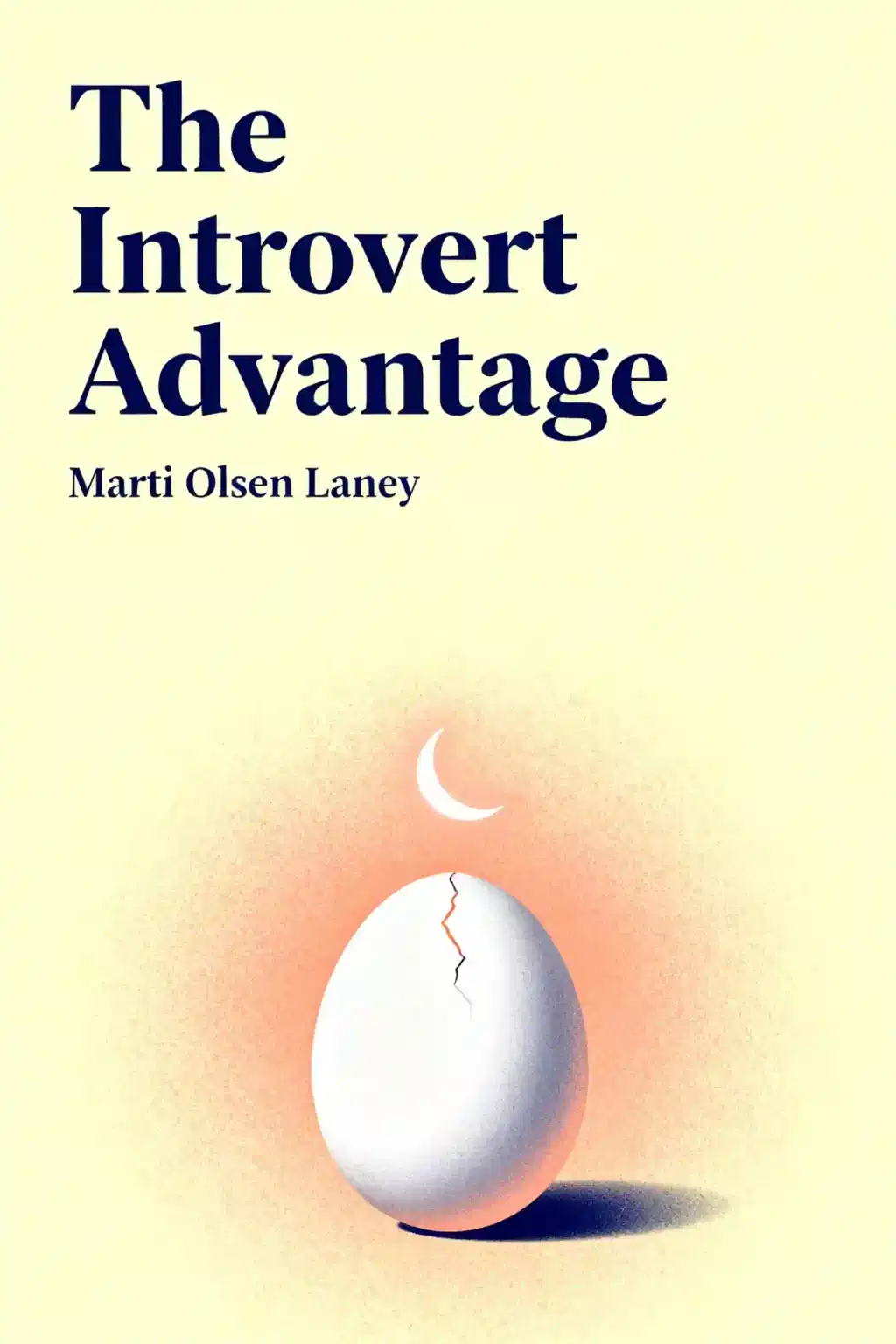
The Introvert Advantage by Marti Olsen Laney Summary

Overview of The Introvert Advantage
In a world favoring extroverts, "The Introvert Advantage" reveals why being quiet is your superpower. Did you know introverts are outnumbered 3:1 yet often live longer? Diane Sawyer and Laura Bush prove it - your thoughtful nature isn't a weakness, it's your competitive edge.
- Introvert brains process acetylcholine for deeper focus and long-term memory retention.
- Embrace "Personal Pacing" to conserve energy in extrovert-dominated environments.
- Build relationships through quality one-on-one interactions over large social gatherings.
- Use the Three P’s Strategy: Personal pacing, priorities, and parameters for success.
- Design "recharge zones" at home/work to restore introvert energy reserves.
- Leverage introvert neurochemistry for creative problem-solving and strategic thinking.
- Parent introverted children by honoring their need for quiet reflection time.
- Introverts gain energy through solitude while extroverts recharge socially.
- Master "selective extroverting" for essential social obligations without burnout.
- Introvert longevity links to deliberate energy conservation and deep relationships.
- Reframe social anxiety as neurological sensitivity to overstimulation.
- Use writing to communicate complex ideas when verbal responses feel pressured.
About the Author of The Introvert Advantage
Marti Olsen Laney, Psy.D., is the acclaimed author of The Introvert Advantage: How to Thrive in an Extrovert World and a pioneering psychotherapist specializing in introversion research. A licensed marriage and family therapist based in Portland, Oregon, Laney combines decades of clinical experience with personal insights as an introvert to create transformative self-help guides. Her work, rooted in psychology and neuroscience, empowers introverts to harness their innate strengths in communication, relationships, and creativity.
Laney’s expertise extends to her other notable book, The Hidden Gifts of the Introverted Child, which offers strategies for nurturing introverted children in an extrovert-centric society. A sought-after speaker, she leads workshops across the U.S. and Canada and shares resources through her platform, TheIntrovertAdvantage.com.
Recognized for blending scientific rigor with actionable advice, Laney’s books have sold over one million copies worldwide and been translated into multiple languages, cementing their status as essential reads for understanding introversion.
FAQs About The Introvert Advantage
What is The Introvert Advantage by Marti Olsen Laney about?
The Introvert Advantage explores how introverts can thrive in a world favoring extroversion. Marti Olsen Laney, a psychotherapist, explains introverts’ unique brain wiring, energy needs, and strengths like deep focus and analytical thinking. The book provides strategies for managing social energy, workplace communication, and relationships, emphasizing self-acceptance and leveraging introverted traits.
Who should read The Introvert Advantage?
This book is ideal for introverts seeking self-understanding, extroverts wanting to support introverted loved ones, and professionals managing introverted teams. Parents of introverted children will also find insights into nurturing their temperament.
Is The Introvert Advantage worth reading?
Yes, for its validation of introverted experiences and practical advice. Readers praise its “aha moments” about energy management and social preferences, though some critique its repetitive sections or overly simplistic writing style.
How does The Introvert Advantage explain introvert-extrovert brain differences?
Laney details physiological contrasts: introverts have longer neural pathways for processing stimuli, leading to deeper reflection but quicker overstimulation. Extroverts’ shorter pathways prioritize rapid responses, making them crave external interaction for energy.
What are practical tips from The Introvert Advantage for socializing?
Key strategies include scheduling downtime after events, preparing conversation topics in advance, and setting boundaries. Laney advises introverts to prioritize quality interactions over quantity to conserve energy.
How does The Introvert Advantage address workplace challenges for introverts?
The book suggests leveraging strengths like listening and preparation. Tips include requesting agendas before meetings, using written communication, and advocating for quiet workspaces to maximize productivity.
What critiques exist about The Introvert Advantage?
Some readers find the writing style overly clinical or repetitive, particularly in later chapters. Critics note the book’s focus on individual adaptation over systemic change in extrovert-centric environments.
How does The Introvert Advantage compare to Quiet by Susan Cain?
While both validate introversion, Laney’s book emphasizes actionable self-help strategies and neurobiological explanations, whereas Quiet focuses more on cultural analysis. Readers recommend both for complementary insights.
What parenting advice does The Introvert Advantage offer?
Laney guides parents in nurturing introverted children by respecting their need for solitude, avoiding over-scheduling, and reframing shyness as thoughtful observation. She stresses the importance of validating their emotional depth.
How does The Introvert Advantage help introverts build relationships?
The book advises communicating energy needs to partners, choosing low-key activities, and balancing social time with recovery. Laney highlights introverts’ capacity for loyalty and deep connection when boundaries are honored.
What are key quotes from The Introvert Advantage?
Notable quotes include:
- “Introverts require less stimulation from the world to feel awake and alert.”
- “The quicker you let go of old cheese, the sooner you find new cheese.” These emphasize self-acceptance and adaptability.
How does The Introvert Advantage redefine success for introverts?
Laney argues success stems from aligning environments with innate traits—valuing depth over breadth, solitude over constant collaboration, and leveraging introverts’ creativity in problem-solving.
Feel the book through the author's voice
Turn knowledge into engaging, example-rich insights
Capture key ideas in a flash for fast learning
Enjoy the book in a fun and engaging way
Key Themes in The Introvert Advantage
Quotes from The Introvert Advantage
Introversion isn't a character flaw or social inadequacy-it's how your brain is naturally wired.
Introverts aren't antisocial-they're differently social.
Introverts typically think before speaking.
Introverts draw energy from their internal world.
Extroverts are energized by the external world.
Characters in The Introvert Advantage
Quick Summary Mode - Read or listen to The Introvert Advantage Summary in 10 Minutes

Break down key ideas from The Introvert Advantage into bite-sized takeaways to understand how innovative teams create, collaborate, and grow.

Flash Card Mode - Top 8 Insights from The Introvert Advantage in a Nutshell

Distill The Introvert Advantage into rapid-fire memory cues that highlight key principles of candor, teamwork, and creative resilience.

Fun Mode - The Introvert Advantage Lessons Told Through 25-Min Stories

Experience The Introvert Advantage through vivid storytelling that turns innovation lessons into moments you'll remember and apply.
Personalize Mode - Read or listen to The Introvert Advantage Summary in 0 Minutes

Ask anything, pick the voice, and co-create insights that truly resonate with you.

From Columbia University alumni built in San Francisco
"Instead of endless scrolling, I just hit play on BeFreed. It saves me so much time."


"I never knew where to start with nonfiction—BeFreed’s book lists turned into podcasts gave me a clear path."


"Perfect balance between learning and entertainment. Finished ‘Thinking, Fast and Slow’ on my commute this week."
"Crazy how much I learned while walking the dog. BeFreed = small habits → big gains."
"Reading used to feel like a chore. Now it’s just part of my lifestyle."

"Feels effortless compared to reading. I’ve finished 6 books this month already."
"BeFreed turned my guilty doomscrolling into something that feels productive and inspiring."

"BeFreed turned my commute into learning time. 20-min podcasts are perfect for finishing books I never had time for."
"BeFreed replaced my podcast queue. Imagine Spotify for books — that’s it. 🙌"

"It is great for me to learn something from the book without reading it."
"The themed book list podcasts help me connect ideas across authors—like a guided audio journey."
"Makes me feel smarter every time before going to work"
From Columbia University alumni built in San Francisco
"Instead of endless scrolling, I just hit play on BeFreed. It saves me so much time."
"I never knew where to start with nonfiction—BeFreed’s book lists turned into podcasts gave me a clear path."
"Perfect balance between learning and entertainment. Finished ‘Thinking, Fast and Slow’ on my commute this week."
"Crazy how much I learned while walking the dog. BeFreed = small habits → big gains."
"Reading used to feel like a chore. Now it’s just part of my lifestyle."
"Feels effortless compared to reading. I’ve finished 6 books this month already."
"BeFreed turned my guilty doomscrolling into something that feels productive and inspiring."
"BeFreed turned my commute into learning time. 20-min podcasts are perfect for finishing books I never had time for."
"BeFreed replaced my podcast queue. Imagine Spotify for books — that’s it. 🙌"
"It is great for me to learn something from the book without reading it."
"The themed book list podcasts help me connect ideas across authors—like a guided audio journey."
"Makes me feel smarter every time before going to work"
"Instead of endless scrolling, I just hit play on BeFreed. It saves me so much time."
"I never knew where to start with nonfiction—BeFreed’s book lists turned into podcasts gave me a clear path."
"Perfect balance between learning and entertainment. Finished ‘Thinking, Fast and Slow’ on my commute this week."
"Crazy how much I learned while walking the dog. BeFreed = small habits → big gains."
"Reading used to feel like a chore. Now it’s just part of my lifestyle."
"Feels effortless compared to reading. I’ve finished 6 books this month already."
"BeFreed turned my guilty doomscrolling into something that feels productive and inspiring."
"BeFreed turned my commute into learning time. 20-min podcasts are perfect for finishing books I never had time for."
"BeFreed replaced my podcast queue. Imagine Spotify for books — that’s it. 🙌"
"It is great for me to learn something from the book without reading it."
"The themed book list podcasts help me connect ideas across authors—like a guided audio journey."
"Makes me feel smarter every time before going to work"
"Instead of endless scrolling, I just hit play on BeFreed. It saves me so much time."
"I never knew where to start with nonfiction—BeFreed’s book lists turned into podcasts gave me a clear path."
"Perfect balance between learning and entertainment. Finished ‘Thinking, Fast and Slow’ on my commute this week."
"Crazy how much I learned while walking the dog. BeFreed = small habits → big gains."
"Reading used to feel like a chore. Now it’s just part of my lifestyle."
"Feels effortless compared to reading. I’ve finished 6 books this month already."
"BeFreed turned my guilty doomscrolling into something that feels productive and inspiring."
"BeFreed turned my commute into learning time. 20-min podcasts are perfect for finishing books I never had time for."
"BeFreed replaced my podcast queue. Imagine Spotify for books — that’s it. 🙌"
"It is great for me to learn something from the book without reading it."
"The themed book list podcasts help me connect ideas across authors—like a guided audio journey."
"Makes me feel smarter every time before going to work"

Get the The Introvert Advantage summary as a free PDF or EPUB. Print it or read offline anytime.