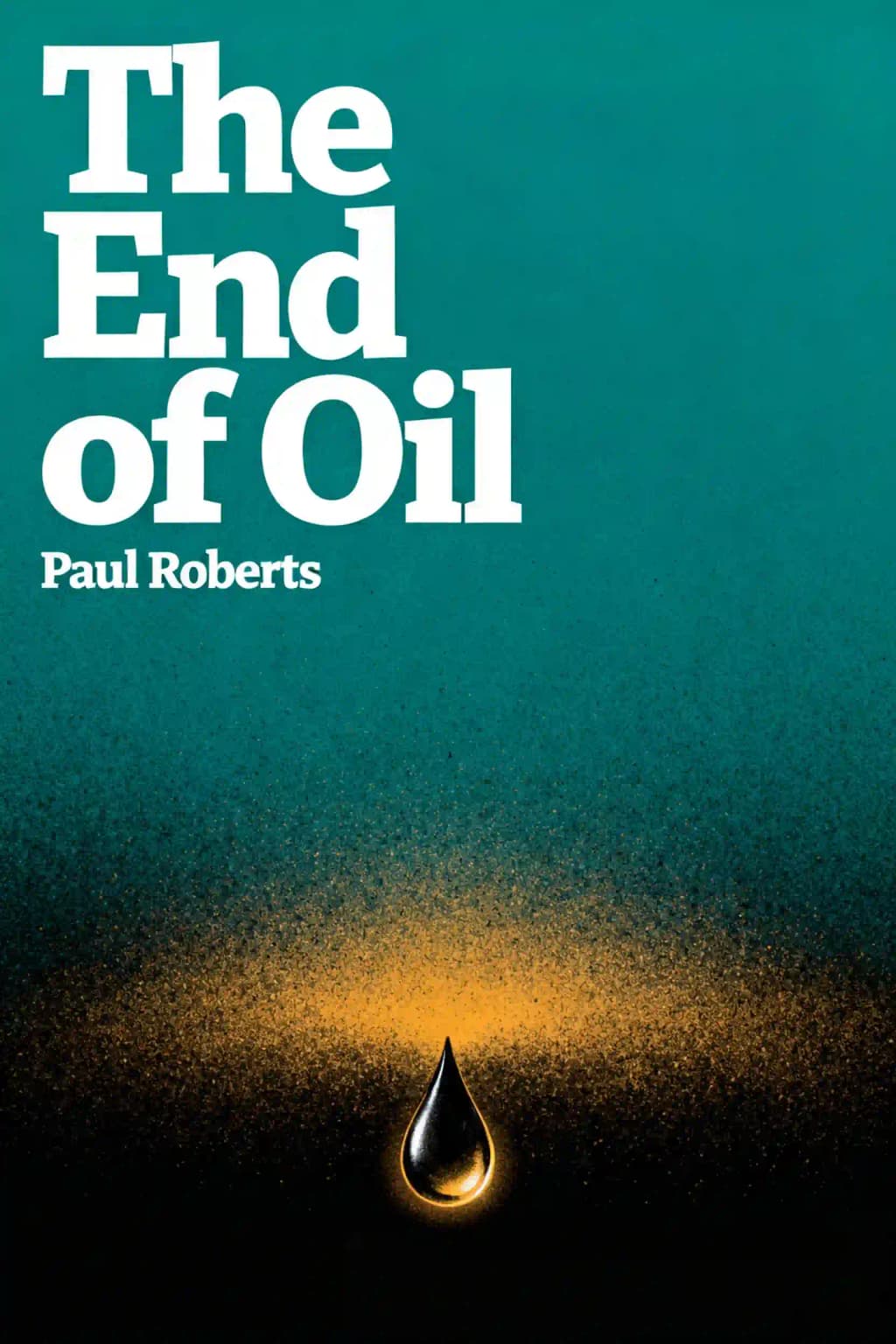
End of Oil
On the Edge of a Perilous New World
Overview of End of Oil
Paul Roberts' "The End of Oil" brilliantly exposes our precarious energy future. This 2004 landmark analysis - compared to "Fast Food Nation" for its cultural impact - reveals the geopolitical time bomb beneath our feet. What happens when the last drop falls?

Key Themes in End of Oil
- peak oil theory
- energy security crisis
- hydrocarbon addiction
- petrostate geopolitics
- hydrogen fuel transition
Quotes from End of Oil
Basing energy policy on such compromised forecasts would be "a huge mistake."
Saudi Arabia "has very likely gone over its peak."
"When it does peak, it will be too late to do anything about it."
Oil transformed from an economic success factor to a source of vulnerability.
The real danger isn't that oil will suddenly vanish.
Characters in End of Oil
- Paul RobertsAuthor and investigative journalist
- Matthew SimmonsEnergy adviser to the Bush administration
- Joseph RommEnergy expert and author
- William Clay FordAutomotive executive and hydrogen advocate
About the Author
About the Author of End of Oil
Paul Roberts, author of The End of Oil, is an acclaimed journalist and expert on global resource economics, technology, and environmental systems. A longtime contributor to Harper’s Magazine, Rolling Stone, and The Washington Post, Roberts combines rigorous analysis of energy markets, geopolitics, and ecological limits in this groundbreaking exploration of fossil fuel dependence. His work is rooted in decades of investigative reporting on the intersections of economics, technology, and sustainability.
Roberts is also the author of The End of Food, a critically acclaimed examination of industrial agriculture’s vulnerabilities, praised by Michael Pollan as “the best analysis of the global food economy,” and The Impulse Society, which critiques modern consumer culture.
His writing has shaped public discourse on resource scarcity and systemic risk, with The End of Oil hailed by Bill McKibben as “perhaps the best single book ever produced about our energy economy and its environmental implications.” The book has been translated into multiple languages and remains essential reading in environmental policy and energy studies.
Download Summary of End of Oil
Get the End of Oil summary as a free PDF or EPUB. Print it or read offline anytime.
FAQs About This Book
The End of Oil analyzes humanity’s unsustainable reliance on fossil fuels, warning of impending energy crises due to oil depletion, geopolitical instability, and climate change. Paul Roberts explores renewable energy alternatives like solar and biofuels, while urging proactive transition strategies to avoid economic and environmental collapse. The book combines investigative journalism with economic and environmental analysis to frame energy as a defining challenge of the 21st century.
This book is essential for policymakers, environmental advocates, and readers interested in energy economics or climate change. It offers valuable insights for professionals in renewable energy sectors, students of geopolitics, and anyone concerned about sustainable development. Roberts’ accessible writing also appeals to general audiences seeking to understand global energy dynamics.
Yes, for its prescient analysis of energy systems and their societal impacts. Roberts’ thorough research on peak oil, renewable technologies, and geopolitical risks remains relevant, particularly as global debates about decarbonization intensify. Though published in 2004, its warnings about oil dependency and climate-driven disruptions resonate strongly in 2025.
Roberts argues that oil’s finite supply, geopolitical volatility, and environmental costs make the fossil fuel economy untenable. He emphasizes three dilemmas: depletion (peak oil), geopolitical risk (reliance on unstable regimes), and climate change (carbon emissions). The book advocates for a diversified energy transition, including renewables, efficiency gains, and a “bridge” economy using natural gas.
Peak oil refers to the point when global oil production peaks and enters irreversible decline, risking economic collapse. Roberts cites geological data showing dwindling reserves and warns that without alternatives, societies face fuel shortages, price shocks, and social upheaval. He stresses that peak oil isn’t a distant threat—it’s a near-term crisis demanding immediate action.
Roberts links fossil fuels to greenhouse gas emissions, habitat loss, and pollution, arguing that oil dependency accelerates climate disasters. He critiques political inaction and advocates for renewables to mitigate warming. The book highlights the paradox of oil: even if supplies lasted, its environmental costs make it incompatible with long-term survival.
- Depletion: Finite oil reserves threaten supply chains and economic stability.
- Geopolitics: Reliance on oil-rich, politically unstable nations fosters conflict.
- Climate change: Burning fossil fuels exacerbates global warming.
Roberts argues these intertwined crises necessitate a rapid shift to sustainable energy.
Roberts proposes a transitional phase using natural gas and improved efficiency to buy time for renewable infrastructure development. This bridge economy would reduce immediate oil dependence while scaling solar, wind, and biofuels. He warns, however, that without long-term planning, such fixes could delay urgent systemic changes.
While both critique unsustainable systems, The End of Oil focuses on energy economics, whereas The Omnivore’s Dilemma examines food production. Roberts emphasizes global policy and technology, whereas Michael Pollan explores consumer choices. Both books underscore the fragility of modern industrial models and the need for systemic reform.
Some critics argue Roberts underestimates capitalist barriers to renewable adoption, noting his reliance on market-driven solutions despite corporate oil interests. Others contend his timeline for peak oil was overly pessimistic, as fracking (unaddressed in the 2004 edition) temporarily boosted reserves. However, his core themes remain widely validated.
With wildfires, energy wars, and renewable tech advancements dominating headlines, Roberts’ warnings about oil’s fragility and climate impacts feel increasingly urgent. The book’s framework for understanding energy transitions informs current debates about green policy, carbon taxes, and ESG investing.
Roberts advocates for:
- Accelerating renewable energy R&D.
- Global cooperation to manage oil decline.
- Carbon pricing to account for environmental costs.
- Public-private partnerships to overhaul infrastructure.
He stresses that solutions require political courage, public engagement, and reimagining economic growth beyond fossil fuels.