Capítulo 1
The Economy's Vengeful God: How Language Shapes Our Financial Reality
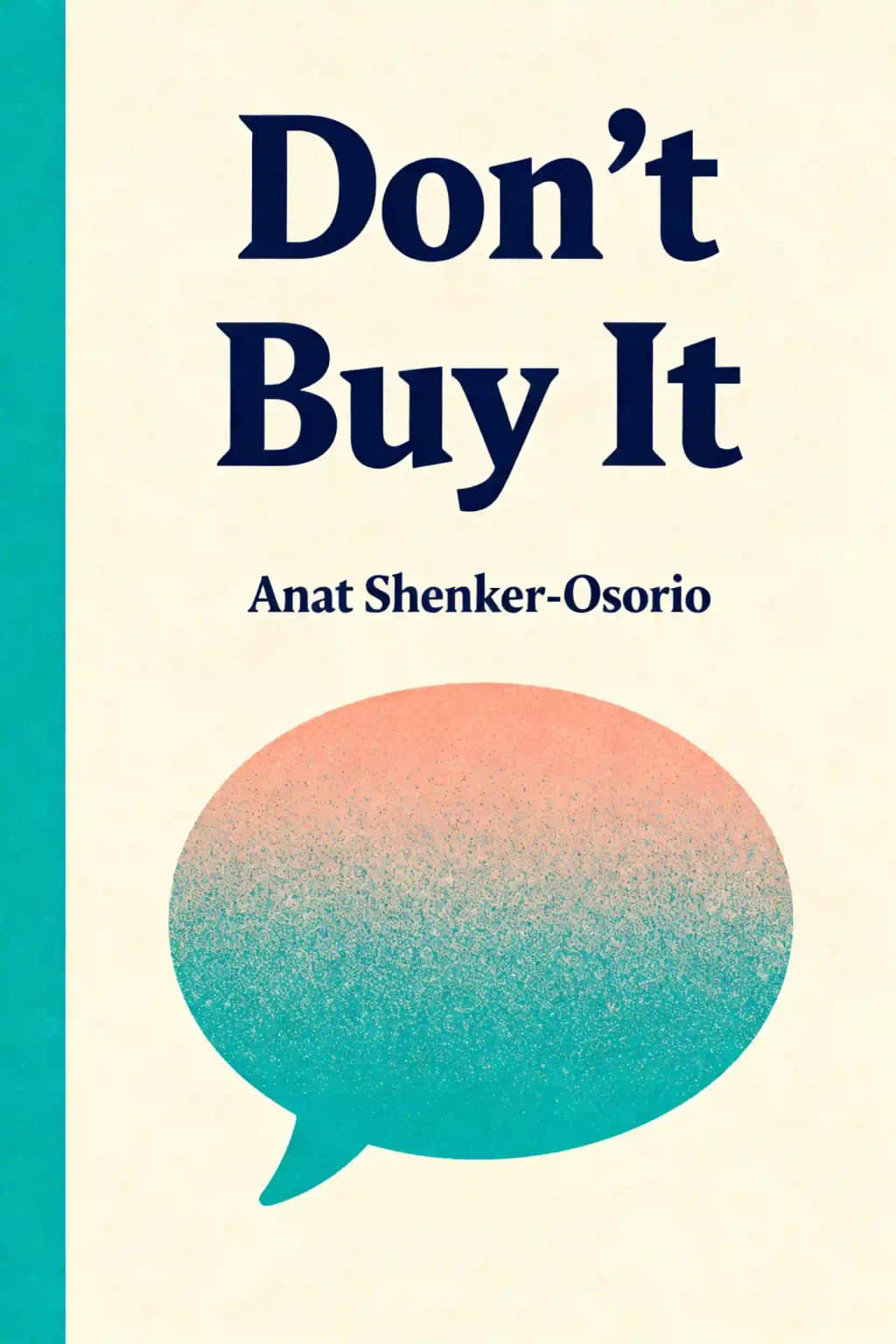
In a brilliant South Park episode, citizens treat the Economy as an angry, vengeful deity demanding sacrifice. This satirical portrayal isn't far from our actual national discourse, where politicians constantly call for "sacrifice" in almost biblical terms. We've been conditioned to worry about "hurting the economy" rather than hurting actual people. Our financial high priests-bankers and CEOs-interpret the Economy's will while breaking rules and demanding our sacrifice. Despite causing financial catastrophe, not a single executive has faced criminal charges. This book, a favorite among progressive economists and consistently on Bill Gates' recommended reading list, has fundamentally changed how many leaders communicate about economic issues. Its core insight-that the metaphors we use to describe the economy shape our understanding of it-has influenced messaging strategies from Capitol Hill to Wall Street.
Capítulo 2
The Rules Are Rigged: Who Benefits From Our Economic System
The directive to "play by the rules" sounds reasonable until you examine whose rules benefit whom. Consider Kelley Williams-Boler, jailed for using her father's address to get her children into a better school district-now a felon unable to work in her profession as a teacher's aide. Or Lilly Ledbetter, who followed Goodyear's rules for 19 years only to discover male colleagues earned significantly more for identical work. Though the Supreme Court acknowledged discrimination, they dismissed her case on a technicality.
What about our millions of immigrants denied protections despite their hard work? The rules clearly benefit those who make them-"The only people who get rich playing by the rules are the people who make the rules."
Americans already work harder than anyone in the industrialized world-137 more hours annually than Japanese workers, 260 more than British workers, and 499 more than French workers. Unlike at least 134 other countries, the US has no laws limiting weekly work hours. We're the only industrialized nation without federally mandated sick days or annual leave, and the only country in the Americas without paid parental leave.
The problem isn't insufficient work ethic-it's that our productivity has actually eliminated jobs. Management consultants proudly lay off workers when the same output can be achieved with fewer person-hours. Meanwhile, the unemployed work incredibly hard just navigating public assistance systems and charity networks to survive.
By emphasizing rule-following and hard work, we reinforce the myth that outcomes depend solely on individual choices while ignoring systemic inequalities based on race, class, gender, geography, and social capital. This preserves the fantasy of American meritocracy while ignoring the reality that different rules apply to different people.
Capítulo 3
The Missing Economic Narrative: Why Progressives Fail to Connect
The 2008 housing market collapse caused immense suffering but also created a crucial opportunity-"a giant fissure in the firmament of economic dogma." For decades, right-wing economists influenced by Milton Friedman and Thomas Sowell had promoted the theory that government governs best by staying out of the economy's way.
Despite this opening to change the economic narrative, progressives failed to seize the moment. While we published charts on inequality and wage stagnation, we never effectively challenged the underlying economic framework. Even with Obama's election and Democratic majorities in Congress, conservatives successfully reframed the crisis as a government failure rather than a market one, leading to the 2010 Tea Party wave.
Our fundamental problem is that we describe what's wrong with the economy and what policies we want, but fail to explain HOW the economy actually works and WHY our solutions would fix it. We haven't created a compelling economic storyline to counter the conservative free-market fable they promote at full volume.
Marketing experts know that selling a product requires first creating demand for it. Just as Apple convinces us we need devices we'd never heard of yesterday, progressives must generate public hunger for something abstract: a compelling storyline about what the economy can and should be.
While Americans typically avoid economic details beyond "what's in my wallet," the 2008 crisis changed everything. Pew Research reported 70% of Americans following economic news in October 2008, far exceeding the previous peak of 49% during the 1993 downturn. Progressive economists suddenly found themselves as primetime talking heads, with the public finally ready to question economic assumptions.
Yet instead of presenting a coherent alternative vision, progressives got bogged down in disconnected explanations about specific failures. We offered regulations and programs without tying them to a compelling narrative about how the economy fundamentally works.
Capítulo 4
The Narrowing of Economic Thought: Missing the Forest for the Trees
Modern economics has become remarkably narrow in focus. Universities no longer teach comparative economic systems or theories contrasting communism versus capitalism. As economists Roger Backhouse and Bradley Bateman note, "We now have an economics profession that hardly ever discusses its fundamental subject, 'capitalism.'"
By taking American-style capitalism as a given, economists merely dig into details, sacrificing vision for specificity. This microscopic approach prevents seeing the whole system. Without challenging basic premises, we accept as truth that growth must be infinite, GDP is the valid measure of success, conservation takes a back seat, inequality is natural, and regulations are at best necessary evils.
This narrowing has made economics increasingly "dismal." In 2011, Harvard students staged a walkout of their economics course for presenting contested terrain as given fact. Without robust debate about what constitutes a well-functioning economy, we accept flawed standards of success-like how smashing car windows increases GDP because repair costs boost spending.
Conveying the mechanics of the economy isn't merely an academic exercise. If progressives can't provide a credible explanation for what makes the economy malfunction, we cannot make a compelling case for the policies we propose to fix it. As Paul Krugman illustrates, without challenging the "confidence fairy" myth-that slashing spending creates growth by inspiring business confidence-we allow destructive austerity policies to dominate.
Despite big businesses sitting on record cash reserves ($1.2 trillion in 2010) without creating jobs, the public still believes tax cuts and spending cuts will magically stimulate hiring. We've essentially conceded the economic battlefield by fighting on conservatives' cut-cut-cut turf.
Capítulo 5
The Conservative Economic Narrative: A Coherent (But Wrong) Story
Conservatives present a consistent message about what the economy is, how it functions, and why it exists. They portray the economy as something natural with predictable cycles that requires minimal intervention. Their framework suggests the economy rewards the good and punishes the bad-essentially serving as a moral enforcer. Their worldview places the economy at the center, with people and nature existing primarily to serve economic growth.
Meanwhile, progressives reinforce this framework through metaphor inconsistency and language choices like "government spending" that imply resources are being "used up" rather than circulated through the economy.
Having multiple progressive views on economic inequality creates a communication disaster. While these positions may have commonalities, what matters is what the public perceives. In a noisy political landscape, only clear messages with defined problems and solutions get heard. Our muddled value proposition makes it difficult for Americans to understand what they'd gain from progressive policies.
We need to select and clearly describe the economy we want to create, and show how our policies connect our current situation to that destination. Without a single, coherent dream, we can't expect public support.
Capítulo 6
The Power of Metaphors: How We Make Sense of Economic Abstractions
For most Americans, including 80% of Congress members, the economy is incomprehensible. Studies show fewer than half of adults understand basic concepts like inflation or interest rates. This economic illiteracy has severe personal consequences-those with less economic knowledge are more likely to face foreclosure or accept predatory mortgages.
The economy is abstract-you can't hold, weigh, or see it. We make sense of such abstractions through "conceptual metaphors," unconsciously comparing intangibles to concrete things. Research shows these metaphors profoundly shape our reasoning. When crime is described as a "beast," 71% favor law enforcement solutions; when described as a "virus," only 54% do, with more preferring preventive programs.
These metaphorical comparisons affect our judgments more powerfully than partisan identification, and they operate below conscious awareness. Conservative messaging guru Frank Luntz understands this power, having crafted phrases like "clear skies initiative" and "death tax" to make unpopular policies palatable. Progressive politicians rarely pay such attention to language, clinging to the disproven notion that facts alone persuade.
What should we want people to understand about the economy? I offer five non-negotiable truths progressives must convey: First, government has always played a critical role-there's never been a truly "free market." Second, our economy is global, requiring us to make America the best place to produce through education and infrastructure, not the cheapest through deregulation. Third, short-term thinking is destructive-investing in schools, roads and healthcare pays future dividends. Fourth, environmental sustainability isn't optional-without an inhabitable planet, there's no economy. Fifth, vast inequality is both morally wrong and socially destructive.
Capítulo 7
Metaphors That Mislead: How Language Shapes Economic Understanding
While conservatives consistently employ just two or three models to explain the economy, progressives meander through many simplifications, undermining our credibility. Our language missteps include personifying the economy while claiming it's not sentient, using frames that vilify taxation when we seek to increase revenues, and employing phrases that make financial crises seem inevitable when we want more oversight.
We frequently describe the economy as if it were a living body-"suffering," "unhealthy," "no longer thriving," or like a reckless teenager. This metaphor suggests the economy has natural cycles requiring minimal interference. When we frame the economy as a body, we imply that periods of prosperity and recession are normal and don't require government intervention, that most fluctuations will adjust on their own, and that regulations are as unwelcome as restrictions on our personal bodily autonomy.
When not a body, the economy is often described as weather or water-we speak of "weathering economic storms" or money that "flows" to the highest returns. This metaphor implies economic conditions are natural, external control is impossible or harmful, and outcomes are inevitable. Even progressives embrace this language: Paul Krugman describes the financial crisis as "a world awash in cheap money" and people whose "assets have evaporated."
This water metaphor suggests the economy self-regulates naturally, making inequality a non-issue. It forms the conceptual basis for "trickle-down" theory and contradicts our belief that government intervention is necessary. As long as we conceptualize the economy as a natural system, we can't effectively argue for directing where money should go.
We fall into messaging traps by treating the economy as an independent entity with its own agency. Remember: "The economy is nothing more than the sum of our collective endeavors." It doesn't bleed when pricked. Yet we routinely say things like "unemployment is rising" or "the dollar is falling" in passive language that obscures the actual choices and decision-makers behind these outcomes.
Capítulo 8
Better Metaphors: Vehicles, Journeys, and Human Construction
Unlike naturalistic metaphors, the "economy as object in motion" framework refreshingly portrays the economy as human-made. Often depicted as a vehicle, this metaphor focuses on speed, direction, and control. Progressive economists like Galbraith and Stiglitz use this language when discussing what should "drive" our economy. The stimulus was justified as giving the economy a "jump-start." Obama urged "stepping on the gas" rather than "slamming the brakes" on recovery.
This model works because: 1) vehicles are human-made, not natural forces; 2) vehicles require operators-suggesting government has a legitimate role in "steering" the economy and creating "rules of the road." While not foolproof (it doesn't automatically specify who should drive), this metaphor at least creates space for progressive arguments about government's role, unlike organic metaphors that make intervention seem unnatural.
While conservatives effectively toggle between "economy as natural entity" (what it is) and "economy as moral enforcer" (why it exists), progressives need their own comprehensive framework. The "economy as journey facilitator" metaphor provides this by zooming in from the vehicle to focus on passengers-actual people. This model helps articulate inequality issues through journey metaphors: some people get a "head start," others find themselves "in the wrong place at the wrong time," and social programs help those who've fallen behind.
Beyond the vehicle metaphor, the "economy as constructed object" model appears frequently across political divides. Obama spoke of "building the economy from the bottom up," while conservatives reference "architecture of prosperity" and "building codes." This metaphor conveys that economies are human creations with foundational components that can be damaged or destroyed by external events. It suggests expertise is needed for construction and maintenance, justifying government intervention during crises.
Capítulo 9
The Inequality Problem: Challenging How We Talk About Economic Disparities
Income and wealth inequality isn't just an economic problem-it's THE economic problem of our time, according to diverse voices from Robert Reich to President Obama to Harvard Business School professor David Moss. Our consumption-driven economy requires consumers with money to spend, and policies that funnel wealth away from poor and middle-class people undermine this foundation.
Harvard economist David Moss found a stunning correlation between financial deregulation/bank failures and inequality. Even conservatives like Matthew Continetti and Paul Ryan grudgingly acknowledge inequality exists and poses problems. Yet Americans remain largely in denial about its extent-when researchers Michael Norton and Dan Ariely surveyed Americans, they found people believed the richest quintile owned 50% of national wealth (the actual figure was 84%).
Most Americans preferred either complete equality (43%) or slight inequality like Sweden's (47%), with only 10% preferring America's actual distribution. The U.S. ranks between Bulgaria and Cameroon in income concentration. Our blindness to inequality isn't just ignorance-it's partly a function of how we talk about it.
Conservative rhetoric consistently frames wealth and poverty as matters of individual responsibility. Herman Cain declared, "Don't blame Wall Street... if you don't have a job and you're not rich, blame yourself." Newt Gingrich claimed poor kids have "no habits of working and nobody around them who works." Mitt Romney dismissed inequality concerns as "envy."
Our brains gravitate toward concrete explanations and shy away from abstractions. While lived experience is immediate and tangible, concepts like "systemic patterns of unequal treatment" lack shape and weight. We're pattern-recognizers who unconsciously filter out information that contradicts our existing beliefs-"I'll see it when I believe it." For those who assume outcomes reflect effort, seeing an African American president proves racism is over.
This cognitive tendency creates an immense messaging challenge: inequality involves population-level differences caused by systemic flaws, not individual failings. Conservative arguments about individual responsibility naturally align with how our brains process information, giving their "self-made man" narrative a cognitive advantage that's difficult to overcome.
Capítulo 10
Reimagining Inequality: From Gaps to Barriers
Verbalizing inequality in a credible and coherent way is challenging, but much of this difficulty stems from our imprecise language. The metaphorical models we use to describe inequality often undermine our intended meaning and create contradictions that reduce public interest in addressing the issue.
The most common metaphor for inequality portrays differences between rich and poor as physical separation across a chasm. We use words like "spread," "divide," "canyon," and especially "gap" (as in "wealth gap"). This horizontal divide language works well for visualizing intangible differences and describing changes over time ("widening gap"). However, this language is fundamentally flawed as a call to action. It's static, conveying outcomes without causes. When we don't provide explanations, audiences fill in their own-typically blaming the poor for lacking ambition or intelligence.
Inequality can also be represented vertically using terms like "top" and "bottom," "hierarchical," "summits," and "deep financial straits." This model reinforces the idea of shared fate-people are on top because others are below-and implies a single economic container we're all in together. While easy to visualize, vertical metaphors introduce problematic notions of superiority and deservedness. In English, "good" is up and "bad" is down, so calling the wealthy "the top" subtly conveys they're better than everyone else.
Rather than portraying inequality as an external force, we can describe it as an internal imbalance within our economic system. This metaphor avoids giving agency to inequality itself while emphasizing instability that requires correction. Language like "out of balance" or an economy that has "gotten off kilter" evokes a familiar, universally unpleasant experience of being destabilized.
Instead of describing a "gap between rich and poor," we're better served calling inequality a "barrier"-an imposing wall behind which a few hoard resources while others are left wanting. This metaphor builds on the common "life as a journey" concept, where inequality functions as an obstacle blocking people's progress.
The barrier metaphor centers attention on process rather than outcomes, making a credible case for why certain groups can't advance despite effort or intelligence. It places blame on obstructions erected by decades of greed and concentrated wealth, not on those trapped behind them. This language resonates with deeply American notions of freedom and unfettered movement-"Don't fence me in" speaks to both cowboys and entrepreneurs.
Capítulo 11
The Power of Language: How Words Shape Economic Reality
Language shapes not just what audiences understand to be true, but what they feel compelled to do. Christopher Bryan's 2008 Stanford study demonstrated this dramatically: 96% of people asked if they would "be a voter" actually voted, compared to just over 50% of those asked if they would "vote." This conceptual shift from action to identity-from what you do to who you are-profoundly influenced behavior.
In economic discourse, progressives frequently use passive voice constructions that obscure human agency. Expressions like "The unemployment rate rose" and "The dollar fell" suggest these figures move of their own accord, concealing the human decisions behind economic outcomes.
In reality, specific policies drive these changes-right-to-work laws, outsource-promoting trade agreements, and patent rules all contribute to reducing available work hours for Americans. Similarly, deliberate monetary policies since the Volcker years have influenced the dollar's value relative to imports. By failing to name the actors behind these economic shifts, progressives make it harder to identify who's responsible and how things could be different.
Conservatives and advertisers understand something progressives often miss: directly addressing your audience creates powerful connections. "You" is advertising's most popular word, beating even "free" and "new." Ronald Reagan masterfully employed "you and I" in his landmark speeches, creating a sense of shared purpose and identity with voters.
The right consistently brings their audience into the conversation, telling them what to do, how to live, and what to value. Their rhetoric of personal responsibility is filled with direct instructions and implied commands. Even when their actual policies benefit only the wealthy few, conservatives speak as though they're addressing everyone.
Progressives, by contrast, tend to speak in vague generalities and academic abstractions. We've largely abandoned the direct appeal exemplified by Kennedy's "ask not what your country can do for you" approach. This reluctance to directly address our audience makes our messages less engaging and personal, despite fighting for policies that would genuinely benefit the many rather than the few.
Capítulo 12
Reimagining Economic Policy: Four Bold Ideas
We need fundamental rethinking of how our economy assigns value to professions, addresses inequality, and approaches homeownership.
With persistent unemployment and underemployment, we have two options: increase labor demand or distribute existing work differently. Work sharing privileges people's needs before economic dogma, but faces resistance because it challenges our moral equation of hard work with virtue. Our culture's obsession with maximum working hours makes this approach difficult to accept, even as unemployment becomes a modern Scarlet Letter that prevents hiring. Until we reorient away from the economy as moral enforcer and our admiration for hard work above raising children or relaxing with friends, meaningful conversation about dividing necessary labor will elude us.
With student debt approaching $1 trillion and average debt per student rising over 50% in the last decade, we face a potential financial bubble. Income-based repayment (IBR) would tie loan payments to earnings-allowing those in lower-paying but essential professions like social work, education, or primary care medicine to manage their debt while being effectively subsidized by graduates who land higher-paying jobs. Opposition to this sensible approach reveals our economic ideology: critics argue it creates incentives for "whimsical" education choices rather than economically productive ones.
Foreclosure devastates families, destroys neighborhoods, lowers property values, and costs lenders-yet most mortgage holders refuse to help people stay in their homes. Dean Baker's "right to rent" proposal, endorsed across the political spectrum, would allow foreclosed homeowners to rent their homes at fair-market prices for up to five years. This would incentivize banks to modify mortgages rather than become landlords. Despite bipartisan support and zero cost to taxpayers, banks fought the 2010 legislation, citing "moral hazard" and claiming it would "nationalize" the housing market.
Rather than treating inequality as a natural fact requiring redistribution after the fact, we could address it at the source by adjusting corporate tax rates based on the ratio of CEO pay to average worker compensation. This elegant solution preserves private sector freedom while making extreme inequality financially costly. Companies could still pay executives astronomical sums, but would face higher tax rates for doing so-especially when their workers must rely on public assistance.
Capítulo 13
Challenging Economic Myths: The Path Forward
Economics claims to be value-neutral, but this is a fiction. Gregory Mankiw himself admits economics can't definitively answer questions like tax fairness because these involve values. The discipline's four core assumptions-scarcity, nonsatiation (infinite desire to consume), perfect information, and rational choice-are absurdly divorced from reality. These assumptions have been elevated to "natural laws" despite contradicting human nature. We're social creatures who thrive on sharing and cooperation, not just competition. Our economic theories blind us to having meaningful conversations about what the economy should actually do for us.
While progressives have become more sophisticated about framing since George Lakoff's influential work, we still make fundamental communication errors. When we say "Government is not the problem" or "Taxes are not a drain," we inadvertently reinforce opposing concepts because negations are processed differently than positive statements. Our brains emphasize nouns while barely registering words like "not."
Our language about the economy requires urgent change. We must establish that the economy is human-made and therefore can be fixed by human action. Without accurately explaining the recession's causes, we can't justify meaningful oversight. And if we don't clarify that what separates the rich from others isn't superiority but rather the policies they pay politicians to create, we enable the blame-the-victim mentality that prevents economic justice.
Norton and Ariely's study on how Americans perceive inequality reveals a crucial insight: by asking people what level of inequality they favored, the researchers implied this is something we can select. The distribution of wealth is no accident but a matter of law, policy, and practice.
Yet progressives rarely speak from this accurate position. Instead, we allow the 1% who benefit from the status quo to define the debate terms. By accepting language that suggests inequality is natural and of unknown origins, we make our problem diagnoses incoherent and our policy solutions implausible.
For economic equality to be possible, we must first recognize that barriers are human-made and can be dismantled through collective action. The economy isn't a vengeful god demanding sacrifice-it's a tool we created and can reshape to serve human flourishing rather than the other way around.