Capítulo 1
When Laughter Fades: A Comedian's Dance with Depression
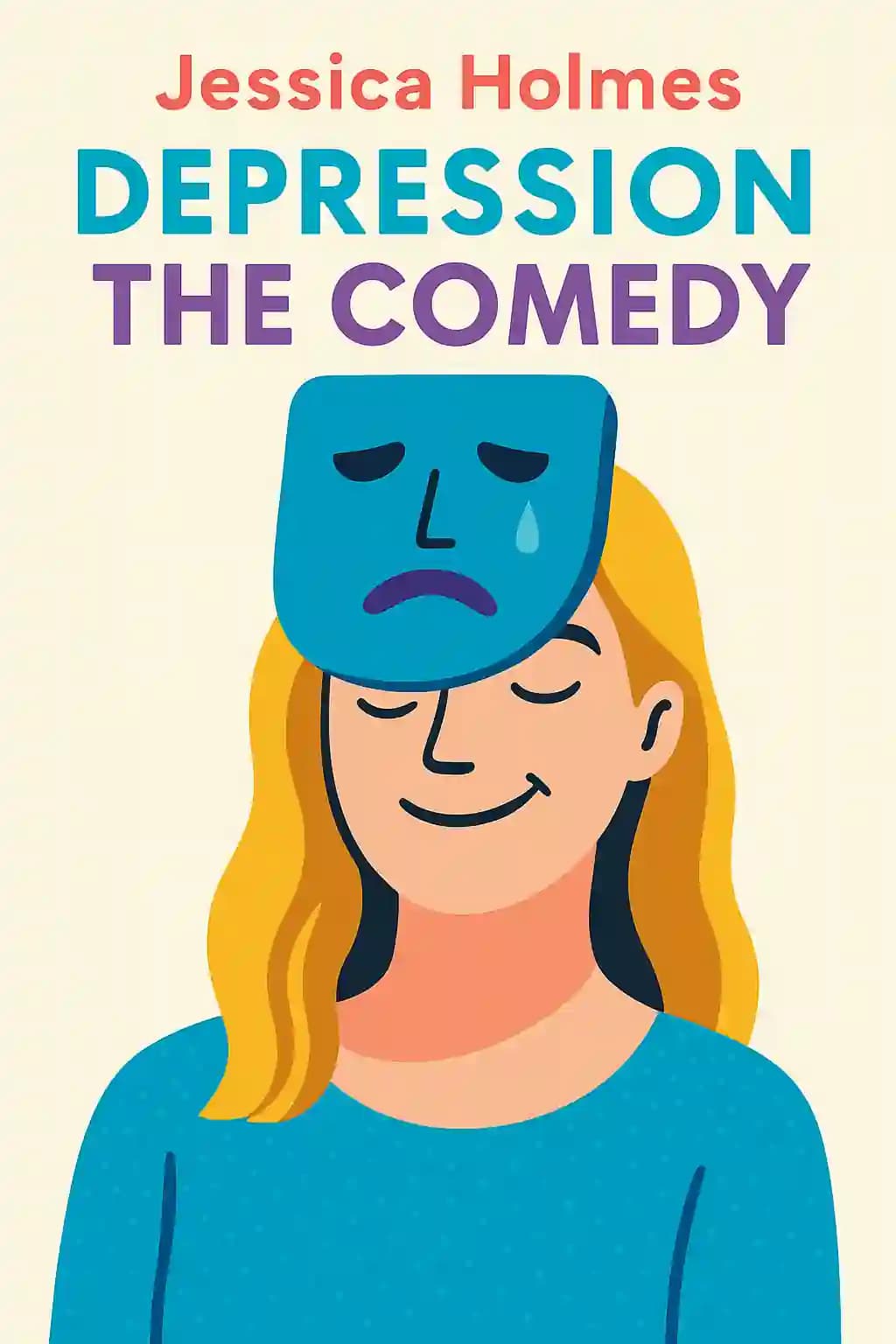
Jessica Holmes had always been the funny one. From collecting quirky moments as a child to becoming a professional comedian, humor was her superpower. So when she found herself unable to feel joy at the prospect of meeting Oprah-her longtime idol-she knew something was deeply wrong. Depression had crept in so gradually that she hadn't noticed her transformation from energetic cheerleader to emotional zombie. Unlike her earlier bout with postpartum depression, this episode arrived without warning and disguised itself brilliantly. As Holmes puts it, waking up each morning felt like punishment, and activities she once loved became unbearable chores. Depression, The Comedy has become something of an underground sensation among mental health advocates and comedy fans alike, with celebrities from Sarah Silverman to Stephen Fry praising its raw honesty. What makes this memoir stand out in the crowded field of mental health literature is Holmes' unique ability to find humor in the darkest corners of her experience without diminishing its seriousness-a balancing act few writers can achieve.
Capítulo 2
The Art of Turning Tragedy into Comedy
"Tragedy + Time = Comedy" isn't just a saying for comedians-it's a survival mechanism. Since childhood, I've documented life's absurdities like collecting material for a personal sitcom. This habit began during a European trip with my grandfather when we encountered a Parisian scammer who sold us tiny pleather jackets at an exorbitant price. When I lamented our financial loss, my grandfather offered wisdom that would shape my approach to life: "Jess, we weren't paying for the jackets. We were paying for the story."
This philosophy carried me through challenging experiences, including my time as a Mormon missionary in Venezuela where I maintained a "Funny Journal" documenting bizarre encounters. Though I eventually left the church, partly over its stance on homosexuality, my habit of collecting comedic moments persisted. Even when my television career faced setbacks-multiple shows canceled after single seasons-this practice taught me resilience.
The funny journal serves multiple purposes. It's not just material for future performances but a therapeutic exercise that helps maintain perspective. By documenting life's absurdities, we transform painful moments into stories we control. This reframing doesn't erase the pain but creates distance that allows healing. Think of it as emotional alchemy-turning lead experiences into golden anecdotes.
However, during depression, this ability disappeared entirely. The mental filter that once transformed difficulties into humor instead filtered out all positive emotions, leaving only doubt and despair. The comedian's greatest tool-finding humor in hardship-was suddenly inaccessible. This loss of perspective is perhaps depression's cruelest trick: it robs us of the very coping mechanisms we need most.
When depression finally lifted, rediscovering my joy in recording life's comedic moments felt like reuniting with an old friend. The funny journal returned not as a professional tool but as a practice of joy and mental health maintenance. It serves as a reminder that life, with proper perspective, contains more comedy than tragedy-even when that perspective temporarily disappears.
Capítulo 3
When Achievement Loses Its Shine
How do you know when you've crossed the line from temporary funk into clinical depression? For me, the answer came when I landed a dream opportunity to emcee an event for Oprah Winfrey-and felt nothing but mild interest.
I had always lived by ambitious mottos like "With great risk comes great reward," pushing myself toward impressive achievements. Yet success had become meaningless. My brain had transformed into a sieve that filtered out positive emotions, leaving only doubt and emptiness. Most days found me on the couch watching reality shows, avoiding friends and social obligations. The world had lost its color.
What's particularly insidious about depression is how it can coexist with professional competence. Despite my deteriorating mental state, I performed well at Oprah's event, feeling unnaturally calm on stage with none of my usual pre-show jitters. The emotional flatness that plagued my personal life actually created an eerie steadiness in my professional one. But afterward, when Oprah herself stood nearby, I froze completely-unable to even thank her for the opportunity.
Even achieving this career milestone that had been prominently displayed on my vision board for years elicited only a tepid "neat" from my emotional repertoire. The contrast between the magnitude of the achievement and the minuscule emotional response it generated created a cognitive dissonance I couldn't ignore.
This experience revealed the fundamental limitation of positive thinking and self-improvement advice when facing clinical depression. No amount of vision boarding, affirmations, or gratitude journaling could fix what was essentially a medical condition. All the motivational quotes in the world couldn't reconnect the neural pathways that had become disconnected.
In response, I taped up a new, simpler mantra beneath my vision board-a line from Finding Nemo: "Just keep swimming." I acknowledged that I needed to focus on smaller goals until I felt less like "a human turd." Sometimes survival itself is achievement enough, and recognizing when to scale back expectations is its own form of wisdom.
Capítulo 4
The Mirror's Harsh Reflection
My relationship with my appearance has always been complicated. As a Mormon missionary in Venezuela, my fair skin earned me the nickname "la rojita" (Little Red One) due to constant sunburn. Despite strict dress codes preventing me from wearing protective hats, I struggled with my reddened appearance under the blazing sun. With limited funds, I carefully budgeted for concealer, once surviving on powdered milk and kidney beans when I prioritized skincare over food.
Depression transformed this normal self-consciousness into something far more sinister. I began calling myself "Miss Piggy" when looking in the mirror, feeling like "an atrocity" inside and out. The internal darkness colored everything I saw in my reflection, creating a feedback loop of self-loathing that seemed impossible to escape.
Like many people struggling with depression, I tried to fix internal problems with external solutions. Online shopping sprees for eccentric clothes I never wore became a temporary distraction, accumulating debt while packages piled up unopened. The momentary dopamine hit from purchasing something new quickly faded, leaving me with both emotional emptiness and financial regret.
My desperate attempts at beauty treatments led me to discount deals at questionable establishments-a "laser therapy" that made my rosacea flare up "like a baboon's bottom" and a spray tan appointment with an apathetic goth teenager that left me looking "like a brown turtle." These experiences would be comical if they weren't manifestations of such profound self-hatred.
What's particularly cruel about depression's effect on self-image is how it distorts perception. The person in the mirror becomes unrecognizable-not because of actual physical changes but because we're seeing ourselves through depression's distorted lens. This warped self-perception then influences behavior, creating a self-fulfilling prophecy where we treat ourselves as unworthy of care or attention.
Years later, after recovering from depression, I discovered that exercise was the only beauty ritual that genuinely improved both my appearance and self-perception. The focus shifted from how I looked to what my body could accomplish-a profound transformation in perspective. Now I prioritize skin protection over appearance, wearing full-coverage swimwear at our trailer park getaway in Ontario, even when friends mistake me for "an old nurse caught in the waves."
The journey from self-loathing to self-acceptance isn't linear or complete-there are still difficult days. But reaching a place where insecurities no longer torment me, where I can be the butt of my own jokes without cruelty, represents genuine progress. Sometimes the greatest beauty treatment is learning to see yourself with kinder eyes.
Capítulo 5
When Love Becomes a Battlefield
Marriage during depression transforms into something unrecognizable-a distorted version of what was once a loving partnership. My husband Scott and I had a charming beginning despite some awkward moments. Our first date featured a depressing movie, and when I stood on a decorative boulder hoping for a kiss, Scott just winked and walked away. By our third date, we'd shared only one significant kiss, with Scott insisting that "Good things are worth waiting for." His playing hard-to-get worked-I proposed two years later when I realized he was more than just a boyfriend.
Our fundamental differences became amplified during my depression. I was a "busy mind with no off switch" who "feels she's right 100 percent of the time" while Scott was a peacekeeper who "doesn't sweat small stuff." These differences, manageable in normal circumstances, became insurmountable obstacles when depression entered the picture.
When my condition was at its worst, I alternated between fury and apology with no middle ground for intimacy. Despite having help at home, "I can't handle this" became my daily mantra. Our sex life disappeared entirely, and in a moment of desperate clarity about what I was putting him through, I offered Scott a "hall pass"-permission to seek intimacy elsewhere. He declined, demonstrating a commitment I couldn't fully appreciate at the time.
Depression affected my professional judgment as well. I experienced brain fog during performances, making embarrassing mistakes during charity auctions and corporate gigs. In a desperate attempt to feel important again, we foolishly invested $150,000 in a friend's movie on a line of credit, a decision that led to years of financial anxiety and sleepless nights.
The isolation depression creates is particularly damaging to intimate relationships. Even with someone physically present and emotionally available, depression builds invisible walls that prevent connection. Simple gestures of affection become irritating, well-intentioned help feels like criticism, and the emotional bandwidth needed for relationship maintenance disappears entirely.
Eventually Scott suggested marriage counseling, a suggestion I initially resisted. His persistence in "fixing" our relationship-despite my resistance-ultimately became the lifeline that not only saved our marriage but helped identify my depression. Sometimes the people who love us see what we cannot, and their willingness to push past our defenses becomes the intervention we desperately need but cannot request.
Capítulo 6
Finding Help Beyond the Couch
Marriage requires endurance rather than speed-it's "a marathon, not a sprint." While Scott and I share compatible traits that will make us "terrific senior citizens" someday (early risers, book lovers, soup enthusiasts), we struggled with daily interactions during my depression. Scott's natural inclination to fix problems became apparent on our first Valentine's Day when he gave me the book "Don't Sweat the Small Stuff" and its accompanying workbook rather than something romantic. Fourteen years later, after leaving me to my own miserable devices, Scott finally insisted on fixing us, and I reluctantly agreed to see a marriage counselor.
Our therapist Evelyn had a "Mona Lisa smile with a Judge Judy hairdo," and her calmness proved contagious. Despite planning to unload evidence against Scott, I softened when I saw his innocent, hopeful expression. After our joint session, Evelyn requested individual meetings. When I returned alone, I unleashed my frustrations-"Scott's the worst!" But Evelyn skillfully helped me realize my irritation wasn't just with Scott but with everyone. She gently suggested I was depressed again, which explained why everyone exhausted me except my children (with whom I felt foggy). She referred me to a psychiatrist, giving me momentary relief that my marriage might have hope.
My new psychiatrist ("Dr. Huh") quickly confirmed Evelyn's depression diagnosis. Getting a diagnosis was both liberating and terrifying. The positives included having a name and treatment plan, an excuse for my behavior, and helping Scott understand I wasn't "body-snatched." The negatives included leaving my safe velvet sectional, realizing I might have recurrences, facing skeptics who don't believe depression is real, and receiving simplistic advice from well-meaning friends. Dr. Huh prescribed antidepressants that would take 6-8 weeks to work fully-"like if a dog chomped down on your leg and the veterinarian says, 'Classic case of dog-on-leg. Don't worry, we'll get him off in two months.'"
While waiting for medication to take effect, Scott and I tried reconnecting through shared activities, but our suggestions revealed our differences-he proposed cleaning together or reading, while I suggested binge-watching reality TV or Facebook surfing. We compromised on a Mexico trip with friends, but even paradise couldn't lift my mood. Despite trying to be "couple-y," I remained irritable, proving depression's essence: "the world is your oyster but you can't see past your own misery."
Upon returning, Dr. Huh explained pills were only part of the solution, not a cure-all: "a painkiller may cure your headache, but that doesn't mean that headaches are caused by a shortage of painkillers." He helped me distinguish between superficial marital problems (solved by not sharing a bathroom) and deeper issues (acknowledging the world wasn't against me). Working from home together proved challenging-Scott's puttering reminded me of my own unproductivity. We tackled practical issues by moving Scott's business to a shared office, curbing my online shopping, going on a budget, and decluttering our home.
The following spring in Hawaii, I experienced a breakthrough when I reacted reasonably to being slammed into coral while snorkeling. Later, when Scott twisted his ankle hiking and I helped him down the mountain without panicking, we shared a rare moment of connection. Through my worst moments, Scott has been there "holding up my proverbial hair so the proverbial puke doesn't get on it. And that's love. That's marathon-worthy."
Capítulo 7
When the Spotlight Becomes a Microscope
Comedy has always been my refuge, but during depression, it transformed into another source of anxiety. I've always felt like an outsider in the comedy world-I'm a morning person who doesn't smoke pot, and I mostly perform at corporate shows rather than clubs. Early career traumas made me withdraw from the social side of comedy: discovering other comedians mocking me on a recording I'd made of my performance, and witnessing an emcee whipping performers with a rubber chicken if they weren't getting enough laughs.
Every comedian has a price for which they'll make terrible artistic choices-from Cher's mocked hair infomercials to Rob Lowe's cringe-worthy Oscar duet with Snow White. In corporate comedy, I've accepted many gigs with "humiliation fees" that included impossible setups: performing at carnivals, kids' birthdays, poolside, outdoors, or even leaning over a balcony to address an audience five stories below. Despite success, I still take these jobs because my starving artist mindset makes me believe any gig beats no gig.
The job comes with ego whiplash-one night opening for Jerry Seinfeld, the next bombing at a poolside show where kids splashed me throughout. When I was depressed, bombing on stage escalated from "That was a bad gig" to catastrophic thinking: "I'm untalented and we'll be living in our RV within a year." Depression makes you emotionally near-sighted and isolates you from peers whose support you need most.
Reaching out to fellow comedians like Patrick McKenna and Tazz Norris helped me realize my problems weren't unique. They encouraged me to work in group settings more often, which helped me push past my insecurities. My comedy peers readily shared their humiliating stories-from James Cunningham accidentally mocking a man with alopecia, to Simon Cotter unintentionally tricking a retiring doctor, to Jennifer Irwin enduring insults during dinner theater, to Dean Young being hired to heckle bathroom users at a bar mitzvah.
What makes performing particularly challenging during depression is the contrast between the persona and the person. Audiences expect energy, joy, and connection-precisely what depression strips away. The effort required to bridge that gap becomes exhausting, and the fear of failing to do so creates additional anxiety. It's like running a marathon with weights attached to your legs while everyone else sprints freely.
These shared experiences remind me that validation makes a huge difference in managing the psychological toll of performance. Now when I face absurd performance situations, I think, "Wait till so-and-so hears about this-we'll have an epic laugh!" Converting humiliation into shared storytelling transforms isolation into connection, creating community from what once felt like solitary suffering.
Capítulo 8
The Invisible Battle: Social Anxiety and Depression
As an introvert with a very public job, I'm most comfortable being around people while simultaneously being left alone. I love people indirectly, preferring to eavesdrop on friends' conversations while cooking rather than participating. My introversion began as an assertiveness problem-I panic during confrontations and become awkwardly uncomfortable in simple social interactions like telling someone they gave me wrong change.
Beyond introversion, I suffer from social anxiety before shows, when traveling, or in situations where I'm expected to meet strangers' social expectations. My behavior becomes either catatonic or scattered. While I rarely get stage fright during performances, the days leading up to shows leave me anxious. I developed coping mechanisms like conversation-enders and even tried medication for anxiety. Initially, the medication made me feel comfortable-sometimes inappropriately so, giving me a "Kate Hudson-on-pot" voice that encouraged all my choices.
This led to disaster at a corporate gig for bankers where I went inappropriately edgy during what I thought was a roast, humiliating the bank executive. Where I need the invisibility cloak most is in smaller towns with "manners." In one isolated northern town, my anxiety made me appear snobby when I couldn't handle a lunch in my honor, and my show was interrupted by kids playing basketball.
Social anxiety creates a painful paradox-the more you want to connect with others, the more difficult it becomes. Every interaction becomes a potential minefield of embarrassment or rejection. The brain constantly scans for threats, interpreting neutral expressions as negative and casual remarks as criticisms. This hypervigilance exhausts mental resources that could otherwise be used for genuine connection.
When combined with depression, social anxiety creates a perfect storm of isolation. Depression saps the energy needed to overcome anxiety, while anxiety prevents the social connections that might alleviate depression. Breaking this cycle requires tremendous effort-often more than can be mustered without professional help.
Social anxiety has made me miss seeing the beauty around me and connecting with people who were genuinely kind. The fear of judgment creates a self-fulfilling prophecy where avoiding connection guarantees loneliness. Learning to distinguish between anxiety's false alarms and genuine social threats remains an ongoing challenge-one that requires constant vigilance but offers the reward of authentic human connection.
Capítulo 9
Parenting Through the Darkness
When my kids were young, I struggled with depression that made parenting nearly impossible. My decision-making process became: "Can this cause long-term damage?" If no, then "yes" to whatever they asked. Only my anxiety could trigger a "no"-my helicopter-parent worries about open water, cars, staircases, and men with mustaches.
I was raised by opposites: my Mormon dad Randy encouraged risk-taking adventures (like sending kids solo through grocery stores with carts), while my agnostic feminist mom Laura prioritized safety. With these conflicting voices in my head, I couldn't decide between them. My behavior became a predictable cycle: placate, avoid, power-bond, avoid, blow up, followed by tearful apologies. My daughter Alexa even made a "Scream Chart" to track who lost their temper most.
Depression prevented me from connecting with my children despite loving them deeply. After diagnosis, my therapist helped me understand that saying "no" wasn't traumatizing but actually provided security. Getting our dog Ellie forced me to get off the sofa daily. With mindfulness practices, I've learned to be present with my children, though I still occasionally see the emotional scars from those dark years.
Parenting while depressed creates a unique form of guilt. You're simultaneously aware of your shortcomings and unable to correct them. You watch yourself failing at the most important job of your life but lack the emotional resources to change course. The knowledge that these formative years won't come again adds pressure that further exacerbates depression's symptoms.
What's particularly painful is the contrast between the parent you want to be and the parent depression allows you to be. The gap between intention and action widens until they seem entirely disconnected. You love your children fiercely but struggle to demonstrate that love in consistent, nurturing ways. Simple tasks like making lunches or attending school events become monumental challenges.
Recovery brings both relief and regret-relief that you can finally be present for your children, but regret for the time lost to depression's fog. Learning to forgive yourself becomes essential for moving forward. Children are remarkably resilient, and with honesty about your struggles and consistent effort to reconnect, relationships can heal. The scars remain, but they become part of a larger story of recovery and resilience that ultimately teaches children valuable lessons about human frailty and the possibility of healing.
Capítulo 10
The Comedian's Curse: Depression in a Funny Business
The relationship between comedy and depression is a chicken-and-egg question that's made me wonder if comedy is the right career path. Are unstable people drawn to this unpredictable lifestyle, or does the feast-or-famine nature of performing cause mental instability? When interviewing veteran comedian Mike MacDonald, he explained that comedy's inherent unfairness is particularly challenging for people with mental health issues-unlike sports where talent and effort reliably lead to advancement, comedy success depends on subjective opinions of gatekeepers.
My comedy journey began as a hobby when friends and I drunkenly dared each other to try stand-up at a campus bar. Despite my terror-buckling legs, accidentally hitting myself in the mouth with the mic-I got hooked after my first laugh. For two years, I performed at every open mic while taking Second City classes and blowing temp work paychecks. My relentless optimism and Oprah-quoting ways made me an outsider among more cynical comics who felt I hadn't "come by comedy honestly."
At the 23-month mark of my self-imposed two-year window, I landed a role as "Little Big Kid" in two-minute TV segments, earning $3,000 for a month's work-my first taste of makeup chairs and catered lunches. This led to five back-to-back series, but when that streak ended, my overthinking became my worst enemy. Corporate comedy gigs provided income but unpredictable work-some weeks fully booked, then months with nothing-creating a financial "yo-yo in the wind."
The instability fed my depression, leaving me spending days watching TV, declining social invitations, crying, and playing Candy Crush instead of working on my career. The ruminating comedians do, the instability, and the competition all contribute to why artists have twice the suicide rate of the general population.
To combat depression while staying in comedy, I developed several strategies: First, remembering "it's nothing personal"-like Billy Baldwin said about show business being "a double-edged sword that sells an illusion that's barely attainable and almost never sustainable," with 97% of Screen Actors Guild members earning less than $20,000 annually. Second, realizing the grass isn't greener elsewhere-every job has its pitfalls. Third, stopping the comparison game by limiting social media time and being honest about my work situation instead of defensive. Fourth, creating stability through team sports, getting a dog, daily writing, and limiting TV to one hour. Fifth, actually working-momentum builds with each productive hour, as my agent reminded me: "Work begets work." Finally, chasing usefulness rather than specialness-as Chynna Phillips demonstrated by praying before performances, "Let me reach whoever needs it."
These approaches haven't "fixed" me, but they've made me more resilient and able to enjoy the ride again. The comedian's curse can become a blessing when we learn to channel our sensitivity into connection rather than self-destruction.
Capítulo 11
Finding Your Way Back: The Marathon of Recovery
When I was a kid, my mom took me to watch the Ottawa marathon. We cheered for everyone-the elite athletes leading the pack, the middlers, and especially the sparse trotters at the rear who kept moving despite being last. Their tenacity brought tears to my eyes. Years later, between my bouts of depression, I was cast in a musical where I befriended a man struggling with his own depression. Though reluctant to fill his prescription, a few of us escorted him to the pharmacy, chanting his name and singing the Rocky theme. Today he seems content, as though his depression was just a passing anomaly.
My own recovery wasn't as simple-medication helped with my postpartum depression but only did "diddly-some" this time. I needed a lifestyle overhaul, counting to three before tackling tasks that seemed daunting, jogging (eventually upgrading from "jeggings and a floppy sun hat" to proper fitness gear), abandoning my "depression diet" of "sorta food" for actual food, and switching to decaf coffee to avoid the crash. Small accomplishments made me feel "more like a boss" with each step forward.
My non-movie treat is pie-making-pinching crusts and pouring in fruit with cinnamon creates a Zen moment for me after failing at meditation. I see Dr. Huh less frequently now, only when anxiety spikes around holidays or work FOMO hits. Talk therapy helped when despair tainted everything, and cognitive behavioral therapy taught me to identify and repeat successful behaviors.
Coming off medication (which I did under medical supervision) turned me back into an emotional toddler. Where I was once measured, I now puff up over $2 carnival prizes or over-share with cashiers. I'm painting with twenty-four colors instead of twelve, happy-crying at church notice boards and holiday commercials. I marvel at marathon runners and wonder how many people run their own daily marathons-single parents, those with invisible illnesses, people juggling marriages and affairs.
My marathon is prioritizing mental health above all else. I've lost gigs by refusing overnight shoots or networking at bars, but new opportunities have filled those gaps. Though I can't help individuals (I'd be back on the sofa within days), I serve as a "human loudspeaker" for those stuck in negative spaces.
We're building a community of support, working to make mental health as stigma-free as brushing teeth. At a party, when a polished woman implied depression was for "lazy whiners," I finally stood up and explained it's an actual illness, not a lack of perspective. So many people support the cause-by listening, fundraising, or just trying to get out of bed.
Sometimes I'm dumbfounded that I'm susceptible to depression despite all the beauty around me. I regret missing parts of my kids' early years, but my grandmother reminded me everyone has regrets-just forgive yourself and move forward. I'll always see the door to depression in the corner, but it's just a door I'm making sport of avoiding. Maybe our whole lives will be spent channeling our tenacity to find a clear path-how beautiful to discover we are the most optimistic of all.