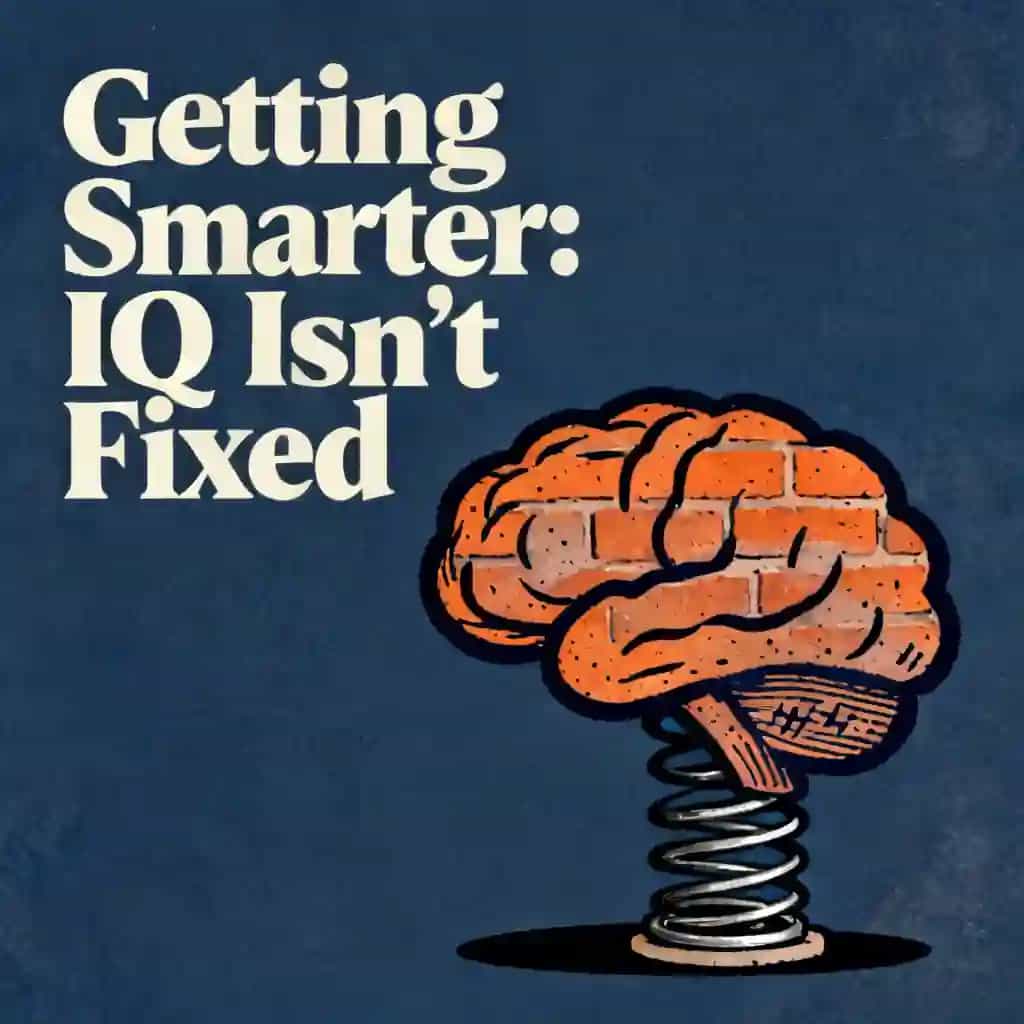
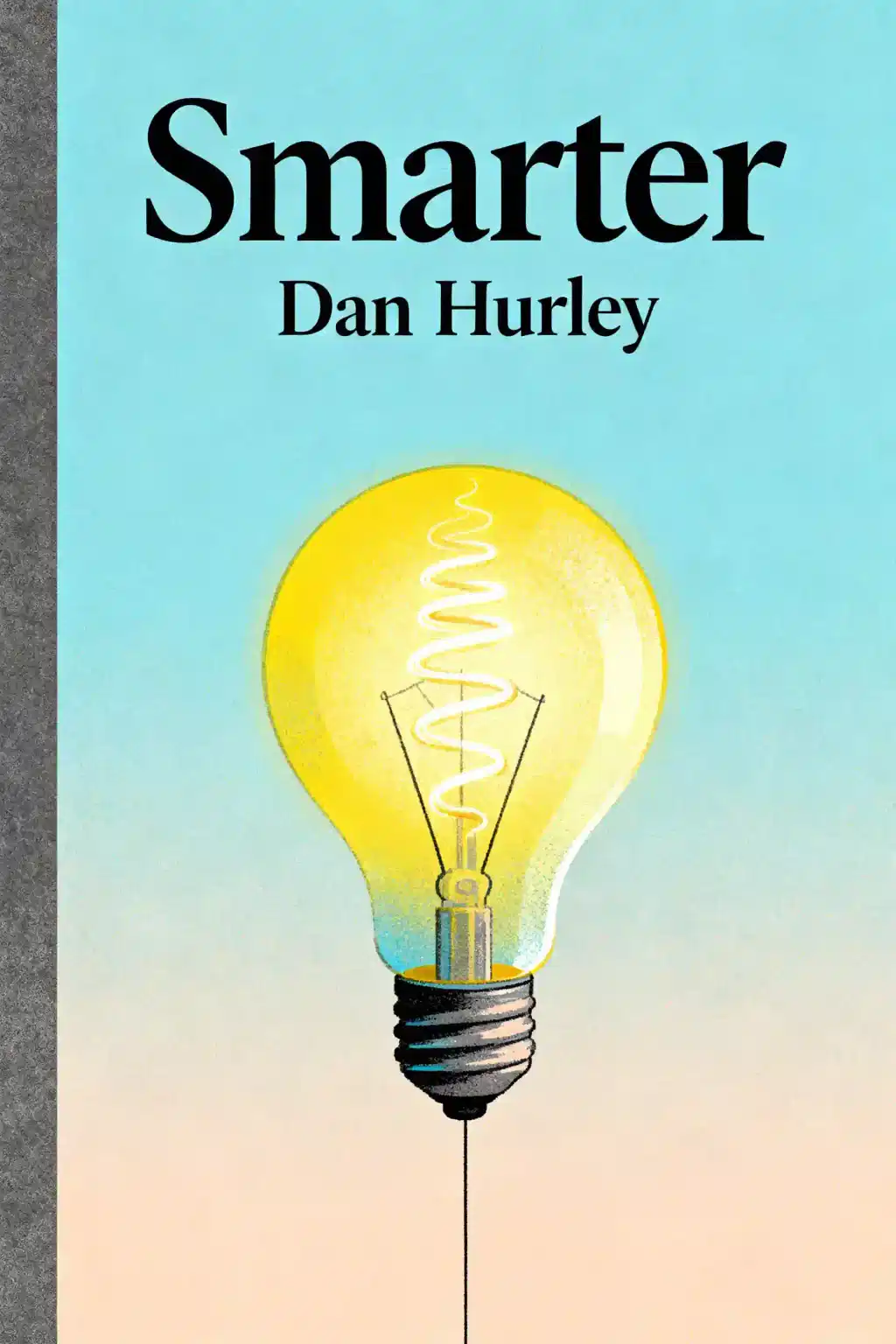
Smarter: The New Science of Building Brain Power by Dan Hurley Summary

Overview of Smarter
Can intelligence be upgraded like software? In "Smarter," journalist Dan Hurley challenges fixed IQ beliefs with groundbreaking neuroscience, testing everything from memory training to transcranial stimulation on himself. Discover why Malcolm Gladwell fans are buzzing about this science-backed guide to boosting your brain power.
- Neuroplasticity proves brains can rewire at any age through training
- Fluid intelligence isn’t fixed—targeted N-back tasks boost problem-solving skills
- Lumosity’s brain games show measurable IQ gains via consistent challenges
- Aerobic exercise enhances cognitive performance more than passive mental activities
- Working memory capacity directly links to fluid intelligence improvements
- Dan Hurley tests nicotine patches and transcranial stimulation for focus boosts
- Learning instruments strengthens neural networks beyond musical skill development
- "Flow state" immersion accelerates learning by merging focus and enjoyment
- Crystallized intelligence grows with age while fluid peaks in early adulthood
- Cognitive training’s real-world impact remains debated despite lab-proven results
- Combining analytical and creative thinking outperforms single-mode intelligence approaches
- Brain health requires social connection as much as mental exercises
About the Author of Smarter
Dan Hurley, award-winning science journalist and author of Smarter: The New Science of Building Brain Power, combines rigorous research with accessible storytelling in this exploration of cognitive enhancement. A veteran contributor to The New York Times Magazine, The Washington Post, and Discover, Hurley bridges neuroscience and practical self-improvement, drawing on three years of interviews with researchers and firsthand experimentation with intelligence-boosting techniques. His investigative work, including a 2012 NY Times Magazine cover story on cognitive improvement, solidifies his authority in translating complex science into actionable insights.
Beyond journalism, Hurley’s unique role as the world’s only “60-Second Novelist” – crafting instant life stories for over 50,000 individuals – underscores his knack for synthesizing human experiences into compelling narratives.
A frequent speaker at venues like SXSW and the Royal Society for the Arts, his work has been featured on NPR, ABC Nightline, and CBS Evening News. Smarter builds on Hurley’s acclaimed career, including his 1994 Psychology Today award-winning investigative piece, offering readers a science-backed roadmap to unlocking mental potential. The book’s methods have garnered attention from educators and professionals seeking evidence-based cognitive strategies.
FAQs About Smarter
What is Smarter by Dan Hurley about?
Smarter explores groundbreaking research on boosting fluid intelligence through brain-training methods like computerized games, memory exercises, and lifestyle changes. Dan Hurley combines scientific studies with personal experimentation to debunk myths about fixed IQ, showing how neuroplasticity allows cognitive improvement at any age. Key themes include the role of flow states, physical exercise, and tools like Lumosity or N-back training.
Who should read Smarter by Dan Hurley?
This book is ideal for psychology enthusiasts, lifelong learners, and skeptics questioning whether IQ can be enhanced. It’s particularly relevant for educators, professionals seeking cognitive edge, or anyone interested in brain-training apps like Lumosity. Hurley’s blend of science and self-experimentation appeals to readers who enjoy authors like David Epstein or Malcolm Gladwell.
Is Smarter by Dan Hurley worth reading?
Yes—especially for those curious about evidence-based brain optimization. Hurley’s deep dive into studies (like Susanne Jaeggi’s N-back research) and firsthand accounts of improving his own fluid intelligence by 16% make it a compelling read. Critics note some commercial brain-training claims remain debated, but the book balances optimism with scientific scrutiny.
How does Smarter explain neuroplasticity?
Neuroplasticity—the brain’s ability to rewire itself—is central to Hurley’s thesis. He highlights studies showing tasks like learning instruments or solving complex problems physically alter brain structures, enhancing fluid intelligence. For example, London taxi drivers’ hippocampal growth from memorizing routes illustrates this adaptability.
What brain-training methods does Smarter recommend?
Key methods include:
- N-back games (20 mins/day improves working memory)
- Dual n-back tasks combining visual/audio challenges
- Physical exercise to boost BDNF, a brain-growth protein
- Flow-state activities (e.g., chess, music) for focused cognitive engagement.
Does Smarter critique commercial brain-training programs?
Hurley examines programs like Lumosity and Cogmed, acknowledging their potential but warns against overhyped claims. While some studies show modest gains, he stresses consistent practice and combining digital tools with real-world challenges (e.g., learning languages) for best results.
What’s the difference between fluid and crystallized intelligence in Smarter?
- Fluid intelligence: Problem-solving in novel situations (improved via brain-training).
- Crystallized intelligence: Accumulated knowledge (grows with age). Hurley argues fluid intelligence’s malleability challenges traditional IQ models.
How did Dan Hurley test Smarter’s techniques on himself?
For 3.5 months, he used N-back training, Lumosity games, nicotine patches (to stimulate focus), and aerobic exercise. Post-experiment IQ tests showed a 16% fluid intelligence increase, though he notes individual results may vary.
What role do flow states play in Smarter?
Flow—deep immersion in challenging tasks—enhances learning speed and creativity. Hurley links it to improved cognitive control, citing examples like musicians or athletes who outperform under pressure.
Are there criticisms of Smarter’s brain-training claims?
Some scientists argue IQ gains from training are narrow or short-lived. Hurley addresses this by emphasizing cross-training (mixing digital/analog tasks) and lifestyle factors (sleep, nutrition) for sustained benefits.
How does Smarter compare to other brain-training books?
Unlike pop psychology titles, Smarter focuses on peer-reviewed studies while maintaining accessibility. It’s more research-driven than The Brain That Changes Itself but less technical than academic texts. Combines narrative storytelling (à la Oliver Sacks) with actionable advice.
Can Smarter’s methods help older adults prevent cognitive decline?
Yes—Hurley cites studies where seniors using brain-training apps showed improved memory and processing speed. Pairing mental exercises with physical activity (e.g., brisk walking) amplifies benefits.
Feel the book through the author's voice
Turn knowledge into engaging, example-rich insights
Capture key ideas in a flash for fast learning
Enjoy the book in a fun and engaging way
Key Themes in Smarter
Quotes from Smarter
Intelligence-long considered fixed and immutable-might actually be trainable like a muscle.
"This is impossible. This doesn't work," Buschkuehl initially declared.
Function matters more than size.
Characters in Smarter
Quick Summary Mode - Read or listen to Smarter Summary in 8 Minutes

Break down key ideas from Smarter into bite-sized takeaways to understand how innovative teams create, collaborate, and grow.

Flash Card Mode - Top 7 Insights from Smarter in a Nutshell

Distill Smarter into rapid-fire memory cues that highlight key principles of candor, teamwork, and creative resilience.

Fun Mode - Smarter Lessons Told Through 23-Min Stories

Experience Smarter through vivid storytelling that turns innovation lessons into moments you'll remember and apply.
Personalize Mode - Read or listen to Smarter Summary in 0 Minutes

Ask anything, pick the voice, and co-create insights that truly resonate with you.

From Columbia University alumni built in San Francisco
"Instead of endless scrolling, I just hit play on BeFreed. It saves me so much time."


"I never knew where to start with nonfiction—BeFreed’s book lists turned into podcasts gave me a clear path."


"Perfect balance between learning and entertainment. Finished ‘Thinking, Fast and Slow’ on my commute this week."
"Crazy how much I learned while walking the dog. BeFreed = small habits → big gains."
"Reading used to feel like a chore. Now it’s just part of my lifestyle."

"Feels effortless compared to reading. I’ve finished 6 books this month already."
"BeFreed turned my guilty doomscrolling into something that feels productive and inspiring."

"BeFreed turned my commute into learning time. 20-min podcasts are perfect for finishing books I never had time for."
"BeFreed replaced my podcast queue. Imagine Spotify for books — that’s it. 🙌"

"It is great for me to learn something from the book without reading it."
"The themed book list podcasts help me connect ideas across authors—like a guided audio journey."
"Makes me feel smarter every time before going to work"
From Columbia University alumni built in San Francisco
"Instead of endless scrolling, I just hit play on BeFreed. It saves me so much time."
"I never knew where to start with nonfiction—BeFreed’s book lists turned into podcasts gave me a clear path."
"Perfect balance between learning and entertainment. Finished ‘Thinking, Fast and Slow’ on my commute this week."
"Crazy how much I learned while walking the dog. BeFreed = small habits → big gains."
"Reading used to feel like a chore. Now it’s just part of my lifestyle."
"Feels effortless compared to reading. I’ve finished 6 books this month already."
"BeFreed turned my guilty doomscrolling into something that feels productive and inspiring."
"BeFreed turned my commute into learning time. 20-min podcasts are perfect for finishing books I never had time for."
"BeFreed replaced my podcast queue. Imagine Spotify for books — that’s it. 🙌"
"It is great for me to learn something from the book without reading it."
"The themed book list podcasts help me connect ideas across authors—like a guided audio journey."
"Makes me feel smarter every time before going to work"
"Instead of endless scrolling, I just hit play on BeFreed. It saves me so much time."
"I never knew where to start with nonfiction—BeFreed’s book lists turned into podcasts gave me a clear path."
"Perfect balance between learning and entertainment. Finished ‘Thinking, Fast and Slow’ on my commute this week."
"Crazy how much I learned while walking the dog. BeFreed = small habits → big gains."
"Reading used to feel like a chore. Now it’s just part of my lifestyle."
"Feels effortless compared to reading. I’ve finished 6 books this month already."
"BeFreed turned my guilty doomscrolling into something that feels productive and inspiring."
"BeFreed turned my commute into learning time. 20-min podcasts are perfect for finishing books I never had time for."
"BeFreed replaced my podcast queue. Imagine Spotify for books — that’s it. 🙌"
"It is great for me to learn something from the book without reading it."
"The themed book list podcasts help me connect ideas across authors—like a guided audio journey."
"Makes me feel smarter every time before going to work"
"Instead of endless scrolling, I just hit play on BeFreed. It saves me so much time."
"I never knew where to start with nonfiction—BeFreed’s book lists turned into podcasts gave me a clear path."
"Perfect balance between learning and entertainment. Finished ‘Thinking, Fast and Slow’ on my commute this week."
"Crazy how much I learned while walking the dog. BeFreed = small habits → big gains."
"Reading used to feel like a chore. Now it’s just part of my lifestyle."
"Feels effortless compared to reading. I’ve finished 6 books this month already."
"BeFreed turned my guilty doomscrolling into something that feels productive and inspiring."
"BeFreed turned my commute into learning time. 20-min podcasts are perfect for finishing books I never had time for."
"BeFreed replaced my podcast queue. Imagine Spotify for books — that’s it. 🙌"
"It is great for me to learn something from the book without reading it."
"The themed book list podcasts help me connect ideas across authors—like a guided audio journey."
"Makes me feel smarter every time before going to work"

Get the Smarter summary as a free PDF or EPUB. Print it or read offline anytime.