Capítulo 1
The Stress Revolution: From Chaos to Calm
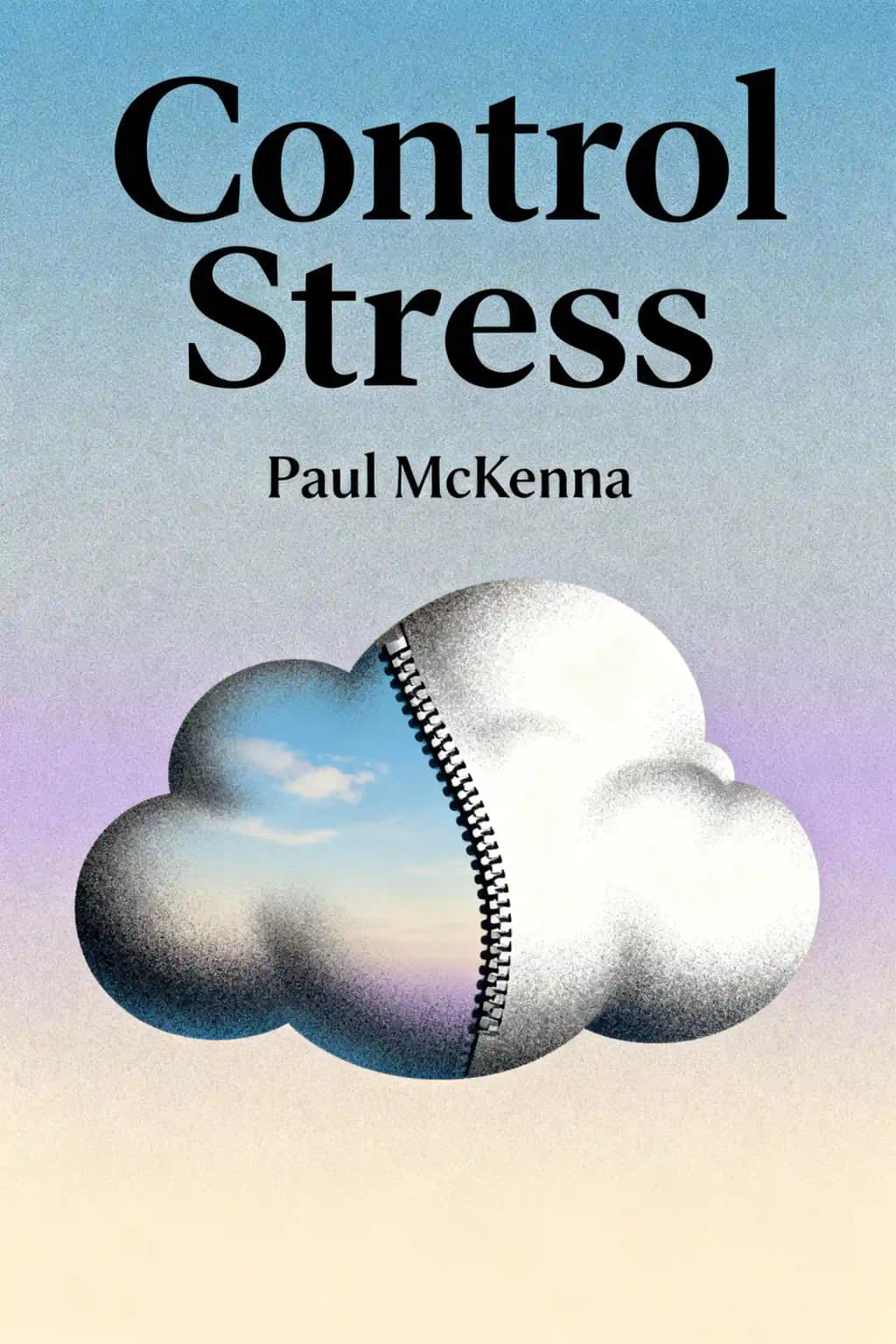
Have you ever found yourself lying awake at 3 AM, mind racing with tomorrow's to-do list, while your heart pounds like a drum? You're not alone. In our hyper-connected world, stress has become an epidemic, with approximately 50% of doctor visits now stress-related and workplace absences due to stress at record levels. Paul McKenna's groundbreaking book "Control Stress" offers a revolutionary approach to this modern plague. Unlike conventional stress management books, McKenna's system combines practical psychological techniques with hypnotic programming to create lasting neurological change. The book has gained a cult following among high-performers including CEOs, Olympic athletes, and celebrities like Ellen DeGeneres and Hugh Jackman, who credit McKenna's methods with helping them maintain peak performance without burnout. Time Magazine called it "the stress bible for the 21st century," while scientific studies from institutions including Harvard Medical School have validated hypnosis as one of the fastest-acting solutions for stress-related conditions. As stress continues to be recognized as a leading contributor to chronic disease, McKenna's approach represents a paradigm shift in how we understand and manage this invisible threat.
Capítulo 2
Understanding Your Stress Response: The Car Alarm in Your Body
Your body's stress response works exactly like a car alarm - designed to keep you safe by alerting you to danger. Without this vital system, you wouldn't have the necessary adrenaline, blood, and oxygen when facing genuine threats. The problem arises when this alarm gets triggered by minor events, essentially "driving you crazy" while causing serious health issues.
The autonomic nervous system maintains your bodily functions through two key components: the sympathetic nervous system (SNS) governs "fight or flight," flooding your body with adrenaline and cortisol when facing danger, while the parasympathetic nervous system (PNS) manages "rest and digest," slowing your heart rate and allowing recovery. This natural relaxation creates a sweet, soft muscle feeling and endorphin release. Ideally, we'd spend most time in relaxed alertness, easily shifting between systems as needed.
Many people have been stressed for so long they've normalized it, completely unaware of how much better life could be. This chronic "background stress" often goes unnoticed until it manifests as bad moods, mistakes, or even illness. When people push ahead while filled with worry and stress, their performance, relationships, and enjoyment suffer - like trying to run a race in heavy armor.
Contrary to what many believe, controlling stress doesn't mean losing your edge or becoming emotionless. Instead, it increases your energy, efficiency, and effectiveness while boosting happiness. You'll maintain your full emotional range but experience less anger, fear, and discomfort with greater background happiness and well-being. The goal is resetting your internal stress mechanism to an appropriate sensitivity level by learning to reinterpret stress causes and reactivating your body's natural stress-reduction system.
As Dr. Hans Selye, the pioneer of stress research, noted: "It is not the event, but rather our interpretation of it, that causes our emotional reaction." Our nervous system cannot distinguish between physical threats and imagined ones - criticism triggers the same stress chemicals as physical danger. These chemicals, meant to be used through physical activity, become toxic when they accumulate from thoughts we can neither fight nor flee from.
Capítulo 3
The Heart-Brain Connection: Your Internal Stress Switch
Research in neurocardiology has revealed something remarkable - your heart contains its own "brain" with 40,000 neurons capable of learning, remembering, and sensing independently. This heart-brain influences our perceptions and emotions while regulating autonomic nervous system signals. When your head-brain perceives a threat, it signals the heart to produce stress chemicals, but remarkably, the heart-brain can override this signal.
The Institute of HeartMath discovered that simply focusing attention on the physical heart reduces stress hormones and increases anti-aging hormones. Their "From Head to Heart" exercise helps shift attention from head to heart, promoting relaxation and clarity by connecting with deeper wisdom and common sense.
This explains why when you're stressed, you often feel disconnected from your "heart" - that intuitive knowing that guides your best decisions. By deliberately shifting your focus from your racing thoughts to the physical area around your heart, you can activate the parasympathetic nervous system and return to a state of calm alertness.
Try this now: Place your hand over your heart area and breathe slowly and deeply, imagining your breath flowing in and out through your heart. As you continue breathing this way, recall a time when you felt genuine appreciation for someone or something. Hold that feeling while maintaining the heart-focused breathing. Notice how quickly your body begins to relax and your mind becomes clearer.
This simple technique activates what HeartMath researchers call "heart coherence" - a state where your heart rhythm becomes more ordered and harmonious, directly affecting brain function and stress hormone levels. When practiced regularly, this heart-focused approach becomes your internal "off switch" for the stress response, available whenever you need it.
Capítulo 4
The Rhythm of Relaxation: Why Recovery Is Your Secret Weapon
In Japan, stress-related deaths from overworking are called "karoshi," a phenomenon increasingly common in Western societies. Like many high achievers, I once pushed myself relentlessly, only to repeatedly burn out and lose progress through illness. Even during vacations, I continued working, driven by guilt and the fear of falling behind. I discovered I was addicted to "busyholism" - the chemical buzz produced by the stress response.
The breakthrough came when I learned from sports psychologist Jim Loehr that "life is not a marathon-it is a series of sprints." Elite athletes understand that peak performance comes not from constant exertion but from strategic oscillation between intense activity and deliberate recovery. By alternating between focused work and recovery periods, I developed greater strength and focus, ultimately accomplishing more by working less.
Our bodies operate on natural 90-minute cycles of alertness and rest called ultradian rhythms. During these "ultradian rest phases," our bodies naturally seek 15 minutes of replenishment. Unfortunately, many override this natural rhythm with caffeine and forced concentration, eventually disrupting their body's signals. The solution is simple - when you notice yourself daydreaming with a feeling of comfort starting in your body, allow yourself to relax deeply for 5-20 minutes. This brief recovery period will refresh you and improve concentration.
The Systematic Relaxation technique provides a structured way to release tension throughout your body. Start by relaxing your eyes, then your jaw, neck, shoulders, arms, hands, chest, stomach, back, legs, and feet. Use a soothing inner voice to guide yourself through this process, saying things like "Now I'm relaxing my eyes... now my jaw is relaxing..." As you practice, you'll find you can achieve deep relaxation in just a few minutes.
Finding balance between activity and rest is essential for managing stress and maintaining health. By understanding our natural cycles and incorporating deliberate recovery periods, we can achieve greater productivity and wellbeing without succumbing to the dangerous pattern of constant work that leads to burnout and illness.
Capítulo 5
Creating Your Calm Anchor: Training Your Nervous System
Our thoughts directly affect how our bodies feel. By creating a "calm anchor" - squeezing your thumb and middle finger together while vividly recalling peaceful feelings - you establish a physical trigger for relaxation. This works through the same associative conditioning principle that Ivan Pavlov discovered with his famous experiments with dogs.
The technique involves intensifying memories of calmness, locking in these feelings through repetition, then applying this anchor to previously stressful situations. Since your nervous system can't distinguish between real and vividly imagined experiences, this reprogramming helps you respond with inner calm instead of stress, allowing you to handle challenging situations more effectively.
To create your calm anchor, first recall a time when you felt completely at peace. As you remember this experience, make the images brighter, the sounds clearer, and the feelings stronger. When the peaceful feelings reach their peak, gently squeeze your thumb and middle finger together, holding for about ten seconds while savoring the calm sensations. Release and repeat this process five times, strengthening the association between the finger squeeze and the feelings of tranquility.
Next, systematically reduce stress by identifying your five most significant stressors and applying your calm anchor to each one. Imagine yourself handling these situations calmly, even when challenges arise. This process of generalization gradually lowers your overall stress levels across all areas of life, becoming easier and more effective with regular practice.
For example, if public speaking causes you anxiety, imagine standing at the podium feeling those familiar nervous sensations beginning. Then activate your calm anchor by squeezing your thumb and middle finger together. Visualize the calm feelings flowing through your body, replacing the anxiety with confidence as you deliver your presentation with poise. Repeat this mental rehearsal several times until the new response feels natural.
This technique systematically reprograms your nervous system's automatic responses. With practice, your brain creates new neural pathways that bypass the stress response, allowing you to remain calm in situations that previously triggered anxiety. The beauty of this approach is that it works with your brain's natural plasticity - its ability to form new connections and patterns based on repeated experiences.
Capítulo 6
Exercise: The Ultimate Stress Antidote
Exercise - any activity that increases heart rate and deepens breathing - is one of our most powerful stress-control tools. It improves blood flow to the brain and major organs while speeding elimination of stress chemicals like adrenaline and cortisol. Physical activity triggers natural relaxation by flooding the body with euphoria-inducing endorphins. Even simple activities like a 15-minute walk can provide these benefits.
Exercise becomes self-reinforcing; as stamina increases, it becomes easier until reaching a tipping point where it's actually easier to exercise than not. It builds muscle, reduces fat, enhances mental clarity, improves skin, increases sex drive, and even slows aging. Yet many avoid it due to negative perceptions.
When controlling stress, the goal isn't aesthetic perfection but feeling better - getting "fit for life." The "Instant Motivation" technique reshapes perceptions of exercise by associating it with highly motivating feelings and experiences. This seven-step process involves rating your current motivation, recalling intensely motivating experiences, visualizing them vividly while making a fist with your dominant hand, and creating a permanent association between that motivation and exercise.
Consider Sarah, a busy executive who knew exercise would help her stress levels but couldn't find the motivation after long workdays. Using the Instant Motivation technique, she recalled the exhilaration she felt after completing a charity 5K run years earlier - the pride, accomplishment, and energy that lingered for days afterward. By anchoring these powerful feelings to the thought of exercise, she transformed her resistance into anticipation. Within weeks, her 20-minute evening walks became the highlight of her day rather than another obligation.
This approach works because it harnesses the brain's associative networks. Rather than relying on willpower (which depletes under stress), it changes the fundamental way your brain categorizes exercise - from "chore" to "reward." The key is consistency; each time you use your motivation anchor before exercising, you strengthen the neural pathways connecting exercise with positive emotions.
Capítulo 7
From Worry to Solutions: Transforming Your Mental Patterns
Worry is one of our least productive and pleasant mental activities, yet we persist in it. People typically worry because they believe it keeps them safe or they don't know how to stop. The key insight is that what most call "worrying" is actually interrupted "downside planning" - they imagine what could go wrong but never create solutions. Successful people complete this process by developing contingency plans.
The human mind possesses extraordinary problem-solving capabilities when freed from limiting beliefs, as demonstrated by George Bernard Dantzig who unknowingly solved two "unsolvable" statistics problems because he didn't know they were impossible. Effective problem-solving requires two steps: entering a calmer, more positive mental state and then generating solutions.
The "law of requisite variety" states that the most flexible part of any system ultimately controls it - meaning more perspectives create more choices and greater control. Three powerful problem-solving techniques can transform your approach to worry:
1. Problem-Solving Questions - Ask yourself: "What's good about this problem?" "What's not perfect yet?" "What am I willing to do to solve this?" "What am I willing to stop doing?" "How can I enjoy the process of solving this?" and "What resources do I need?"
2. Role Model Step-In - Imagine how someone you admire would handle this situation. See through their eyes, hear through their ears, and feel how they would feel. This perspective shift often reveals solutions invisible from your normal viewpoint.
3. Back to the Future - Imagine the problem already solved and you're looking back at how you did it. What steps did you take? What resources did you discover? This technique leverages your brain's pattern-recognition abilities to find solutions.
Even when solutions are available, worry thoughts can persist because the mind believes worry serves a protective function. Worry exists on a spectrum from apathy/indifference to panic/anxiety disorder, with healthy concern (levels 2-3) being ideal - enough interest to handle necessary tasks without excessive worry about uncontrollable factors.
The Worry Buster exercise helps identify the positive intention behind worry, develop healthier alternatives, and reset your worry thermostat to shift from panic to appropriate concern. By acknowledging the protective purpose behind worry while finding more effective ways to achieve that protection, you can break free from the worry cycle without feeling like you're abandoning your responsibilities.
Capítulo 8
Rewriting Your Stress Story: Changing Your Self-Narrative
Stories form the fabric of our society, from ancient myths to modern bestsellers. But the most important story is the one you tell yourself about yourself and your life. These self-narratives are shaped by our upbringing, especially during our first six or seven years. If you were repeatedly told life is a struggle, that becomes your experience. People view the world through the filter of their stories, which is why certain patterns seem to repeat in your life.
Many people have become so hypnotized by their own negative stories that they can't even recognize them as stories anymore. Common stress-inducing narratives include "I never have enough time," "I can't cope," or "I'm a perfectionist." While some personal stories serve us well, many are imposed from outside - like being told you're "no good at math" or "shy." The more we repeat these stories, the more real they seem. But they're still just stories that can be changed once you recognize them as such.
Our moment-to-moment feelings are largely determined by the pictures we create in our imagination and the stories we tell ourselves - like a television program constantly playing in the background. Even without conscious practice, everyone has the ability to work with internal imagery. Simple tests like visualizing your front door or imagining biting into a lemon demonstrate this innate capacity that can be developed with practice.
One of the most powerful perceptual shifts you can make is learning to step inside or outside your internal imagery. "Dissociation" - stepping outside a thought or memory - instantly reduces stress and increases feelings of control. When we dissociate from stressful images by seeing ourselves in the picture from a distance, draining the color, and making the image smaller and transparent, we dramatically reduce emotional intensity. Conversely, "association" - stepping into positive memories - increases emotional intensity.
Consider how this works in practice: When James thinks about his upcoming presentation, he creates a vivid mental movie where he sees himself stumbling over words while colleagues look bored or critical. He's fully "associated" into this imagery - seeing it through his own eyes, hearing the stumbles in his own voice, feeling the embarrassment in his body. This creates immediate stress.
After learning dissociation techniques, James practices viewing that same scenario from the back of the imaginary room, watching himself as if on a small, distant screen. He notices the colors fading to black and white, the sound becoming quieter. From this perspective, the presentation seems like someone else's problem - interesting but not emotionally overwhelming. This simple perceptual shift dramatically reduces his stress response.
Capítulo 9
Healing Trauma: Rewiring Painful Memories
Post-traumatic stress disorder manifests through flashbacks, nightmares, sleep difficulties, anger and hypervigilance. The fascinating insight from working with trauma victims is that two people can experience identical traumatic events yet respond completely differently. The difference lies in how their brains represent the memory through specific combinations of images, sounds, words and feelings.
Our stress response to traumatic events depends entirely on how we internally represent those memories. When we repeatedly replay traumatic memories in vivid, associated ways, we essentially re-traumatize ourselves each time. The key to healing lies in changing how these memories are coded in our minds.
By teaching clients to dissociate from traumatic memories - floating out of the picture, shrinking it down, draining the color, and running it backwards quickly - we can permanently disconnect the feelings of trauma from the memory itself. This approach allows people to remember what happened without being emotionally hijacked by the memory, often producing remarkable relief in minutes rather than months of therapy.
The technique for rewiring unpleasant memories involves imagining yourself in a comfortable movie theater, then floating up to the projection booth where you can safely observe yourself watching the memory on screen. From this dissociated perspective, you watch the film from before the traumatic event until after you successfully came through it, then run the film backwards as fast as possible. Repeating this process several times recodes the memory, disconnecting the emotional charge while preserving the factual information.
Lisa, a client who had been in a serious car accident, would experience panic attacks whenever she needed to drive on the highway. Using this technique, she watched herself watching a movie of the accident from the projection booth. After running the memory backwards several times, she was able to recall the accident without panic. The memory remained intact - she could still describe exactly what happened - but the emotional charge had disappeared. Within days, she was able to drive on highways again without anxiety.
This powerful technique works surprisingly quickly, though professional help should always be sought for serious trauma. It doesn't erase memories but changes how they're stored in the brain, separating the factual content from the emotional response. This allows you to learn from past experiences without being controlled by them.
Capítulo 10
The Art of Being: Finding Joy in the Present Moment
Many people who appear to have everything - wealth, possessions, busy lives - are often deeply stressed and unhappy. They have "all the toys but none of the joy." True contentment comes not from external achievements but from cultivating inner peace. Making changes in the outside world means little if you haven't first learned to live peacefully on the inside - otherwise it's just "rearranging deck chairs on the Titanic."
The key difference between those who are peaceful despite busy lives and those who are stressed is their approach to life. Many live in a "Do-Have-Be" pattern - doing as much as possible to have things that will make them happy. The more effective approach is "Be-Do-Have" - being at peace first, then doing what needs to be done, which naturally leads to having what you want.
Many people find it difficult to simply be with themselves, constantly seeking distraction from uncomfortable feelings. Yet ironically, when you're willing to be present with discomfort, it often transforms into something more pleasant. Emotions are signals - anger tells you to take action, fear keeps you alert, sadness signals a need for self-nurturing. When these emotions don't need to shout to be heard, you experience more background good feelings.
Creating space to just "be" requires reprioritizing your life. Steve Jobs' question - "If today were the last day of my life, would I want to do what I am about to do today?" - provides powerful perspective. The 80/20 rule (Pareto Principle) reveals that typically 80% of results come from 20% of efforts, 80% of stress comes from 20% of people or activities, and 80% of happiness comes from 20% of your experiences.
Medical research increasingly supports laughter as a practical tool for better health. Dr. Madan Kataria's research shows that laughing 15-20 minutes daily, even without reason, increases endorphins - natural opiates that reduce pain, alleviate respiratory symptoms, and increase stamina. Having a sense of humor is vital not just for these biochemical benefits but because finding humor requires seeing situations from multiple perspectives. When stressed, people's focus narrows exclusively to problems, causing them to lose this perspective-shifting ability and their sense of humor.
When you're drowning in stress, everything seems worse than it is. But with background happiness-a subtle awareness that all is well regardless of circumstances-small problems won't rock your world. This state of relaxed alertness combines good bodily feelings with positive thoughts. Dr. Robert Holden's research showed that depressed people who laughed for 20 minutes daily, exercised, and practiced positive thinking completely reprogrammed their brains within a month, moving from clinical depression to happy optimism.
Capítulo 11
The Gratitude Revolution: Training Your Brain for Joy
When stressed, people become fixated on everything wrong or potentially wrong in their lives-they become the alarm rather than the car. This negative focus strengthens neural pathways associated with fear and stress, making it easier to enter the stress response than to experience joy. The solution is shifting attention from "what's wrong" to "what's right," not through blind positive thinking but by retraining your brain to notice joy and wonder.
People under stress habitually focus on what's wrong or could go wrong-becoming specialists in "disaster awareness." This reinforces neural pathways associated with fear, making stress their default state. The "I Feel Good" technique helps: whenever you experience a good feeling, place your hand on your heart, acknowledge it, and instruct your mind to seek more such feelings. Simply saying "I feel good" while doing this for just seven days dramatically improves well-being.
Viktor Frankl's seminal book "Man's Search for Meaning" reveals a powerful truth: even in the most horrific environments, we can experience joy. Despite documenting Nazi brutalities, Frankl described how prisoners at Auschwitz, after a brutal day, could still be captivated by a beautiful sunset. This reminds us that joy and beauty remain present around us, regardless of circumstances-and the more we train our brains to spot them, the more joy we'll experience.
The simplest yet most powerful tool for rebooting our natural joy system is making daily lists of things we appreciate. This can include both significant achievements and small pleasures-from family relationships to that first morning coffee. Research shows this practice delivers dramatic benefits: fewer physical symptoms, greater optimism, higher goal achievement, and increased alertness, enthusiasm, determination, and energy.
By maintaining a "Joy List" with at least five new items daily, we celebrate our abundance rather than habituating to life's good things. Reviewing this list whenever you need a boost raises consciousness levels and reconnects you to life's simple pleasures. As Oprah Winfrey states, keeping a gratitude journal "will absolutely change your life." The act of writing down what you appreciate trains your brain to make gratitude and joy your default emotional position.
Scientific experiments confirm that repeatedly thinking about things that make you feel good alters your brain chemistry for the better. By focusing on positive thoughts, you build neural networks associated with feelings of well-being, literally "hardwiring" yourself to feel good more frequently. What you focus on consistently increases, and by building neural pathways that default to relaxation and joy, your brain will naturally seek out good feelings.