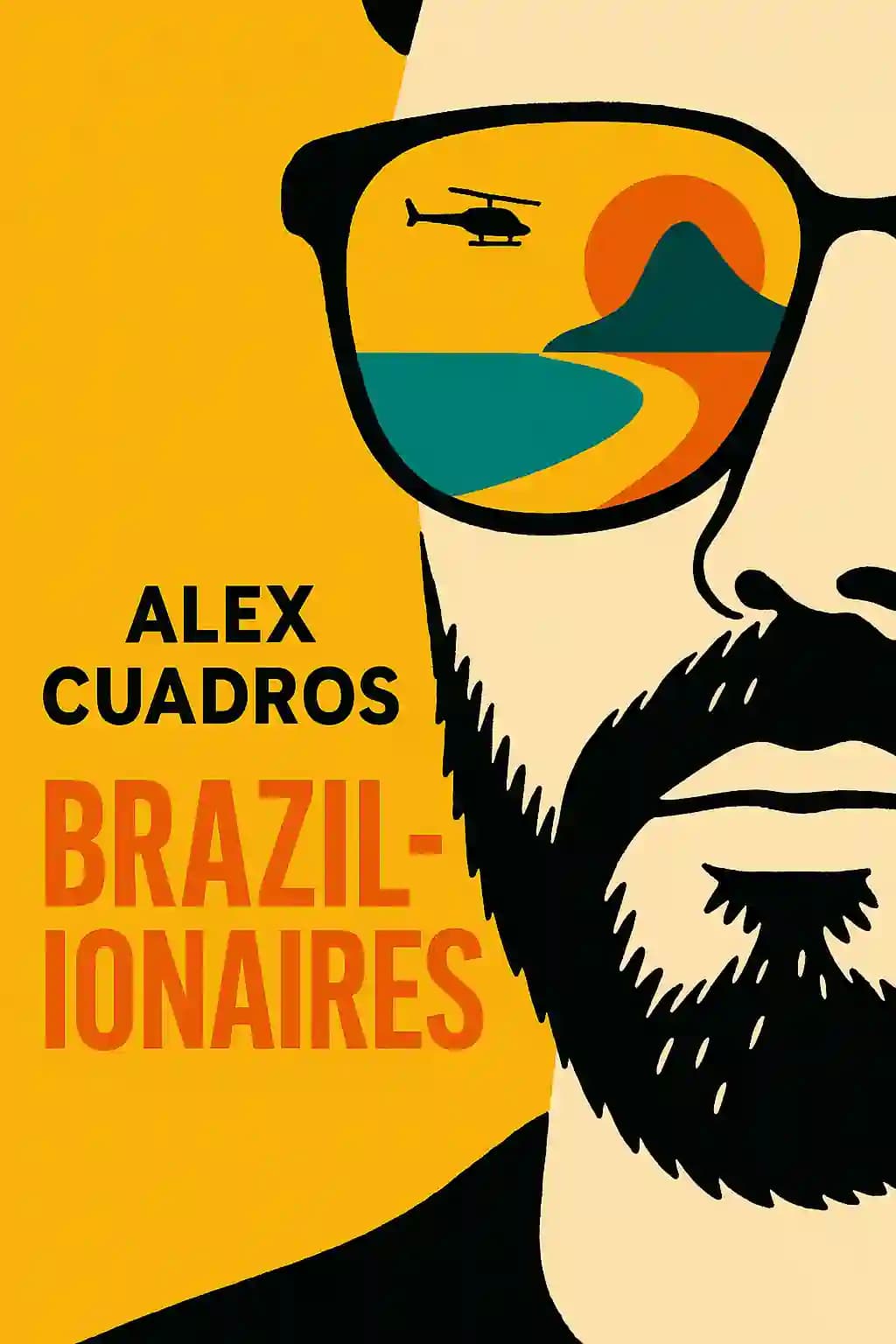
Brazillionaires
Wealth, Power, Decadence, and Hope in an American Empire
Overview of Brazillionaires
Dive into Brazil's shadowy billionaire class where corruption meets capitalism. Endorsed by The New York Times' Andrew Ross Sorkin as "wild and richly reported," Brazillionaires reveals how the ultra-wealthy shaped a nation's rise and spectacular fall - with lessons on power that transcend borders.

Key Themes in Brazillionaires
- extreme wealth inequality
- political patronage systems
- corporate government entanglement
- crony capitalism
- brazilian oligarchy
Quotes from Brazillionaires
Justice, opportunity, and even life itself seem to operate on different terms.
Rules existed 'para ingles ver' but were routinely broken.
'I'm always here. It's you gentlemen who change,'
Villages artificially divided to receive multiple payments.
Nobody messes with my communists.
Characters in Brazillionaires
- Alex CuadrosAuthor and journalist who investigated the elite
- Eike BatistaOnce Brazil's richest man and father of Thor
- Thor BatistaSon of Eike Batista involved in a fatal accident
- Sebastiao CamargoFounder of the construction giant Camargo Correa
- Wanderson Pereira dos SantosCyclist whose death symbolized Brazil's inequality
About the Author
About the Author of Brazillionaires
Alex Cuadros is the acclaimed author of Brazillionaires: Wealth, Power, Decadence, and Hope in an American Country, a penetrating exploration of Brazil’s billionaire elite and their influence on the nation’s socio-economic fabric.
An investigative journalist and former Bloomberg “billionaires reporter,” Cuadros draws on six years of immersive reporting in São Paulo to expose the intersections of wealth, corruption, and power in Latin America’s largest economy. His work has appeared in The New Yorker, The Atlantic, The Washington Post, and Harper’s, with his 2023 article on the Amazon’s ecological tipping point featured in The Best American Science and Nature Writing.
Cuadros’s rigorous yet accessible narrative style blends financial analysis with cultural insight, reflecting his deep expertise in Brazil’s political and economic landscape. Brazillionaires was longlisted for the Financial Times Business Book of the Year and named a New York Times Editors’ Choice.
His upcoming book, When We Sold God’s Eye, continues his focus on the Amazon, chronicling an Indigenous tribe’s collision with modern capitalism. Cuadros’s reporting has been supported by the Pulitzer Center and the Alicia Patterson Foundation, cementing his reputation as a leading voice on Brazil’s complexities.
Download Summary of Brazillionaires
Get the Brazillionaires summary as a free PDF or EPUB. Print it or read offline anytime.
FAQs About This Book
Brazillionaires examines Brazil’s economic rollercoaster through the lives of its ultra-wealthy elites, particularly billionaire Eike Batista. It explores how corruption, hubris, and inequality fueled Brazil’s rise as a BRIC nation and subsequent collapse, blending investigative journalism with narratives of billionaires who dominated industries like beer, fast food, and energy. The book reveals how oligarchs shaped politics, media, and environmental policies.
This book suits readers interested in global economics, Latin American politics, or narratives about wealth disparities. Journalists, historians, and business analysts will appreciate its deep dive into corruption and power dynamics. Fans of biographical-economic hybrids like Lords of Finance or The Big Short will find parallels in its cautionary tales.
Yes. Longlisted for the Financial Times Business Book of the Year and praised as a New York Times Editors’ Choice, it combines rigorous reporting with gripping storytelling. Cuadros’ access to Brazil’s elite provides unique insights into their influence over national crises, making it essential for understanding modern capitalism’s pitfalls.
The book frames Brazil’s boom-and-bust cycle through Eike Batista’s trajectory: his meteoric rise as a mining magnate symbolizing the BRIC-era optimism, and his 2015 bankruptcy mirroring the nation’s collapse. Cuadros ties this to systemic issues like graft, commodity dependence, and elite exploitation of public resources.
Corruption is central, depicted as a centuries-old staple of Brazilian business. Examples include billionaires bribing politicians for contracts, evading taxes, and manipulating media. Cuadros traces this from 19th-century oligarchs to modern figures like Batista, showing how graft enabled wealth concentration and social inequality.
Batista emerges as a tragic symbol of excess. Once Brazil’s richest man, he flaunted yachts and empire-building before his oil ventures crashed, exposing reckless leverage and fraud. Cuadros frames his downfall as emblematic of Brazil’s misplaced trust in charismatic elites.
Key holdings include:
- Ambev (Budweiser, Stella Artois)
- 3G Capital (Burger King, Heinz)
- EBX Group (Batista’s energy/mining conglomerate)
- Odebrecht (construction giant embroiled in bribery scandals)
Cuadros contrasts billionaires’ opulence with widespread poverty, arguing that elites exploited tax breaks, lax regulations, and political connections to hoard wealth. The 2013 street protests—sparked by transit fare hikes amid World Cup spending—highlight this divide.
- Power consolidation: Elites control Brazil’s economy, media, and environment.
- Systemic corruption: Bribes and cronyism are ingrained in business-politics ties.
- Hubris and fragility: Batista’s collapse mirrors Brazil’s vulnerability to commodity swings and speculative bubbles.
Unlike economist-heavy texts, Cuadros uses character-driven narratives akin to Katherine Boo’s Behind the Beautiful Forevers. It shares themes with Winner-Take-All Politics but focuses on Brazil’s unique blend of tropical glamour and institutional decay.
A former Bloomberg Brazil correspondent, Cuadros spent six years investigating its elites. His work for The New Yorker, The Atlantic, and Pulitzer Center grants underscores his expertise in finance and environmental reporting.
As Brazil faces new crises—deforestation, political polarization—the book remains a cautionary tale about unchecked elite power. Its lessons on resource mismanagement and inequality resonate globally amid climate and economic instability.





