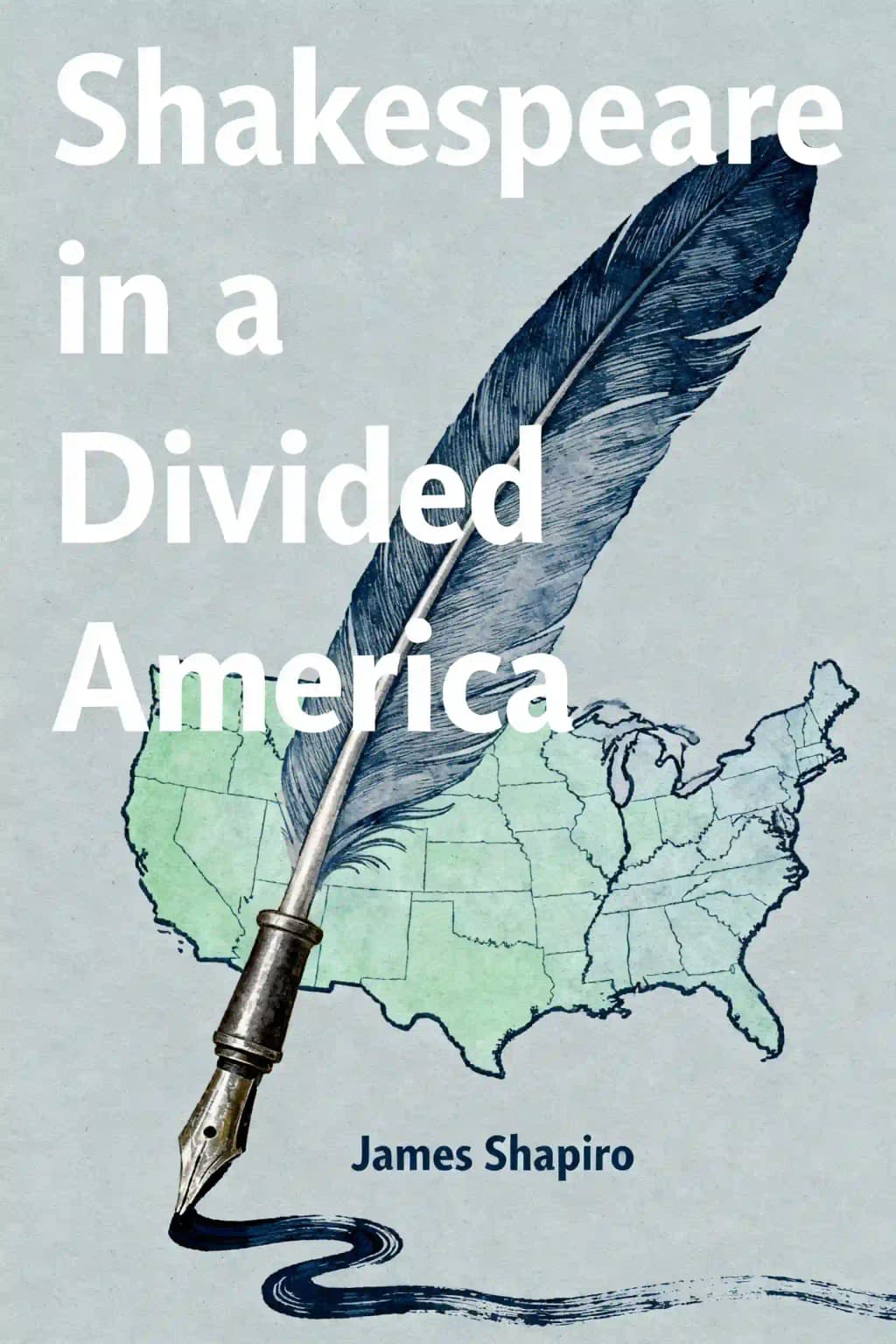
Shakespeare in a Divided America
What His Plays Tell Us about Our Past and Future
Overview of Shakespeare in a Divided America
Shakespeare's plays reveal America's soul in Shapiro's eye-opening exploration of our nation's deepest divides. From Lincoln's assassination to Trump-era controversies, discover how the Bard has both reflected and shaped America's tumultuous identity struggles for over two centuries.

Key Themes in Shakespeare in a Divided America
- cultural polarization
- american racial imagination
- national identity formation
- gender performance
- literary political history
Quotes from Shakespeare in a Divided America
Shakespeare speaks to me in a way that no other writer does.
Desdemona's passion for Othello was unnatural.
Mexico needed to be taught to respect us like a headstrong wife.
His manhood was all talk.
I could not separate the African color from the man.
Characters in Shakespeare in a Divided America
- James ShapiroAuthor and historian exploring Shakespeare's role
- John Quincy AdamsAbolitionist and president with complex racial views
- Fanny KembleCelebrated actress and anti-slavery journal writer
- Ulysses S. GrantFuture general cast as Desdemona in an army play
- Abigail AdamsMother of John Quincy Adams with conflicted views
About the Author
About the Author of Shakespeare in a Divided America
James Shapiro, acclaimed Shakespeare scholar and bestselling author of Shakespeare in a Divided America, is a leading authority on the cultural and political resonance of Shakespeare’s works. A Larry Miller Professor of English at Columbia University and Shakespeare Scholar in Residence at New York’s Public Theater, Shapiro explores how Shakespeare’s plays mirror America’s ideological fractures. His deep expertise in Elizabethan and Jacobean drama, honed through decades of teaching and research, informs his examination of race, immigration, and power in this critically lauded work.
Shapiro’s groundbreaking studies, including 1599: A Year in the Life of William Shakespeare (winner of the Samuel Johnson Prize) and The Year of Lear: Shakespeare in 1606 (James Tait Black Prize recipient), have redefined modern Shakespeare scholarship. A frequent contributor to The New York Times, The Guardian, and The New Yorker, he has also authored BBC documentaries like The King and the Playwright.
Shakespeare in a Divided America was named one of The New York Times’ Ten Best Books of 2020 and a National Book Critics Circle Award finalist, cementing Shapiro’s reputation as a vital voice in connecting literary history to contemporary societal debates.
Download Summary of Shakespeare in a Divided America
Get the Shakespeare in a Divided America summary as a free PDF or EPUB. Print it or read offline anytime.
FAQs About This Book
Shakespeare in a Divided America by James Shapiro explores how Shakespeare’s plays have mirrored and shaped America’s unresolved conflicts, including racism, immigration, class warfare, and political polarization. Through historical case studies—from John Quincy Adams’ debates on interracial marriage to Trump-era controversies over Julius Caesar—Shapiro reveals how Shakespeare’s works expose cultural tensions and ideological divides.
This book appeals to history enthusiasts, Shakespeare scholars, and readers interested in the intersection of literature and politics. It’s particularly valuable for those analyzing how cultural icons like Shakespeare reflect societal conflicts, offering insights into America’s past and present divisions.
Yes. Shapiro’s meticulous research and engaging narrative illuminate how Shakespeare’s plays remain relevant to American discourse. While some critics question its political conclusions, the book offers a unique lens to understand historical and modern tensions through literature.
The 1916 chapter examines debates over restricting immigration, linking Shakespeare’s The Tempest to fears of “foreign” influence. Shapiro shows how nativists and reformers alike invoked Shakespeare to justify opposing views on national identity, underscoring the playwright’s role in framing America’s immigration discourse.
The 1849 Astor Place Riot—a deadly clash over rival performances of Macbeth—highlights class conflict and anti-English sentiment. Shapiro frames it as a pivotal moment where Shakespeare became a battleground for issues of equality and cultural ownership in a rapidly changing America.
Shapiro analyzes a 2017 Trump-inspired Julius Caesar production that sparked outrage, arguing such controversies reveal how Shakespeare’s exploration of power and tyranny remains potent. However, he questions whether shared engagement with the plays can still bridge ideological divides in polarized times.
Some critics argue Shapiro overstates Shakespeare’s unifying potential in earlier eras and underestimates systemic inequities. Others note the book’s focus on elite interpretations, neglecting broader populist engagements with Shakespeare’s works.
The book traces how figures like Lincoln and John Quincy Adams turned to Shakespeare’s tragedies to grapple with leadership crises. For example, Lincoln’s fascination with Macbeth and Richard III mirrored his fears about ambition and moral compromise during the Civil War.
The 1948 chapter examines debates over interfaith marriage through Romeo and Juliet adaptations. Shapiro shows how the play’s themes of forbidden love resonated during a period of social conservatism, reflecting anxieties about cultural assimilation and religious identity.
Unlike 1599 (a deep dive into Shakespeare’s creative process), this book uses historical case studies to argue for Shakespeare’s enduring cultural relevance. Both works showcase Shapiro’s ability to link literary analysis to broader societal shifts.
As America continues to grapple with political polarization, immigration reforms, and debates over inclusivity, Shapiro’s analysis offers a framework to understand how cultural symbols like Shakespeare both reflect and influence national identity.
Shapiro argues that Shakespeare’s plays “forced to the surface the cultural tensions and shifts that otherwise prove so difficult to identify.” This idea anchors his exploration of how Othello, Macbeth, and other works catalyzed debates about race, power, and belonging.