Capítulo 1
When Social Media Became the World's Most Powerful Algorithm
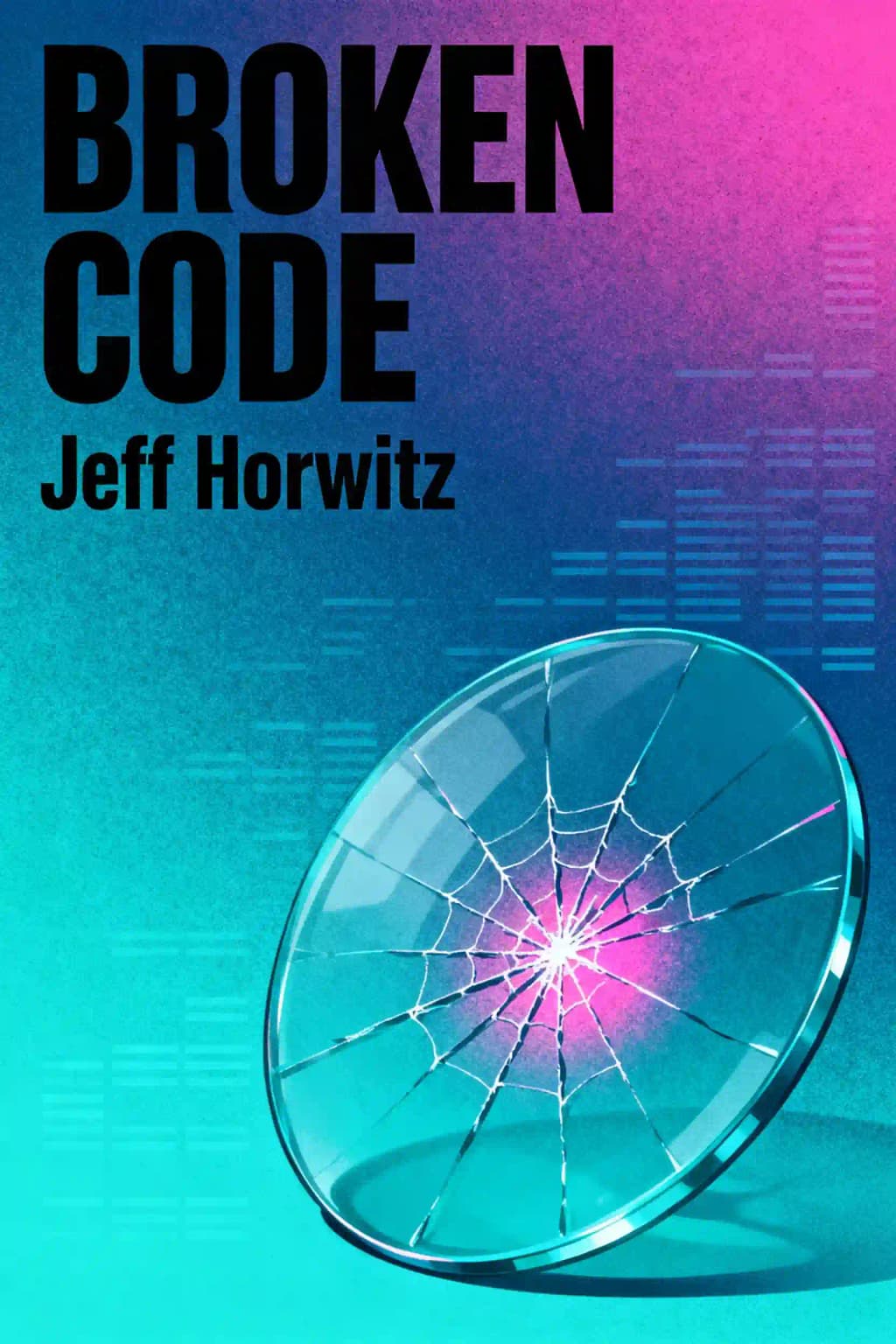
In the heart of Silicon Valley, a tech prodigy returned to Facebook's sprawling campus in 2019, feeling both at home and deeply disturbed. Arturo Bejar, once the architect of Facebook's groundbreaking "Protect and Care" team, had come back as a consultant after his teenage daughter faced misogynistic comments and unsolicited explicit images on Instagram. What he discovered shattered his faith in the company he had helped build: the user reporting system he designed had been deliberately crippled to reduce complaints by making the process convoluted and misleading. This revelation epitomized Facebook's transformation from an idealistic connector of people to a platform that systematically prioritized growth over user welfare. "Broken Code" has become a cultural touchstone in Silicon Valley, with tech executives and regulators alike citing it as required reading for understanding how algorithms shape our world. The book's revelations have sparked congressional hearings and informed regulatory approaches worldwide, while celebrities from Barack Obama to Elon Musk have referenced its insights about how social media's design choices fundamentally alter human interaction.
Capítulo 2
The Birth of a Digital Behemoth
Facebook's transformation from Mark Zuckerberg's Harvard dorm room project to global digital empire was fueled by an intense mixture of relentless ambition and acute paranoia. The company consistently operated with a siege mentality, viewing any emerging messaging or sharing platform - whether Instagram, WhatsApp, or Snapchat - as an existential threat requiring immediate response. This defensive posture triggered frequent "lockdowns" - intense all-hands emergencies where entire engineering teams worked around the clock to neutralize competitors by rapidly copying their distinctive features. The famous "Move Fast and Break Things" motto, emblazoned on office walls and t-shirts, wasn't merely clever Silicon Valley marketing; it embodied a corporate philosophy that consistently prioritized aggressive expansion over careful consideration of societal consequences.
The News Feed, patented by "Zuckerberg et al." in 2006, fundamentally transformed Facebook from static profile pages to dynamic content streams that captured users' attention for hours. When first launched, users revolted against what they perceived as a "stalkeresque" feature that broadcast their activities to friends. However, when engagement metrics doubled within days, Facebook learned a pivotal lesson that would shape its future decision-making: user complaints could be safely ignored if usage metrics improved. This pattern would repeat throughout Facebook's history, with leadership consistently prioritizing engagement statistics over user privacy concerns and welfare considerations.
By 2012, Facebook had achieved unprecedented scale with nearly a billion users but struggled to monetize effectively through advertising - a crisis highlighted when General Motors publicly abandoned the platform, calling its ads ineffective. The solution emerged from Joaquin Quinonero Candela's team, which revolutionized Facebook's advertising system by implementing sophisticated machine learning algorithms to predict which ads users would find relevant. His team's weekly algorithmic updates dramatically improved both revenue generation and user experience by enabling precise targeting without increasing the overall ad load that users saw.
This successful integration of AI sparked a company-wide revolution, with every product team scrambling to implement machine learning solutions. Engineers discovered that rapid experimentation often yielded better results than careful algorithm redesigns, embracing a "throw hundreds of variants at the wall" approach that prioritized performance over understanding. The company proudly touted that its engineers were running over 500,000 experiments monthly across trillions of data points - a scale of testing unprecedented in corporate history.
Despite its tremendous power and sophistication, Facebook's recommendation systems operated purely through statistical correlation rather than genuine understanding of user preferences or intentions. The algorithms couldn't explain their decisions in human-interpretable terms, but this aligned perfectly with Zuckerberg's fundamental belief that data and code were inherently more objective than human judgment. As one senior executive notably remarked, without these AI systems, Facebook's products would be reduced to "dust" - an admission of how thoroughly dependent the platform had become on automated decision-making.
Capítulo 3
The Political Awakening
The morning after Donald Trump's shocking 2016 election victory, Facebook's senior Public Policy and Elections staff gathered in their Washington DC office, where Elliot Schrage grimly predicted, "We are going to get blamed for this." His words proved prophetic as Facebook found itself at the center of a growing controversy about social media's role in democracy.
Katie Harbath, head of Facebook's Elections team and a Republican, found this prediction particularly troubling. Her five-year mission had been proving Facebook could transform politics for the better. A Wisconsin native who had risen from an entry-level RNC position to become Facebook's global political emissary, Harbath had traveled the world helping political parties leverage the platform, believing social media could revitalize democracy globally.
By 2015, Mark Zuckerberg himself had championed creating a dedicated Civic Engagement team, and Facebook sponsored presidential primary debates. But by spring 2016, Harbath noticed disturbing trends. In the Philippines, Rodrigo Duterte's campaign had thrived using inflammatory rhetoric and misinformation. A month later, the Brexit campaign succeeded using similar tactics. Both victories reinforced Facebook's political influence, but not in the positive way Harbath had envisioned.
When Trump's campaign accepted Facebook's offer of an embedded liaison, Harbath recruited James Barnes, who relocated to Brad Parscale's San Antonio operation despite disliking Trump. Barnes left after the Access Hollywood tape leaked, believing Trump's campaign was finished. On election night, as Trump's victory became clear, Barnes was devastated, believing he had personally contributed to the outcome.
At Facebook headquarters, employees held grief counseling sessions as they questioned how Trump's victory aligned with their belief that Facebook made the world more understanding. Zuckerberg initially dismissed suggestions that fake news on Facebook had influenced the election as "a crazy idea," despite his communications team advising against such statements. Meanwhile, Trump's campaign eagerly credited Facebook for their victory, with Parscale telling Wired that "Facebook and Twitter were the reason we won this thing."
Two days after dismissing Facebook's influence, Zuckerberg partially retreated from his position. Then BuzzFeed published an analysis showing fake news had generated more engagement than mainstream news in the election's final months, with pro-Trump falsehoods dominating. Facebook's own researchers confirmed this finding, contradicting Zuckerberg's claim that falsehoods on both sides would cancel each other out.
Capítulo 4
Inside the Algorithmic Black Box
Michael McNally joined Facebook in April 2017 after thirteen years at Google fighting spam, bringing his expertise in detecting malicious behavior patterns to Facebook's misinformation problems. He immediately noticed concerning differences in how the platforms operated - where Google thoroughly evaluated algorithm changes, Facebook relied primarily on simple metrics like session length without examining individual cases.
At Google, McNally had helped develop sophisticated methods to identify spam by recognizing behavioral patterns. His team discovered that excessive enthusiasm - users who were "hyperactive and exceptional" - often signaled untrustworthy behavior. One Google tool called "Zip It" identified suspicious users who posted too many five-star reviews too quickly, a signal of manipulation attempts.
Unlike Google's thorough evaluation process for algorithm changes, Facebook relied on a dozen core metrics like session length and interaction rates. Teams would test changes on small user segments, implementing whatever increased these metrics without examining the actual content being promoted. McNally found this approach dangerously simplistic, calling Facebook's hallowed metrics "crap" because they failed to distinguish between healthy engagement and manipulation by bad actors.
By 2017, Facebook had abandoned its belief that users would naturally identify and avoid falsehoods, partnering with external fact-checkers instead. McNally's team developed machine learning systems to detect behavioral patterns of fake news publishers and implemented "downranking" - suppressing questionable content without deleting it. They targeted hoax publishers for having slow load times, excessive ads, and pop-ups - punishing everything except the falsity itself.
In early 2018, Zuckerberg announced a major shift in Facebook's focus from helping users find relevant content to fostering "meaningful social interactions" (MSI). The change was actually driven by a crisis - engagement metrics had been plummeting since 2017, threatening Facebook's core functionality. The rushed MSI implementation dramatically reweighted user behaviors: reshares became worth 30 times more than likes, comments 15 times more, and emoji reactions 5 times more. The system didn't analyze sentiment - an angry face carried the same value as a heart emoji.
Integrity teams immediately recognized the obvious problem: this would make people fight. Hyperbolic headlines and outrage bait would thrive under the new system. Despite concerns raised internally, executives insisted MSI was a done deal - Zuckerberg's orders. Outside analysis later confirmed MSI rewarded anger, with political extremes and inflammatory content performing best. European political parties told Facebook researchers they were now "trapped in an inescapable cycle of negative campaigning" by the platform's incentive structure.
Capítulo 5
The Manufactured Virality Machine
Jeff Allen joined Facebook in 2016 after earning a physics doctorate and working at About.com optimizing content for search engines. When he transferred to the Page Ranking team in 2018, he immediately recognized that foreign content farms were publishing political trash content that made About.com's material look sophisticated by comparison. Allen saw these Macedonian content farms as kindred spirits to his teenage self - tech-savvy opportunists exploiting system vulnerabilities for profit.
Allen identified how troll farms achieved "manufactured virality" through systematic content theft. Their posts consistently went viral because they stole already-proven content from Reddit, Twitter, and even other Facebook pages. On Facebook, originality was a liability while recycled viral content reliably succeeded again. These operations monetized through ads, Facebook's revenue-sharing program, or by selling their large pages to unknown buyers.
Allen discovered widespread community exploitation, comparing legitimate organizations like the National Congress of American Indians with fraudulent pages like "Native American Proub" run from Vietnam. Six of the top ten Black-themed pages were troll farms, while the top fourteen Christian and Muslim pages were illegitimate. These operations accumulated massive followings for "largely unknown purposes," though Allen found evidence suggesting some had contacted the Russian Internet Research Agency.
Allen's research confronted Facebook's principle to "Assume Good Intent," which had been applied not just to colleagues but to billions of users. Drawing from his experience watching Google succeed where earlier search engines failed, Allen created a presentation called "Confessions of an SEO Scumbag" to demonstrate how ordinary opportunists could damage Facebook's ecosystem. His research identified that just 0.175 percent of pages (33,000 entities) received 25 percent of all Facebook page views, with virtually none being managed by credible media professionals.
Meanwhile, Brandon Silverman's CrowdTangle tool, acquired by Facebook in 2016, was revealing uncomfortable truths about the platform's content. When Silverman eventually showed Facebook executives a list of the day's top-performing content - vulgar, spammy, and removal-worthy material rather than "meaningful" content - the room fell into uncomfortable silence when asked if they felt proud of what their platform was promoting. After the most "pregnant, heavy pause" Silverman had ever experienced, everyone quickly moved to another question.
Capítulo 6
From Optimism to Defense: The Civic Integrity Team
With Facebook still embroiled in scandals during the 2018 midterm elections, the company needed to prove it could maintain order on its platform. The Civic team, originally created to enhance democracy through features like constituent badges for Congress members and voter registration tools, had to pivot dramatically to focus on platform defense.
Led by Samidh Chakrabarti, the predominantly liberal team had a responsibility to remain nonpartisan. Their early research in 2016 revealed disturbing findings: the most popular American political groups weren't American at all but Macedonian troll farms, while a third of top German political groups featured racist content and conspiracy theories. Worse still, Facebook's own recommendation tools were responsible for 64% of extremist group joins.
By late 2017, Civic had grown to nearly one hundred staff members and shifted focus toward platform defense. Chris Cox became a crucial supporter, telling integrity teams to "Dig deeper on quality" and encouraging a "Stop the Line" approach modeled after Toyota's manufacturing technique. The team's transformation from optimistic builders to in-house pessimists required careful messaging, with product manager Elise Liu noting they had to constantly reassure colleagues: "It's not your fault. It happened. How can you be part of the solution? Because you're amazing."
As Facebook grappled with its role in society, the Civic team was transferred from Cox's organization to Guy Rosen's Central Integrity division - a significant shift from Cox's broader interest in the platform's societal role to Rosen's narrower focus on metrics and problem-solving. Rosen had joined Facebook through the acquisition of his company Onavo, which collected extensive user data while ostensibly providing privacy services. His approach was distinctly categorical: he focused on building classifiers for clearly rule-breaking content rather than addressing qualitative questions about platform quality.
Despite earlier resource constraints, Chakrabarti's team now had a "blank check" from leadership. They invested $100 million into a system to identify political content and dramatically expanded their research team with anthropologists, sociologists, and political scientists. Unlike most Facebook divisions where the engineer-to-researcher ratio was twenty-to-one, Civic maintained a much higher proportion of researchers investigating how misinformation spread and how communities functioned on the platform.
Myanmar exemplified Facebook's most catastrophic failure. As the platform rapidly filled the void of civil society in a country emerging from military rule, it became a vector for ethnic violence against Rohingya Muslims. Despite warnings from journalists as early as 2013, Facebook took minimal action, hiring just one Burmese-language content reviewer in 2015 while simultaneously making Facebook access free through telecom deals. The result was devastating: 25,000 people killed, 700,000 displaced, and thousands raped and injured in what the UN labeled genocide.
Capítulo 7
Global Harm and Selective Enforcement
Facebook's integrity work was largely driven by "PR fires" in the United States and other affluent markets, while problems in smaller, poorer countries received less attention - even when human consequences were greater. When the BBC exposed domestic servants being sold on Instagram in Persian Gulf states, Facebook initially pledged action but largely dropped the matter until Apple threatened to remove its apps from the App Store. This triggered immediate action - deleting 133,000 posts and revamping policies - but commitment waned again.
Facebook's fundamental strategy of using AI classifiers to govern its platform couldn't possibly work globally. Classifiers didn't reliably work across languages, requiring separate development for each language and constant retraining. Even in India's top languages like Hindi and Bengali, election-related classifiers were "underdeveloped" and "not really catching," while most Indian languages had no classifiers at all. This created a widening gap between protected markets and "Rest of World" countries.
In Ethiopia's civil war, Facebook lacked hate speech classifiers in any major language, ran 97% fewer fact-checks per user than in the US, and didn't allow reporting violations in Oromo, the country's most populous region's language. As one internal presentation concluded: "We're largely blind to problems on our site."
Facebook consistently chose growth over quality in global markets. Despite documenting potentially horrific problems that could lead to loss of life, the company expanded service to vulnerable regions before user protections could catch up. Even in countries at "dire" risk of mass atrocities, the At Risk Countries team needed approval for interventions that might harm engagement.
Despite identifying "tier one" risks of societal violence in India, Facebook refused to follow its normal enforcement playbook due to business interests and fear of government retaliation. Internal meetings revealed employees' frustration at the company's refusal to address coordinated hate campaigns by the BJP and RSS, which promoted dangerous conspiracies through thousands of entities. When asked why this content wasn't removed despite clear violations, one presenter admitted: "it's too politically sensitive to take down RSS content as hate."
An Indian Facebook employee codenamed "Kiran" became disillusioned after witnessing the company's double standards. The breaking point came when a Hindu nationalist activist's account was reinstated after posting a video showing the kidnapping and assault of a man accused of killing a cow - content that violated Facebook's policies but somehow received special treatment.
Capítulo 8
The Whistleblower and the Reckoning
Frances Haugen grew up in Iowa to professor parents and studied engineering at Olin College before joining Google, where she worked on book digitization and earned patents. After Google paid for her Harvard MBA, she was struck by a devastating autoimmune disorder that left her partially disabled with nerve damage. During her recovery, she formed a close friendship with a caretaker who later became radicalized by online conspiracy theories - a personal experience that shattered her faith in social media.
After recovering enough to work at Yelp and Pinterest, Haugen joined Facebook's Civic Integrity team in June 2019, specifically seeking to combat disinformation. She found Facebook's approach frustrating, noting they expected small teams to solve massive problems with inadequate resources. She saw the Integrity team as an understaffed cleanup crew tackling life-or-death issues without proper support, particularly concerned about Facebook's impact in developing countries newly gaining internet access.
By December 2020, Haugen began documenting her concerns and eventually met with a reporter to discuss potentially exposing Facebook's internal workings. Using a burner phone, she systematically captured screenshots of internal Facebook documents, building a collection of over 10,000 files that would become the largest leak in company history.
The documents revealed Facebook's deep awareness of its problems: Instagram's research stating "We make body image issues worse for one in three teen girls," the XCheck system giving preferential treatment to VIP users, the company's knowledge of how its algorithm changes increased anger and divisiveness, and its failure to adequately address human trafficking, hate speech, and misinformation globally.
When the Wall Street Journal published "The Facebook Files" based on Haugen's documents in September 2021, the company's stock was at an all-time high of $380. Zuckerberg doubled down on his authority, rejecting plans to abandon Instagram Kids and ordering Communications not to yield ground. Just days after the media storm, Facebook announced its rebrand to Meta, pivoting toward the "metaverse" - a virtual reality environment Zuckerberg envisioned reaching a billion people within a decade.
While publicly dismissing Haugen's revelations, Meta was quietly restricting internal information access. Research documents disappeared from company systems, multi-thousand-employee forums were set to "secret," and researchers were instructed to self-censor by limiting audience access, avoiding linking platform problems to offline harm, and never suggesting the company had violated laws.
The crackdown on internal research backfired, driving more employees to leak documents. Most significantly, data scientists designed an experiment tracking the "minimum integrity holdout" that proved Facebook had fundamentally misunderstood integrity work's impact. While integrity measures initially decreased engagement, after six months they caused no harm, and after a year actually produced measurable usage gains, especially among young users.
Capítulo 9
The Legacy of Broken Code
Former Facebook employees began organizing externally to continue their integrity work, creating a diaspora of tech ethicists determined to reform social media from the outside. Jeff Allen and Sahar Massachi emerged as leading voices, establishing the Integrity Institute as a sanctuary for exiled Facebook integrity specialists. By early 2023, their nonprofit had evolved into a formidable think tank, securing substantial funding to support six full-time staff members, fifteen distinguished fellows, and a network of over 160 members. The Institute's influence extended to the highest levels of tech policy, providing crucial guidance to the European Commission and helping emerging platforms avoid Facebook's missteps.
The exodus of conscience-driven employees created multiple channels of advocacy. Brandon Silverman, who had led Facebook's transparency initiatives, redirected his expertise toward legislative reform, championing bills requiring social media companies to share data with researchers and regulators. Arturo Bejar, drawing on his deep experience with user well-being, became a powerful voice for reform, consulting with Meta's Oversight Board while providing critical testimony to state attorneys general investigating the platform's impact on youth mental health. Their ongoing work consistently revealed familiar patterns: recommendation systems operating without adequate safeguards, over-reliance on faulty automated content moderation, and systematic failures in abuse reporting systems that often resulted in legitimate complaints being automatically discarded.
Zuckerberg's pivot to the metaverse in 2022 coincided with unprecedented challenges. Facebook reported its first-ever decline in daily users, triggering a historic stock collapse that erased over $230 billion in market value in a single day. The subsequent wave of layoffs - affecting more than 11,000 employees - disproportionately impacted integrity teams, suggesting a continued deprioritization of safety measures. The metaverse initiative itself struggled to gain traction, with Horizon Worlds - Meta's flagship virtual reality platform - attracting fewer than 200,000 daily users despite billions in investment, a user base comparable to the population of Sioux Falls, South Dakota.
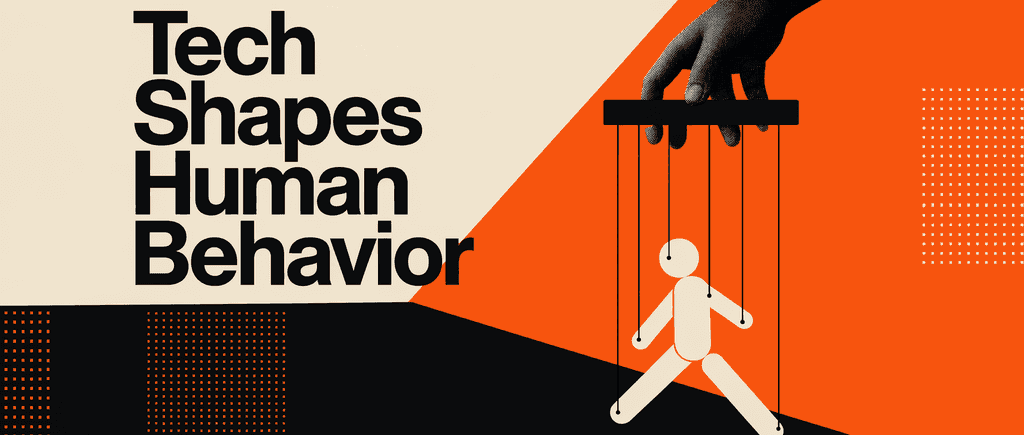
"Broken Code" transcends the narrative of a single company's missteps to expose fundamental questions about digital architecture and human behavior. The evidence increasingly shows that engagement-optimized algorithms inevitably amplify divisive content, outrage, and tribal thinking - not because of malicious intent, but because these emotions drive the metrics these systems are designed to maximize. Facebook's journey offers a crucial lesson: technology isn't a neutral tool but a powerful force that shapes human interaction and society itself.
The challenge facing social media's future extends beyond content moderation to fundamental questions of design ethics. As Bejar observed upon his return to Facebook as a consultant, "Policy enforcement is analogous to the police, it is necessary to prevent crime, but it is not what makes a space feel safe." The path forward requires reimagining success metrics beyond engagement, developing new frameworks for ethical technology, and creating digital spaces that actively promote human connection and well-being rather than exploiting psychological vulnerabilities. The legacy of Facebook's struggles may ultimately be in teaching us that the true measure of a platform's success lies not in its ability to capture attention, but in its capacity to foster genuine human flourishing.