Is criticism an art form or a necessary evil? A.O. Scott's provocative exploration sparked a Twitter feud with Samuel L. Jackson after his Avengers review. Discover why criticism isn't just negative commentary but essential cultural engagement - with insights from Ratatouille's Anton Ego.
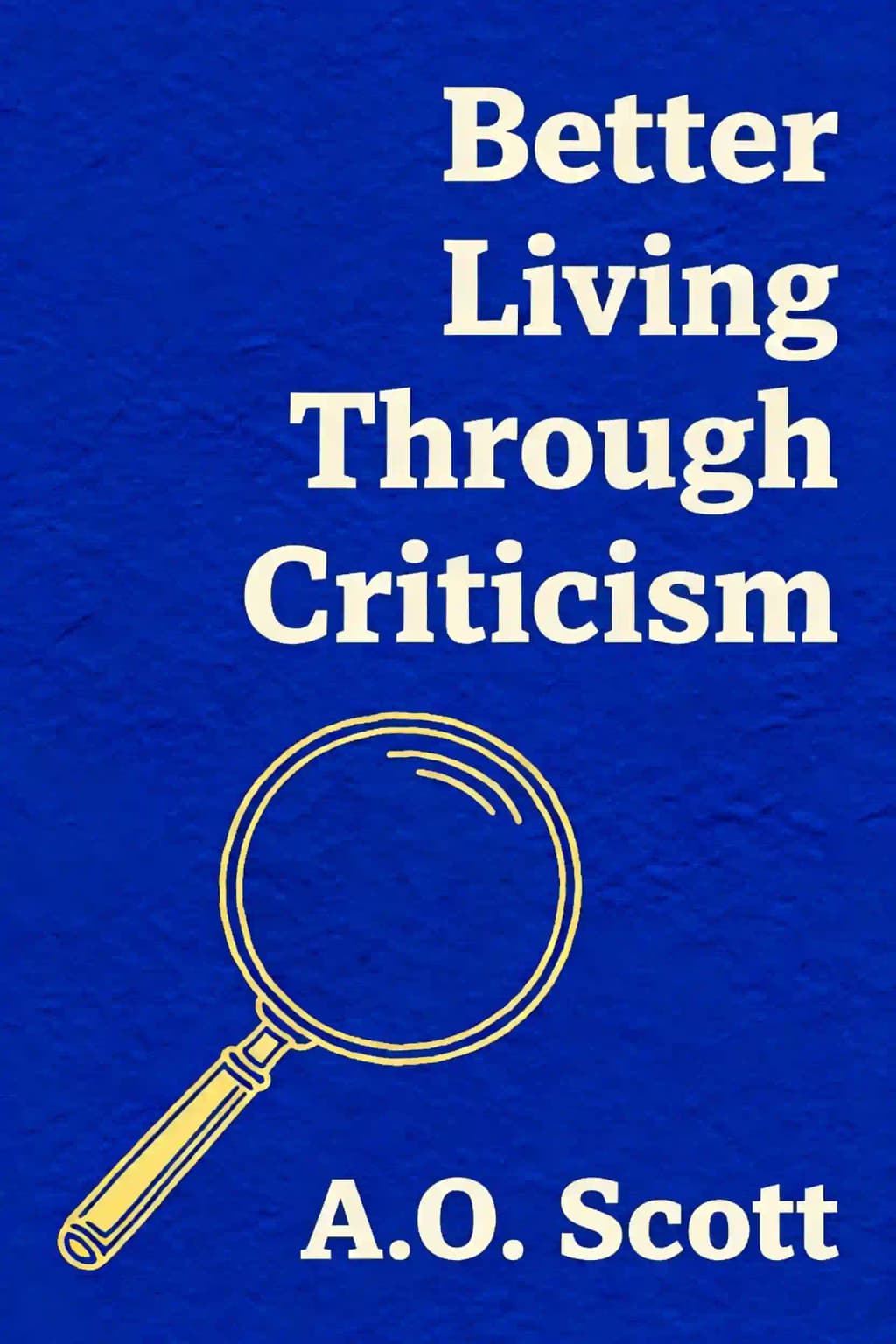
A.O. Scott, acclaimed film critic and cultural commentator at The New York Times, explores the transformative power of critical thinking in his book Better Living Through Criticism. Blending philosophical inquiry with cultural analysis, the work examines art’s role in society and the dialog between creators and audiences.
These themes are rooted in Scott’s decades-long career as a Pulitzer Prize-winning critic. A Harvard literature graduate and former editor at The New York Review of Books, Scott has authored over 2,200 film reviews and the influential essay series “The Americans,” which dissects modern fiction’s cultural impact.
His critiques, known for bridging academic rigor and accessible prose, have shaped public discourse on cinema and literature. In 2023, he transitioned to leading critical essays for the Times Book Review, cementing his authority in literary analysis.
Better Living Through Criticism became a New York Times bestseller and is frequently cited in university courses on media theory, reflecting its enduring relevance to contemporary cultural debates.
A.O. Scott’s Better Living Through Criticism argues that critical thinking is essential for deeper engagement with art and culture, positioning criticism as a universal human activity rather than an elitist pursuit. The book explores how criticism enhances understanding, fosters dialogue, and refines personal and societal perspectives on creativity, beauty, and truth.
This book is ideal for artists, critics, and culturally curious readers seeking to understand criticism’s role in shaping artistic appreciation and societal discourse. It appeals to those interested in philosophy, cultural analysis, or the intersection of art and critical thought.
Yes, for its nuanced defense of criticism as both an art form and a tool for intellectual growth. While some critique its abstract Q&A format and limited practical guidance, Scott’s insights into creativity, judgment, and cultural dialogue offer valuable perspectives for reflective readers.
Scott views critics as facilitators who activate public interest in art through reasoned analysis, not merely arbiters of taste. He emphasizes criticism as a creative act that deepens engagement with cultural works, blending subjective experience with objective inquiry.
Notable quotes include Elizabeth Hardwick’s “The great difficulty is making a point, making a difference—with words” and H.L. Mencken’s call for critics to “make an articulate noise in the world.” Scott himself describes criticism as “a struggle between judgment and curiosity.”
Scott warns against conflating criticism with marketing, arguing critics should prioritize honest analysis over promoting works. He advocates silence over dismissive reviews, stressing ethical responsibility in shaping cultural conversations.
Some reviewers find the Q&A format repetitive and question Scott’s avoidance of critics’ personal biases. Others argue he underplays the emotional motivations behind criticism, such as envy or resentment, despite framing it as an artistic practice.
He democratizes criticism, framing it as an innate human activity that enriches collective understanding. By linking critical thinking to everyday decision-making, he counters elitism while advocating for rigorous, inclusive cultural discourse.
The self-interview format allows Scott to explore complex ideas reflexively, though critics note it occasionally circles without resolution. This approach mirrors the book’s theme of criticism as an ongoing, open-ended dialogue.
Scott’s defense of criticism resonates in an era of polarized opinions, emphasizing thoughtful dialogue over reactive judgments. It encourages readers to navigate cultural consumption with curiosity and analytical rigor.
While theoretical, it suggests criticism sharpens critical thinking skills applicable beyond art—such as evaluating politics or personal choices. Scott highlights how dissecting creative works cultivates empathy and intellectual adaptability.
Reviews praise its intellectual ambition and defense of criticism’s cultural value, though some find it overly abstract. The book is celebrated for redefining critics as essential contributors to artistic and societal progress.
Siente el libro a través de la voz del autor
Convierte el conocimiento en ideas atractivas y llenas de ejemplos
Captura ideas clave en un instante para un aprendizaje rápido
Disfruta el libro de una manera divertida y atractiva
Taste is a form of knowledge.
Criticism is fundamental to human consciousness.
Anti-intellectualism has become virtually our civic religion.
Criticism is art's late-born twin.
Originality emerges not from isolation.
Desglosa las ideas clave de Better Living Through Criticism en puntos fáciles de entender para comprender cómo los equipos innovadores crean, colaboran y crecen.
Destila Better Living Through Criticism en pistas de memoria rápidas que resaltan los principios clave de franqueza, trabajo en equipo y resiliencia creativa.

Experimenta Better Living Through Criticism a través de narraciones vívidas que convierten las lecciones de innovación en momentos que recordarás y aplicarás.
Pregunta lo que quieras, elige la voz y co-crea ideas que realmente resuenen contigo.

Creado por exalumnos de la Universidad de Columbia en San Francisco
"Instead of endless scrolling, I just hit play on BeFreed. It saves me so much time."
"I never knew where to start with nonfiction—BeFreed’s book lists turned into podcasts gave me a clear path."
"Perfect balance between learning and entertainment. Finished ‘Thinking, Fast and Slow’ on my commute this week."
"Crazy how much I learned while walking the dog. BeFreed = small habits → big gains."
"Reading used to feel like a chore. Now it’s just part of my lifestyle."
"Feels effortless compared to reading. I’ve finished 6 books this month already."
"BeFreed turned my guilty doomscrolling into something that feels productive and inspiring."
"BeFreed turned my commute into learning time. 20-min podcasts are perfect for finishing books I never had time for."
"BeFreed replaced my podcast queue. Imagine Spotify for books — that’s it. 🙌"
"It is great for me to learn something from the book without reading it."
"The themed book list podcasts help me connect ideas across authors—like a guided audio journey."
"Makes me feel smarter every time before going to work"
Creado por exalumnos de la Universidad de Columbia en San Francisco

Obtén el resumen de Better Living Through Criticism como PDF o EPUB gratis. Imprímelo o léelo sin conexión en cualquier momento.
Have you ever watched a film, read a book, or viewed a painting and felt an inexplicable urge to talk about it afterward? That impulse-to process, analyze, and share your experience-is the beating heart of criticism. In our digital age, when everyone with internet access can publish opinions yet traditional critical voices face extinction, understanding the true nature of criticism has never been more vital. Criticism isn't merely the domain of professionals writing reviews; it's fundamental to human consciousness-as natural as breathing yet as sophisticated as philosophy. It begins with thinking deeply about our experiences with art, whether that's a Renaissance painting or the latest superhero movie. This impulse challenges the prevalent notion that thinking critically somehow diminishes enjoyment, pushing back against an anti-intellectualism that has become "virtually our civic religion" in America, even while "critical thinking" remains an educational buzzword in our schools and universities.