Capítulo 1
Beyond Tired Feet: The Revolutionary Life of Rosa Parks
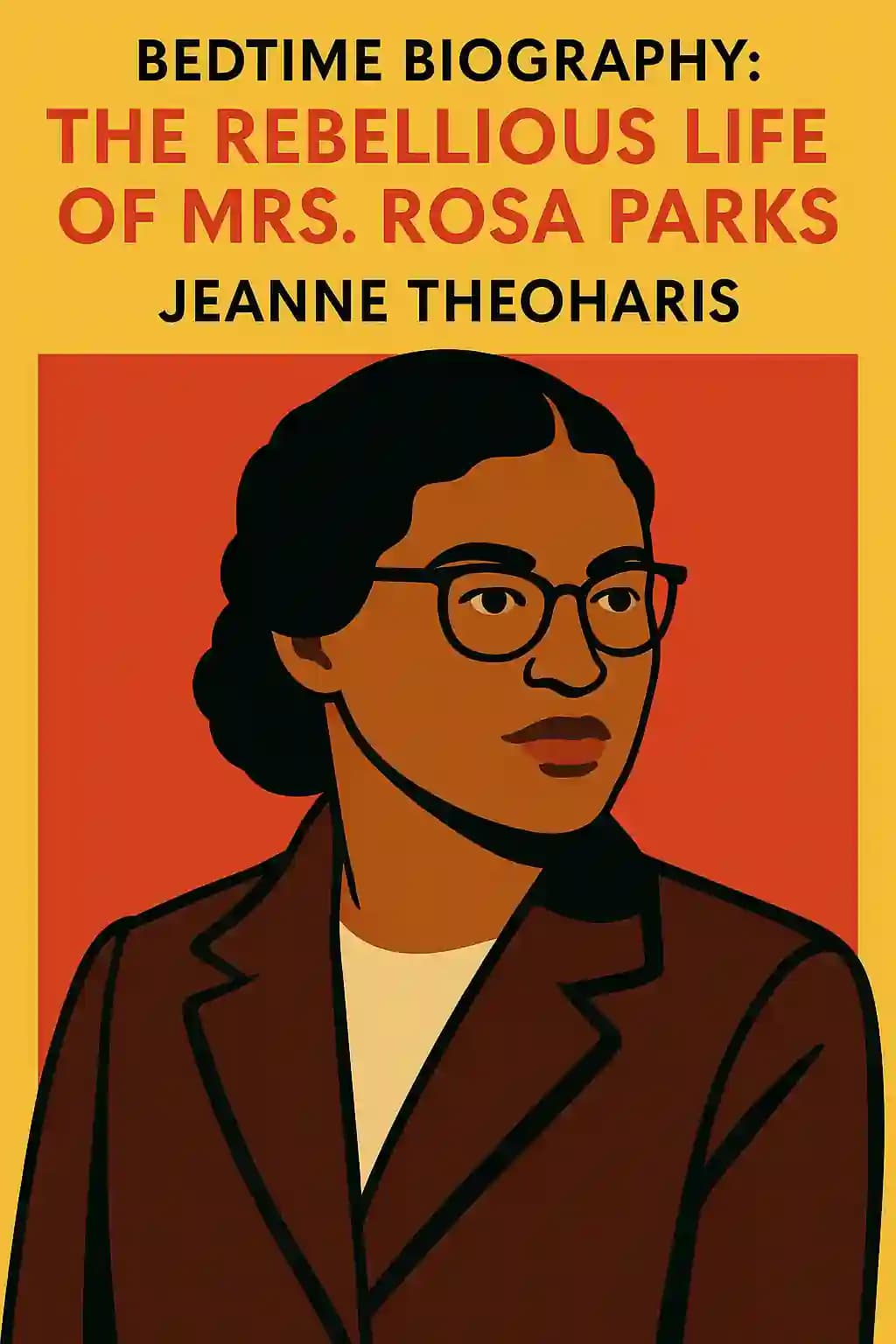
In a nation that loves to simplify its heroes, Rosa Parks has perhaps suffered the most from historical reduction. When she died in 2005, she became the first woman and second African American to lie in honor in the Capitol rotunda, with 40,000 Americans paying their respects. Yet the woman celebrated in those national tributes bore little resemblance to the actual Rosa Parks. The sanitized mythology-a quiet, humble seamstress who spontaneously refused to give up her bus seat because her feet hurt-erases decades of deliberate activism before Montgomery and forty years of political work afterward. This convenient fable allows Americans to celebrate how far we've come while ignoring persistent racial inequalities. As her friends noted with bitter irony, the woman who had been red-baited throughout her life for her radical politics was posthumously transformed into a meek, accidental heroine who sparked a movement and then disappeared. The truth is far more compelling: Rosa Parks was a seasoned freedom fighter whose December 1, 1955 bus stand represented just one moment in a lifetime of resistance against American injustice.
Capítulo 2
The Making of a Freedom Fighter
Rosa McCauley's political consciousness was shaped by her family's fierce dignity in the face of white supremacy. Born in 1913 in Tuskegee, Alabama, she was raised primarily by her maternal grandparents after her parents separated. Her grandfather, Sylvester Edwards, a former slave who supported the Marcus Garvey movement, kept a shotgun by the door to protect his family from night riders. "My grandfather was the first activist in my life," Parks later recalled. "He was a man who would not stand for injustice."
This early education in resistance continued when Rosa married Raymond Parks in 1932. Raymond was deeply involved in defending the Scottsboro Boys-nine young Black men wrongfully accused of raping two white women. Rosa remembered their kitchen table "covered with guns" as Raymond organized clandestine meetings. She worried whether he would return alive, as police regularly intimidated them by driving past their home. Raymond's political courage provided fertile ground for Rosa's own activism to grow. He was what scholar Gwen Patton called "a revolutionary in his own right," refusing to be intimidated and expecting to be treated with dignity.
At Raymond's urging, Rosa completed her high school education in 1933-a significant achievement when only 7% of Black Americans had high school diplomas. Despite her education, Rosa struggled to find appropriate work, as office jobs were virtually nonexistent for Black women in Alabama. She worked various jobs including as a nurse's assistant and at Maxwell Air Force Base during World War II.
Throughout these early years, Parks maintained her dignity and self-respect, despising how some Black people felt forced to kowtow to white authority. She particularly resented when Black women had to use their sexuality to protect themselves from white power, and increasingly sought ways to contest such disrespect. By the time she attended her first NAACP meeting in 1943, Parks had already developed a profound sense of justice and a willingness to fight for it.
Capítulo 3
"The Toughest Fight of My Life": Building the Movement in Montgomery
Rosa Parks's involvement with the Montgomery NAACP began in 1943, and by 1945 she was elected secretary of the branch-a position she would hold for the next twelve years. Far from being a passive member, Parks became the branch's most consistent activist. Working closely with E.D. Nixon, a Pullman porter and longtime civil rights leader, she investigated sexual assaults against Black women, helped Black citizens register to vote despite intimidation, and documented cases of police brutality and lynching.
"The NAACP was hated as much as the Communists," Parks later explained, noting the danger of her work in 1940s Alabama. She faced constant threats, obscene phone calls, and economic reprisals. Yet she persisted, believing that "if there was any one thing I could do to help bring about freedom, I would do it."
In 1954, Parks revitalized the NAACP Youth Council, teaching young members about respectability, proper comportment, and the importance of political action. She took them to drink from "white" water fountains and organized them to challenge library segregation. The Youth Council also traveled across Alabama for citizenship education, helping prepare adults for voter registration tests. Parks appreciated that the young people were action-oriented, immediately writing letters about anti-lynching legislation rather than "spending a lot of time arguing over motions" like the senior branch.
Parks took particular interest in the case of Jeremiah Reeves, a sixteen-year-old sentenced to death after a white woman accused him of rape following what Parks believed was a consensual relationship. The Montgomery NAACP worked for years to free him, with Parks personally corresponding with Reeves and helping publish his poetry. When Reeves was executed in March 1958, Parks admitted, "Sometimes it was very difficult to keep going when all our work seemed to be in vain."
In summer 1955, at the urging of both Nixon and Virginia Durr (a white liberal for whom Parks worked as a seamstress), Parks attended a two-week workshop at Highlander Folk School entitled "Racial Desegregation: Implementing the Supreme Court Decision." The experience at this integrated training center for activists was transformative. "It was one of the few times in my life up to that point when I did not feel any hostility from white people," Parks recalled. The contrast between Highlander's integrated environment and Montgomery's rigid segregation made returning to her job at Montgomery Fair department store particularly difficult.
Capítulo 4
"I Had Been Pushed As Far As I Could Stand"
By December 1955, Rosa Parks had spent twelve years fighting against racial injustice in Montgomery with few tangible results. The August 1955 murder of fourteen-year-old Emmett Till in Mississippi had profoundly affected her. She wept over the photos in Jet magazine, and as poet Nikki Giovanni later wrote, Parks "could not stand that death. And in not being able to stand it. She sat back down."
The Montgomery bus system particularly exemplified segregation's arbitrary cruelty. Black passengers constituted the majority of riders and paid the same fare, yet received inferior service and constant disrespect. Bus drivers wielded complete discretion over seating arrangements, forcing Black passengers to stand over empty seats and reenter through rear doors. Drivers routinely addressed Black women with demeaning terms like "black nigger," "black bitches," and "whores."
Parks wasn't alone in her resistance. During World War II, Montgomery became "the epicenter of the guerrilla war on buses" with numerous confrontations between Black service members and white drivers. Throughout the 1940s and 50s, brave individuals like Viola White (1944), Geneva Johnson (1946), and Hilliard Brooks (1950, who was killed by police) had all challenged segregation on buses.
In March 1955, fifteen-year-old Claudette Colvin refused to give up her bus seat, declaring she knew her constitutional rights. When police arrived, she was roughly handcuffed and arrested. Parks was particularly angered by this incident, seeing it as further proof that all their committees and petitions had yielded "just a brush-off." Though community leaders initially rallied around Colvin's case, E.D. Nixon ultimately decided she wasn't the right plaintiff for a broader campaign, believing that as a poor, unmarried pregnant teenager, she would face too much scrutiny.
On December 1, 1955, Rosa Parks refused to give up her seat on a Montgomery bus, making a deliberate moral choice that would change history. When driver James Blake demanded she surrender her seat in the middle section for a white man, Parks looked him straight in the eye and said "No." She wasn't physically tired but "tired of giving in," believing that moving meant consenting to her own humiliation. "If I did not resist being mistreated," she explained, "I would spend the rest of my life being mistreated."
Though she knew the dangers-having seen Claudette Colvin manhandled and aware that Black women were sometimes pulled off buses and raped-Parks remained composed. She drew strength from her faith and ancestors, thinking about her grandfather's gun and the tradition of Black women's resistance on public transportation. As she later explained, "My rebelling against being mistreated on the buses didn't begin when I was arrested... Over the years, I have been rebelling against second-class citizenship."
Capítulo 5
"There Lived a Great People": The Montgomery Bus Boycott
E.D. Nixon, upon learning of Parks's arrest, recognized her as the perfect test case they had been seeking-middle-aged, religious, respected, and morally unimpeachable. "If there ever was a woman who was dedicated to the cause, Rosa Parks was that woman," Nixon declared, knowing the press couldn't "dig up something she did" to discredit her. Most importantly, Parks was "a real fighter" who wouldn't be intimidated by white backlash.
After her release on $100 bail, Parks, her husband Raymond, and her mother discussed next steps with Nixon and the Durrs. Though Raymond initially expressed concern about the dangers, Rosa agreed to pursue the case, calling attorney Fred Gray that evening. Meanwhile, Jo Ann Robinson of the Women's Political Council worked through the night with two students to produce thousands of leaflets announcing a one-day bus boycott on Monday, when Parks would appear in court.
The morning of December 5 exceeded all expectations. Nearly every Black person in Montgomery had joined the boycott, filling sidewalks and streets with people walking or offering rides. Parks called the sight "gratifying" and "unbelievable," later recalling it as her most vivid memory from the entire year-long boycott: "As I look back on those days, it's just like a dream. The only thing that bothered me was that we waited so long to make this protest."
That evening, fifteen thousand people gathered at Holt Street Baptist Church for a mass meeting that would cement the boycott's future. Five thousand packed inside while thousands more stood outside listening through public address systems. Martin Luther King Jr., despite having no prepared remarks, delivered an electrifying speech that captivated the crowd. He spoke of being "tired of being segregated and humiliated" and invoked both Christianity and the Constitution to justify their struggle.
Yet despite being introduced as the movement's heroine to a standing ovation, Parks was not invited to speak. This silencing revealed the gender dynamics at play-as Reverend Graetz later noted, "It was a male-dominated movement." Had Parks spoken, she might have connected her stand to the Scottsboro case, Recy Taylor, Emmett Till, Highlander Folk School, and other struggles. Instead, she was relegated to being a symbol rather than a strategist, despite her extensive political experience.
As the boycott continued, the MIA's transportation system grew increasingly sophisticated, spending nearly $3,000 weekly to arrange 15,000-20,000 rides daily with fifteen dispatchers and twenty full-time drivers. Parks herself worked for a month as a dispatcher, connecting riders to the forty-one stations across the city.
White segregationists responded with violence. After King's home was bombed with his wife and baby inside, Parks rushed to help clean up Nixon's house when it was bombed the next day. She wrote to a friend that they were "praying for courage and determination to withstand all attempts of intimidation," and requested night watchmen for her apartment as "strange men" had been inquiring about "this woman who caused all this trouble."
On November 13, 1956, the Supreme Court unanimously upheld the district court decision nullifying Alabama's segregation laws on buses. The boycott officially ended on December 20, 1956, after 382 days. E.D. Nixon described the power of that December morning as "the best ride I ever had in my life... feeling like we was heading to heaven."
Capítulo 6
"It Is Fine to Be a Heroine but the Price Is High"
Rosa Parks's stand came at tremendous personal cost. She was discharged from Montgomery Fair a month after her bus protest, jeopardizing her family's financial stability. A week later, Raymond resigned from Maxwell Air Force Base after being forbidden from discussing the protest. Their landlord raised their rent by ten dollars monthly, pushing the family into severe economic hardship.
While the physical violence against boycotters is well-documented in civil rights history, the economic catastrophe faced by Parks and other activists remains less recognized. Parks endured constant hateful phone calls-"Die, nigger. Die"-and verbal harassment on the street, all while facing the paradox of being "famous" yet having no money.
Despite being a celebrated speaker who raised substantial funds for the MIA, Parks consistently turned over all proceeds to the organization. Even when doing NAACP speaking tours that offered modest stipends, she prioritized the movement over her own financial needs. Meanwhile, the MIA hired four women as office staff but offered no position to Parks despite her administrative skills and political experience.
The relentless harassment and economic insecurity overwhelmed Raymond, who began drinking heavily and suffered a nervous breakdown during the boycott. When a psychiatrist suggested Rosa "give up all her civil rights work and go back to being a little sweet housewife," she rejected this advice and continued her activism, though the stress also affected her own health with stomach ulcers, heart problems, and chronic insomnia.
Throughout 1956, Parks traveled extensively across America, making appearances for the bus protest and NAACP. These trips were crucial for fundraising and bringing national attention to their struggle. Her travels took her from Detroit to Seattle, Los Angeles to New York to San Francisco. In New York, she rode the bus, prominently taking a front seat-an event photographed by the Amsterdam News. She also received her first-ever plaque from the Committee for Better Human Relations, moving her to tears.
Despite the boycott's success, the Parks family's situation remained dire. Both Rosa and Raymond still couldn't find work as white establishments refused to hire them, and the hate calls continued unabated. The decision to leave Montgomery came partly from the unfriendly reception Parks received from certain members within the civil rights community. Many had grown jealous of her national stature. As she told the Pittsburgh Courier, "I can't exactly say that the reaction from what happened in the boycott made me leave. I really had been thinking about leaving for a long time. But I guess something did have a part in our deciding to go."
Capítulo 7
The Northern Promised Land That Wasn't
When Rosa Parks moved to Detroit in August 1957, she discovered that racism in the North was "almost as widespread as Montgomery." Because the apparatus of racial inequality in Detroit was more covert, the daily humiliation of separate drinking fountains and lunch counters was gone. Still, she did not find "too much difference" between race relations in Detroit and Montgomery. Like Montgomery, the city offered a decidedly second-class citizenship for blacks.
Black migration to Detroit had swelled in the twentieth century, with Detroit's black population doubling between 1940 and 1950. Despite the economic opportunities that drew migrants north, black Detroiters faced persistent discrimination in housing, employment, and policing. At the Great March to Freedom in June 1963, Martin Luther King Jr. condemned racial injustice as "a national problem," asserting "that de facto segregation in the North is just as injurious as the actual segregation in the South."
Police repression was a constant affront to black life in Detroit. The NAACP had documented hundreds of cases of police brutality, with 47 cases resulting in hospitalization. Yet Detroit's major newspapers maintained "a standing arrangement not to cover incidents of police brutality." The killing of Cynthia Scott by police officer Theodore Spicher in July 1963 sparked massive protests, with 5,000 people demonstrating outside police headquarters.
Parks's political activities did not end when she left the South. She joined St. Matthew's AME Church but frequently attended events at Albert Cleage's Central Congregational Church, which held numerous programs on black struggle and consciousness. According to SNCC comrade Martha Norman Noonan, Parks deliberately aligned herself with Detroit's more radical elements.
In 1964, Parks campaigned vigorously for John Conyers's congressional bid. When Martin Luther King Jr.'s nephews in Detroit tried to get him to support Conyers, it was Parks who made the decisive call to King: "You've got to come to Detroit and embrace Brother Conyers. We need you." King couldn't refuse. On March 1, 1965, Conyers hired Parks for his Detroit office, where she would work until retiring in 1988-her first paid political position after twenty years of activism.
In April 1965, moved by images of brutality at Selma's Edmund Pettus Bridge, Parks returned to Alabama to join the march from Selma to Montgomery. The experience proved disheartening-without an official participant vest, police repeatedly removed her from the march, and many young marchers didn't recognize her. "It seemed like such a short time that I had been out of Alabama, but so many young people had grown up in that time. They didn't know who I was," she lamented.
The Parkses lived near the epicenter of Detroit's 1967 uprising. Their home functioned as a salon for political discussions, with many young Malcolm X admirers gathering there. When the uprising broke out, Rosa worked at Conyers's office, which became a crucial complaint center during the crisis. She viewed the uprising as stemming from white resistance to civil rights demands and rising anger among black youth, contextualizing it within systemic inequalities rather than condemning it as mere hooliganism. "Regardless of whether or not any one person may know what to do about segregation and oppression," she observed, "it's better to protest than to accept injustice."
Capítulo 8
"Any Move to Show We Are Dissatisfied"
Rosa Parks had long believed in self-defense and was a steadfast critic of racism in the criminal justice system. "I'm in favor of any move to show that we are dissatisfied," she declared in 1964, frustrated by the languid pace of change. Her lifetime of political work embraced multiple approaches to fighting racism, from nonviolent direct action to more militant stances.
Parks shocked black-nationalist lawyer Chokwe Lumumba when she revealed her hero was Malcolm X rather than Martin Luther King Jr. Though she deeply admired King, Malcolm's boldness, clarity, and racial pride reminded her of her grandfather. She saw no contradiction in admiring both leaders.
Parks had been raised to be proud and to stand up for self-protection. "I just couldn't accept being pushed even at the cost of my life," she explained, noting that individual nonviolence "could be mistaken for cowardice." Her belief in self-defense stemmed partly from her Christian faith: "From my upbringing and the Bible I learned people should stand up for rights just as the children of Israel stood up to the Pharaoh."
While Parks found mass nonviolent action "refreshing" and effective during the Montgomery boycott, she was never "completely converted to it." Her philosophy coupled nonviolence with self-defense: "As far back as I remember, I could never think in terms of accepting physical abuse without some form of retaliation if possible." Like many black Southerners, the Parks family kept a gun in their home even while participating in nonviolent movements.
Parks encountered Malcolm X three times in the mid-1960s and treasured these meetings, especially their final conversation a week before his assassination. For Parks, like Malcolm, self-defense was about self-protection. She grew increasingly disillusioned with nonviolent direct action being met with white violence: "If we are going to have non-violence and love and all that, it should be on both sides... you actually can't remain nonviolent too long with the kind of treatment that would provoke violence."
Martin Luther King's assassination in April 1968 devastated the Parks family. Rosa "just went numb," playing Sam Cooke's "Long Time Coming" repeatedly, while Raymond couldn't eat for days. Parks and Louise Tappes journeyed south, first to Memphis to join the march King was to have led, then to Atlanta for the funeral, where she was seated on the platform next to Ossie Davis.
By the late 1960s, Parks had become an elder stateswoman in the black freedom struggle. Despite her advancing age, she remained active in numerous causes-supporting hospital workers striking in Charleston, backing militant black labor movements in Detroit, introducing Shirley Chisholm during her first Detroit appearance, and opposing the Vietnam War. As historian John Bracey observed, her persistence inspired younger activists: "She never gave up...That's important to young people. 'Why are you tired? I'm not tired.'...She was an example. She could have retired, said 'I'm not in this, don't talk to me.' But she steadily kept coming out."
Parks immersed herself in Black Power politics both nationally and locally. In 1968, she joined a "militant group" of blacks at the Democratic Convention in Chicago who refused to back any presidential candidate. That same year, she attended the third national conference on Black Power in Philadelphia. In Detroit, Parks became a fixture at Black Power events. "Honest to God, almost every meeting I went to, she was always there," recalled Ed Vaughn.
Parks maintained connections with radical groups like the Republic of New Afrika (RNA), which advocated for reparations and a separate black nation in the South. When RNA members were arrested after a 1971 shootout with police in Mississippi, Parks intervened through Congressman Conyers's office to ensure their safety. According to RNA Minister of Justice Chokwe Lumumba, "She intervened and really saved their lives."
Even in her seventies, Parks remained politically engaged during the Reagan years. She joined the Free South Africa Movement, walking picket lines in Washington, DC at age seventy-one carrying signs reading "Freedom Yes Apartheid No!" When Mandela visited Detroit after his release from prison, he recognized Parks in the receiving line and approached her chanting "RO-SA PARKS! RO-SA PARKS!" before embracing his fellow freedom fighter.
Capítulo 9
"Racism Is Still Alive"
Rosa Parks's most historic hour may have occurred on the bus in 1955, but a moment revealing her true character came forty years later. In 1994, at age eighty-one, Parks was mugged in her home by a young black man who hit her and stole $103. While commentators used the incident to bemoan the decline of black youth, Parks rejected this narrative. She prayed for her attacker "and the conditions that have made him this way," maintaining her lifelong belief that structural inequity, not individual moral failure, was the root cause of such violence.
In 1987, Parks founded the Rosa and Raymond Parks Institute for Self Development with Elaine Steele, seeking to develop leadership skills in young people and honor Raymond's memory. The institute emphasized black history, self-respect, and education for liberation-reflecting Parks's own transformative experience with learning black history. Through its "Pathways to Freedom" program, students retraced routes like the Underground Railroad while engaging in field research.
As Parks aged, she grew increasingly aware of her symbolic status. "As time has gone by, people have made my place in the history of the civil-rights movement bigger and bigger," she observed. "Interviewers still only want to talk about that one evening in 1955." She often expressed weariness with constantly retelling her story. "I hope I won't be having to tell people that story for the rest of my life," she said in 1973.
Though initially uncomfortable with her symbolic status, Parks eventually made peace with it, focusing on what still needed to be done rather than her own discomfort. She accepted the role of "mother of the civil rights movement" to carry its history to students, lamenting that many young people weren't familiar with key activists like Fred Gray or Fannie Lou Hamer. With Jim Haskins, she wrote an autobiography for young people, tired of others writing "their own versions" of her life.
As honors flowed in during her later years-streets named after her, stained-glass windows created, and in 1991, a bust unveiled at the Smithsonian-Parks continued speaking against injustice. In 1999, she received the Congressional Gold Medal, with President Clinton comparing her bus stand to the battles at Normandy and behind the Iron Curtain, calling it "the quintessential story of the 20th Century."
When Parks died in 2005, politicians rushed to honor her, perhaps hoping a "tired old woman" lying in the Capitol would distract from federal inaction after Hurricane Katrina two months earlier. By celebrating Parks as a nonthreatening heroine of a movement consigned to the past, her memorial helped construct America as a post-racial society.
Yet Parks herself continued insisting on the enduring need for racial justice, reminding Americans "not to become comfortable with the gains we have made." She wanted to be remembered as "a person who always wanted to be free and wanted it not only for myself." Doing justice to Parks's legacy requires acknowledging that racial injustice in America has deep roots. It demands recommitment to her lifelong goals: justice under law, community empowerment, voting rights, educational access, economic justice, and Black history in curricula. And it means heeding her advice to Spelman College students: "Don't give up and don't say the movement is dead."