Capítulo 1
Beyond the Wonder: A Journey Through Multiple Perspectives
When R.J. Palacio's "Wonder" burst onto the literary scene in 2012, it captured millions of hearts with its powerful message about kindness and acceptance. The story of Auggie Pullman-a boy with a severe facial difference navigating his first year in a mainstream school-resonated with readers of all ages. "Auggie & Me" isn't a sequel in the traditional sense but rather a companion piece that expands Auggie's world through three different perspectives: Julian, Christopher, and Charlotte. Each narrative reveals how Auggie's presence transforms their lives in profound and unexpected ways. The book has been embraced by educators worldwide as part of anti-bullying curricula and praised by celebrities like Emma Roberts and Reese Witherspoon for its emotional depth and accessibility to young readers.
Capítulo 2
The Bully's Redemption: Julian's Journey from Fear to Understanding
Julian Albans opens his story defensively, dismissing concerns about how he treated Auggie Pullman. He laments how his "ordinary" and perfect life changed after Auggie arrived at Beecher Prep, disrupting his comfortable social world where he enjoyed popularity and status. When Julian first sees Auggie, his reaction is visceral-"I wanted to cover my eyes and run away screaming." This encounter triggers the return of childhood nightmares that Julian thought he had conquered years ago.
Julian's mother becomes his enabler, sympathizing with his discomfort and even Photoshopping Auggie out of the class picture to create "good memories, not ugly ones." When Julian escalates his bullying by leaving cruel notes in Auggie's locker with messages like "You're so ugly you should wear a mask every day!" and "I bet your mother wishes you'd never been born," he's suspended for two weeks. Rather than showing remorse, Julian's parents decide to pull him from the school, blaming Mr. Tushman and the administration for the situation.
The turning point comes during summer vacation in Paris when Julian stays with his grandmother. After confessing his behavior to Mr. Browne in an email, his grandmother (Grandmere) shares her own powerful story of prejudice and redemption. As a young girl in Nazi-occupied France, she had avoided a boy named Tourteau who walked with canes due to polio. When Germans came to take Jewish children from her school, Tourteau-the very boy she had shunned-risked his life to help her escape and hide for two years. Most shockingly, Julian learns that Tourteau's real name was Julian-the person for whom he was named.
This revelation devastates Julian, who finally recognizes the depth of his cruelty. "I was the bully," he confesses to his grandmother, who comforts him with wisdom: "The things you did, you know they were not right. But that does not mean you are not capable of doing right." Julian writes a heartfelt apology to Auggie and convinces his parents to drop their lawsuit against the school. The story ends with Julian's father telling him, "Tu marches toujours le front haut"-"You always walk with your head held high," signaling Julian's growth and the possibility of redemption.
Capítulo 3
The Childhood Friend: Christopher's Complex Connection to Auggie
Christopher Blake and Auggie share a connection that predates their own memories, their mothers having formed a close friendship during their pregnancies. This early bond meant Christopher grew up viewing Auggie's facial differences as simply part of who his friend was - until the outside world began to intrude on their friendship. Growing up alongside Auggie, Christopher experienced firsthand how society treated someone who looked different, witnessing both subtle avoidance and outright cruelty.
A defining moment occurred when Christopher was four years old at their local playground. While playing on the swings, a little girl caught sight of Auggie's face and screamed so loudly that several parents rushed over. The incident ended with Auggie hurriedly covering his face with his Star Wars scarf, tears streaming down his cheeks, while Christopher stood frozen, suddenly seeing his friend through others' eyes. This experience marked Christopher's first real understanding of how the world viewed his friend differently - and the weight of that knowledge would shape their relationship for years to come.
As they entered elementary school, their friendship became increasingly complicated by social dynamics. Christopher found himself unconsciously developing two separate social circles - his "regular" school friends and his special time with Auggie. When Christopher met Auggie's friend Hudson, who also had a craniofacial syndrome, he felt overwhelmed by the increased attention they attracted as a group. Simple activities like getting ice cream or going to the movies became exercises in managing public reactions, from prolonged stares to whispered comments and occasional pointing. Christopher began choosing easier social situations, gravitating toward activities with other friends where he could relax without serving as a buffer between his friend and the world.
Their friendship adapted to change when Christopher's family relocated to Bridgeport. Technology became their primary connection, with daily FaceChat sessions becoming a new routine. These virtual hangouts often lasted hours, with both boys keeping their tablets propped up while they did homework, built matching Lego sets, or watched the same TV shows in synchronized viewing parties. However, the demands of Christopher's new life - soccer practice, school clubs, new friendships - gradually eroded their daily communication to weekly check-ins, then occasional calls.
A particularly painful incident occurred during one of their video calls when Christopher's new friends Jake and Tyler unexpectedly entered his room and saw Auggie on screen. Their shocked expressions quickly turned to mockery, making cruel jokes after leaving. Though Christopher defended his friend fiercely, the incident highlighted the ongoing challenge of bridging his two worlds and protecting Auggie from casual cruelty.
The death of Auggie's dog Daisy marked a turning point in their friendship. Initially hesitant to reach out during such an emotional time, Christopher avoided calling until he needed help with math homework. Auggie's response - spending hours creating a detailed PDF guide to word problems and patiently walking Christopher through each example - demonstrated the depth of their friendship despite its complications. This act of kindness prompted Christopher to reflect on loyalty and friendship, ultimately influencing his decision to decline joining a more popular band rather than abandon his current bandmate John. Through this experience, Christopher realized that true friendship sometimes requires choosing the harder path - a lesson he learned first through his relationship with Auggie.
Capítulo 4
The Reluctant Welcome Buddy: Charlotte's Social Navigation
Charlotte Cody prides herself on being kind, but her story reveals the complexities of navigating middle school social hierarchies while trying to do the right thing. As one of Auggie's assigned "welcome buddies," Charlotte is outwardly nice to him but struggles with genuine inclusion, especially when it might affect her social standing.
Charlotte's world revolves around her dream of becoming a Broadway star and her careful navigation of fifth-grade social politics. She's particularly fixated on being accepted by the popular group led by Savanna, which now includes her former best friend Ellie. When Charlotte is selected for Mrs. Atanabi's special dance performance alongside Ximena (from the popular group) and Summer (Auggie's true friend), she sees it as a potential pathway into the elite social circle.
The dance project becomes transformative as the three girls from different social "species" (as Charlotte describes them-"mammals, reptiles, and fish") form an unexpected bond. During rehearsals, Ximena confronts Charlotte about her performative kindness toward Auggie: "You're nicer to him when you're in front of teachers. It's been noticed." This accusation forces Charlotte to examine her behavior and motivations.
Simultaneously, the girls become united in their search for a mysterious blind accordion player named Gordy Johnson who has disappeared from his usual spot on Main Street. This shared mission, along with their dance preparation, creates a genuine connection between them that transcends their usual social boundaries.
When Charlotte's friend Maya writes a hurtful note calling Ximena "evil," Charlotte faces a moral dilemma about loyalty. In a surprising turn, Ximena responds to the situation with maturity and grace, apologizing to Maya and demonstrating that she's more than the mean-girl stereotype Charlotte had assumed.
The story culminates with Charlotte being called to Mr. Tushman's office on the last day of school. Expecting to receive the Beecher medal for her community service work, she immediately realizes Auggie will be receiving it instead. In a moment of genuine growth, Charlotte suggests that Summer might be more deserving than either of them, explaining that while she had been nice to Auggie because she was asked to be his welcome buddy, Summer had shown true kindness by befriending him voluntarily. Mr. Tushman helps her understand that friendship isn't about medals, and that being nice is the first step toward true kindness.
Capítulo 5
The Power of Perspective: Seeing Through Different Eyes
Throughout these three stories, Palacio masterfully explores how perspective shapes our understanding of others and ourselves. Each character's unique viewpoint serves as a lens through which readers witness the transformative power of shifting perspectives and growing empathy. Julian initially sees Auggie as a monster who triggers his nightmares - a fear rooted in his own insecurities and childhood trauma - but through his grandmother's story, he comes to recognize his own monstrosity in bullying someone for their appearance. This revelation forces him to confront the disconnect between his self-image as a "good kid" and his actual behavior toward Auggie.
Christopher views Auggie through the lens of their shared history, having known him since they were toddlers. His perspective is complicated by the guilt of moving away and the challenges of maintaining a friendship that requires extra effort and understanding. His story reveals how even long-standing relationships can be tested by distance, change, and the social pressures of adolescence. Through Christopher's eyes, we see how friendship with Auggie demands not just acceptance, but active commitment and loyalty.
Charlotte's journey offers yet another vital perspective, as she sees Auggie initially as a potential obstacle to her social aspirations and carefully cultivated image. Her role as an official welcome buddy forces her to navigate the complex social dynamics of middle school, where kindness can be both a virtue and a liability. Through observing Summer's genuine friendship with Auggie, Charlotte gradually learns that true kindness isn't about recognition or duty but about authentic human connection.
Each character's journey involves a moment of profound recognition - a shift in perspective that allows them to see beyond surface appearances to deeper truths. For Julian, this comes through his grandmother's revelation about his namesake during the Holocaust, forcing him to confront how prejudice and cruelty can manifest in everyday actions. For Christopher, the turning point happens when Auggie helps him with challenging math problems, reminding him that friendship transcends physical appearance and that everyone has unique gifts to offer. For Charlotte, the pivotal moment occurs when she recognizes that Summer's spontaneous kindness toward Auggie carries more weight and meaning than her own assigned role as a welcome buddy - a realization that challenges her to question the authenticity of her own actions.
These shifting perspectives ultimately illuminate how our initial judgments often reveal more about ourselves than about others, and how genuine understanding requires the willingness to see the world through different eyes. Through these interconnected narratives, Palacio demonstrates how empathy and understanding can grow from the most unexpected encounters and revelations.
Capítulo 6
The Ripple Effect of Kindness and Cruelty
"Auggie & Me" powerfully demonstrates how our actions create ripples that affect others in ways we may never fully comprehend. Julian's cruelty toward Auggie stems from his own unresolved fears and insecurities, particularly those stemming from his grandmother's Holocaust experiences. His behavior not only wounds Auggie directly but creates a toxic atmosphere that divides the entire fifth grade into warring factions, forcing students to choose sides and straining longstanding friendships. This chain reaction illustrates how negativity can multiply exponentially, affecting even those not directly involved in the original conflict.
Conversely, Summer's simple act of sitting with Auggie at lunch - a decision made purely from compassion - creates a ripple of positivity that transforms the social dynamics of their grade. Her courage in defying social pressure influences others, including initially skeptical characters like Ximena, who eventually recognizes the superficiality of excluding someone based on appearance. Summer's example shows how small acts of kindness can create safe spaces that encourage others to show their better selves.
Christopher's story delves deeper into the complexity of maintaining relationships through difficult times. His struggle with whether to call his friend during a period of grief reflects the universal challenge of navigating emotional support. His mother's wisdom that "good friendships are worth a little extra effort" becomes a central theme, highlighting how meaningful relationships require active maintenance, occasional sacrifice, and the willingness to step into uncomfortable situations. Through Christopher, we see how seemingly minor decisions - responding to a text, showing up during hard times, or simply listening - can profoundly impact someone's emotional well-being.
Charlotte's narrative explores the subtle ways social pressures can distort our moral compass, leading us to prioritize popularity and social standing over genuine connection and empathy. Her internal struggle between maintaining her social status and standing up for what's right reflects a common dilemma in middle school and beyond. Her journey demonstrates that true kindness often requires courage - the willingness to stand apart from the crowd when necessary and potentially face social consequences. Through Charlotte's experiences, we see how the fear of social isolation can make us complicit in cruelty, but also how breaking free from these pressures can inspire others to do the same.
The interconnected stories highlight how our choices, whether kind or cruel, create complex webs of cause and effect that extend far beyond our immediate circle. They remind us that we all have the power to influence our social environment, either by perpetuating cycles of exclusion or by breaking them through conscious acts of inclusion and empathy.
Capítulo 7
Finding Common Ground in Unexpected Places
Each story features powerful moments where characters discover unexpected connections that bridge their seemingly insurmountable differences. Julian's transformation begins when his grandmother shares her haunting wartime story about Tourteau, a disfigured boy who saved her life during the Nazi occupation of France. This revelation forces Julian to confront his own prejudices and see Auggie's situation through a completely different lens - demonstrating how shared stories can create bridges of understanding across generations and experiences.
Christopher's reconnection with Auggie unfolds through multiple touching encounters that remind them both of their shared childhood memories - from playing Star Wars in the backyard to their secret handshakes and inside jokes. Their bond, temporarily strained by distance and different schools, strengthens through mutual support during difficult times, particularly when Christopher stands up for Auggie during a challenging social situation at school.
The unlikely friendship between Charlotte, Summer, and Ximena develops through their shared curiosity about the mysterious accordion player in the neighborhood. Their initial connection, sparked by this common interest, deepens as they discover their mutual passion for dance. During their rehearsals for the school performance, they learn to appreciate each other's different dance styles and cultural backgrounds - Charlotte's ballet training, Summer's modern dance experience, and Ximena's Latin dance heritage.
These connections often occur in surprising places and unexpected moments - a quiet conversation in a grandmother's kitchen filled with the aroma of fresh-baked cookies, a late-night math tutoring session that turns into a heart-to-heart discussion, or a shared laugh over their common use of the phrase "God bless America." Through these encounters, Palacio masterfully illustrates how human connection rarely stems from carefully planned interactions or grand gestures. Instead, it emerges from small moments of shared vulnerability, whether it's admitting to struggling with homework, sharing a family story, or revealing a hidden talent.
The author shows how these seemingly minor interactions create lasting bonds between characters who might otherwise remain distant or even antagonistic. These moments of connection often catch the characters by surprise, demonstrating that empathy and understanding can bloom in the most unexpected circumstances - proving that what divides us is often less significant than what brings us together.
Capítulo 8
The Journey Toward Authentic Self-Acceptance
Perhaps the most profound theme across all three stories is the characters' struggle to reconcile their public personas with their authentic selves. Julian must confront the uncomfortable gap between his carefully cultivated self-image as a popular, good kid and the harsh reality of his bullying behavior - a journey that forces him to examine not only his actions but also the family dynamics and insecurities that shaped them. His transformation becomes particularly poignant when he realizes that his grandmother's Holocaust survival story connects directly to his treatment of Auggie, leading to a deeper understanding of acceptance and compassion.
Christopher's internal conflict manifests in more subtle ways as he wrestles with the contradiction between his longstanding loyalty to Auggie and his natural desire for social acceptance in his new school. His story reveals how even the strongest friendships can be tested by peer pressure and the universal need to belong. Through Christopher's experiences, we see how maintaining authenticity often requires conscious choice and occasional sacrifice, especially during the turbulent middle school years.
Charlotte's character arc presents yet another facet of this struggle. Her reputation as a "goody two-shoes" serves as both a shield and a burden - protecting her from criticism while simultaneously trapping her in others' expectations. Her internal monologues reveal moments of jealousy, uncertainty, and calculation that contradict her perfect image, making her journey toward self-acceptance particularly relatable to high-achieving students who struggle with perfectionism.
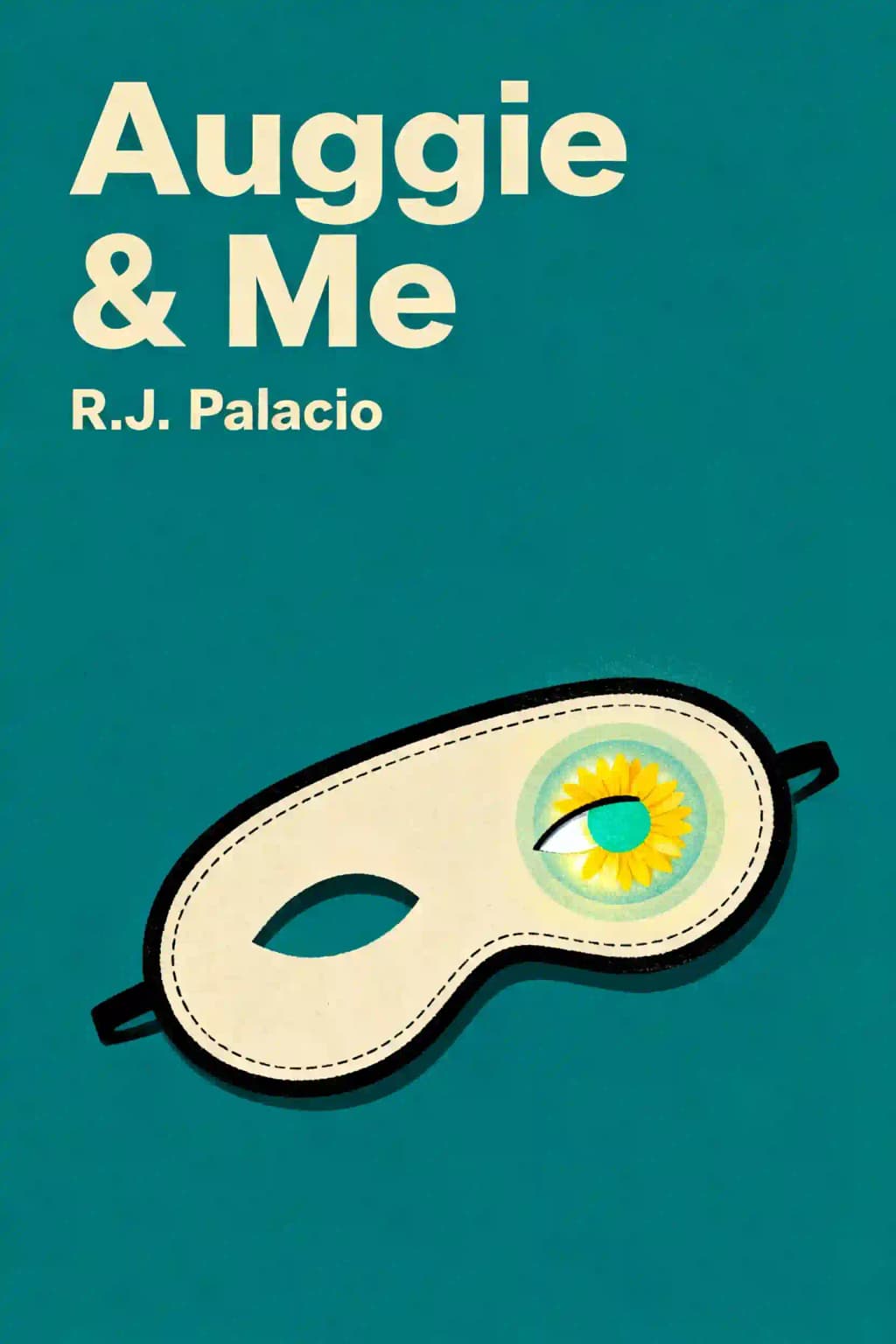
The theme of masks - both literal and metaphorical - runs throughout all three narratives. Each character wears different kinds of masks: Julian hides behind humor and popularity, Christopher behind distance and new friendships, and Charlotte behind achievement and proper behavior. Their gradual removal of these masks parallels Auggie's own journey in "Wonder," suggesting that true growth requires the courage to be vulnerable.
Ximena's fifth-grade commencement speech captures this theme perfectly when she expresses hope that as they enter sixth grade, they will "learn to trust each other enough to truly be themselves and accept one another for who they really are." Her words carry extra weight because they come after witnessing the transformative power of authenticity in her classmates' lives. This journey toward authentic self-acceptance emerges as not just an individual struggle but a collective one - suggesting that creating a community where people feel safe to be themselves requires effort and vulnerability from everyone involved.
The various paths these characters take toward self-acceptance demonstrate that authenticity isn't achieved in a single moment of revelation but through a series of small choices and challenging confrontations with oneself. Their stories remind us that the masks we wear - whether for protection, acceptance, or convenience - ultimately prevent us from forming genuine connections and experiencing true growth.
Capítulo 9
The Transformative Power of Story
Throughout "Auggie & Me," stories within stories create powerful moments of transformation that ripple through the characters' lives and consciousness. Grandmere's haunting wartime tale - a narrative of survival, resistance, and unexpected kindness during the Nazi occupation of France - helps Julian understand not only empathy and courage but also the weight of choices made under pressure. Her account of hiding a Jewish girl despite the risks transforms Julian's understanding of what true bravery means, moving beyond physical courage to moral fortitude.
The mystery surrounding Gordy Johnson serves as a catalyst that brings Charlotte, Summer, and Julian together, breaking down social barriers through shared curiosity and purpose. Their collaborative investigation reveals how perceived differences often mask common ground - each character discovering pieces of themselves in the process of understanding another's story. This subplot demonstrates how shared narratives can bridge seemingly insurmountable social divides.
Christopher and Auggie's childhood fantasy about Pluto's demotion from planetary status evolves into a profound metaphor for dealing with life's disappointments and unexpected changes. Their imaginative response to this scientific reclassification - creating elaborate stories about Pluto's feelings and revenge plans - shows how storytelling helps children process complex emotions and abstract concepts. This running narrative thread illustrates how we use stories to make sense of both personal and universal challenges.
These nested narratives remind us that stories aren't just entertainment - they're essential vehicles for understanding ourselves and others. When Julian learns about his grandmother's past, when the three students unravel Gordy's story, or when Christopher reflects on his shared mythology with Auggie, each character experiences a fundamental shift in perspective. Through these moments, Palacio demonstrates how narratives create empathetic bridges between different experiences and worldviews.
In the end, "Auggie & Me" transcends its initial premise of exploring three kids' relationships with Auggie Pullman. It becomes a deeper examination of how we all navigate fundamental human challenges: confronting our fears, nurturing authentic friendships, and discovering our true selves in a world that often prizes conformity over individuality. Through these three distinct perspectives - each shaped by personal stories and shared narratives - Palacio invites readers to examine their own relationships and biases. The book ultimately reveals that kindness isn't simply an external action we perform for others - it's an internal transformation that shapes our character, influences our worldview, and determines how we engage with the complex stories unfolding around us every day.