Capítulo 1
The Digital Masquerade: Exploring Our Collective Virtual Imagination
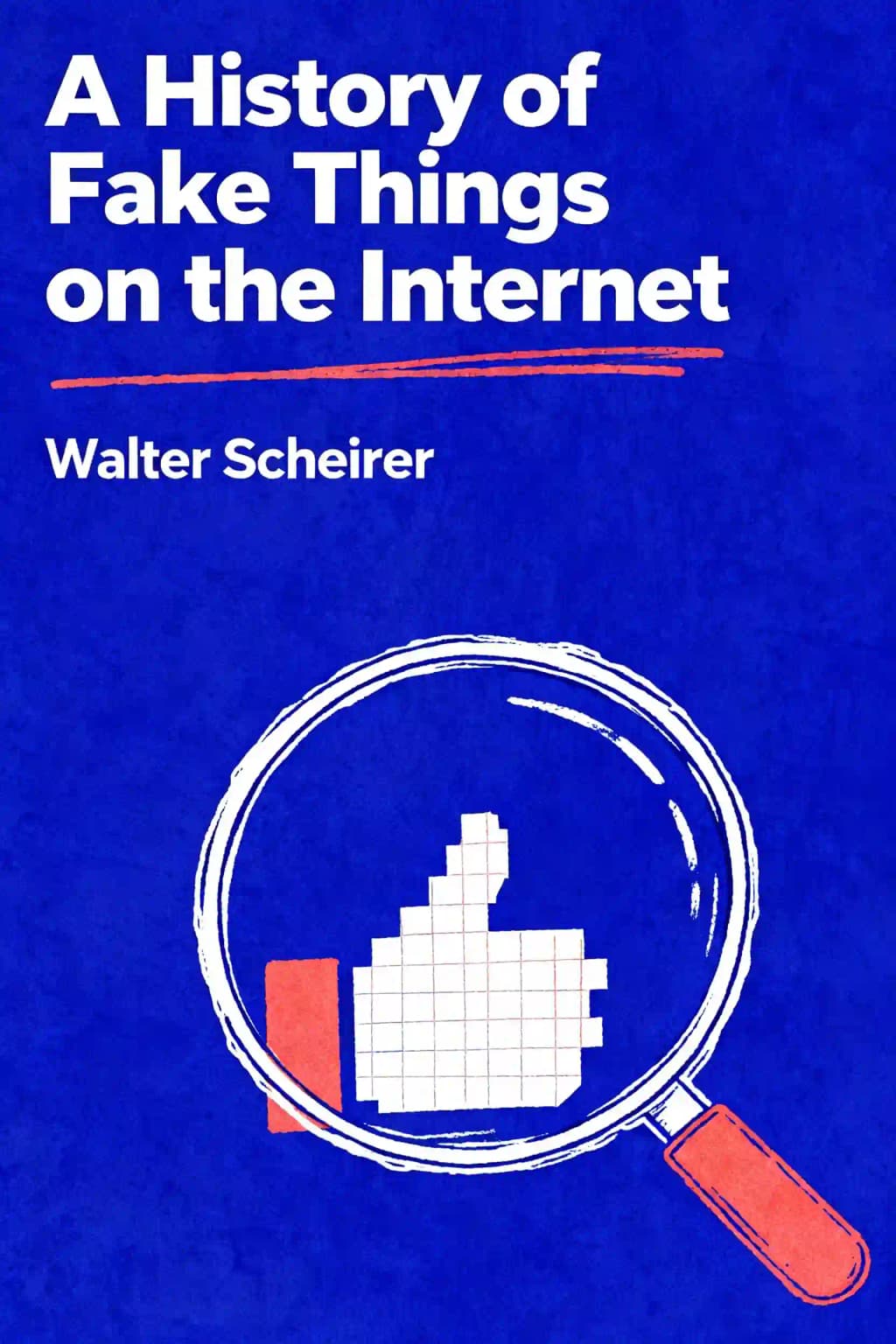
In 2016, a photo showing Donald Trump meeting with Russian officials circulated widely online, causing outrage among political observers. The image appeared genuine, with proper lighting, consistent shadows, and natural-looking interactions between subjects. There was just one problem: the meeting never happened. The image was a sophisticated fake, one of countless manipulated photos flooding social media during that contentious election season. Walter J. Scheirer's "A History of Fake Things on the Internet" arrives at the perfect cultural moment to help us understand this phenomenon. Named one of Bill Gates' top reads of 2024 and praised by The New York Times as "essential reading for our post-truth era," Scheirer's work doesn't simply condemn digital fakery but explores its rich cultural history, revealing how manipulation has always been intertwined with human creativity. Drawing from his background as both a computer scientist and cultural historian, Scheirer offers a nuanced perspective on why we create, share, and believe fake content-and what it reveals about our collective imagination.
Capítulo 2
The Internet as Extension of Human Imagination
Why is there so much fake content online? We're experiencing a rare civilizational transformation that's fundamentally altering our relationship with information and challenging our perception of existence. The global population now moves seamlessly between physical and virtual realities, with the Internet functioning as an extension of our collective imagination, filled with competing fictions. While this fuels unprecedented creativity and connection, it also harbors significant dangers, from widespread misinformation to the erosion of shared reality.
The Pew Research Center has likened the Internet to a weapon of mass destruction due to its "corrosive power" when lacking reliable truth-sorting mechanisms. Their studies show that 64% of Americans say fabricated news stories cause confusion about basic facts, while 88% believe social media companies have at least some responsibility to prevent misinformation. Many blame specific social technologies, believing regulation could resolve our post-truth stalemate. But this perspective overlooks important questions: Do all falsehoods mislead? Are creators of false content always malicious? What would happen if fiction-enabling media were banned? Consider how platforms like Wikipedia, despite initial skepticism, have developed community-based verification systems that generally work.
Bruno Macaes argues in "History Has Begun" that we should embrace rather than fear internet mythmaking, calling technology "the new holy writ, the inexhaustible source of the stories by which we order our lives." He points to examples like cryptocurrency communities, fan fiction networks, and virtual worlds as positive manifestations of collective imagination. Yet tension persists between creative expression and malicious deception when both use identical tools. The same mechanisms that enable collaborative storytelling also facilitate coordinated disinformation campaigns.
Humans have always sought to transcend physical reality through imagination, leading us into myth. Claude Levi-Strauss observed that myths across cultures share remarkable similarities, suggesting they're an essential aspect of human thought. From ancient creation stories to modern urban legends, myths provide simplifications that resolve contradictions, relieving anxiety and creating new possibilities. For instance, creation myths worldwide often feature similar elements - chaos giving way to order, divine beings shaping reality - despite emerging independently. Humanity exists in parallel timelines: the physical world and the myth cycle, with mythical thinking being as rigorous as scientific thinking but applied to different domains.
The internet has simplified reality in ways that echo ancient mythmaking, but at an unprecedented scale and speed. Adam Curtis's documentary "HyperNormalisation" suggests contemporary life has become an overwhelming stream of extraordinary events that governments can't handle. Politicians, business leaders, and tech utopians have created a simpler virtual world to escape real-world complexities. This represents the resurrection of the myth cycle that began in the 1970s, accelerated by technological developments like digital telephone switching, Ethernet, and TCP/IP protocols. Social media platforms, with their algorithmic feeds and echo chambers, function similarly to traditional myth-making structures, creating simplified narratives that help users make sense of an increasingly complex world. From QAnon to viral marketing campaigns, these modern myths spread faster and farther than ever before, shaping public opinion and behavior in profound ways.
Capítulo 3
Memes: The Ancient Art of Cultural Transmission
Internet memes didn't originate in the early 2000s-they're part of an ancient tradition of cultural transmission that spans millennia. Richard Dawkins, who coined the term "meme" in 1976, traced these cultural units back to antiquity, noting how Socrates' philosophical ideas remain vibrantly alive two millennia later through continuous replication and adaptation. The oral tradition emerged first, with Homeric poems like The Iliad and The Odyssey weaving mythology into compelling narratives that people accepted as historical truth despite their fantastical elements like gods, monsters, and supernatural interventions.
Visual mediums followed as powerful meme vectors, with Greek pottery serving as an ancient equivalent to today's social media platforms. These ceramic vessels, found in households across the Mediterranean, didn't just preserve classical stories - they reimagined them through contemporary lens. Artisans decorated everyday objects with scenes showing heroes in comedic situations, gods in compromising positions, and ordinary citizens engaging in both mundane and extraordinary activities. These ancient artists employed recognizable character types and familiar settings much like today's Doge, Pepe, or Wojak characters serve as consistent templates for modern internet memes.
The pottery's artistic language revealed what ancient people truly thought and experienced through sophisticated techniques still used in contemporary meme culture: parody, absurdist humor, visual puns, and exaggerated features. Scholars have discovered examples of nonsense writing on ancient artifacts - strings of letters that made no literal sense but carried cultural meaning, functioning remarkably similarly to modern absurdist memes like "covfefe" or "stonks."
Ancient historical writing demonstrated a fascinating relationship with truth that parallels modern internet culture. Herodotus' Histories, while considered the foundation of Western historical scholarship, contains numerous impossible tales presented as fact - from gold-digging ants "bigger than foxies" to phoenix birds and flying snakes. Later writers like Pliny the Elder and Aelian perpetuated these fantastic stories without critical examination. This wasn't simply due to scientific ignorance; ancient audiences actively expected historical accounts to incorporate mythical elements, understanding that these served to convey deeper cultural truths and moral lessons.
Today's digital infrastructure has become an unprecedented cradle for both factual and fictional content. The year 2016 marked a milestone when global internet traffic exceeded one zettabyte (one trillion gigabytes) for the first time, reflecting explosive growth in multimedia content creation and sharing. With over 70% of Americans actively using social media platforms and users spending more than four hours daily on smartphones, the distinction between content consumer and creator has effectively disappeared. Nearly all shared digital content undergoes some form of modification, from subtle automatic camera enhancements to deliberate manipulations, creating a modern parallel to ancient practices of cultural remixing and reinterpretation.
Capítulo 4
Hackers: The Original Digital Mythmakers
The world of computer hackers defies the stereotypical portrayal of socially awkward nerds committing crimes online. From the 1980s to early 2000s, an extraordinary subculture emerged focused on using technology in unintended ways. These hackers operated pseudonymously with handles that protected their identities while adding to the mystique. The scene attracted diverse participants: counterculture figures resisting authority through network misuse, trained engineers seeking creative freedom beyond their day jobs, artistic individuals exploring computing as a new medium, and countless rebellious teenagers and college students.
One remarkable example of hacker mythmaking involved the Cult of the Dead Cow, who perpetrated an elaborate hoax culminating at the 1993 HoHoCon hacker conference. They created a fictional character named "Quentin" who supposedly appeared on NBC's Dateline program revealing government UFO secrets. When asked who remembered this follow-up Dateline episode featuring the mysterious Quentin, half the audience raised their hands-despite no such episode ever airing. The group played a grainy, fake Dateline clip featuring one member's sister as Quentin, presenting "evidence" of a massive cover-up involving NASA, the Apollo 1 fire, and an astronaut who supposedly received bionic enhancements to survive the disaster.
Their fabricated story cleverly incorporated elements from the 1970s TV show "The Six Million Dollar Man," creating a prototype for modern conspiracy theories by weaving factual elements with obvious fiction. The prank successfully exploited news media, bulletin board system communities, and live audiences, becoming legendary within hacker culture.
This case reveals how the news media bears responsibility for creating conditions where hacker pranks flourished. Jim Thomas, editor of Computer Underground Digest, experienced this firsthand when a Dateline producer contacted him seeking sensational "hacker busts" while ignoring serious computer crimes. Despite its questionable journalistic practices-including staging truck explosions and pursuing predator stings that led to tragedy-Dateline remained influential. Hackers exploited journalists' desire for sensational stories by feeding them fabrications, including tales about moving satellites. The same vulnerabilities persist today, with political actors exploiting reporters seeking sensational scoops.
Capítulo 5
The Photographic Illusion: From Darkroom to Digital
Photo manipulation isn't new to the digital age-it's been a fixture of media for nearly two centuries. Even in the 1970s, photographers could alter images using darkroom techniques. Since photography's invention, retouching became so common that finding unaltered photographs was difficult. One of the earliest fake photos was Hippolyte Bayard's 1840 "Self Portrait as a Drowned Man," which depicted the photographer as a corpse to protest being overlooked for his photographic innovations.
By the late nineteenth century, darkroom specialists had developed sophisticated techniques for photo doctoring that fell into two categories: deletion or insertion of details. Early cameras produced remarkably high-quality images that captured fine details-sometimes too many for vain subjects. Retouching negatives to remove blemishes became standard practice in photography studios. For removing entire people, photographers used cropping, effacement (selectively cutting negatives), or blocking (painting over people and filling the void with matching background). Albania's leader Enver Hoxha routinely purged enemies from photos, sometimes leaving behind chilling details like shoes of the erased subjects-a stark warning about his control over reality.
Newly created voids in photos could be filled with cutouts from other images to create photomontages. At the turn of the twentieth century, whimsical photomontage postcards became popular collectibles, featuring people in outer space, human-headed chimeras, and subjects posing with impossibly giant objects. Another clever technique was double exposure, which captured multiple images on the same negative-particularly effective for creating "spirit photography" that purportedly showed the living with ghostly images of their deceased loved ones.
By the 1980s, digital cameras emerged alongside computer programs that could alter photographs. Digital editing offered distinct advantages: operations became reversible, new manipulations like geometric warping became possible, editing became accessible to untrained users, and digital images could be easily shared across computer systems. The most consequential operation for the social media era was text overlay, which embedded captions directly into images, paving the way for Internet memes.
Capítulo 6
Photoshop: The Democratization of Visual Manipulation
The verb "to Photoshop" emerged through a remarkable combination of technological innovation and family collaboration. Thomas Knoll, a computer vision PhD student, and his brother John, an Industrial Light & Magic engineer, developed the software from Thom's image-processing algorithms. Both were sons of a photography-enthusiast professor who introduced them to imaging technology. While Thom worked on algorithms missing from existing graphic design software, John recognized their commercial potential.
Their initial collection of code snippets evolved into an application with groundbreaking features like color image support and multiple file formats. John's innovation of plug-ins allowed users to add their own features, creating communities around the product. Adobe purchased distribution rights in 1988 and released the first commercial version in 1990, perfectly timed with the rise of multimedia technologies and the internet.
John's early demos, featuring a photo of his girlfriend Jennifer that he would clone, showcased Photoshop's capabilities while foreshadowing how the software would transform image manipulation. By the late 1990s, "Photoshop" had become a verb, and the software had revolutionized industries from fashion to advertising by making previously time-consuming manipulations quick and accessible.
On today's internet, Photoshopped versions of reality are as prevalent as those resembling real life. Memes have innovatively coupled photographic manipulation with jokes, transforming what was once oral entertainment into visual exchange. While it's technically possible to detect that an image has been edited, determining whether it contains malicious content remains challenging. Despite efforts by Adobe's Content Authenticity Initiative and DARPA's forensics research programs, technological solutions remain elusive.
Recent headlines warn of an "information apocalypse" threatening to "rewrite history," but such alarmism overlooks that virtually all digital photos undergo some form of manipulation through computational photography and social media filters. Rather than focusing on technological solutions, we might better address the deeper human desire to escape reality and enter imaginative alternatives. The real issue isn't accuracy but how we incorporate content into decision-making and culture.
Capítulo 7
Cheat Codes: The Allure of Hidden Knowledge
Early computer users were captivated by accessing digital spaces beyond ordinary reach. The vast complexity of computer technology offered tantalizing opportunities for discovery, with users sometimes stumbling upon secrets that unlocked seemingly impossible realms. The most recognizable manifestation of this phenomenon was the video game cheat code, which exemplified the thrill of discovering hidden digital pathways. These codes became "the currency of cool" according to former GamePro editor Dan Amrich, with rumors spreading across high school cafeterias before landing on bulletin board systems.
This fascination with hidden knowledge extended to the hacker underground, where technical files on hacking and phreaking created an information asymmetry that challenged even experts in distinguishing real from fake content. The "Blotto box" exemplifies early phone phreak pranks-a mythical device allegedly capable of disabling all phones in an area code, attributed to "King Blotto" of the Legion of Doom. These fake plans blended technical jargon with apocalyptic claims about generating enough voltage to electrocute phone users, becoming legendary despite their implausibility.
As the underground hacking scene began professionalizing into the computer security industry, an ideological war erupted between competing factions. The blackhats viewed industry transitions as betrayal of hacking's core philosophy, seeking to protect their subculture by intimidating those marketing their skills commercially. They exposed security flaws in whitehats' products, highlighting that with enough resources, any system could be compromised regardless of countermeasures-revealing elements of fakery inherent in the emerging computer security business.
Blackhat hackers weaponized underground publications against whitehats, with Gobbles Security becoming particularly infamous. Their deliberately outrageous claims often found believers despite their absurdity. In early 2003, they released an advisory claiming they worked for the RIAA to create "virii/worm hybrids" to attack file-sharing networks-a fabrication that nearly secured them a TechTV interview. The group's broken-English advisories confused well-meaning people who offered to help rewrite them, missing their intentionally goofy style.
These textfiles functioned as "cheat codes for life" by blending fact and fiction into plausible digital windows into imagination. They created a parallel reality where hackers could access hidden knowledge and power, reinforcing the community's identity while simultaneously undermining efforts to commercialize and regulate their subculture.
Capítulo 8
The Self-Fulfilling Prophecies of Media Forensics
Self-fulfilling prophecies pervade science and technology when experts make seemingly inevitable predictions using compelling rhetoric like "It is inescapable" or "All data point to this happening." This pattern is particularly bewildering in scientific communities that should prioritize skepticism over proclamations of inevitability.
Media forensics emerged as a field attempting to solve a problem that didn't yet exist. The discipline comprises two core parts: computer vision (pioneered by Hany Farid, using physics-based and machine-learning models to detect forgery clues) and signal processing (developed by Jessica Fridrich, who introduced sensor fingerprinting and techniques to identify image manipulation).
For its first two decades, media forensics struggled with a fundamental issue-the lack of actual malicious digital photo manipulations to study. Researchers resorted to creating their own fake examples, inadvertently providing blueprints for the very manipulations they sought to prevent. The field was heavily influenced by fiction like Michael Crichton's "Rising Sun," which imagined perfect digital fakes upending courtroom evidence.
The field's growth was dramatic-from just 14 academic papers in 2004 to 440 in 2020-with researchers consistently arguing that preserving digital media integrity was the only defense against fake content. However, this purely technical perspective disregarded the cultural complexities of internet media consumption. As demonstrated by the 9/11 "tourist guy" photo that spawned numerous memes, internet users were more comfortable with competing realities than experts anticipated, treating the internet as a creative space rather than a factual database.
The media forensics community's early prophecies about perfect digital fakes have come true, but not in the way they expected. While sophisticated fakes exist, the most disruptive forms of fakery are often crude but socially damaging images like memes. Researchers like Nasir Memon acknowledge this disconnect: "Real shit has been happening on the Internet for over a decade." Perhaps most concerning is the rise of falsified scientific images, with journals like Nature reporting "up to one-fifth of published life-sciences papers contain at least one digitally altered image," some intentionally modified to change experimental results.
Capítulo 9
Beyond Prediction: The Limits of AI Clairvoyance
We live with persistent unease about the future, often leading desperate people to make bad decisions. Like King Saul consulting the Witch of Endor when faced with the Philistine army-only to receive a prophecy of doom-we crave stability amid uncertainty. The desire to predict the future persists despite thousands of years of admonitions against clairvoyance. Today, this manifestation has taken a curious turn: the seer has shape-shifted into a computer algorithm.
Generative adversarial networks can synthesize photorealistic images by learning from vast datasets-often scraped from social media platforms like Facebook and Instagram. The Montreal group's climate change visualization model uses 300 x 300 pixel color images, creating a functionally infinite space of possible images that far exceeds the number of atoms in the universe. This makes evaluating prediction accuracy nearly impossible, as there are no predefined thresholds for similarity between predicted and actual future images.
The greatest challenge for prediction is novelty-completely unexpected events that no model can anticipate. Donald Rumsfeld's famous "unknown unknowns" concept captures this problem perfectly. AI algorithms are particularly vulnerable because they're trained on limited historical data that necessarily undersamples reality. They fail to generalize beyond immediate experience and struggle with new environmental conditions. AI prediction failures abound: algorithms couldn't accurately forecast six life outcomes for 4,000 families despite having 13,000 data points; facial recognition systems claiming to identify "future criminals" exploited dataset irregularities; and job candidate assessment tools discriminate against diverse applicants absent from training data.
The core problem with AI technologies attempting to predict the far future is their vulnerability to exploitation by scammers preying on society's anxiety. Beyond scams lies a deeper ethical dilemma: audiences viewing climate-change predictions might focus on individual solutions (like fortifying their property) while ignoring necessary systematic global changes. This misdirects attention from the fundamental problem. The solution is simple: learn from the past and react to the present. We already know climate change's current impact and what's needed: drastically reduced fossil-fuel consumption, increased clean energy investment, reconfigured transportation, and modernized infrastructure.
Capítulo 10
Toward a Creative Digital Future
The foundation for today's virtual reality began in 1965 when computer graphics pioneer Ivan Sutherland described digital displays as "a looking glass into a mathematical wonderland," echoing Marshall McLuhan's view of electric circuitry as "an extension of the central nervous system." Early Internet visionaries like John Perry Barlow recognized the network's potential as "a realm bounded only by human imagination." Initially limited by slow hardware and immature software, this vision became more achievable in the early 2000s with broadband, smartphones, and massive data centers.
As venture capitalist Marc Andreessen observed in 2007, the world became "malleable" through software, which was "eating the world" by virtualizing physical services. Now, AI promises to transform this landscape further, with NVIDIA CEO Jensen Huang declaring "AI is going to eat software." This evolution leads toward the "metaverse," described by Meta's Mark Zuckerberg as an "embodied internet" that will progress from augmented reality on smartphones to peripherals that create immersive experiences and eventually to brain-computer interfaces.
The creative potential of technology has democratized what was once exclusive to professionals. The DIY attitude that drove computer hackers, digital artists, and AI researchers now extends to nearly everyone with a smartphone. While AI's progress in technical applications like disease diagnosis has been slower than expected, its creative capabilities are surging forward. Visual artists quickly recognized this potential, leading to collaborations between artists and AI researchers. While Christie's made headlines selling AI-generated art for $432,500 in 2018, the most interesting developments are happening in community art. Platforms like Art Blocks and Brain Drops have established communities generating art directly onto blockchains, while user-friendly interfaces like Artbreeder allow anyone to modify an image's "genes."
When addressing fake content online, we must avoid extreme reactions like abandoning social media or imposing draconian content controls. Instead, we should evaluate whether technologies that enable fake content might contribute to humanity's common good. Philosopher Shannon Vallor offers a virtue-based framework for ethical technology assessment, asking whether technologies promote good within and beyond communities. This approach requires distinguishing between harmful uses (like political disinformation targeting opponents) and beneficial ones (like satire).
We must move beyond excessive pessimism about internet fictions. As McLuhan quoted Whitehead, "It is the business of the future to be dangerous"-risk accompanies the unknown, but shouldn't paralyze us. The problems with fake content are manageable through existing norms and functional politics. Understanding media context is essential for interpreting digital fakes, as they express myth cycles propagating through new communication technologies. McLuhan's concept of the "global village" reframes myth cycles in technological terms, suggesting that "electric technology fosters and encourages unification and involvement." The global village needs its dark alleys to capture the full human experience, requiring us to think deeply about what we encounter.




![[2604.26965] The Impact of AI-Generated Text on the Internet](/_next/image?url=https%3A%2F%2Fd1y2du6z1jfm9e.cloudfront.net%2Fassets%2Fpodcast%2Fpurple.png&w=1024&q=50)