Overview of Sleepwalkers
Christopher Clark's groundbreaking "The Sleepwalkers" reframes World War I's origins, challenging Germany's sole blame. This 350,000-copy bestseller influenced German foreign policy and earned Frank-Walter Steinmeier's attention. How did misunderstandings between great powers trigger history's deadliest conflict? The answer will stun you.
- Challenges WWI blame narratives by exposing Europe’s shared miscalculations and mutual distrust.
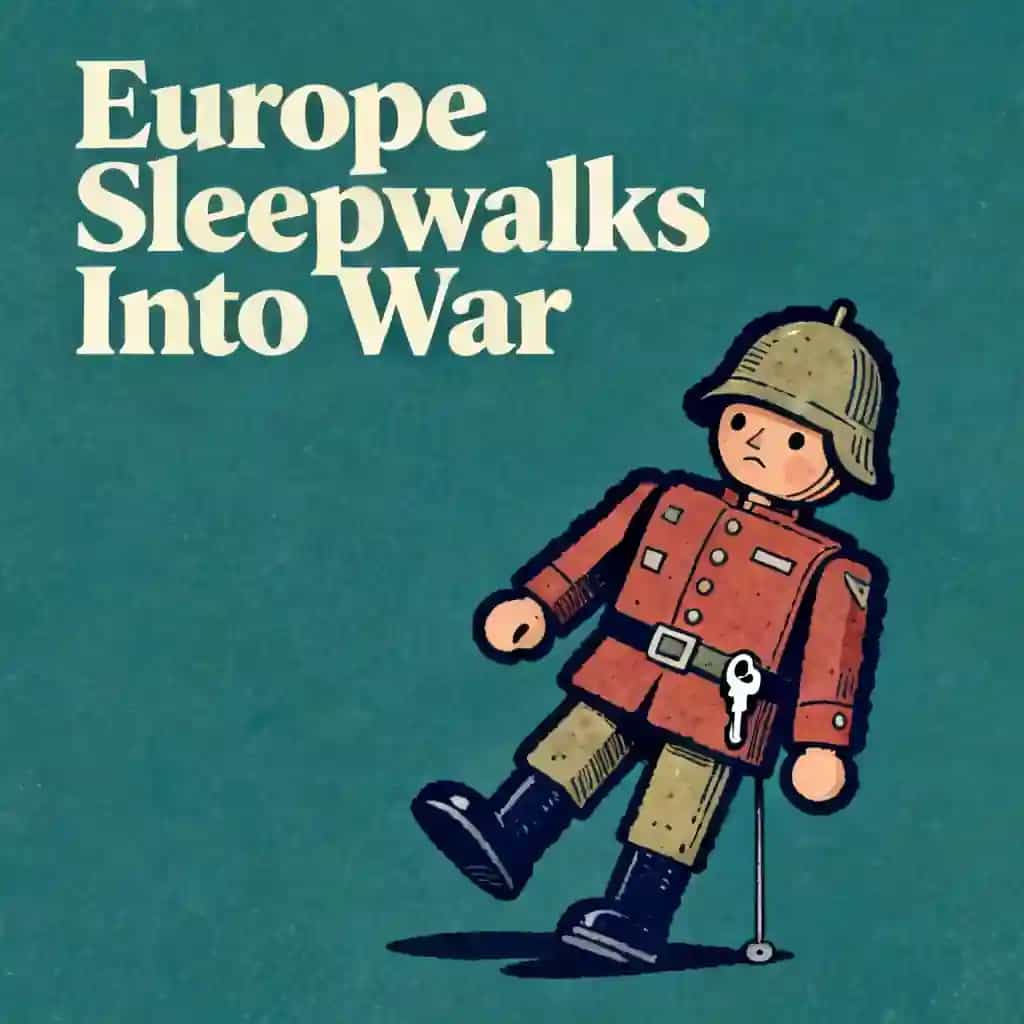
- Uses “sleepwalking” metaphor to explain leaders’ unintended escalation toward catastrophic war.
- Analyzes multipolar pre-war Europe’s fragile alliances that amplified diplomatic failures.
- Exposes Serbian radicalism and Habsburg rigidity as combustible Balkan tinderbox drivers.
- Argues Archduke’s assassination was catalyst, not sole cause, in crisis chain reaction.
- Reveals fatal misjudgments of Russian military capabilities across European governments.
- Details how alliance systems transformed regional crisis into global conflict inevitability.
- Revisionist scholarship reframing WWI origins through pan-European leadership failures.
- Showcases primary-source diplomacy analysis highlighting mutual distrust among nations.
- Explains how “July Crisis” decisions spiraled beyond governments’ control.
- Rejects war inevitability thesis by mapping contingency in pre-war geopolitics.
- Links Ottoman decline to rising Eastern European tensions and power vacuums.
About the Author of Sleepwalkers
Sir Christopher Munro Clark, author of The Sleepwalkers: How Europe Went to War in 1914, is an acclaimed historian and Regius Professor of History at the University of Cambridge, specializing in 19th- and 20th-century European political and diplomatic history.
A Sydney-born scholar educated at the University of Cambridge and Freie Universität Berlin, Clark’s expertise in German history and transnational conflicts informs his nuanced analysis of World War I’s origins, blending meticulous research with gripping narrative.
His authoritative works, including the Wolfson History Prize-winning Iron Kingdom: The Rise and Downfall of Prussia and the bestselling Revolutionary Spring: Europe Aflame and the Fight for a New World, 1848–1849, explore themes of power, ideology, and unintended consequences in shaping modern Europe.
Knighted in 2015 for advancing Anglo-German relations, Clark’s scholarship is widely cited in academic and public discourse. The Sleepwalkers has been translated into over 30 languages and earned recognition as a New York Times Notable Book, solidifying its status as a landmark study of geopolitical miscalculation.
FAQs About Sleepwalkers
What is The Sleepwalkers: How Europe Went to War in 1914 about?
Christopher Clark’s The Sleepwalkers examines the complex political alliances, miscalculations, and diplomatic failures that led to World War I, arguing that European powers unintentionally stumbled into conflict. The book emphasizes shared responsibility over assigning blame to a single nation, analyzing pivotal events like the 1903 Serbian regicide, the Balkan tensions, and the July Crisis of 1914.
Who should read The Sleepwalkers?
History enthusiasts, students of international relations, and readers interested in geopolitical decision-making will find this book valuable. Clark’s narrative blends scholarly rigor with accessible storytelling, making it suitable for both academics and general audiences seeking a nuanced understanding of WWI’s origins.
Is The Sleepwalkers worth reading?
Yes—it’s a seminal work that challenges traditional blame-centric narratives of WWI. Clark’s meticulous research, multi-national perspective, and gripping account of diplomatic breakdowns have earned critical acclaim, including the Los Angeles Times Book Prize. Its relevance extends to modern discussions about alliance systems and unintended consequences.
What does the "sleepwalkers" metaphor mean in Christopher Clark’s book?
The metaphor describes European leaders as “watchful but unseeing,” navigating crises with limited awareness of their collective drift toward catastrophe. Clark uses this imagery to illustrate how preconceptions, miscommunication, and institutional pressures blinded decision-makers to the war’s inevitability until it was too late.
How does The Sleepwalkers explain the July Crisis of 1914?
Clark reconstructs the July Crisis as a chain reaction of overlapping alliances and mutual distrust. After Archduke Franz Ferdinand’s assassination, Austria-Hungary’s ultimatum to Serbia triggered Russian mobilization, German support for Austria, and French commitments to Russia—escalating into a continental war despite no nation actively seeking it.
What is Christopher Clark’s view on responsibility for WWI?
Clark rejects the idea of a sole culprit, arguing that all major powers contributed through misjudgments and rigid policies. His analysis highlights how Austria-Hungary’s aggression, Germany’s “blank check” support, and Russia’s mobilization each played critical roles in the crisis.
How does The Sleepwalkers differ from other WWI histories like The Guns of August?
Unlike Barbara Tuchman’s focus on military strategy, Clark prioritizes diplomatic and political missteps across decades. While Tuchman dramatizes August 1914, Clark traces deeper structural causes, such as Serbia-Austria tensions and the fragility of multinational empires.
What are the key criticisms of The Sleepwalkers?
Some historians argue Clark underemphasizes Germany’s role in encouraging Austrian aggression. Others note the dense detail in early chapters may overwhelm casual readers, though the narrative gains momentum in later sections.
What lessons from The Sleepwalkers apply to modern geopolitics?
The book underscores how rigid alliances, miscommunication, and overconfidence in crisis management can lead to disaster—a cautionary tale for modern diplomacy. Clark’s emphasis on unintended consequences resonates in debates about military escalation and multilateralism.
Does The Sleepwalkers discuss the Balkan Wars’ impact on WWI?
Yes. Clark details how the 1912-1913 Balkan Wars destabilized the region, fueling Serbian nationalism and Austria-Hungary’s fear of Slavic uprisings. These tensions set the stage for the Sarajevo assassination and the broader crisis.
What archival sources does Christopher Clark use in The Sleepwalkers?
Clark draws from diplomatic cables, personal letters, and government records across six languages, including Serbian, German, and Russian archives. This multi-national approach helps him challenge biased postwar narratives.
How does The Sleepwalkers structure its analysis of WWI’s causes?
The book is divided into three parts: Balkan geopolitics pre-1914, European alliance systems, and the July Crisis. This framework allows Clark to connect long-term structural issues with immediate triggers, avoiding oversimplification.
Feel the book through the author's voice
Turn knowledge into engaging, example-rich insights
Capture key ideas in a flash for fast learning
Enjoy the book in a fun and engaging way
Key Themes in Sleepwalkers
Quotes from Sleepwalkers
a spark might set the whole Balkans alight and involve all the Powers of Europe.
The gap between nationalist ambitions and demographic realities made violence inevitable.
Serbia nearly doubled its size.
operating under administrative absolutism.
embracing the lands with the paper-white arm of administration.
Characters in Sleepwalkers
Quick Summary Mode - Read or listen to Sleepwalkers Summary in 9 Minutes

Break down key ideas from Sleepwalkers into bite-sized takeaways to understand how innovative teams create, collaborate, and grow.

Flash Card Mode - Top 8 Insights from Sleepwalkers in a Nutshell

Distill Sleepwalkers into rapid-fire memory cues that highlight key principles of candor, teamwork, and creative resilience.

Fun Mode - Sleepwalkers Lessons Told Through 25-Min Stories

Experience Sleepwalkers through vivid storytelling that turns innovation lessons into moments you'll remember and apply.
Personalize Mode - Read or listen to Sleepwalkers Summary in 0 Minutes

Ask anything, pick the voice, and co-create insights that truly resonate with you.

From Columbia University alumni built in San Francisco
"Instead of endless scrolling, I just hit play on BeFreed. It saves me so much time."


"I never knew where to start with nonfiction—BeFreed’s book lists turned into podcasts gave me a clear path."


"Perfect balance between learning and entertainment. Finished ‘Thinking, Fast and Slow’ on my commute this week."
"Crazy how much I learned while walking the dog. BeFreed = small habits → big gains."
"Reading used to feel like a chore. Now it’s just part of my lifestyle."

"Feels effortless compared to reading. I’ve finished 6 books this month already."
"BeFreed turned my guilty doomscrolling into something that feels productive and inspiring."

"BeFreed turned my commute into learning time. 20-min podcasts are perfect for finishing books I never had time for."
"BeFreed replaced my podcast queue. Imagine Spotify for books — that’s it. 🙌"

"It is great for me to learn something from the book without reading it."
"The themed book list podcasts help me connect ideas across authors—like a guided audio journey."
"Makes me feel smarter every time before going to work"
From Columbia University alumni built in San Francisco
"Instead of endless scrolling, I just hit play on BeFreed. It saves me so much time."
"I never knew where to start with nonfiction—BeFreed’s book lists turned into podcasts gave me a clear path."
"Perfect balance between learning and entertainment. Finished ‘Thinking, Fast and Slow’ on my commute this week."
"Crazy how much I learned while walking the dog. BeFreed = small habits → big gains."
"Reading used to feel like a chore. Now it’s just part of my lifestyle."
"Feels effortless compared to reading. I’ve finished 6 books this month already."
"BeFreed turned my guilty doomscrolling into something that feels productive and inspiring."
"BeFreed turned my commute into learning time. 20-min podcasts are perfect for finishing books I never had time for."
"BeFreed replaced my podcast queue. Imagine Spotify for books — that’s it. 🙌"
"It is great for me to learn something from the book without reading it."
"The themed book list podcasts help me connect ideas across authors—like a guided audio journey."
"Makes me feel smarter every time before going to work"
"Instead of endless scrolling, I just hit play on BeFreed. It saves me so much time."
"I never knew where to start with nonfiction—BeFreed’s book lists turned into podcasts gave me a clear path."
"Perfect balance between learning and entertainment. Finished ‘Thinking, Fast and Slow’ on my commute this week."
"Crazy how much I learned while walking the dog. BeFreed = small habits → big gains."
"Reading used to feel like a chore. Now it’s just part of my lifestyle."
"Feels effortless compared to reading. I’ve finished 6 books this month already."
"BeFreed turned my guilty doomscrolling into something that feels productive and inspiring."
"BeFreed turned my commute into learning time. 20-min podcasts are perfect for finishing books I never had time for."
"BeFreed replaced my podcast queue. Imagine Spotify for books — that’s it. 🙌"
"It is great for me to learn something from the book without reading it."
"The themed book list podcasts help me connect ideas across authors—like a guided audio journey."
"Makes me feel smarter every time before going to work"
"Instead of endless scrolling, I just hit play on BeFreed. It saves me so much time."
"I never knew where to start with nonfiction—BeFreed’s book lists turned into podcasts gave me a clear path."
"Perfect balance between learning and entertainment. Finished ‘Thinking, Fast and Slow’ on my commute this week."
"Crazy how much I learned while walking the dog. BeFreed = small habits → big gains."
"Reading used to feel like a chore. Now it’s just part of my lifestyle."
"Feels effortless compared to reading. I’ve finished 6 books this month already."
"BeFreed turned my guilty doomscrolling into something that feels productive and inspiring."
"BeFreed turned my commute into learning time. 20-min podcasts are perfect for finishing books I never had time for."
"BeFreed replaced my podcast queue. Imagine Spotify for books — that’s it. 🙌"
"It is great for me to learn something from the book without reading it."
"The themed book list podcasts help me connect ideas across authors—like a guided audio journey."
"Makes me feel smarter every time before going to work"

Get the Sleepwalkers summary as a free PDF or EPUB. Print it or read offline anytime.