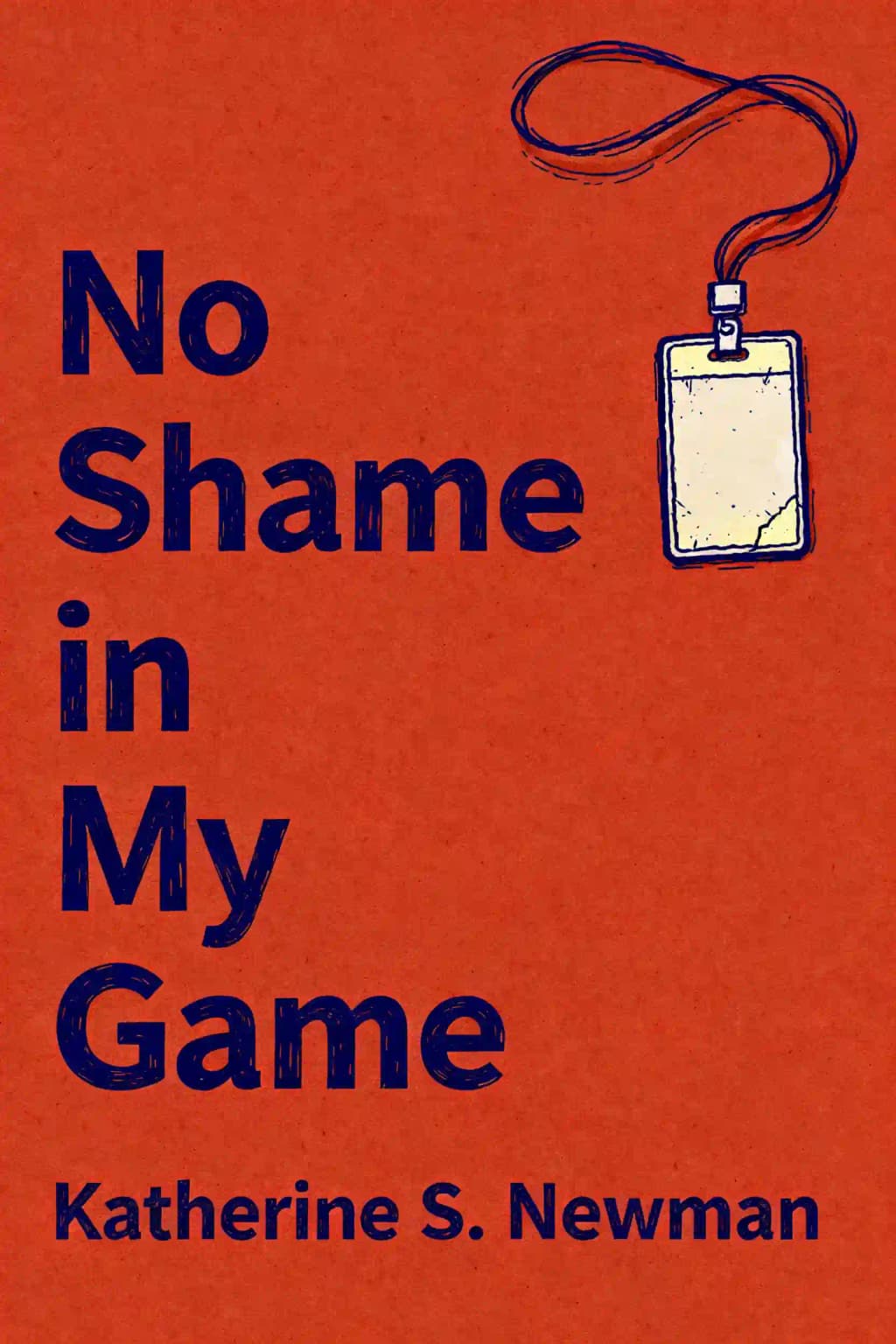
No Shame in My Game
The Working Poor in the Inner City
Overview of No Shame in My Game
In "No Shame in My Game," Harvard anthropologist Katherine Newman dismantles poverty myths through intimate portraits of Harlem's working poor. Winner of the Robert F. Kennedy Book Award, this eye-opening study asks: Why do we stigmatize those fighting hardest to escape poverty's grip?

Key Themes in No Shame in My Game
- urban working poor
- inner city employment
- minimum wage survival
- low wage mobility
- welfare reform impact
Quotes from No Shame in My Game
They don't need 'reengineering' of their values; they need support.
Survival takes precedence over advancement.
Health problems create employment instability.
It's not what you know, it's who you know.
Fast food jobs carry profound stigma.
Characters in No Shame in My Game
- Katherine S. NewmanAuthor and sociologist who studied Harlem's poor
- Robert ReichPublic figure who praised the book's research
- William Julius WilsonSociologist who recognized the book's importance
About the Author
About the Author of No Shame in My Game
Katherine S. Newman, award-winning author of No Shame in My Game: The Working Poor in the Inner City, is a distinguished sociologist and academic renowned for her research on urban poverty and economic mobility.
A professor at Princeton University and former Provost of the University of Massachusetts system, Newman combines anthropological rigor with policy insights to expose systemic barriers faced by low-wage workers. Her work draws from decades of fieldwork, underscored by her roles at Columbia University, Harvard’s Kennedy School of Government, and Johns Hopkins University.
Newman’s expertise spans labor economics and social inequality, reflected in her eight books, including The Missing Class and Reskilling America, which examine near-poverty dynamics and workforce transitions. A frequent commentator on NPR and PBS, she received the Robert F. Kennedy Book Award and Sidney Hillman Prize for No Shame in My Game, praised for reshaping public discourse on poverty. Her research has been funded by the National Science Foundation and Russell Sage Foundation, cementing her authority in social policy circles.
Download Summary of No Shame in My Game
Get the No Shame in My Game summary as a free PDF or EPUB. Print it or read offline anytime.
FAQs About This Book
No Shame in My Game by Katherine S. Newman explores the lives of low-wage workers in Harlem, challenging stereotypes about poverty and work ethic. Through interviews and fieldwork, it reveals how workers navigate economic instability, structural inequality, and social stigma while maintaining resilience and dignity. The book highlights survival strategies like resource-pooling and community networks, advocating for policy changes to support the working poor.
This book is essential for sociologists, policymakers, and anyone interested in urban poverty, labor markets, or social justice. Students studying economic inequality will gain nuanced insights into systemic barriers faced by low-wage workers, while general readers appreciate its humanizing narratives about often-overlooked communities.
Yes—Newman’s blend of rigorous research and compelling storytelling offers a groundbreaking perspective on poverty. It dispels myths about the “unmotivated poor” and provides actionable policy ideas, making it a vital resource for understanding socioeconomic challenges in urban America.
The book examines how systemic racism exacerbates economic marginalization for Black and Latino communities in Harlem. Newman highlights discriminatory hiring practices, unequal access to education, and cultural stereotypes that perpetuate cycles of poverty, while emphasizing workers’ agency despite these barriers.
Newman conducted qualitative research through:
- 300+ interviews with fast-food workers and job seekers.
- Participant observation in Harlem’s low-wage workplaces.
- Longitudinal tracking of workers’ progress over years.
Key strategies include:
- Resource-pooling: Sharing housing, childcare, and income with kin.
- Informal labor: Side jobs like hair braiding or car repairs.
- Community networks: Leveraging local organizations for support.
While praised for its empathy, some critics note a reliance on anecdotal evidence over quantitative data. Others suggest deeper analysis of policy implementation could strengthen its arguments, though most acclaim its human-centered approach.
Newman reframes these jobs as valid career pathways requiring skill and dedication. Workers express pride in mastering tasks like inventory management or customer service, countering perceptions of “unskilled” labor.
Recommendations include:
- Employer consortia to create advancement opportunities.
- School-to-work programs for youth.
- Subsidized childcare and healthcare for workers.
With rising income inequality and debates about minimum wage, the book’s insights into systemic barriers remain urgent. Its focus on worker dignity aligns with modern movements for fair labor practices and economic justice.
While No Shame in My Game focuses on immediate struggles, follow-ups like Chutes and Ladders track long-term outcomes. Later books analyze how macroeconomic shifts (e.g., 1990s wage growth) impacted mobility trajectories.
- “You know that saying, ‘Keeping up with the Joneses?’ Well, we’re just trying to keep up with the rent.”
- “Their jobs might be low-paid, but their contributions are anything but small.”
These lines encapsulate workers’ pragmatism and undervalued societal roles.