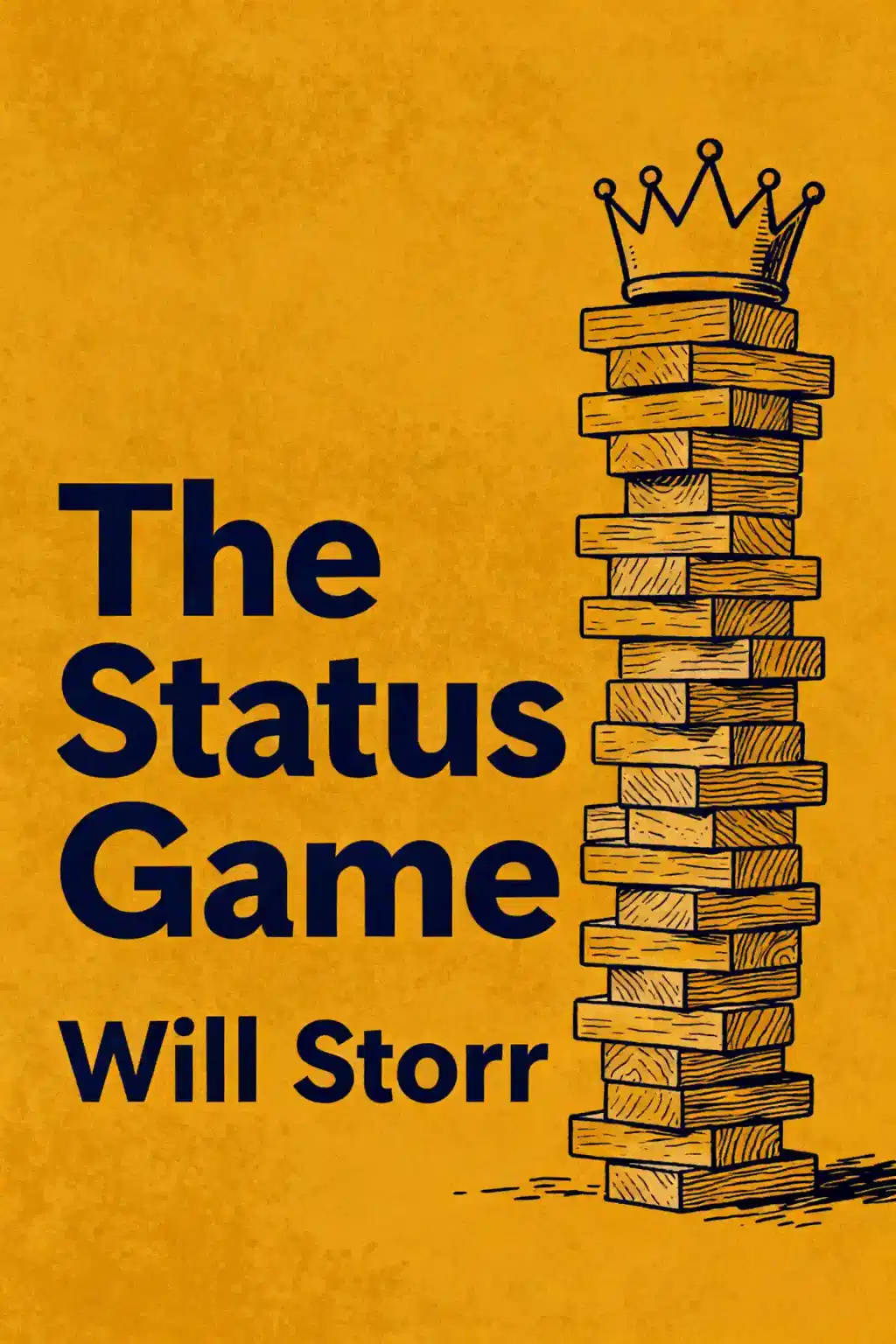
Status Game: On Social Position and How We Use It by Will Storr Summary

Overview of Status Game
"The Status Game" unveils how humans play dominance, virtue, and success games that shape everything from politics to mental health. Storr's research reveals a shocking truth: office workers at the bottom of hierarchies face higher mortality rates than their superiors. Are we all just status-seeking animals?
- Humans instinctively play status games for survival, sex, and social dominance.
- Status is relative: perceived worth depends on comparisons, not absolute achievement.
- Three status games shape societies: dominance (force), success (skill), and virtue (morality).
- Humiliation triggers traumatic status loss, fueling cycles of violence or psychological collapse.
- High-status individuals gain influence through prestige (admiration) more than dominance (fear).
- Tight status games demand conformity, suppress dissent, and erode personal identity.
- Chronic low status correlates with anxiety, depression, and inflammatory health conditions.
- Groups weaponize moral narratives to control status hierarchies and justify oppression.
- Privilege determines status-game access but can be hacked through strategic storytelling.
- Civilizations rise through status-driven innovation but collapse via toxic intergroup competition.
- Cults exemplify extreme status games offering identity in exchange for obedience.
- Escape toxic games by joining groups valuing individual contribution over hierarchy.
About the Author of Status Game
Will Storr is the bestselling author of The Status Game and an award-winning journalist renowned for his groundbreaking explorations of psychology, culture, and human behavior. A former contributing editor at Esquire and GQ Australia, Storr built his reputation through investigative reporting in conflict zones like South Sudan and Aboriginal Australia, earning the Amnesty International Award for his work on gender-based violence.
His books, including The Science of Storytelling (a Sunday Times bestseller) and Selfie (“approaching genius” – The Sunday Times), dissect themes of identity, social dynamics, and neuroscience with a journalist’s rigor and a storyteller’s flair.
A sought-after ghostwriter for public figures like Ant Middleton, Storr’s collaborative works have sold over two million copies globally. His TEDx talk on the neuroscience of narrative and frequent contributions to The Guardian, The New Yorker, and BBC documentaries reinforce his authority on social psychology.
The Status Game, which examines humanity’s obsession with social hierarchy, distills decades of research into accessible insights used by educators and corporate leaders alike. Storr’s work has been translated into 15 languages and taught in writing seminars for institutions including the European Parliament.
FAQs About Status Game
What is The Status Game by Will Storr about?
The Status Game explores how human behavior is driven by the universal pursuit of status within social groups. Will Storr argues that status-seeking—whether through dominance, virtue, or success—shapes our relationships, beliefs, and societal structures. The book combines psychology, anthropology, and storytelling to explain how status games influence everything from personal happiness to global conflicts.
Who should read The Status Game?
This book is ideal for readers interested in psychology, sociology, or self-improvement. Leaders, professionals, and anyone seeking to understand social hierarchies or navigate workplace dynamics will find actionable insights. It’s also valuable for those curious about why conspiracy theories, cancel culture, and group conflicts arise.
Is The Status Game worth reading?
Yes—The Status Game offers a compelling lens to decode human behavior, blending rigorous research with engaging narratives. Critics praise its ability to make complex concepts accessible, though some note it occasionally oversimplifies motives. It’s particularly recommended for its fresh perspective on social media, politics, and personal relationships.
What are the three types of status games described in the book?
Storr identifies dominance games (gaining power through force/fear), virtue games (earning respect via moral alignment), and success games (achieving prestige through skill/knowledge). These “prestige games” often coexist, with societies rewarding different traits based on cultural values.
How does The Status Game explain societal conflicts?
The book posits that intergroup strife arises when status competitions turn toxic. Examples include wars, cults, and online Cancel Culture, where groups demonize outsiders to elevate their own status. Storr warns that such games can distort reality, fuel extremism, and erode cooperation.
What is the “Prince Charles Paradox” mentioned in The Status Game?
This paradox illustrates how formal titles (e.g., royalty) don’t always equate to genuine respect. Despite Charles’ high official status, many view him as less competent than self-made leaders. Storr uses this to show how status is earned through perceived value, not just inherited roles.
Does Will Storr suggest ways to “win” the status game?
Storr advises focusing on local games where your contributions matter (e.g., family, hobbies, or niche communities). He emphasizes cultivating warmth, sincerity, and competence—traits that build sustainable admiration without relying on aggression or manipulation.
How does humiliation relate to status, according to the book?
Humiliation—the loss of status—triggers profound psychological pain, often leading to aggression or withdrawal. Storr links this to toxic behaviors like trolling, radicalization, and workplace bullying, as individuals seek to reclaim status through destructive means.
What criticisms exist about The Status Game?
Some argue the book overemphasizes status as a motivator, neglecting factors like curiosity or altruism. Others note it occasionally conflates correlation with causation in historical examples. However, most agree its framework explains a significant portion of human behavior.
How does The Status Game apply to career advancement?
The book suggests aligning with “success games” in your field by mastering valued skills (e.g., coding, public speaking). It also warns against toxic dominance games in corporate cultures, advocating for prestige earned through mentorship and ethical leadership.
What iconic quotes define The Status Game?
- “Life is a game that never ends. And it’s the very worst of us.”
- “Status is the golden key that unlocks our dreams.”
- “Groups gather, agree what symbols mean ‘status,’ then strive to achieve it.”
These lines underscore humanity’s relentless, often destructive pursuit of social standing.
How does The Status Game compare to Sapiens or Atomic Habits?
While Sapiens examines broad human history and Atomic Habits focuses on personal routines, The Status Game bridges the two by explaining how social hierarchies shape both societal evolution and individual choices. It’s more psychology-focused than Yuval Harari’s work but less prescriptive than James Clear’s.
Feel the book through the author's voice
Turn knowledge into engaging, example-rich insights
Capture key ideas in a flash for fast learning
Enjoy the book in a fun and engaging way
Key Themes in Status Game
Quotes from Status Game
Life isn't simply a journey or a story-it's a game.
Status isn't merely pleasant-it's an essential nutrient.
We don't experience ourselves as game players but as heroes.
Most people would choose higher status over higher pay.
When we're judged and measured by others, their judgments matter profoundly.
Characters in Status Game
Quick Summary Mode - Read or listen to Status Game Summary in 9 Minutes

Break down key ideas from Status Game into bite-sized takeaways to understand how innovative teams create, collaborate, and grow.

Flash Card Mode - Top 11 Insights from Status Game in a Nutshell

Distill Status Game into rapid-fire memory cues that highlight key principles of candor, teamwork, and creative resilience.

Fun Mode - Status Game Lessons Told Through 21-Min Stories

Experience Status Game through vivid storytelling that turns innovation lessons into moments you'll remember and apply.
Personalize Mode - Read or listen to Status Game Summary in 0 Minutes

Ask anything, pick the voice, and co-create insights that truly resonate with you.

From Columbia University alumni built in San Francisco
"Instead of endless scrolling, I just hit play on BeFreed. It saves me so much time."


"I never knew where to start with nonfiction—BeFreed’s book lists turned into podcasts gave me a clear path."


"Perfect balance between learning and entertainment. Finished ‘Thinking, Fast and Slow’ on my commute this week."
"Crazy how much I learned while walking the dog. BeFreed = small habits → big gains."
"Reading used to feel like a chore. Now it’s just part of my lifestyle."

"Feels effortless compared to reading. I’ve finished 6 books this month already."
"BeFreed turned my guilty doomscrolling into something that feels productive and inspiring."

"BeFreed turned my commute into learning time. 20-min podcasts are perfect for finishing books I never had time for."
"BeFreed replaced my podcast queue. Imagine Spotify for books — that’s it. 🙌"

"It is great for me to learn something from the book without reading it."
"The themed book list podcasts help me connect ideas across authors—like a guided audio journey."
"Makes me feel smarter every time before going to work"
From Columbia University alumni built in San Francisco
"Instead of endless scrolling, I just hit play on BeFreed. It saves me so much time."
"I never knew where to start with nonfiction—BeFreed’s book lists turned into podcasts gave me a clear path."
"Perfect balance between learning and entertainment. Finished ‘Thinking, Fast and Slow’ on my commute this week."
"Crazy how much I learned while walking the dog. BeFreed = small habits → big gains."
"Reading used to feel like a chore. Now it’s just part of my lifestyle."
"Feels effortless compared to reading. I’ve finished 6 books this month already."
"BeFreed turned my guilty doomscrolling into something that feels productive and inspiring."
"BeFreed turned my commute into learning time. 20-min podcasts are perfect for finishing books I never had time for."
"BeFreed replaced my podcast queue. Imagine Spotify for books — that’s it. 🙌"
"It is great for me to learn something from the book without reading it."
"The themed book list podcasts help me connect ideas across authors—like a guided audio journey."
"Makes me feel smarter every time before going to work"
"Instead of endless scrolling, I just hit play on BeFreed. It saves me so much time."
"I never knew where to start with nonfiction—BeFreed’s book lists turned into podcasts gave me a clear path."
"Perfect balance between learning and entertainment. Finished ‘Thinking, Fast and Slow’ on my commute this week."
"Crazy how much I learned while walking the dog. BeFreed = small habits → big gains."
"Reading used to feel like a chore. Now it’s just part of my lifestyle."
"Feels effortless compared to reading. I’ve finished 6 books this month already."
"BeFreed turned my guilty doomscrolling into something that feels productive and inspiring."
"BeFreed turned my commute into learning time. 20-min podcasts are perfect for finishing books I never had time for."
"BeFreed replaced my podcast queue. Imagine Spotify for books — that’s it. 🙌"
"It is great for me to learn something from the book without reading it."
"The themed book list podcasts help me connect ideas across authors—like a guided audio journey."
"Makes me feel smarter every time before going to work"
"Instead of endless scrolling, I just hit play on BeFreed. It saves me so much time."
"I never knew where to start with nonfiction—BeFreed’s book lists turned into podcasts gave me a clear path."
"Perfect balance between learning and entertainment. Finished ‘Thinking, Fast and Slow’ on my commute this week."
"Crazy how much I learned while walking the dog. BeFreed = small habits → big gains."
"Reading used to feel like a chore. Now it’s just part of my lifestyle."
"Feels effortless compared to reading. I’ve finished 6 books this month already."
"BeFreed turned my guilty doomscrolling into something that feels productive and inspiring."
"BeFreed turned my commute into learning time. 20-min podcasts are perfect for finishing books I never had time for."
"BeFreed replaced my podcast queue. Imagine Spotify for books — that’s it. 🙌"
"It is great for me to learn something from the book without reading it."
"The themed book list podcasts help me connect ideas across authors—like a guided audio journey."
"Makes me feel smarter every time before going to work"

Get the Status Game summary as a free PDF or EPUB. Print it or read offline anytime.