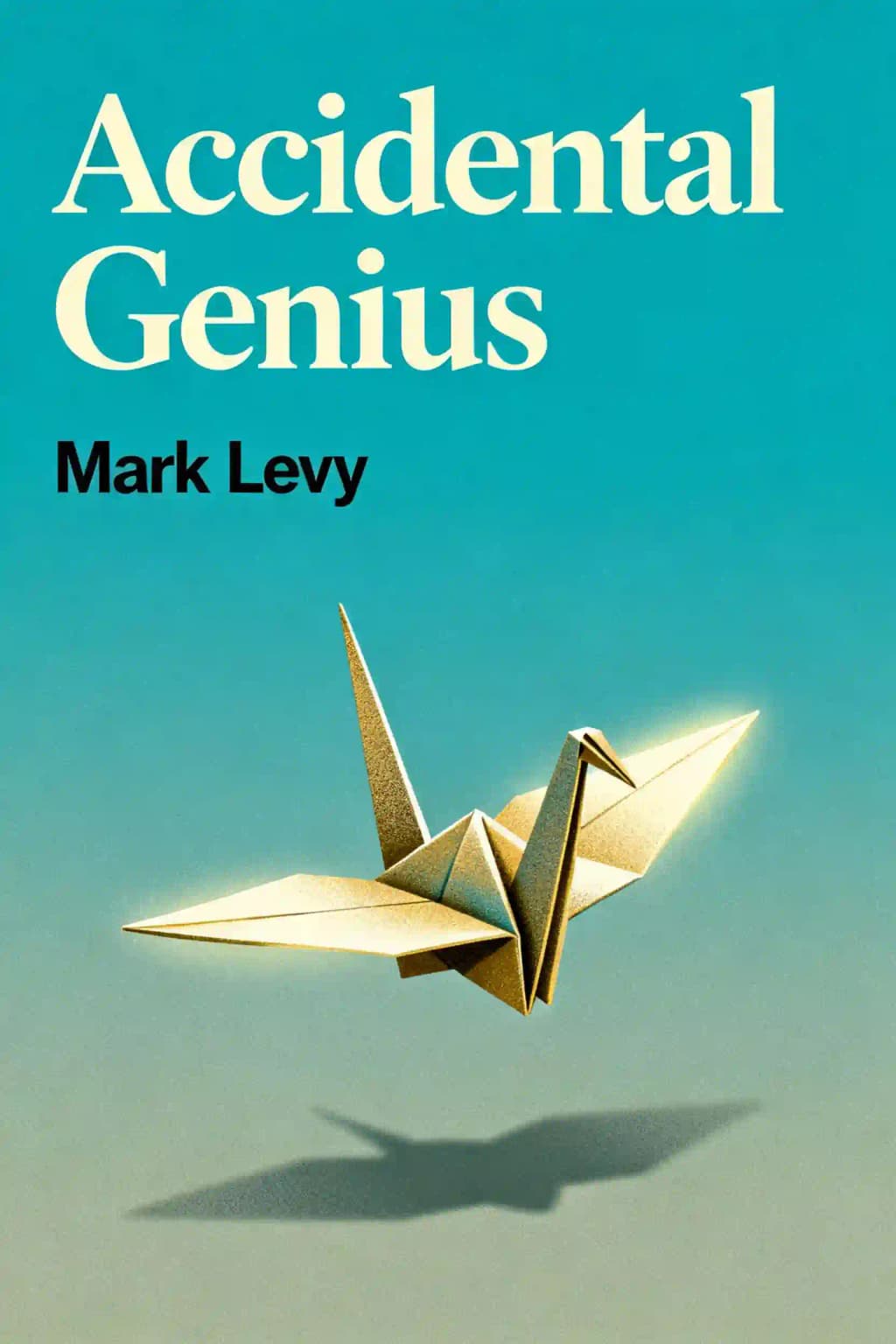
Accidental Genius
Using Writing to Access Your Natural Ingenuity
Overview of Accidental Genius
Unleash your hidden genius with Mark Levy's revolutionary freewriting method that's transformed creative thinking in ten languages. Tony Robbins and Seth Godin swear by it - what could four hours of uninhibited writing reveal about your untapped brilliance?

Key Themes in Accidental Genius
- freewriting techniques
- bypassing inner critics
- subconscious idea mining
- unfiltered thought capture
- creative problem solving
Quotes from Accidental Genius
The key to getting the most out of freewriting is to write as fast as you can.
Quantity before quality-the bad brings the good.
Write the way you think.
Freewriting isn't writing-it's watching yourself think in real-time.
Go with what you're given.
Characters in Accidental Genius
- Mark LevyAuthor and developer of the freewriting method
- Robert KriegelBusiness consultant who studied Olympic sprinters
- Chuck PalahniukAuthor who uses laundry cycles to time writing
- Chris MartinColdplay frontman who uses subconscious writing
About the Author
About the Author of Accidental Genius
Mark Levy, bestselling author of Accidental Genius: Using Writing to Generate Your Best Ideas, Insight, and Content, is a sought-after differentiation strategist and founder of Levy Innovation LLC. A pioneer in positioning thought leaders and brands, Levy has spent over two decades elevating clients like Simon Sinek, White House advisors, and TED speakers, helping some increase fees by 2,000%. His expertise in creative problem-solving stems from diverse roles: Chief Marketing Officer for an Inc. 5,000 experiential branding firm serving Fortune 500 clients, Rutgers University writing instructor, and New York Times contributor.
The book merges Levy’s passion for writing with practical frameworks for unlocking creativity, reflecting his work with CEOs, UN speakers, and bestselling authors. He expands these ideas as co-host of the “Planet of the Associations” podcast, teaching future-focused strategies to global leaders. A Hall of Fame inductee in consulting mentorship, Levy has keynoted for organizations like Google and Vistage while authoring five books.
Accidental Genius, translated into eleven languages and an Amazon category bestseller, distills Levy’s signature approach: transforming private writing into public breakthroughs. His methods have shaped messaging for institutions from Stanford University to the Las Vegas stage, where his co-created “Chamber Magic” show became New York’s longest-running solo performance.
Download Summary of Accidental Genius
Get the Accidental Genius summary as a free PDF or EPUB. Print it or read offline anytime.
FAQs About This Book
Accidental Genius teaches readers to harness freewriting—a rapid, unfiltered writing technique—to unlock creativity, solve complex problems, and generate innovative ideas. By bypassing the internal "editor," this method helps uncover subconscious insights and transform raw thoughts into actionable solutions. The book includes six freewriting secrets and 15 principles for boosting productivity.
Professionals facing creative blocks, writers seeking fresh strategies, and anyone interested in problem-solving through unconventional thinking. Mark Levy’s methods benefit entrepreneurs, marketers, and individuals aiming to turn ideas into books, speeches, or business strategies.
Yes—it offers practical tools like freewriting to overcome mental barriers and enhance creativity. With endorsements from thought leaders like Tony Robbins, it’s praised for transforming how people approach challenges. Over 85% of professionals report creative stagnation, making Levy’s techniques highly relevant.
Freewriting involves writing continuously without editing, grammar rules, or pauses. This process silences self-criticism, allowing unexpected ideas to surface. Levy demonstrates how 10-minute sessions can reveal solutions to business problems or spark book concepts.
- Freewriting unlocks creativity: Write freely to access subconscious ideas.
- Reframe problems: Shift perspectives by writing about challenges as solved.
- Embrace quirks: Unique traits fuel originality.
- Refine raw ideas: Transform freewriting into polished content.
Levy’s techniques improve decision-making, problem-solving, and communication skills. For example, writing about a project as if it succeeded can reveal overlooked strategies, aiding professionals in navigating workplace challenges.
Some note freewriting requires discipline to yield results, and its unstructured approach may initially frustrate rigid thinkers. However, supporters argue it’s a proven method for overcoming creative blocks.
Unlike The Power of Habit or Atomic Habits, which focus on routines, Levy’s book emphasizes spontaneous writing to generate ideas. It’s less about incremental change and more about unlocking immediate creative breakthroughs.
- “Write the way you think”: Use conversational language to bypass filters.
- “Freewriting is a means of watching yourself think”: Observe thoughts without judgment.
Yes. Levy’s freewriting helps draft blogs, social media posts, or speeches by converting raw ideas into structured content. For example, SAP uses similar methods to create customer-focused stories.
In an era of AI-driven content, Levy’s human-centric approach fosters originality. Remote workers use freewriting to combat isolation-induced creativity slumps, making it a timely tool.
Yes. The book introduces 15 principles for problem-solving, including “trying easy” (prioritizing flow over perfection) and “writing to discover” (using writing as an exploratory tool).