Overview of The Screwtape Letters
Journey into Hell's bureaucracy where a senior demon mentors his nephew in corrupting humans. John Cleese's Grammy-nominated narration brought this satirical masterpiece to life, while Lewis's WWII-era insights on temptation continue sparking uncomfortable self-reflection. What's your own demon whispering today?
- Demons exploit distraction to prevent holiness through daily monotony
- Ownership mindset over time opens doors for selfishness and spiritual decay
- "Mere Christianity" resists political co-option better than trend-driven faith expressions
- Incremental compromise proves deadlier than dramatic sins in eternal warfare
- Humility flourishes when acknowledging God's ownership of all possessions
- Demonic strategy masks reality through hazy thinking and false urgency
- Suffering's value depends on response: rebellion deepens hell's grip
- "Law of undulation" requires preparing for spiritual droughts after mountaintops
- Laughter weaponized: cynicism corrodes joy while holy mirth disarms evil
- Prayer becomes dangerous to hell when focused on presence over petitions
- Sexual temptation succeeds through twisted virtue, not just obvious lust
- Hell's fatal blind spot: inability to comprehend self-giving divine love
About the Author of The Screwtape Letters
C.S. Lewis (Clive Staples Lewis, 1898–1963) was an acclaimed Irish-born scholar and Christian apologist who crafted The Screwtape Letters as a satirical exploration of morality, temptation, and spiritual warfare. A fellow at Oxford University and member of the literary group The Inklings, Lewis drew from his own reconversion to Christianity and expertise in medieval literature to create this genre-blending work of theological fiction. His bestselling Chronicles of Narnia series and apologetic masterpiece Mere Christianity further cement his legacy as a transformative voice in 20th-century literature and Christian thought.
Lewis’s academic background in philosophy and classical studies, coupled with his accessible storytelling, enabled him to frame complex theological concepts through imaginative narratives. Beyond his fiction, he authored influential works like The Great Divorce and The Problem of Pain, blending rigorous logic with vivid allegory. The Screwtape Letters has been translated into over 30 languages and remains a cornerstone of modern Christian apologetics, praised for its witty epistolary format and enduring relevance to ethical discourse.
FAQs About The Screwtape Letters
What is The Screwtape Letters by C.S. Lewis about?
The Screwtape Letters is a satirical Christian allegory structured as 31 letters from Screwtape, a senior demon, to his nephew Wormwood. It explores spiritual warfare through devils’ tactics to undermine faith, emphasizing subtle temptations like complacency, vanity, and distraction. The book critiques human weaknesses while advocating for deliberate spiritual vigilance.
Who should read The Screwtape Letters?
This book suits readers interested in Christian theology, moral philosophy, or satirical literature. It appeals to those examining temptation’s psychological mechanics, fans of C.S. Lewis’s works like Mere Christianity, and anyone seeking insights into resisting self-destructive habits in modern life.
Is The Screwtape Letters worth reading?
Yes—it remains a classic for its witty critique of human nature and timeless exploration of faith. Lewis’s imaginative reversal of perspectives (demons as narrators) offers fresh insights into moral accountability, making it relevant for personal growth and theological study.
What are the main themes in The Screwtape Letters?
Key themes include:
- Subtle temptation: Demons exploit minor flaws rather than overt sins.
- Spiritual complacency: “The safest road to Hell is the gradual one”.
- Divine love vs. demonic nihilism: Screwtape cannot comprehend human virtue or God’s grace.
How does The Screwtape Letters critique modern distractions?
Screwtape advises Wormwood to keep the “patient” preoccupied with trivialities, mirroring today’s social media and streaming overconsumption. Lewis’s warning against passive thinking resonates with 21st-century struggles to prioritize reflection over constant stimulation.
What is the doctrine of sola fide in The Screwtape Letters?
The book underscores salvation through faith (sola fide), not deeds. Demons fail because they cannot grasp God’s unconditional love—Wormwood’s patient ultimately chooses faith despite imperfections, defying Hell’s transactional worldview.
How does C.S. Lewis use satire in the book?
Lewis satirizes bureaucratic inefficiency through Hell’s “Lowerarchy” and critiques WWII-era moral certitude. By framing demons as petty office workers, he humorously exposes the banality of evil and human self-importance.
What criticisms has The Screwtape Letters faced?
Some argue its focus on individual morality overlooks systemic evil, while others find its theological assumptions exclusionary. Modern readers may also critique its dated gender roles and lack of diverse perspectives.
How does The Screwtape Letters compare to Mere Christianity?
Both explore Christian apologetics, but Letters uses narrative fiction, while Mere Christianity is a theological essay. Letters offers pragmatic advice on resisting temptation, whereas Mere Christianity systematizes core beliefs.
Why is Screwtape obsessed with Wormwood’s failures?
Screwtape’s frustration reflects Hell’s toxic hierarchy: demons compete to corrupt souls for power. His mentorship exposes the futility of evil—Wormwood’s incompetence mirrors Hell’s inherent dysfunction against divine purpose.
What does the “patient” symbolize in the story?
The unnamed patient represents an average person navigating faith amidst everyday temptations. His eventual salvation demonstrates that spiritual victory hinges on persistent, humble choice rather than perfection.
How does The Screwtape Letters remain relevant in 2024?
Its themes of misinformation, cognitive dissonance, and distraction parallel modern issues like “fake news” and digital addiction. Lewis’s emphasis on critical thinking over propaganda remains urgently applicable.
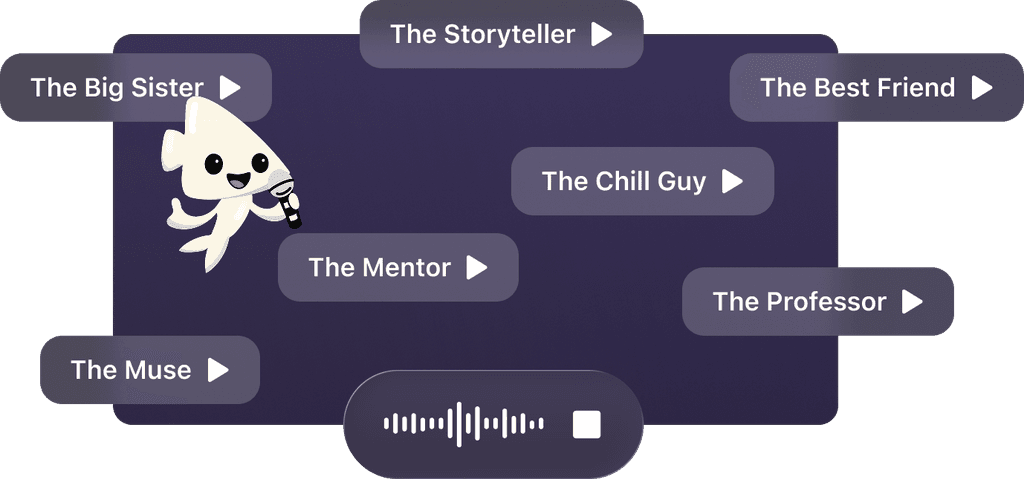
Feel the book through the author's voice
Turn knowledge into engaging, example-rich insights
Capture key ideas in a flash for fast learning
Enjoy the book in a fun and engaging way
Characters in The Screwtape Letters
- ScrewtapeA senior demon and mentor to his nephew
- WormwoodA junior tempter assigned to corrupt a human soul
- The patientThe specific human targeted for demonic corruption
- C.S. LewisThe author of the book
Key Themes in The Screwtape Letters
- spiritual warfare
- psychological manipulation
- moral corruption
- religious satire
- human fallibility
Quotes from The Screwtape Letters
Use jargon, not argument.
Keep pressing the ordinariness of things.
The demons' job isn't to teach humans but to fuddle them.
Keep everything hazy in his mind.
Our best work isn't putting things into minds but keeping things out.
Explore Your Way of Learning
 Quick Summary Mode
Read or listen to The Screwtape Letters Summary in 9 Minutes
Break down key ideas from The Screwtape Letters into bite-sized takeaways to understand how innovative teams create, collaborate, and grow.

 Fun Mode
The Screwtape Letters Lessons Told Through 25-Min Stories
Experience The Screwtape Letters through vivid storytelling that turns innovation lessons into moments you'll remember and apply.
 Personalize Mode
Experience The Screwtape Letters in your own learning style
Ask anything, choose your learning style, and co-create insights that truly resonate with you.
From Columbia University alumni built in San Francisco
"Instead of endless scrolling, I just hit play on BeFreed. It saves me so much time."


"I never knew where to start with nonfiction—BeFreed’s book lists turned into podcasts gave me a clear path."


"Perfect balance between learning and entertainment. Finished ‘Thinking, Fast and Slow’ on my commute this week."
"Crazy how much I learned while walking the dog. BeFreed = small habits → big gains."
"Reading used to feel like a chore. Now it’s just part of my lifestyle."

"Feels effortless compared to reading. I’ve finished 6 books this month already."
"BeFreed turned my guilty doomscrolling into something that feels productive and inspiring."

"BeFreed turned my commute into learning time. 20-min podcasts are perfect for finishing books I never had time for."
"BeFreed replaced my podcast queue. Imagine Spotify for books — that’s it. 🙌"

"It is great for me to learn something from the book without reading it."
"The themed book list podcasts help me connect ideas across authors—like a guided audio journey."
"Makes me feel smarter every time before going to work"
From Columbia University alumni built in San Francisco
"Instead of endless scrolling, I just hit play on BeFreed. It saves me so much time."
"I never knew where to start with nonfiction—BeFreed’s book lists turned into podcasts gave me a clear path."
"Perfect balance between learning and entertainment. Finished ‘Thinking, Fast and Slow’ on my commute this week."
"Crazy how much I learned while walking the dog. BeFreed = small habits → big gains."
"Reading used to feel like a chore. Now it’s just part of my lifestyle."
"Feels effortless compared to reading. I’ve finished 6 books this month already."
"BeFreed turned my guilty doomscrolling into something that feels productive and inspiring."
"BeFreed turned my commute into learning time. 20-min podcasts are perfect for finishing books I never had time for."
"BeFreed replaced my podcast queue. Imagine Spotify for books — that’s it. 🙌"
"It is great for me to learn something from the book without reading it."
"The themed book list podcasts help me connect ideas across authors—like a guided audio journey."
"Makes me feel smarter every time before going to work"
"Instead of endless scrolling, I just hit play on BeFreed. It saves me so much time."
"I never knew where to start with nonfiction—BeFreed’s book lists turned into podcasts gave me a clear path."
"Perfect balance between learning and entertainment. Finished ‘Thinking, Fast and Slow’ on my commute this week."
"Crazy how much I learned while walking the dog. BeFreed = small habits → big gains."
"Reading used to feel like a chore. Now it’s just part of my lifestyle."
"Feels effortless compared to reading. I’ve finished 6 books this month already."
"BeFreed turned my guilty doomscrolling into something that feels productive and inspiring."
"BeFreed turned my commute into learning time. 20-min podcasts are perfect for finishing books I never had time for."
"BeFreed replaced my podcast queue. Imagine Spotify for books — that’s it. 🙌"
"It is great for me to learn something from the book without reading it."
"The themed book list podcasts help me connect ideas across authors—like a guided audio journey."
"Makes me feel smarter every time before going to work"
"Instead of endless scrolling, I just hit play on BeFreed. It saves me so much time."
"I never knew where to start with nonfiction—BeFreed’s book lists turned into podcasts gave me a clear path."
"Perfect balance between learning and entertainment. Finished ‘Thinking, Fast and Slow’ on my commute this week."
"Crazy how much I learned while walking the dog. BeFreed = small habits → big gains."
"Reading used to feel like a chore. Now it’s just part of my lifestyle."
"Feels effortless compared to reading. I’ve finished 6 books this month already."
"BeFreed turned my guilty doomscrolling into something that feels productive and inspiring."
"BeFreed turned my commute into learning time. 20-min podcasts are perfect for finishing books I never had time for."
"BeFreed replaced my podcast queue. Imagine Spotify for books — that’s it. 🙌"
"It is great for me to learn something from the book without reading it."
"The themed book list podcasts help me connect ideas across authors—like a guided audio journey."
"Makes me feel smarter every time before going to work"

Download Summary of The Screwtape Letters
Get the The Screwtape Letters summary as a free PDF or EPUB. Print it or read offline anytime.