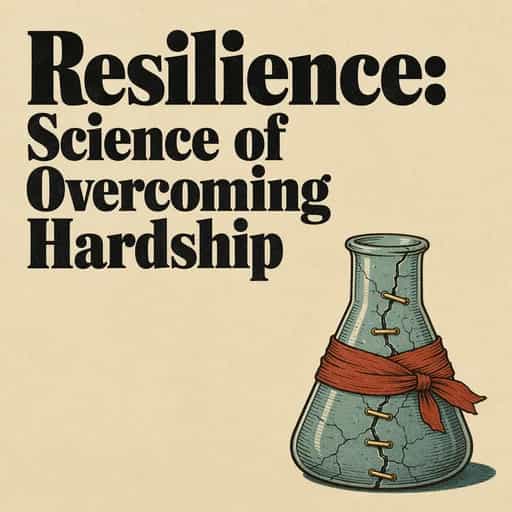
Resilience: Hard-Won Wisdom for Living a Better Life by Eric Greitens Summary

Overview of Resilience
In "Resilience," former Navy SEAL Eric Greitens offers hard-won wisdom for overcoming life's toughest battles. This NYT bestseller, praised by Admiral Mike Mullen, transforms military lessons into universal tools. What separates those who crumble from those who conquer? The answer might surprise you.
- Resilience requires confronting pain to build courage, not avoiding hardship
- Purpose is the anchor: replace fleeting happiness with mission-driven resilience
- Navy SEAL wisdom: positive action beats positive thinking for overcoming obstacles
- Take 100% responsibility for reactions to life’s unfairness to gain control
- Combat PTSD by transitioning warrior discipline into civilian purpose and service
- Mentorship matters: resilience grows through modeled courage and shared wisdom
- Forge purpose through deliberate action, not passive self-reflection or wishful thinking
- Build stress immunity by viewing challenges as training for greater missions
- Craft habits that align with core values, not temporary comfort or ease
- Transform suffering into strength using ancient philosophy and modern warrior principles
- Practice compassion daily: resilience requires tending to others’ wounds and yours
- Stop asking “why me?” Start asking “how will I respond now?”
About the Author of Resilience
Eric Robert Greitens, New York Times bestselling author of Resilience: Hard-Won Wisdom for Living a Better Life, is a decorated Navy SEAL officer, Rhodes Scholar, and leadership expert whose work bridges military experience and personal development. Drawing from his combat deployments and humanitarian work in conflict zones like Rwanda and Iraq, Greitens crafts this transformative guide to resilience through 23 heartfelt letters to a struggling fellow SEAL—blending philosophical insights with hard-earned lessons from the battlefield.
A graduate of Duke University and Oxford, where he earned a doctorate in ethics, Greitens founded The Mission Continues, a nationally acclaimed nonprofit empowering veterans to serve their communities.
His earlier works include the NYT bestseller The Heart and the Fist, which chronicles his journey from humanitarian aid worker to SEAL, and The Warrior’s Heart, a teen adaptation praised by Barnes & Noble and Kirkus. Recognized by TIME as one of the world’s 100 Most Influential People and by Fortune among the 50 Greatest Leaders, Greitens’ books have shaped public discourse on courage and service. Resilience debuted on the NYT bestseller list and remains a cornerstone text for readers seeking strategies to thrive through adversity.
FAQs About Resilience
What is Resilience: Hard-Won Wisdom for Living a Better Life about?
Resilience: Hard-Won Wisdom for Living a Better Life is a practical guide to building mental toughness through purposeful action, written by Navy SEAL Eric Greitens. Structured as letters to a struggling veteran, it combines philosophical insights from figures like Epictetus with Greitens' combat and humanitarian experiences. Key themes include confronting pain, developing disciplined habits, and finding purpose through struggle.
Who should read Resilience: Hard-Won Wisdom for Living a Better Life?
This book targets veterans, leaders, and anyone facing adversity. Its actionable advice on transforming suffering into strength resonates with readers seeking gritty self-improvement strategies beyond generic positivity. Greitens’ blend of warrior ethos and Stoic philosophy appeals to those valuing real-world application over theoretical concepts.
Is Resilience: Hard-Won Wisdom for Living a Better Life worth reading?
Yes, for readers wanting unconventional self-help grounded in combat-tested wisdom. Critics note its masculine tone and dense philosophical references, but praise its actionable frameworks for building resilience through hardship. The New York Times bestseller offers rare insights from a SEAL-turned-humanitarian.
What is Eric Greitens' definition of resilience?
Greitens defines resilience as "the virtue that enables people to move through hardship and become better." He argues pain and fear can forge courage if met with disciplined action, not just positive thinking. This contrasts with passive coping—resilience requires actively shaping struggles into growth opportunities.
What are the main lessons in Resilience: Hard-Won Wisdom for Living a Better Life?
- Purposeful struggle: Choose challenges aligned with your values
- Habit mastery: Build routines that convert effort into excellence
- Mentorship: Learn from those who’ve endured similar battles
- Responsibility: Growth stems from owning your responses to adversity
How does Resilience differ from typical self-help books?
Rejecting quick fixes, Greitens emphasizes sustained effort over feel-good affirmations. The book uses war stories and ancient philosophy rather than pop psychology. Readers report its SEAL-earned credibility makes abstract concepts like Stoicism feel urgently practical.
What are notable quotes from Resilience: Hard-Won Wisdom for Living a Better Life?
- "We all need something to struggle against and to struggle for."
- "Happiness requires courage, resilience, and a stubborn dedication to reality."
- "The aim is not to avoid struggles but to have the right ones."
How does Resilience address PTSD and veteran challenges?
Drawing from letters to a PTSD-stricken SEAL, Greitens outlines rebuilding purpose post-combat. Strategies include vocational retraining, community service, and reframing trauma as a catalyst for leadership. The approach mirrors his nonprofit work with veterans.
What criticisms exist about Resilience: Hard-Won Wisdom for Living a Better Life?
Some readers find the tone overly masculine and philosophically dense. Critics argue its focus on individual grit underemphasizes systemic barriers. However, most praise its unflinching honesty about transforming suffering.
How can Resilience help with career or leadership challenges?
The book teaches framing setbacks as growth opportunities. Leaders learn to model vulnerability while maintaining accountability—Greitens shows how disciplined habits and mentorship networks drive organizational resilience.
How does Resilience compare to other books on Stoicism?
Unlike academic Stoicism guides, Greitens blends Marcus Aurelius’ principles with Special Operations rigor. It’s closer to Extreme Ownership than Meditations, offering battlefield-tested tactics for applying philosophy to modern crises.
What long-term habits does Resilience recommend?
- Daily reflection on core values
- Physical training as mental discipline
- Service-oriented goal setting
- Regular mentorship check-ins
Feel the book through the author's voice
Turn knowledge into engaging, example-rich insights
Capture key ideas in a flash for fast learning
Enjoy the book in a fun and engaging way
Key Themes in Resilience
Quotes from Resilience
Everyone has a philosophy, whether they realize it or not.
Our wounds do not diminish our obligation to serve others.
Arrogance merely masks weakness.
Failure is essential to growth.
Characters in Resilience
Quick Summary Mode - Read or listen to Resilience Summary in 11 Minutes

Break down key ideas from Resilience into bite-sized takeaways to understand how innovative teams create, collaborate, and grow.

Flash Card Mode - Top 9 Insights from Resilience in a Nutshell

Distill Resilience into rapid-fire memory cues that highlight key principles of candor, teamwork, and creative resilience.

Fun Mode - Resilience Lessons Told Through 19-Min Stories

Experience Resilience through vivid storytelling that turns innovation lessons into moments you'll remember and apply.
Personalize Mode - Read or listen to Resilience Summary in 0 Minutes

Ask anything, pick the voice, and co-create insights that truly resonate with you.

From Columbia University alumni built in San Francisco
"Instead of endless scrolling, I just hit play on BeFreed. It saves me so much time."


"I never knew where to start with nonfiction—BeFreed’s book lists turned into podcasts gave me a clear path."


"Perfect balance between learning and entertainment. Finished ‘Thinking, Fast and Slow’ on my commute this week."
"Crazy how much I learned while walking the dog. BeFreed = small habits → big gains."
"Reading used to feel like a chore. Now it’s just part of my lifestyle."

"Feels effortless compared to reading. I’ve finished 6 books this month already."
"BeFreed turned my guilty doomscrolling into something that feels productive and inspiring."

"BeFreed turned my commute into learning time. 20-min podcasts are perfect for finishing books I never had time for."
"BeFreed replaced my podcast queue. Imagine Spotify for books — that’s it. 🙌"

"It is great for me to learn something from the book without reading it."
"The themed book list podcasts help me connect ideas across authors—like a guided audio journey."
"Makes me feel smarter every time before going to work"
From Columbia University alumni built in San Francisco
"Instead of endless scrolling, I just hit play on BeFreed. It saves me so much time."
"I never knew where to start with nonfiction—BeFreed’s book lists turned into podcasts gave me a clear path."
"Perfect balance between learning and entertainment. Finished ‘Thinking, Fast and Slow’ on my commute this week."
"Crazy how much I learned while walking the dog. BeFreed = small habits → big gains."
"Reading used to feel like a chore. Now it’s just part of my lifestyle."
"Feels effortless compared to reading. I’ve finished 6 books this month already."
"BeFreed turned my guilty doomscrolling into something that feels productive and inspiring."
"BeFreed turned my commute into learning time. 20-min podcasts are perfect for finishing books I never had time for."
"BeFreed replaced my podcast queue. Imagine Spotify for books — that’s it. 🙌"
"It is great for me to learn something from the book without reading it."
"The themed book list podcasts help me connect ideas across authors—like a guided audio journey."
"Makes me feel smarter every time before going to work"
"Instead of endless scrolling, I just hit play on BeFreed. It saves me so much time."
"I never knew where to start with nonfiction—BeFreed’s book lists turned into podcasts gave me a clear path."
"Perfect balance between learning and entertainment. Finished ‘Thinking, Fast and Slow’ on my commute this week."
"Crazy how much I learned while walking the dog. BeFreed = small habits → big gains."
"Reading used to feel like a chore. Now it’s just part of my lifestyle."
"Feels effortless compared to reading. I’ve finished 6 books this month already."
"BeFreed turned my guilty doomscrolling into something that feels productive and inspiring."
"BeFreed turned my commute into learning time. 20-min podcasts are perfect for finishing books I never had time for."
"BeFreed replaced my podcast queue. Imagine Spotify for books — that’s it. 🙌"
"It is great for me to learn something from the book without reading it."
"The themed book list podcasts help me connect ideas across authors—like a guided audio journey."
"Makes me feel smarter every time before going to work"
"Instead of endless scrolling, I just hit play on BeFreed. It saves me so much time."
"I never knew where to start with nonfiction—BeFreed’s book lists turned into podcasts gave me a clear path."
"Perfect balance between learning and entertainment. Finished ‘Thinking, Fast and Slow’ on my commute this week."
"Crazy how much I learned while walking the dog. BeFreed = small habits → big gains."
"Reading used to feel like a chore. Now it’s just part of my lifestyle."
"Feels effortless compared to reading. I’ve finished 6 books this month already."
"BeFreed turned my guilty doomscrolling into something that feels productive and inspiring."
"BeFreed turned my commute into learning time. 20-min podcasts are perfect for finishing books I never had time for."
"BeFreed replaced my podcast queue. Imagine Spotify for books — that’s it. 🙌"
"It is great for me to learn something from the book without reading it."
"The themed book list podcasts help me connect ideas across authors—like a guided audio journey."
"Makes me feel smarter every time before going to work"

Get the Resilience summary as a free PDF or EPUB. Print it or read offline anytime.