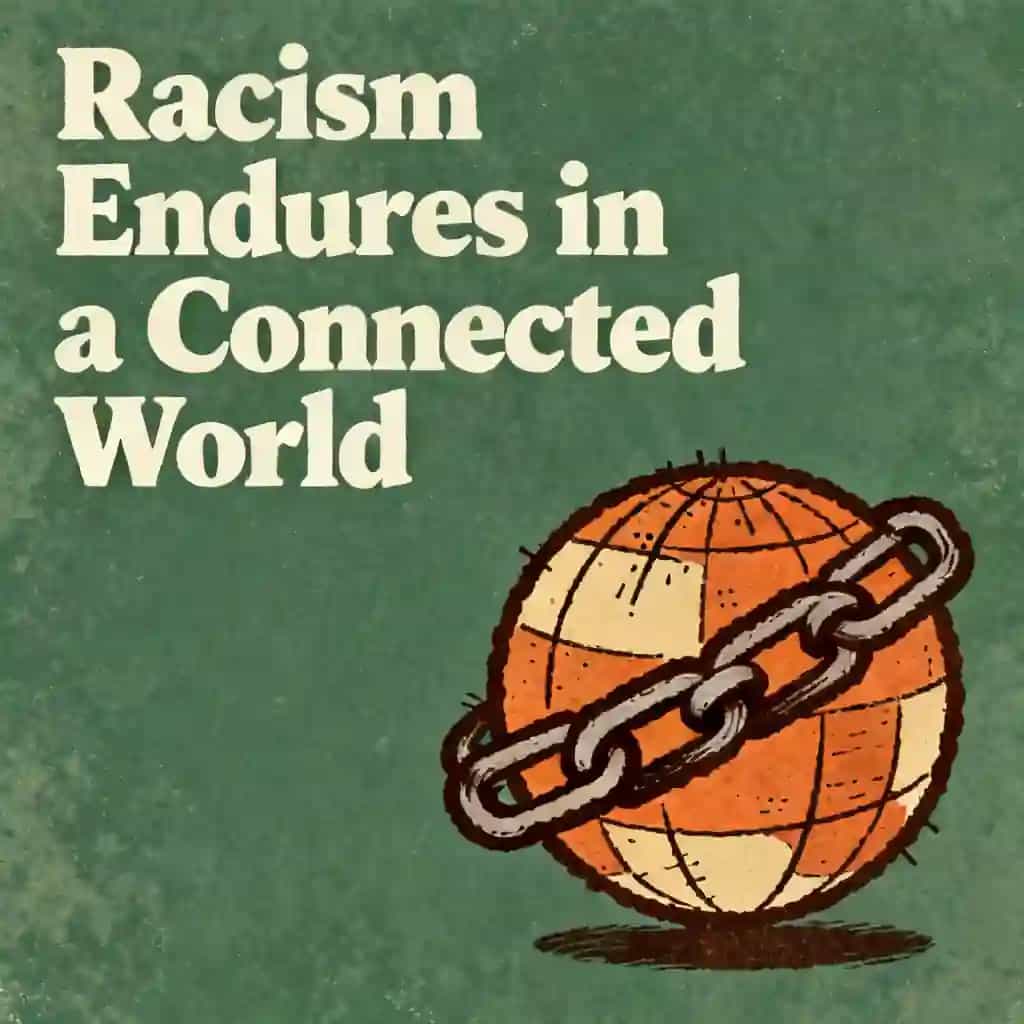
The End of Race Politics: Arguments for a Colorblind America by Coleman Hughes Summary

Overview of The End of Race Politics
Coleman Hughes boldly challenges modern anti-racism, arguing it's creating "neoracism" rather than equality. Endorsed by intellectual heavyweights like Steven Pinker and Sam Harris, this controversial manifesto revives MLK's colorblind vision. What if our obsession with racial identity is the very barrier to progress?
- Coleman Hughes advocates colorblind policies over race-conscious frameworks for true equality
- Systemic racism narratives often ignore cultural and demographic factors shaping group outcomes
- "Overrepresentation" assumes racial parity as default despite natural specialization across groups
- Colorblindness honors MLK's dream better than modern equity-based social engineering
- Hughes debunks reparations as counterproductive to racial harmony and merit-based progress
- Identity politics lowers achievement standards for minorities through victimhood reinforcement
- Race-neutral policies uplift disadvantaged groups without entrenching divisive narratives
- Historical data shows colorblind approaches reduced racism faster than current methods
- The End of Race Politics rejects equity quotas as new segregation
- Individual meritocracy succeeds where race-based systems create perverse incentives
- Hughes proves colorblindness fosters unity while race-focused frameworks amplify division
- Evidence-based policy-making outperforms emotional appeals to identity in solving disparities
About the Author of The End of Race Politics
Coleman Cruz Hughes, author of The End of Race Politics: Arguments for a Colorblind America, is a prominent writer, podcast host, and public intellectual recognized for his incisive analysis of race, ethics, and public policy.
Born in 1996 to an African-American and Puerto Rican family in New Jersey, Hughes draws on his biracial heritage and academic background in philosophy (Columbia University) to challenge modern narratives on racial identity. His work, featured in The New York Times, The Wall Street Journal, and his Substack newsletter at The Free Press, advocates for colorblind universalism, a theme central to his critically acclaimed debut book.
A Forbes 30-under-30 honoree and former fellow at the Manhattan Institute, Hughes has testified before Congress on reparations and frequently appears on media platforms like CNN, Real Time with Bill Maher, and The Joe Rogan Experience. He hosts the Conversations with Coleman podcast, where he engages with experts on culture and politics. The End of Race Politics has sparked national debate, cementing Hughes’s reputation as a bold voice in contemporary discourse on race and equality.
FAQs About The End of Race Politics
What is The End of Race Politics about?
The End of Race Politics: Arguments for a Colorblind America argues against race-conscious policies and modern anti-racism movements, advocating for a society that treats individuals without regard to race. Coleman Hughes critiques concepts like systemic racism and argues that disparities often stem from cultural and demographic factors rather than discrimination.
Who should read The End of Race Politics?
This book is ideal for readers interested in race relations, political philosophy, or public policy. It appeals to centrists, classical liberals, and anyone skeptical of contemporary identity politics. Hughes’ data-driven approach makes it valuable for educators, policymakers, and students debating race-neutral vs. race-based solutions.
Is The End of Race Politics worth reading?
Yes, for those seeking a controversial counter-narrative to mainstream anti-racism. Hughes combines academic research with accessible prose, though progressive readers may disagree with his conclusions. The book sparked debates for challenging DEI initiatives and “oppressor vs. oppressed” frameworks.
What are the main arguments in The End of Race Politics?
Key arguments include:
- Race-conscious policies deepen racial divisions.
- “Systemic racism” poorly explains most disparities.
- Colorblindness aligns with MLK’s vision of judging character over skin color.
- Cultural factors, not systemic bias, drive gaps in education, income, and crime.
What does Coleman Hughes mean by a “colorblind America”?
Hughes advocates for policies and social norms that ignore race entirely, promoting equal treatment under law and individual merit. He argues this approach reduces racial resentment and fosters unity, contrasting it with equity-based frameworks that emphasize group outcomes.
How does The End of Race Politics address systemic racism?
Hughes disputes systemic racism as a primary cause of disparities, citing examples like Asian-American success and declining racial gaps in policing. He acknowledges historical racism but argues present-day inequalities often reflect class and culture, not systemic bias.
What are some key quotes from The End of Race Politics?
Notable quotes include:
- “Nothing is more normal than for different subcultures to specialize in particular sectors” – challenges assumptions about demographic “overrepresentation”.
- “Anti-racism has become a pseudo-religion” – critiques the moral certainty of modern racial activism.
How does Coleman Hughes critique modern anti-racism movements?
Hughes claims these movements fixate on racial identity, fostering division and pessimism. He critiques terms like “white privilege” as overly simplistic and argues they alienate potential allies. Instead, he champions universalist principles and cross-racial coalition-building.
Does The End of Race Politics offer solutions for racial inequality?
Yes: Hughes proposes colorblind policies, economic investment in poor communities (regardless of race), and fostering a culture that prioritizes merit. He emphasizes class-based initiatives over race-specific reparations or hiring quotas.
What criticisms has The End of Race Politics received?
Progressives argue Hughes underestimates ongoing discrimination and downplays historical inequities. Others claim his colorblind vision ignores implicit bias. Traditional civil rights advocates criticize his rejection of race-based data collection.
How does The End of Race Politics compare to other books on race?
Unlike Ibram X. Kendi’s How to Be an Antiracist or Robin DiAngelo’s White Fragility, Hughes rejects race-focused solutions. His work aligns with Thomas Sowell’s Discrimination and Disparities but adds contemporary analysis of DEI efforts and “woke” culture.
Feel the book through the author's voice
Turn knowledge into engaging, example-rich insights
Capture key ideas in a flash for fast learning
Enjoy the book in a fun and engaging way
Key Themes in The End of Race Politics
Quotes from The End of Race Politics
What if our obsession with race is making racism worse, not better?
The racial categories we use today are fundamentally arbitrary.
Colorblindness is often misunderstood.
The aim is to consciously disregard race as a reason to treat individuals differently.
Neoracism invokes civil rights leaders while betraying their deepest convictions.
Characters in The End of Race Politics
Quick Summary Mode - Read or listen to The End of Race Politics Summary in 8 Minutes

Break down key ideas from The End of Race Politics into bite-sized takeaways to understand how innovative teams create, collaborate, and grow.

Flash Card Mode - Top 10 Insights from The End of Race Politics in a Nutshell

Distill The End of Race Politics into rapid-fire memory cues that highlight key principles of candor, teamwork, and creative resilience.

Fun Mode - The End of Race Politics Lessons Told Through 26-Min Stories

Experience The End of Race Politics through vivid storytelling that turns innovation lessons into moments you'll remember and apply.
Personalize Mode - Read or listen to The End of Race Politics Summary in 0 Minutes

Ask anything, pick the voice, and co-create insights that truly resonate with you.

From Columbia University alumni built in San Francisco
"Instead of endless scrolling, I just hit play on BeFreed. It saves me so much time."


"I never knew where to start with nonfiction—BeFreed’s book lists turned into podcasts gave me a clear path."


"Perfect balance between learning and entertainment. Finished ‘Thinking, Fast and Slow’ on my commute this week."
"Crazy how much I learned while walking the dog. BeFreed = small habits → big gains."
"Reading used to feel like a chore. Now it’s just part of my lifestyle."

"Feels effortless compared to reading. I’ve finished 6 books this month already."
"BeFreed turned my guilty doomscrolling into something that feels productive and inspiring."

"BeFreed turned my commute into learning time. 20-min podcasts are perfect for finishing books I never had time for."
"BeFreed replaced my podcast queue. Imagine Spotify for books — that’s it. 🙌"

"It is great for me to learn something from the book without reading it."
"The themed book list podcasts help me connect ideas across authors—like a guided audio journey."
"Makes me feel smarter every time before going to work"
From Columbia University alumni built in San Francisco
"Instead of endless scrolling, I just hit play on BeFreed. It saves me so much time."
"I never knew where to start with nonfiction—BeFreed’s book lists turned into podcasts gave me a clear path."
"Perfect balance between learning and entertainment. Finished ‘Thinking, Fast and Slow’ on my commute this week."
"Crazy how much I learned while walking the dog. BeFreed = small habits → big gains."
"Reading used to feel like a chore. Now it’s just part of my lifestyle."
"Feels effortless compared to reading. I’ve finished 6 books this month already."
"BeFreed turned my guilty doomscrolling into something that feels productive and inspiring."
"BeFreed turned my commute into learning time. 20-min podcasts are perfect for finishing books I never had time for."
"BeFreed replaced my podcast queue. Imagine Spotify for books — that’s it. 🙌"
"It is great for me to learn something from the book without reading it."
"The themed book list podcasts help me connect ideas across authors—like a guided audio journey."
"Makes me feel smarter every time before going to work"
"Instead of endless scrolling, I just hit play on BeFreed. It saves me so much time."
"I never knew where to start with nonfiction—BeFreed’s book lists turned into podcasts gave me a clear path."
"Perfect balance between learning and entertainment. Finished ‘Thinking, Fast and Slow’ on my commute this week."
"Crazy how much I learned while walking the dog. BeFreed = small habits → big gains."
"Reading used to feel like a chore. Now it’s just part of my lifestyle."
"Feels effortless compared to reading. I’ve finished 6 books this month already."
"BeFreed turned my guilty doomscrolling into something that feels productive and inspiring."
"BeFreed turned my commute into learning time. 20-min podcasts are perfect for finishing books I never had time for."
"BeFreed replaced my podcast queue. Imagine Spotify for books — that’s it. 🙌"
"It is great for me to learn something from the book without reading it."
"The themed book list podcasts help me connect ideas across authors—like a guided audio journey."
"Makes me feel smarter every time before going to work"
"Instead of endless scrolling, I just hit play on BeFreed. It saves me so much time."
"I never knew where to start with nonfiction—BeFreed’s book lists turned into podcasts gave me a clear path."
"Perfect balance between learning and entertainment. Finished ‘Thinking, Fast and Slow’ on my commute this week."
"Crazy how much I learned while walking the dog. BeFreed = small habits → big gains."
"Reading used to feel like a chore. Now it’s just part of my lifestyle."
"Feels effortless compared to reading. I’ve finished 6 books this month already."
"BeFreed turned my guilty doomscrolling into something that feels productive and inspiring."
"BeFreed turned my commute into learning time. 20-min podcasts are perfect for finishing books I never had time for."
"BeFreed replaced my podcast queue. Imagine Spotify for books — that’s it. 🙌"
"It is great for me to learn something from the book without reading it."
"The themed book list podcasts help me connect ideas across authors—like a guided audio journey."
"Makes me feel smarter every time before going to work"

Get the The End of Race Politics summary as a free PDF or EPUB. Print it or read offline anytime.