Stalking the wild pendulum: on the mechanics of consciousness

Overview of Stalking the wild pendulum
Venture beyond conventional physics as Bentov's mind-bending exploration of consciousness challenges reality itself. Endorsed by Stanford physicist William Tiller and inspiring Blink-182's Tom DeLonge, this cult classic asks: What if your brain isn't creating thoughts, but merely receiving them from the quantum field?
- Reality is a vibratory illusion where matter consists mostly of empty space.
- Consciousness permeates all existence from subatomic particles to cosmic structures.
- The brain functions as a thought amplifier rather than a thought generator.
- Meditation accelerates consciousness evolution by synchronizing personal energy with universal frequencies.
- The universe operates holographically storing all knowledge accessible through expanded awareness.
- Human beings possess multiple "bodies" for interacting with distinct realities from physical to causal.
- Black holes and white holes drive the cosmic cycle of creation and dissolution.
- At death organized energy bodies return information to the universe's consciousness field.
- Higher realities transcend duality achieving unity where opposites merge into balance.
- Emotional stress release through meditation optimizes nervous system efficiency.
- Entrainment synchronizes personal vibration with higher-frequency energy fields.
- The universe functions as a teaching machine designed for consciousness evolution.
About the Author of Stalking the wild pendulum
Itzhak Bentov, author of Stalking the Wild Pendulum: On the Mechanics of Consciousness, was an Israeli-American scientist, inventor, and pioneering voice in consciousness studies.
Born in Czechoslovakia in 1923, he survived the Holocaust and went on to design Israel’s first rocket during the 1948 War of Independence. Later, he revolutionized medical technology by inventing the steerable cardiac catheter and co-founding Medi-Tech (now part of Boston Scientific).
His multidisciplinary background—spanning physics, engineering, and biomedicine—profoundly shaped Stalking the Wild Pendulum, where he explores consciousness through frameworks like quantum physics and meditation, presenting the universe as a dynamic hologram. Bentov’s other works, including A Cosmic Book, further examine spirituality and reality mechanics.
Tragically killed in the 1979 American Airlines Flight 191 disaster, his visionary fusion of science and mysticism continues influencing consciousness literature worldwide.
FAQs About Stalking the wild pendulum
What is Stalking the Wild Pendulum about?
Stalking the Wild Pendulum: On the Mechanics of Consciousness explores the intersection of quantum physics, consciousness, and mysticism. Itzhak Bentov proposes a holographic universe model where reality emerges from vibrational patterns, blending scientific rigor with metaphysical concepts like the nature of time and expanded states of awareness. The book uses accessible analogies to explain complex ideas, positioning consciousness as a fundamental cosmic force.
Who is Itzhak Bentov?
Itzhak Bentov (1923–1979) was an Israeli-American inventor, scientist, and mystic. A Holocaust survivor, he designed Israel’s first rocket during the 1948 Arab-Israeli War and later invented the steerable cardiac catheter. His multidisciplinary background—spanning engineering, medicine, and spirituality—informed his pioneering work on consciousness, culminating in Stalking the Wild Pendulum.
Who should read Stalking the Wild Pendulum?
This book suits seekers interested in bridging science and spirituality, including:
- Consciousness enthusiasts exploring beyond materialism.
- Quantum physics novices seeking accessible metaphysics.
- Personal growth readers valuing mind-body interconnectedness.
Its blend of humor and profundity makes complex ideas digestible for both academics and curious laypersons.
Is Stalking the Wild Pendulum worth reading?
Yes, for its groundbreaking fusion of physics and mysticism. Bentov’s theories on vibrational reality and cosmic consciousness remain influential in holistic science circles. While some critique his logic as speculative, most praise the book’s ability to expand perspectives on existence. Its enduring popularity (4.2/5 Goodreads) confirms its impactful clarity.
What are the main ideas in Stalking the Wild Pendulum?
Key concepts include:
- Holographic universe: Reality as vibrational interference patterns.
- Consciousness mechanics: How awareness interacts with quantum fields.
- Microvibrations: The body’s resonant link to cosmic energy.
- Time perception: Subjectivity versus linear chronology.
Bentov frames these through analogies like pendulum dynamics, demystifying abstract physics.
How does Bentov explain consciousness?
Bentov posits consciousness as a resonant wave penetrating all matter, where individual awareness "tunes in" to universal frequencies. He compares this to a pendulum’s swing—where focused attention amplifies specific realities. This model integrates yogic concepts like Kundalini with quantum coherence, suggesting consciousness shapes physical reality.
What criticisms exist about Stalking the Wild Pendulum?
Critiques focus on:
- Over-speculation: Some theories lack empirical backing.
- Simplified physics: Experts note occasional inaccuracies.
- Metaphysical leaps: Non-scientific readers may find arguments unconvincing.
Despite this, the book’s originality in bridging science and spirituality retains strong appeal.
Why is Stalking the Wild Pendulum relevant in 2025?
Its themes align with modern interests in quantum consciousness, meditation science, and unified field theory. As AI and neurotech advance, Bentov’s ideas about vibrational reality offer frameworks for understanding emergent technologies. The book remains a cult classic for those exploring consciousness beyond materialist paradigms.
How does Bentov connect ancient wisdom to science?
He parallels Hindu cosmology (e.g., Kundalini as cosmic energy) with quantum vibrations, arguing ancient mystics intuitively grasped principles now verified by physics. For example, he equates yogic energy channels with standing wave patterns in the body, positioning spirituality as proto-science.
What is Bentov’s view of the universe?
Bentov describes a fractal, holographic universe where every particle contains the whole. Consciousness acts as the "pendulum" that observes and collapses probabilistic waves into reality. This model unifies relativity, quantum mechanics, and Eastern philosophies into a resonant, participatory cosmos.
Can Bentov’s ideas be applied practically?
Yes, particularly in:
- Meditation: Using resonance for focused awareness.
- Stress reduction: Harmonizing microvibrations.
- Manifestation: Aligning intention with quantum probabilities.
Readers report enhanced mindfulness by applying his vibrational principles.
How does Stalking the Wild Pendulum compare to other consciousness books?
Unlike purely academic or esoteric texts, Bentov balances wit and rigor. Compared to The Tao of Physics (Capra), it offers more mechanistic models of consciousness. Versus The Holographic Universe (Talbot), it prioritizes accessibility over scholarly depth, making it ideal for newcomers.
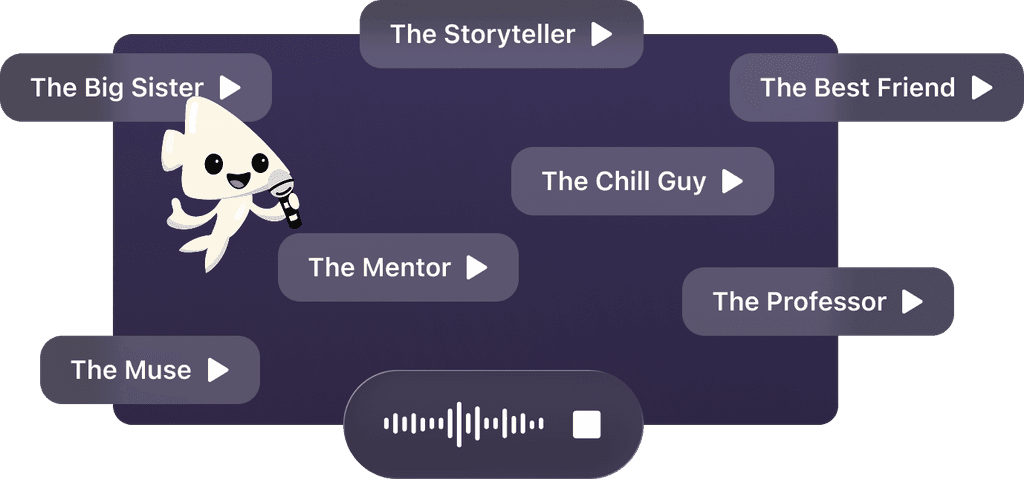
Feel the book through the author's voice
Turn knowledge into engaging, example-rich insights
Capture key ideas in a flash for fast learning
Enjoy the book in a fun and engaging way
Characters in Stalking the wild pendulum
- Itzhak BentovAuthor and inventor who explored consciousness.
Key Themes in Stalking the wild pendulum
- vibrational reality
- holographic universe
- consciousness evolution
- bio-resonant systems
- quantum mysticism
Quotes from Stalking the wild pendulum
Nature favors synchronization over chaos.
The whole is encoded in every part.
Our reality is fundamentally vibratory.
Our solid reality is revealed as vast empty space.
Explore Your Way of Learning
 Quick Summary Mode
Read or listen to Stalking the wild pendulum Summary in 9 Minutes
Break down key ideas from Stalking the wild pendulum into bite-sized takeaways to understand how innovative teams create, collaborate, and grow.

 Fun Mode
Stalking the wild pendulum Lessons Told Through 24-Min Stories
Experience Stalking the wild pendulum through vivid storytelling that turns innovation lessons into moments you'll remember and apply.
 Personalize Mode
Experience Stalking the wild pendulum in your own learning style
Ask anything, choose your learning style, and co-create insights that truly resonate with you.
From Columbia University alumni built in San Francisco
"Instead of endless scrolling, I just hit play on BeFreed. It saves me so much time."


"I never knew where to start with nonfiction—BeFreed’s book lists turned into podcasts gave me a clear path."


"Perfect balance between learning and entertainment. Finished ‘Thinking, Fast and Slow’ on my commute this week."
"Crazy how much I learned while walking the dog. BeFreed = small habits → big gains."
"Reading used to feel like a chore. Now it’s just part of my lifestyle."

"Feels effortless compared to reading. I’ve finished 6 books this month already."
"BeFreed turned my guilty doomscrolling into something that feels productive and inspiring."

"BeFreed turned my commute into learning time. 20-min podcasts are perfect for finishing books I never had time for."
"BeFreed replaced my podcast queue. Imagine Spotify for books — that’s it. 🙌"

"It is great for me to learn something from the book without reading it."
"The themed book list podcasts help me connect ideas across authors—like a guided audio journey."
"Makes me feel smarter every time before going to work"
From Columbia University alumni built in San Francisco
"Instead of endless scrolling, I just hit play on BeFreed. It saves me so much time."
"I never knew where to start with nonfiction—BeFreed’s book lists turned into podcasts gave me a clear path."
"Perfect balance between learning and entertainment. Finished ‘Thinking, Fast and Slow’ on my commute this week."
"Crazy how much I learned while walking the dog. BeFreed = small habits → big gains."
"Reading used to feel like a chore. Now it’s just part of my lifestyle."
"Feels effortless compared to reading. I’ve finished 6 books this month already."
"BeFreed turned my guilty doomscrolling into something that feels productive and inspiring."
"BeFreed turned my commute into learning time. 20-min podcasts are perfect for finishing books I never had time for."
"BeFreed replaced my podcast queue. Imagine Spotify for books — that’s it. 🙌"
"It is great for me to learn something from the book without reading it."
"The themed book list podcasts help me connect ideas across authors—like a guided audio journey."
"Makes me feel smarter every time before going to work"
"Instead of endless scrolling, I just hit play on BeFreed. It saves me so much time."
"I never knew where to start with nonfiction—BeFreed’s book lists turned into podcasts gave me a clear path."
"Perfect balance between learning and entertainment. Finished ‘Thinking, Fast and Slow’ on my commute this week."
"Crazy how much I learned while walking the dog. BeFreed = small habits → big gains."
"Reading used to feel like a chore. Now it’s just part of my lifestyle."
"Feels effortless compared to reading. I’ve finished 6 books this month already."
"BeFreed turned my guilty doomscrolling into something that feels productive and inspiring."
"BeFreed turned my commute into learning time. 20-min podcasts are perfect for finishing books I never had time for."
"BeFreed replaced my podcast queue. Imagine Spotify for books — that’s it. 🙌"
"It is great for me to learn something from the book without reading it."
"The themed book list podcasts help me connect ideas across authors—like a guided audio journey."
"Makes me feel smarter every time before going to work"
"Instead of endless scrolling, I just hit play on BeFreed. It saves me so much time."
"I never knew where to start with nonfiction—BeFreed’s book lists turned into podcasts gave me a clear path."
"Perfect balance between learning and entertainment. Finished ‘Thinking, Fast and Slow’ on my commute this week."
"Crazy how much I learned while walking the dog. BeFreed = small habits → big gains."
"Reading used to feel like a chore. Now it’s just part of my lifestyle."
"Feels effortless compared to reading. I’ve finished 6 books this month already."
"BeFreed turned my guilty doomscrolling into something that feels productive and inspiring."
"BeFreed turned my commute into learning time. 20-min podcasts are perfect for finishing books I never had time for."
"BeFreed replaced my podcast queue. Imagine Spotify for books — that’s it. 🙌"
"It is great for me to learn something from the book without reading it."
"The themed book list podcasts help me connect ideas across authors—like a guided audio journey."
"Makes me feel smarter every time before going to work"

Download Summary of Stalking the wild pendulum
Get the Stalking the wild pendulum summary as a free PDF or EPUB. Print it or read offline anytime.