Kapitel 1
When Survival Traits Turn Against Us
Imagine a world where our most fundamental survival instincts-the very traits that ensured human survival for tens of thousands of years-have become our greatest health threats. This is the paradox at the heart of Dr. Lee Goldman's groundbreaking work. As a renowned cardiologist and dean at Columbia University Medical Center, Goldman brings a unique evolutionary perspective to modern medicine, challenging us to reconsider how our ancient programming clashes with contemporary life. His insights have transformed medical practice, with his cardiac risk assessment tools featured in Malcolm Gladwell's "Blink" and implemented in hospitals worldwide. The book has become required reading in medical schools across America, with Bill Gates calling it "essential for understanding the mismatch between our genes and modern life." What makes this perspective so compelling is that it offers a unifying theory for why heart disease, diabetes, anxiety, and depression have become epidemic-they're not just diseases but consequences of our evolutionary success.
Kapitel 2
Our Evolutionary Heritage: How We Got Here
The human story begins roughly 200,000 years ago when Homo sapiens first appeared in Africa. We weren't alone-Neanderthals, Denisovans, and other human-like species shared the planet with us for tens of thousands of years. Rather than simply replacing each other, these groups coexisted and interbred. Modern Europeans and Asians carry about 2% Neanderthal DNA, while some populations have Denisovan genetic material. African populations contain DNA from yet another prehistoric human group.
Natural selection shaped our genome through a simple principle: individuals with advantageous genetic traits survived to reproduce, passing those beneficial traits to offspring. Our DNA contains approximately 21,000 protein-coding genes, representing just 2% of our total genetic material. Though humans share 99.6-99.9% identical DNA, each of us has at least six million base pairs that differ from others.
Even mutations offering just a 1% survival advantage eventually spread throughout populations. This selective process becomes most visible when examining genes common in some regions but rare in others. Take skin color-our dark-skinned African ancestors got plenty of sunlight for vitamin D production, but as humans migrated to colder climates and wore more clothing, genetic mutations reducing melanin production spread rapidly, allowing more UV light to penetrate skin and activate vitamin D. Europeans and Asians evolved light skin through different genetic pathways, while dark skin persisted in Africa because it protected folate (critical for development) from UV degradation.
Lactose tolerance provides another striking example. For 190,000 years, all adult humans were lactose intolerant-unable to digest milk sugar after weaning. Then about 7,000 years ago, shortly after cattle domestication, a mutation appeared that kept the lactase gene permanently active. This mutation provided a 4-10% survival advantage through crucial nutrition, spreading rapidly in populations with domesticated animals. Today, about 95% of northern Europeans can digest lactose as adults, compared to only 10-20% of non-herding Africans.
Our bodies evolved countless other adaptations for survival, including resistance to infectious diseases. The CCR5-Delta32 mutation, present in about 10% of northern Europeans, reduces HIV progression risk by 25%. Those inheriting two copies (about 1% of northern Europeans) are essentially immune to most HIV strains. This genetic adaptation that arose 300 generations ago now provides unexpected protection against a modern virus.
Kapitel 3
The Mismatch: When Ancient Programming Meets Modern Life
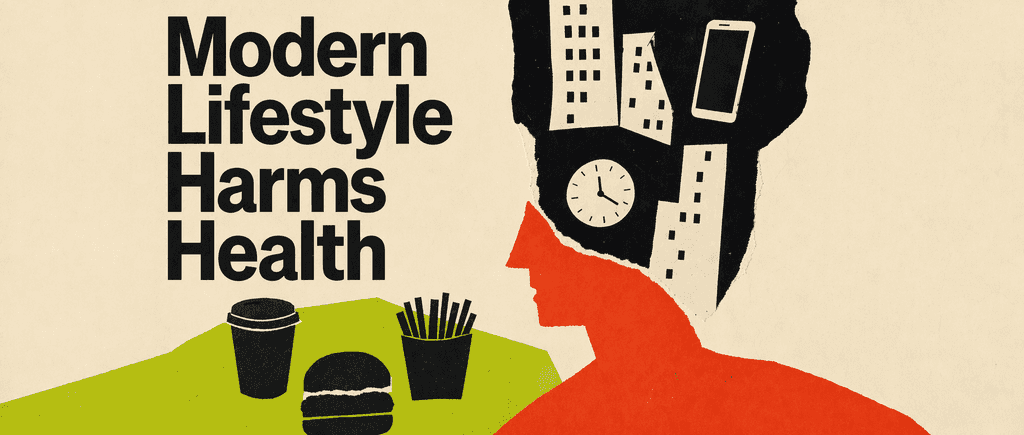
While our genetic adaptations were perfect for the environments in which they evolved, they've become problematic in our radically transformed world. Natural selection operates on a "win-now" principle-it can't anticipate future challenges. For 200,000 years, this worked because environmental changes occurred slowly enough for genetic adaptation. But the Industrial Revolution transformed our world in just ten generations, creating unprecedented population growth, decreased childhood mortality, and increased lifespans.
We've become a species of aging, sedentary indoor-dwellers in the evolutionary blink of an eye. While our brains have rapidly transformed our environment, our bodies evolve in slow motion. Our genes simply can't keep pace with these changes, as no mutation could spread widely enough in just 200 years unless it offered an extraordinary survival advantage-virtually impossible in modern societies where most people already live long enough to reproduce.
The traits that enabled our ancestors' survival-adaptations for food shortages, threat recognition, and wound healing-have become mismatched with our modern environment. Since modern diseases typically affect us after we've reproduced, natural selection can't eliminate these harmful traits. Consequently, the same survival adaptations that perpetuated our species have become overly protective and sometimes detrimental in an era of abundant food, minimal violence, and advanced medical care.
Kapitel 4
The Hunger Paradox: How Survival Drove Us to Obesity
The Pima Indians of Arizona illustrate how rapidly dietary changes can trigger metabolic disaster. In 1908, diabetes was extremely rare among them. By 1971, an astonishing 50% had developed the disease-directly linked to their 70% obesity rate. What happened? Their traditional diet based on agriculture and river fishing was disrupted when upstream water diversion threatened starvation. The U.S. government's solution-providing flour, sugar, and lard-dramatically altered their diet, increasing fat content from 15% to 40%.
This story foreshadowed a global epidemic. Today, over one-third of Americans are obese, another third are overweight, and 10% have diabetes. This epidemic stems from our evolutionary programming: humans developed powerful desires for calorie-dense foods and efficient fat storage to survive periodic famines. Our bodies were never designed to handle constant food abundance, especially when obtaining it requires minimal physical effort.
Our ancestors likely ate whenever they found food, consuming up to 12,000 calories when food was plentiful to store energy for lean times. Their diets averaged 60% calories from animals and 40% from plants, with fat comprising 20-35% of intake, mostly unsaturated from nuts and lean game. Beyond calories, humans require 13 vitamins, 17 minerals, and 9 essential amino acids we can't synthesize ourselves.
Today, our bodies have the same sophisticated systems to drive hunger, taste, and digestion, but in a radically different environment. The hypothalamus serves as "command central" for regulating hunger and fullness, interpreting signals from throughout the body. At least 20 different molecules and hormones participate in this complex communication. Ghrelin stimulates appetite, while stomach distention and hormones from digestive organs signal fullness. Fat tissue releases leptin to suppress appetite-people with leptin deficiency develop marked obesity because their brains never receive the "stop eating" signal.
Our taste buds evolved to prefer sweet, umami, and moderate salt tastes-all indicators of nutritious foods in nature. Bitter tastes, detected by over 25 different genes, serve as protection against poisonous plants. Our brains drive us to seek variety in our diet-explaining why we always have room for dessert-which evolutionarily helped our ancestors obtain diverse nutrients.
Remarkably, about 70% of our modern diet comes from foods unavailable to hunter-gatherers: dairy products (10%), cereal grains (24%), refined sugars (18%), refined vegetable oils (17%), and alcohol (1%). The average American adult now consumes about 500 more daily calories than in the 1970s, primarily from fats and carbohydrates. Consequently, nearly two-thirds of American adults are overweight, with over one-third obese.
Kapitel 5
Water, Salt, and the Silent Killer
Franklin Delano Roosevelt's death at age 63 came not from his well-known polio, but from a stroke caused by severe untreated high blood pressure-a condition that literally blew a hole in a small artery in his brain. His blood pressure had skyrocketed from a borderline 140/100 mmHg in 1931 to a catastrophic 260/150 by the Yalta Conference in February 1945. Roosevelt died from the unintended consequences of overprotective biological mechanisms that had been critical for human survival for 200,000 years-the same mechanisms that protected our ancestors from dehydration.
Our evolutionary advantage lies in heat dissipation during prolonged exertion. While most mammals rely on inefficient panting to cool down, humans have approximately two million eccrine sweat glands that can produce up to 3.5 quarts of sweat per hour. When this sweat evaporates from our skin, it generates remarkable cooling power-likely giving us an advantage over the stronger but less heat-efficient Neanderthals.
This sweating ability requires higher water intake than other mammals need. Since we lack a large water storage organ, we depend on hormones from our brain, lungs, liver, kidneys and adrenal glands to maintain proper water and salt balance. Our kidneys handle most fine-tuning of salt and water balance, conserving both during shortages and eliminating excess in urine. Our bodies prioritize preventing dangerous low blood pressure over worrying about slight excesses of water and salt.
Throughout human history, water access has shaped civilization-cities like Jerusalem and Jericho rose at natural springs, while others developed along rivers. Salt became critically important when humans shifted to agriculture, as vegetarians don't get enough salt from their diet. Salt's value as a food preservative made it more precious than gold in many societies.
Today, the threats that endangered our Stone Age ancestors are minor concerns in an era of bottled water, salty snacks, intravenous fluids, and air conditioning. Our hunter-gatherer ancestors survived on about 700 milligrams of sodium daily, and populations with limited salt access like the Yanomami of Brazil can thrive on as little as 400 milligrams. In such societies, blood pressure remains normal throughout life. Americans consume far more sodium than needed, primarily from processed foods and restaurant meals.
Blood pressure consists of two measurements: systolic pressure (when the heart beats) and diastolic pressure (between beats). Normal blood pressure is defined as no higher than 120/80. About 95% of high blood pressure cases are "essential hypertension"-resulting from a misset sodium thermostat due to excess hormones that conserve sodium or constrict arteries. These hormonal imbalances often stem from mutations in over 40 genes that once protected our ancestors from dehydration.
Elevated blood pressure creates turbulent blood flow that damages arterial linings and muscle layers. Healing forms cholesterol-containing scars that narrow arteries, reducing blood flow to organs. Complete blockage causes tissue death-a heart attack in cardiac tissue or stroke in brain tissue. Extreme pressure can rupture weakened arteries, especially in the brain, causing hemorrhagic strokes.
High blood pressure prevalence rises dramatically with age in developed countries-from 5% below age 35 to over 70% after age 75. Its impact is staggering, contributing to about half of all heart attack and stroke deaths, plus causing heart and kidney failure. The traits that saved our ancestors through millennia of dehydration threats have become a mixed blessing in our salt-rich modern environment.
Kapitel 6
Fear, Memory, and Mental Health in Modern Society
Just days before Valentine's Day 2012, Iraq War veteran and Purple Heart recipient Jason Pemberton killed his wife and then himself. His tragic story illustrates how the same hypervigilant, fear-driven survival mechanisms that protected our ancestors can produce devastating side effects in modern society-anxiety, phobias, depression, and suicide. In today's America, one in ten adults suffers from depression, and 40,000 commit suicide annually-making Americans twice as likely to die by suicide as by murder or combat.
Archaeological evidence has disproved the myth of peaceful prehistoric humans. About 15% of prehistoric hunter-gatherers died violent deaths-a rate remarkably consistent with surviving hunter-gatherer societies today. Modern studies show shocking violence rates: among the Ache of Paraguay, 40-60% of deaths are violent; in Papua New Guinea, 20-30% of adult male deaths are murders; among the Yanomami of Venezuela, 25% of adult males are killed in conflicts typically over women or revenge.
The evolutionary advantage of being able to kill rather than be killed is substantial-a trait with just a 10% survival advantage can spread to nearly the entire population within 3,000 years. While we don't have an identifiable "murder gene," homicidal thoughts are nearly universal-over 90% of men and 80% of women report having them. Men commit about 85% of murders worldwide regardless of culture, with most victims also being men.
Our brain, though only 2% of our body weight, consumes 17% of our calories, with about half our genes influencing brain function. The human neocortex is three times larger than other animals', critical for memory and emotional intelligence. We possess both learned fears and innate, hardwired fears-toddlers instinctively fear snakes and spiders but must learn to fear guns and electrical outlets.
Fear helps us avoid dangerous situations, but when danger is unavoidable, we have six defensive responses: freeze, faint, flee, fight, be submissive, or play dead. Each serves specific purposes-fear of heights causes freezing to prevent falls; fear of blood induces fainting to preserve brain blood flow when bleeding. The "smoke detector principle" explains why false alarms are evolutionarily advantageous-burning 200 calories to flee is worth it if there's even a 1% chance of avoiding injury that would cost 20,000 calories in recovery.
Our emotional responses that once protected us now often harm us. Anxiety represents exaggerated versions of adaptive behaviors-a little excitement improves performance, but excessive worry causes dysfunction. About 7% of Americans suffer from social anxiety disorder, 3% from generalized anxiety, and 2% experience panic attacks. Depression evolved from adaptive sadness and submissiveness that helped ancestors avoid confrontation with stronger adversaries. It serves as a transition phase allowing people to disengage from unreachable goals and find new strategies.
As civilization progressed, violent deaths declined dramatically. Britain's current homicide rate is less than 5% of what it was in the thirteenth century, while the worldwide median homicide rate has fallen by almost 50% since 1967. Today, homicides and war deaths constitute less than 1% of all American deaths. Yet anxiety affects 18% of US adults annually and nearly 30% during their lifetimes, with women 50% more likely to report it than men. Depression affects about 7% of US adults yearly and 17% lifetime, with over 20% of American women aged 40-60 reportedly taking antidepressants.
Kapitel 7
Blood Clotting: From Life-Saver to Life-Taker
Heart disease and stroke have become leading killers in modern America due to our diets and lack of exercise, despite being rare in Paleolithic times. When actress Rosie O'Donnell experienced her 2012 heart attack, a 99% blockage in her main coronary artery (a "widow maker") required emergency stent placement. This illustrates the delicate balance between our need to clot quickly to prevent fatal bleeding and the dangers of unnecessary clotting that can cause heart attacks and strokes.
With approximately 12% of Paleolithic ancestors dying from homicide and fatal injuries, non-fatal wounds were even more common. Childbirth presented an even greater bleeding challenge-Paleolithic women with an average of ten deliveries faced roughly a one-in-30 lifetime risk of bleeding to death during childbirth, necessitating rapid and effective clotting mechanisms.
Our blood circulation system is a marvel of evolutionary design, with ten pints of blood cycling through 60,000 miles of vessels about 40 million times by age 75. Blood flows smoothly because vessel linings produce anticlotting factors. When this lining is damaged, two rapid-response clotting pathways activate: platelets stick to exposed receptors and recruit others, while blood proteins form a fibrous mesh. We maintain about 15 million platelets per drop-four times more than needed for trauma clotting.
During pregnancy, a mother's blood volume increases dramatically-red cells by 25% and plasma volume doubles-providing cushion against delivery blood loss. To prevent fatal hemorrhage during childbirth, pregnant women produce more clotting proteins, though this increases clot risk tenfold. Genetic adaptations like factor V Leiden (found in 5% of northern Europeans) evolved to protect against blood loss, despite potential downsides.
Just as insufficient clotting proteins cause bleeding, excessive clotting proteins create dangerous blood clots, particularly in veins where blood flows more slowly. Even more dangerous are arterial clots, which form when atherosclerotic plaques rupture. These cholesterol-rich deposits accumulate in artery walls due to our liver's overproduction of lipoproteins, especially when stimulated by saturated fat consumption.
Starting about 6,000 years ago, human innovation began changing our relationship with bleeding. Early interventions included Mesopotamian sutures, Egyptian wound treatments, and Roman tourniquets. Blood transfusions progressed from Richard Lower's 1665 dog experiments to James Blundell's partially successful human attempts in 1818, but weren't practical until blood typing was understood in the early 1900s.
William Heberden first described coronary artery disease in 1768, but heart attacks remained remarkably rare into the early 1900s. By the Korean War, three-quarters of young soldiers killed in combat already showed atherosclerotic plaques, and such plaques became nearly ubiquitous in middle-aged Americans.
Our finely tuned clotting system developed over thousands of years when our ancestors were extremely active, rarely lived long enough to develop arterial clots, and were active enough to avoid most venous clots. The cruel irony is that while we're now far less likely to bleed to death than ever before, the genetic tendencies that helped our ancestors survive now contribute to our most common causes of death-diseases caused by clots account for about 25% of all deaths in modern America, more than four times the number caused by all forms of bleeding.
Kapitel 8
Can Our Bodies Adapt Fast Enough?
Since 1990, life expectancy for non-Hispanic white Americans without high school diplomas has declined by four years-an unprecedented trend in the US. This raises a critical question: is this decline temporary, or will improved living standards paradoxically decrease life expectancy as modern diseases increase?
Species perpetuation depends not on longevity but reproductive success-having offspring who survive to reproduce themselves. Average life expectancy at birth in Paleolithic times was 30-35 years-sufficient to perpetuate Homo sapiens despite high childhood mortality. But with improved living standards, nutrition, and sanitation, life expectancy rose dramatically-from 41 to 53 years in Britain between 1870-1920. Today's global life expectancy is 71-72 years, with Japanese women reaching 86 years.
By 2030, worldwide childhood mortality is projected to be half of what it was in 2000, driving life expectancy to 85 years for women and 80 for men in high-income countries. Heart attacks and strokes will remain the leading causes of death globally, with diabetes rising from ninth to seventh. Depression will become the second leading global health problem and the primary concern in high-income countries.
Could natural selection eliminate our harmful overprotective traits or develop new beneficial mutations? Unfortunately, this is unlikely because natural selection favors traits that increase early reproductive success, even if they're harmful later in life. Our overprotective genes that drive overeating, salt consumption, depression, and excessive clotting don't kill us quickly enough or prevent reproduction, making them immune to natural selection.
With our population growing from 1 million to 7 billion, we now have 7,000 times more people each carrying approximately 65 new mutations per generation. While our growing population creates more mutations, their spread remains limited by geography and mating patterns. Even highly beneficial mutations take generations to spread.
While genes govern who we are, our bodies adapt to environmental conditions during development. Nearsightedness exemplifies this-largely influenced by children spending less time outdoors in bright sunlight and more time indoors with artificial light. Modern science has discovered epigenetics-environmental factors that tag our DNA and affect gene expression without changing the genetic code itself. Some epigenetic tags persist through reproduction, allowing certain parental experiences to influence offspring.
Natural selection acting on both genetic and epigenetic changes will continue to shape our species, but far too slowly to match the rapid changes of modern civilization. To overcome our problematic survival traits, we'll need to change our behavior or rely on science and medicine.
Kapitel 9
The Challenge of Changing Our Behavior
Oprah Winfrey's well-documented weight struggles exemplify how difficult it is to overcome our genetic programming. Despite her motivation and determination, she has repeatedly lost significant weight only to regain it-her experience mirrors the 90% of overweight people who ultimately regain most or all lost weight.
Weight loss is mathematically simple but practically difficult-a 220-pound person wanting to lose 45 pounds in six months would need to reduce daily caloric intake from 3,000 to 1,800 calories. But dieting isn't natural; we're programmed to eat until full. Most weight-loss interventions show people rarely lose more than ten pounds even after a year of trying.
Despite popular debates, it's primarily calorie count that determines weight-not specific food sources. For weight control, what matters most is finding a satisfying diet you'll actually follow. The exception may be snacking patterns-mice with constant food access gained significantly more weight than those with time-restricted feeding despite consuming identical calories.
Modern food environments sabotage our Paleolithic instincts. Portion size profoundly affects consumption-moviegoers randomly given larger popcorn containers ate 45% more fresh popcorn and 33% more stale popcorn than those with medium containers. Even nutrition experts served themselves 30% more ice cream with larger bowls and 15% more with larger serving spoons. Food proximity and visibility also matter-office workers ate more candies when they were visible in clear bowls on their desks, and consistently misjudged how many they consumed.
Environmental influences like plate shapes, package sizes, lighting, and convenience increase consumption by resetting our sense of normal or making it harder to track intake-what nutritionist Brian Wansink calls "mindless eating." The food industry's triple threat combines calorie-dense foods high in sugar, salt and fat with large package sizes and volume discounts.
For those diagnosed with high blood pressure hoping to avoid medication, modest salt reduction combined with weight loss, caffeine avoidance, and increased exercise can lower blood pressure by approximately 10/5 mmHg. However, as with other lifestyle modifications, few people maintain sufficient changes long-term.
Natural selection favored survival and reproduction, not happiness-about 40-50% of our happiness is genetic, while another 40% comes from activities within our control. Happiness correlates with feelings of autonomy, competence, and relatedness. Cognitive behavioral therapy (CBT) offers the most successful approach for managing stress, anxiety and depression by changing maladaptive thinking patterns. CBT can reduce depression symptoms by about 30% and prevent relapses by around 50%.
While good health begins at home, our broader environment significantly influences our eating habits, exercise patterns, and self-perception. Information-based interventions have proven largely ineffective-food labeling in New York City reduced the average Starbucks order by only 15 calories. Price manipulation shows greater effectiveness-25% price increases significantly reduce snack and beverage purchases, while similar reductions increase fruit and vegetable consumption.
Kapitel 10
Medicine's Role in Overcoming Our Evolutionary Legacy
Despite our best efforts at behavior modification, many people cannot overcome their genetic predispositions. Bill Clinton's story illustrates this challenge-even after his heart attack prompted lifestyle changes, he still needed medical interventions. While we should try to improve our habits, we shouldn't focus on guilt when we fail. Instead, we should consider using medical science to help our bodies adapt to our modern environment.
Modern medical interventions offer effective options for treating conditions caused by our overprotective traits. About half of American adults take prescription medications, with this number rising to 90% by age 65. The most common medications address cholesterol, blood pressure, and depression-all linked to offsetting our historical survival traits.
The American Medical Association officially declared obesity a disease in 2013, recognizing that overeating stems from inherent survival traits rather than just bad habits. Currently, only five FDA-approved medications exist for long-term obesity treatment, each with modest effectiveness and significant side effects. Research shows gut bacteria significantly impact weight regulation-bacteria from obese subjects can increase weight when transferred to germ-free mice. Bariatric surgery remains the most effective treatment for morbid obesity, with three approaches: stomach banding, partial stomach removal, or intestinal bypass.
For hypertension, medications target the hormones that protect us from dehydration-diuretics reduce salt and water retention, beta blockers prevent renin release, ACE inhibitors and ARBs block different steps in the hormone cascade, and calcium-channel blockers directly prevent artery contraction. No single medication works universally, so doctors typically prescribe small doses of multiple drugs to retune our salt and water systems at multiple levels while minimizing side effects.
Mental disorders like anxiety and depression are now recognized as chemical imbalances rather than personal failings. While cognitive and behavioral therapy can help, medications have become the primary treatment approach. Most antidepressants increase brain levels of serotonin or norepinephrine by blocking their breakdown. About one-third of depressed people improve with placebo, while medication doubles the response rate to about two-thirds.
Anticlotting medications are crucial for people who've had abnormal clotting or face increased risk. Heart attack survivors routinely receive "blood thinners"-typically aspirin or newer antiplatelet drugs like clopidogrel that prevent platelets from forming clots in coronary arteries. For atrial fibrillation patients, where clots form from blood stagnation in the non-contracting atrium, medications targeting the protein cascade rather than platelets are used.
Gene therapy offers potential for changing our genes faster than natural selection by using vectors (typically viruses) to transport DNA coding for missing proteins into our genome. Other promising approaches include DNA/RNA editing and epigenetic manipulation that could alter gene function through the 250,000+ regulators influencing our 21,000 protein-coding genes.
We're entering an era of personalized health where genome sequencing, biomarkers and imaging will reveal our disease risks, guide screening tests, and help select optimal treatments. Instead of relying on population averages or trial-and-error, medicine will target individual characteristics to maximize benefits while minimizing risks. Healthcare will shift from treating illness to primordial prevention-reversing risk factors before disease develops.
Our challenge is using our brains-which created these problems by rapidly changing our environment-to bring us back into sync. With food abundance, sedentary lifestyles, and high rates of anxiety and depression, medications will increasingly help offset the mismatch between our survival traits and modern environment. We must recognize that many health problems stem from genetic predispositions beyond our full control, requiring less judgment of ourselves and others as we navigate the complex interplay between our ancient genes and modern lives.