Kapitel 1
The Silent Force Shaping Our World
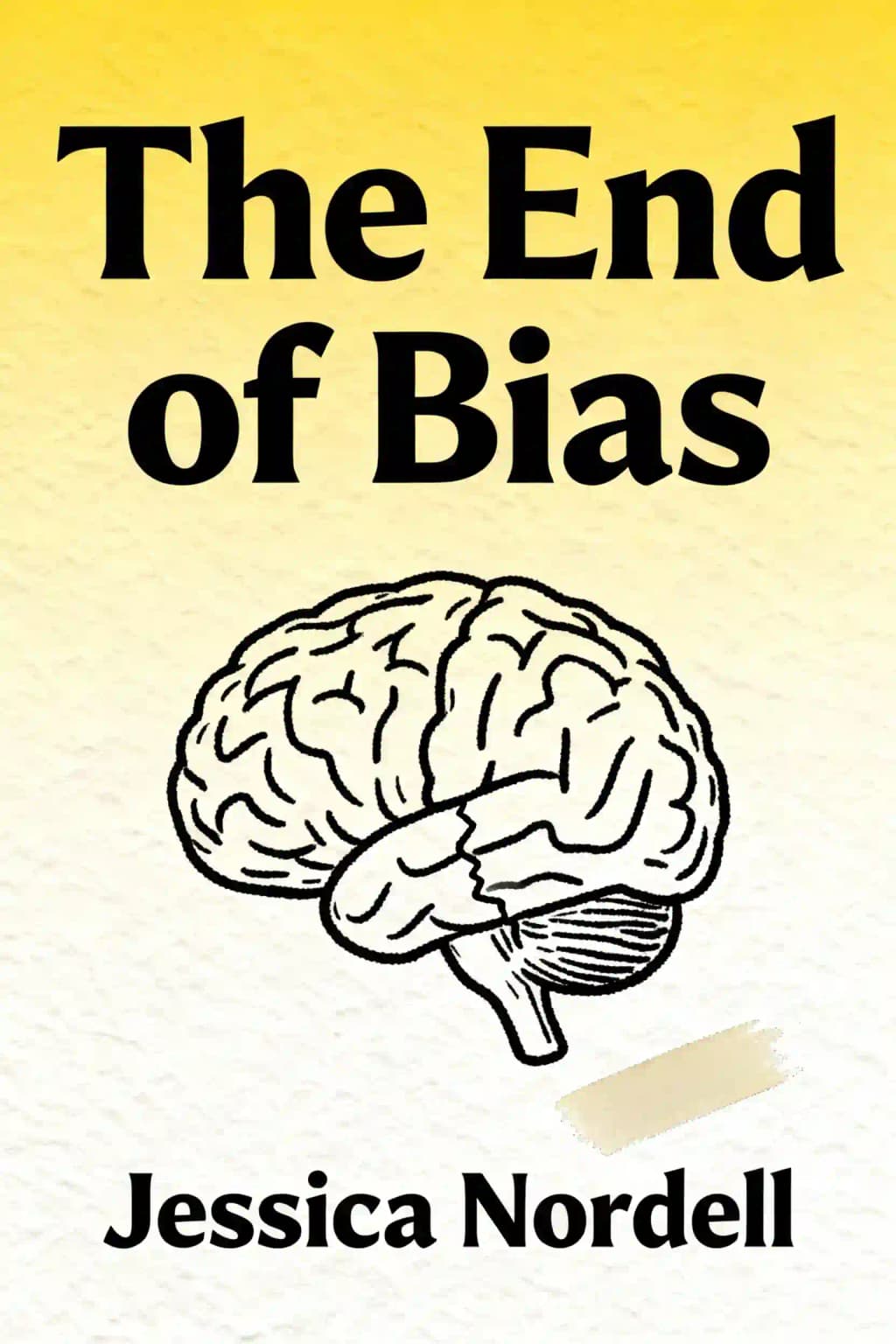
Ever found yourself making a snap judgment about someone based on their appearance, accent, or name? Jessica Nordell's groundbreaking book "The End of Bias" reveals how these split-second reactions shape our world in profound ways. Named one of the Best Books of 2021 by NPR and The Washington Post, this work arrives at a critical moment when understanding bias has never been more urgent. What makes Nordell's approach unique is her combination of rigorous science with compelling storytelling, taking readers from police departments to preschools to reveal how unconscious prejudice operates-and how it can be overcome. Oprah Winfrey called it "essential reading for anyone who wants to understand how bias works," while Nobel Prize winner Daniel Kahneman praised its "rare combination of scientific rigor and compelling storytelling." As we navigate increasingly diverse societies, this book offers something precious: evidence-based hope that we can build a more equitable world.
Kapitel 2
The Mechanics of Unconscious Bias
Bias isn't simply a moral failing of bad people-it's a predictable function of how our brains work. Our minds naturally categorize information to navigate a complex world, but this essential cognitive ability can lead us astray when applied to human beings. Rebecca Bigler's fascinating classroom experiments demonstrate this process in action. When teachers randomly assigned children colored shirts and then consistently referred to them by these groups ("Good morning, blue-shirts!"), children quickly developed stereotypes about these arbitrary categories. Children wearing blue shirts came to believe their group was superior, but only when teachers emphasized the importance of the categories.
Our brains perform several tricks with categories that facilitate bias. We "essentialize" groups, believing members share some fundamental nature. We overestimate differences between groups while underestimating variation within them. We see outgroups as homogeneous while viewing our own group as diverse. This explains why media often portrays white criminals as disturbed individuals while minority criminals are seen as representing their entire group.
Most disturbingly, categorization affects perception itself. When people feel threatened, they literally perceive Black faces as darker and Arab faces as angrier. Simply learning a category-as Nordell experienced with "Arab" students while teaching in France-makes us notice differences we previously overlooked. While categorization is universal, how we define categories varies dramatically across cultures, as demonstrated by diverse gender systems in Native American and Indonesian societies.
The consequences of these mental shortcuts compound dramatically over time. A simulation called NormCorp revealed how even tiny biases-just 3% in areas like performance evaluation and opportunity access-eventually resulted in men occupying 82% of top positions after twenty promotion cycles. These disparities emerge without coordinated discrimination or explicit intent to harm. The simulation doesn't even account for additional obstacles like sexual harassment or motherhood penalties.
Beyond blocking advancement, subtle bias often causes more harm than overt discrimination because its ambiguity creates self-doubt. It erodes performance through "stereotype threat," hijacking working memory and creating self-fulfilling prophecies. The resulting homogeneity creates dangerous blind spots in fields from ecology to medicine, where male-dominated perspectives have missed critical patterns like cooperation in nature or the systemic causes of health disparities.
Kapitel 3
Breaking the Habit of Prejudice
Psychologist Will Cox demonstrates how habitual thinking overrides conscious intentions through a simple exercise: participants struggle to name colors when words spell different colors (like the word "blue" printed in red ink). He then reveals media bias by showing two nearly identical Hurricane Katrina photos-a Black man "looting" groceries versus a White couple "finding" bread and soda.
Patricia Devine builds on this demonstration, explaining that good intentions aren't enough to overcome prejudice that operates as automatically as reading. Her workshop applies cognitive behavioral therapy principles to bias reduction through three essential components: raising awareness of unconscious biases, building motivation to change, and providing concrete strategies to replace biased responses with new behaviors.
Despite diversity training becoming a multibillion-dollar industry embraced by Fortune 500 companies, most programs lack rigorous evaluation. When assessed, results are often disappointing-a meta-analysis of 260 studies found trainings primarily affected participants' feelings about the training itself rather than producing lasting attitude changes. More troublingly, sociologists found that mandatory trainings for managers actually decreased promotion rates for Black women by 9% and Asian Americans by 4-5% over five years. This may stem from managers feeling their autonomy threatened-one study showed White men displayed physiological signs of threat when told a company strongly valued diversity.
Unlike typical diversity trainings, the Madison workshop offers a rigorously evaluated approach that's frank but nonjudgmental. Rather than asking people to eliminate implicit associations, it teaches them to notice habits and change behaviors. Devine demonstrates that acknowledging differences is essential-holding her pale arm next to a Black student's to show that pretending not to see differences actually worsens discrimination.
The workshop concludes with practical strategies: notice stereotypes and actively replace them; look for situational explanations rather than attributing behavior to inherent traits; seek relationships with different people; and practice perspective-taking. Research shows embodied perspective-taking is particularly effective-participants who experienced color-blindness through VR spent twice as long helping color-blind students compared to those who merely imagined it.
After implementing a gender-focused version with STEM faculty, the proportion of women hired rose from 32 to 47 percent in participating departments, while departments that didn't receive training showed no change. Undergraduate students who participated in racial bias workshops were more likely to notice bias in daily life, label it as wrong, and speak out against it even two years later.
Why do workshops like Madison's have any effect at all? One explanation comes from substance abuse prevention research. Programs that reward people for staying clean work not just because of economic incentives, but because they flip people from habitual to deliberative thinking. Similarly, bias awareness workshops help people see their reactions as choices rather than inevitabilities.
Kapitel 4
Fear, Perception, and Mindfulness in Policing
In July 2016, a routine traffic stop ended in tragedy when officer Jeronimo Yanez fatally shot Philando Castile, a 32-year-old school nutrition supervisor beloved by students as "Mr. Rogers with dreadlocks." After pulling over Castile for a broken brake light, Yanez became agitated when Castile calmly disclosed he had a legally permitted firearm. When Castile reached for his license as requested, Yanez fired seven shots, killing him as his girlfriend and her four-year-old daughter watched.
Though acquitted by a predominantly white jury, Yanez's defense that "this wasn't about race" contradicts extensive research showing race likely played a critical role in his perception and fear response. Civil rights attorney Connie Rice discovered this racialized fear when interviewing over 800 Los Angeles police officers who confessed, regardless of their own race, that "Black men scare me." This fear aligns with research showing that Americans perceive Black men as more threatening than white men of identical size. Black boys are seen as older and less innocent than white peers, and Black men are perceived as taller, more muscular, and more capable of harm.
This fear of Black people isn't merely contemporary but extends back to American chattel slavery, when white slave owners lived in perpetual terror. South Carolina passed the Negro Act of 1740 prohibiting enslaved people from learning to write, growing food, or meeting in groups. Later laws even required white men to bring guns to church to guard against "the wicked attempts of Negroes."
Modern police training often compounds fear by emphasizing "pre-attack indicators" that mirror normal anxiety responses. "Warrior trainings" like The Bulletproof Warrior-which Yanez attended-teach officers they're at war in a hostile world divided into sheep (the public), wolves (criminals), and sheepdogs (police), emphasizing that hesitation is deadly.
In Hillsboro, Oregon, police sergeant Richard Goerling noticed an "asshole factor" among officers-routine aggression toward the public that he recognized as a performance failure. Seeking solutions, he explored practices used by elite performers like athletes and discovered mind-body approaches including yoga and meditation.
Police work exposes officers to society's most traumatic situations, from overdoses to child abuse to death notifications. This takes a severe toll: officers experience higher rates of heart disease, depression, PTSD, and suicide than the general population. This damage is compounded by a professional culture that denies suffering and stigmatizes emotions.
Scientific research confirms meditation's benefits: decreased stress reactivity, increased attention, greater care for others, and reduced inflammation, depression and anxiety. Mindfulness works by "deautomatizing" habitual reactions-separating perception from automatic response, creating space for alternative choices. Early studies show promising results for reducing implicit bias, with participants in mindfulness meditation showing less implicit race and age bias on IAT tests.
In Bend, Oregon, officers began practicing daily 15-minute meditation sessions. Research showed they experienced less anger, fatigue, burnout, and impulsivity after training. Citizen complaints dropped 12 percent and use of force decreased 40 percent over six years.
Kapitel 5
Building Trust Through Meaningful Contact
Civil rights attorney Connie Rice received an unexpected call from LAPD Chief Bill Bratton asking for her help-surprising since she had spent fifteen years battling the department through lawsuits addressing racial discrimination and police brutality. Rice had witnessed the LAPD evolve into a paramilitary organization whose brutality targeted communities of color, pioneering SWAT teams and conducting destructive raids that included battering down walls and terrorizing residents.
After interviewing over eight hundred officers, Rice discovered a culture defined by insularity, warrior mentality, and callousness. Officers lacked meaningful relationships with the communities they policed, leading them to stereotype entire neighborhoods like Watts. This absence of familiarity bred deep, racialized fear that distorted threat assessments. "If you're afraid of someone," Rice explained, "you objectify them. They're not a human being, they're a threat."
Rice's approach echoed Gordon Allport's "contact hypothesis" from his 1954 book The Nature of Prejudice. Allport argued that prejudice could be reduced when people from different groups work together with equal status toward common goals, backed by institutional authority. This theory had proven effective in several contexts, from integrated combat divisions in World War II to workplace integration of people with disabilities.
Rice's Advancement Project focused on safety as the foundational civil right. She saw how LAPD's aggressive approach was undermining safety by destroying community trust, creating a vacuum that empowered gangs. Her thousand-page report in 2007 revealed how the city had failed by treating gangs as individual criminal cases rather than a public health epidemic.
The Community Safety Partnership deployed fifty officers to patrol on foot in housing developments, making a five-year commitment with increased pay. Crucially, they would be evaluated on relationship-building rather than arrests. Officers were selected for conflict resolution skills and community connections. The program required both sides to overcome deep distrust-officers learned the history of policing including slave patrols, while residents were asked to work with the same department that had inflicted generational trauma.
Launching in 2011, the CSP officers organized baseball games, barbecues, and listened to community concerns. As relationships developed, officers and community members formed genuine friendships. Officers visited locals in hospitals, invited children to their homes for dinner, and were invited to quinceaneras, graduations, funerals, and baptisms.
An independent analysis showed CSP decreased arrest rates to about 50% of pre-program levels while cutting violent crime by nearly 25%. Homicides dropped dramatically from an average of seven per year to about two. Research suggests that when people see police as legitimate, crime decreases, as those who believe in the law's legitimacy are more likely to comply with it.
Kapitel 6
Designing Systems That Counter Bias
The story of Chris, a woman who developed stage IV colon cancer at age 37 after doctors repeatedly dismissed her symptoms as stress, tiredness, and indigestion-telling her she was just a "working mom" who needed rest-illustrates how bias manifests in healthcare. Research reveals systemic treatment differences: Black patients receive less pain medication due to false stereotypes about pain sensitivity; women receive fewer timely interventions and less pain treatment; and doctors use more negative language with Black patients. The consequences are deadly: Black women are 3-4 times more likely to die from childbirth complications than White women.
At Johns Hopkins, trauma surgeon Elliott Haut discovered only a third of high-risk patients received proper blood clot prevention. Following Peter Pronovost's aviation-inspired checklist approach, Haut implemented a computerized system that walked doctors through risk factors and recommended treatments. The results were dramatic: preventable clots were nearly eliminated, and fatal pulmonary embolisms were cut in half. More surprisingly, they discovered women had been 45% less likely than men to receive proper clot prevention-a disparity that completely disappeared after implementing the checklist.
Economist Richard Thaler and legal scholar Cass Sunstein coined "choice architecture" to describe how context shapes decisions. Like physical environments influence behavior, process design can shape outcomes without requiring persuasion. The Hopkins checklist functions as choice architecture by interrupting biased decision-making processes, disentangling holistic judgments into constituent parts like a prism separates light into colors.
The Boston Symphony Orchestra pioneered bias reduction through behavioral design in 1952 by implementing screened auditions that concealed musicians' identities from judges. Economists found that concealing musicians' identities increased women's odds of advancing by 50 percent, contributing significantly to women now comprising nearly 40 percent of orchestras.
In 2001, statistician Cynthia Park discovered alarming disparities in Broward County's gifted education program. White children comprised nearly 60 percent of students labeled gifted despite being a minority of the student population, while over a dozen schools with primarily students of color had no identified gifted students. Park's solution was universal screening-testing every single second grader with a nonverbal cognitive test that minimized cultural bias. The results were dramatic: the number of Black and Hispanic students qualifying as gifted tripled, with 80 percent of newly identified students being low-income or English language learners.
Broward's universal screening success extended beyond identification-it transformed educational trajectories. Schools created "high-achiever classrooms" for gifted students, filled out with near-qualifying peers who also benefited from accelerated instruction. Black and Hispanic students in these environments saw their math and reading score gaps disappear.
Kapitel 7
Breaking Through Institutional Homogeneity
In 2013, Caroline Criado-Perez campaigned to keep women on British currency, succeeding in getting Jane Austen featured on the ten-pound note. Her victory unleashed a torrent of online abuse-nearly one rape or death threat per minute. Twitter's response was woefully inadequate, requiring victims to complete cumbersome nine-part questionnaires for each threat.
Computer scientist Melvin Conway observed that software inevitably reflects the structure and biases of the organization that created it. Twitter's founding team-four young white men-had a critical blind spot: they never anticipated abuse because they'd never experienced online harassment themselves. While co-founder Evan Williams recalled the early internet as a thrilling exchange of ideas between minds, former engineering manager Leslie Miley, who was often mistaken for a woman online, had experienced the internet's dark side firsthand.
Shortly after physicist Peko Hosoi moved to California to teach at Harvey Mudd, she received an unexpected call from MIT's mechanical engineering department offering her a faculty position-an offer that was actually part of an experiment during a crisis moment. MIT's environment was challenging for women, who made up only 24 percent of mechanical engineering undergraduates. For women faculty, MIT's own reports revealed systematic marginalization-they received fewer resources, lower salaries, less lab space, and exclusion from important committees despite achieving tenure at the same rate as men.
The mechanical engineering department implemented strategic changes to increase women faculty while maintaining MIT's high standards. Rather than hiring for specific subspecialties where women were scarce, they broadened searches to entire fields and actively recruited outstanding women candidates, making their research interests departmental priorities. This approach yielded six exceptional women hires, including Peko Hosoi who pioneered soft robotics and became an engineering dean. The cohort achieved tenure at 66 percent-exceeding MIT's average 47 percent rate-proving the previous process had been flawed.
An unexpected transformation occurred as women faculty increased: female undergraduate enrollment in mechanical engineering rose dramatically from 32.5 percent to 50.4 percent-far exceeding peer institutions like Georgia Tech (21%) and Caltech (30%). Psychologist Nilanjana Dasgupta's research showed that female mentors serve as "social vaccines" against stereotype threats-women engineering students with female mentors maintained confidence and belonging, with 100 percent remaining in the field compared to significant attrition among those with male or no mentors.
Being the first of your identity in any field requires unstated "pioneer requirements"-additional skills beyond the formal job description. Pioneers must withstand solitude, ignore disparaging comments, and navigate hostile cultures while performing at the same level as those without these burdens. This reveals how homogeneous organizations artificially shrink the candidate pool by requiring both stated qualifications and these shadow traits.
Kapitel 8
Creating Cultures of True Inclusion
When Uche Blackstock grew up in Brooklyn, she thought most doctors were Black. Her mother was a nephrologist, her pediatricians were Black, and she regularly attended meetings of Black physician societies. Medicine seemed natural and attainable. During her career, however, Blackstock encountered persistent bias-nurses treated her differently than male residents, patients assumed she was there to change sheets rather than provide care, and male physicians gave her orders as if she were an orderly rather than a physician colleague.
Despite loving emergency medicine and excelling at it, Blackstock faced persistent bias. When finally given a diversity leadership role, her initiatives to address microaggressions and improve mentoring were blocked as "too inflammatory" or "too exclusionary of men." She realized her position was symbolic-meant to represent diversity without creating actual change. After being told "This is the way we do things" and "You have to fit into the culture," Blackstock resigned from academic medicine entirely.
Blackstock's experience reflects a widespread pattern across professions. Up to 44% of minority doctors and 47% of women leave academic medicine, compared to 30% of white doctors and men. Similarly high attrition rates plague law (70% of women of color have considered leaving), journalism, and engineering (40% of women engineers leave).
True inclusion goes beyond feeling welcome to having actual influence. While companies often measure inclusion through subjective reporting (feeling valued and heard), many professionals from marginalized groups report hitting barriers when attempting to effect meaningful change or gain strategic influence. As MIT professor Robin Ely notes, "Inclusion has come to mean a pablum, feel-good thing," like celebrating birthdays, but "whose thoughts are acted upon?" The real measure of inclusion is the distribution of decision-making power.
When Gianmarco Monsellato became CEO of struggling law firm Taj in 2004, he implemented structural changes to combat bias: evaluating performance relative to time worked, requiring objective promotion criteria, addressing pay disparities and sexism, making opportunities accessible to all, ensuring women's presence in decisions, allowing part-time work without penalties, and creating low-risk paths to leadership. He focused on changing the environment rather than "fixing" women: "There is nothing wrong with women. The problem is the environment."
After these changes, women grew to 50% of equity partners (versus 20% in U.S. firms), including mothers. Women filled half of executive positions and top earners. The company's revenue increased 70% over twelve years as Taj rose to first-tier status.
Federico Ardila-Mantilla, a Colombian mathematician who experienced isolation as a minority student at MIT, transformed his classroom at San Francisco State University to create genuine inclusion. With 60% minority students and many first-generation college attendees, Ardila reimagined math culture by establishing a class agreement where students committed to taking "an active, patient, and generous role" in everyone's learning. He eliminated discouraging phrases like "it's obvious," encouraged broader participation by waiting for three hands before calling on students, played music to create comfort, and designed culturally relevant exercises.
Kapitel 9
Transforming Culture Through New Norms
French psychologists Abdelatif Er-rafiy and Markus Brauer found that countering stereotypes works best not by promoting positive images, but by emphasizing diversity within groups. In their experiments, posters showing people of Arab origin with different personality traits (both positive and negative) and the message "What makes us the same is that we are all different" reduced discriminatory behavior.
People exposed to these posters sat closer to Arab individuals, were more likely to sign anti-discrimination petitions, volunteer for Arab rights groups, and help an Arab woman who spilled her belongings (91% helped versus 59% in the control group). The posters worked by undermining stereotyping, which depends on seeing group members as homogeneous.
Media doesn't just change how we see others-it changes how groups see themselves by signaling social norms. In Rwanda, following the 1994 genocide where radio propaganda played a devastating role in inciting violence, a soap opera called "New Dawn" was created to promote healing. While the year-long study showed the program didn't change listeners' personal beliefs about intermarriage or bystander intervention, it dramatically shifted their perception of what they ought to believe. More importantly, it changed their behavior-listeners showed more cooperation and open communication when sharing resources.
At Nicolaigarden preschool in Stockholm, teachers filmed their interactions with children to identify sources of unfairness. Expecting to catch bias among children, they were shocked to discover they themselves were treating boys and girls differently-comforting girls more, holding them closer, while allowing boys more noise and rowdiness.
To create equal opportunities, the teachers changed their behaviors: comforting boys with the same tenderness as girls, letting girls be as rambunctious as boys, avoiding gender-specific greetings, and using the gender-neutral pronoun "hen." Despite critics claiming they were "eliminating gender," research showed the children still recognized gender differences but were less likely to make stereotypical assumptions about toys or playmates.
In these schools, teachers understand that freedom isn't just freedom to grow and explore, but freedom from the tightening net of others' expectations. The opportunity to create this possibility resides in every interaction, every featherweight moment.
Kapitel 10
The Path Forward: Combining Personal and Systemic Change
Can we overcome unconscious, unintentional, or unexamined biases? The evidence says yes. Transformation-relinquishing false ideas passed down for centuries-requires great effort and the will to change, but commitment grows stronger with knowledge.
Changing one's thinking isn't quick or straightforward, even for the well-intentioned, nor is it a cure-all. Individual bias reduction won't end disparities and inequities rooted in historical exclusion and extractive policies. Only large systemic changes can address such longstanding injustices. Yet authentic individual change remains crucial. Laws and institutions emerge from human hearts and consciousness. Policies are created, interpreted, and implemented by people.
We can begin by noticing our own biased reactions, questioning and interrupting them once seen. Mindful awareness helps observe these reactions more clearly and regulate our internal landscape. We can form meaningful connections with people unlike ourselves, increasing the complexity with which we see others. We can build structured decision-making into institutions to reduce bias in everyday practices, redesign on-ramps to opportunities, and ensure organizations value all members.
Understanding history is vital to uprooting bias. The Marley Hypothesis suggests perception of racism increases with historical knowledge. Tracing social prejudices to their inception reveals them as human inventions rather than timeless truths. Learning the history of patriarchal ideas helped Nordell perceive ways she'd internalized falsehoods and discounted her authority and that of other women. Similarly, studying racism's history brought increasing freedom from its grip.
If we grapple deeply enough with our biases to see one another in all our facets, we might create new patterns of relating across differences. We might even feel our way into another's experience-an act of imagination that South African scholar Pumla Gobodo-Madikizela notes is a prelude to caring, perhaps to love.
Gobodo-Madikizela, who served on South Africa's Truth and Reconciliation Commission, challenges Descartes' famous "I think, therefore I am," which reflects individual existence independent of others. In reality, we exist through each other: our humanity depends on our ability to bestow humanity on others. This truth transcends the business case for ending bias, strengthening both cultural and justice arguments. We end bias for others and for ourselves.
Without our illusions and denials, we might become truly human and trustworthy. We might all become free.