Kapitel 1
Beyond the Office: The Revolution That Changed How We Work
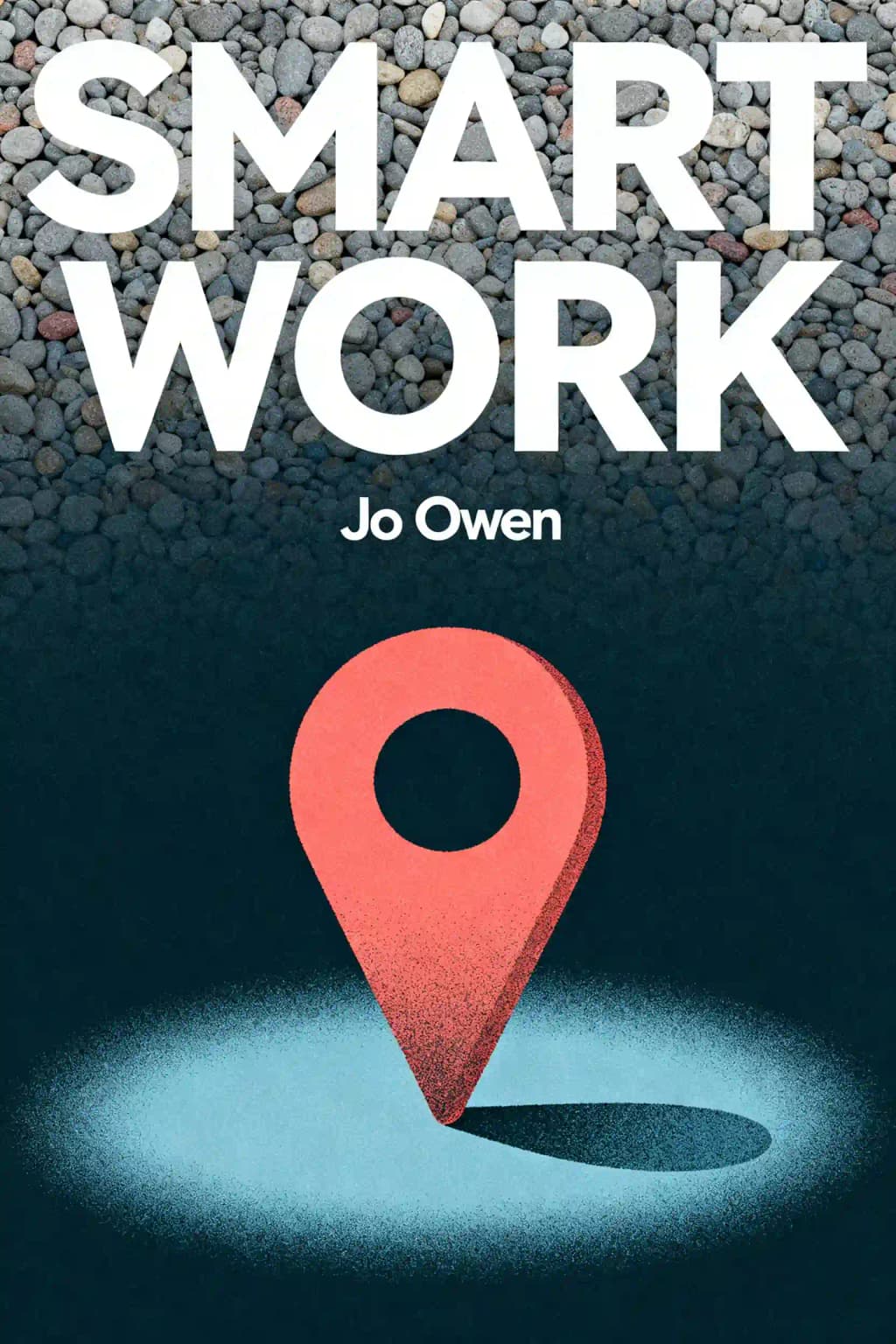
In the spring of 2020, the world witnessed the greatest shift in work practices since the Industrial Revolution. Overnight, millions of professionals found themselves setting up makeshift home offices, juggling family responsibilities, and navigating the unfamiliar terrain of remote leadership. Jo Owen's "Smart Work" emerged from this crucible as a beacon for disoriented leaders, quickly becoming required reading for executives at companies like Google, Microsoft, and Goldman Sachs. Drawing on research conducted across continents during the pandemic itself, the book offers a masterclass in 21st-century leadership. What makes Owen's work particularly compelling is its foundation in real-world experience-having developed leadership programs for organizations from global corporations to special forces units, he brings practical wisdom rather than theoretical constructs. As Satya Nadella, Microsoft's CEO, noted: "The pandemic didn't change the trajectory of work; it accelerated what was already happening. Owen's framework helps us navigate this acceleration with confidence rather than fear."
Kapitel 2
The RAMP Framework: A New Leadership Paradigm
The pandemic didn't just change where we work-it fundamentally transformed how we lead. Traditional command-and-control management, already declining in relevance for knowledge workers, collapsed entirely when bosses could no longer physically observe their teams. Owen's research revealed that successful remote leadership consistently follows the RAMP framework: Relationships (building networks of trust), Autonomy (balanced with accountability), Motivation (sustaining performance and wellbeing), and Process (establishing effective infrastructure).
This framework represents the evolution from 19th-century management practices to 21st-century leadership principles. While traditional management relied on direct observation and hierarchical control, remote leadership demands trust-based influence. The pandemic merely accelerated a transformation that was already underway, driven by rising education levels, technological advancement, and the increasing complexity of professional work. Companies like Microsoft and GitLab had already begun implementing elements of this framework years before the pandemic, recognizing that traditional management methods were becoming obsolete in a digital-first world.
The RAMP model isn't just theoretical-it provides practical solutions to the most pressing challenges of hybrid work. When leaders build strong relationship networks, they create the trust necessary for remote collaboration through regular one-on-ones, virtual team-building activities, and intentional informal connections. When they balance autonomy with accountability, they enable focused work while maintaining performance standards through clear objectives and metrics rather than time-based monitoring. When they nurture motivation and mental health, they prevent burnout and sustain engagement by implementing flexible schedules, wellness programs, and recognition systems that acknowledge both outcomes and effort. And when they establish effective processes, they create the infrastructure for seamless collaboration through documented workflows, asynchronous communication protocols, and digital tools that support remote teamwork.
What makes this framework particularly powerful is its universal applicability across industries and organizational sizes. From global corporations like Spotify, which implemented "squad" frameworks emphasizing autonomous teams, to educational institutions that redesigned their teaching models, organizations that implemented these principles found themselves not just surviving but thriving in the new paradigm. The companies that struggled most were those that attempted to recreate office-based control mechanisms in remote environments-installing surveillance software, requiring constant video presence, or demanding rigid work hours that ignored the fundamental differences between home and office work.
Research shows that organizations implementing the RAMP framework experienced 23% higher employee engagement, 31% lower turnover, and 27% increased productivity compared to those maintaining traditional management approaches. Success stories include companies like Atlassian, which saw a 50% increase in innovation metrics after implementing autonomous team structures, and Buffer, which achieved record-breaking performance while maintaining a fully remote workforce through strong relationship-building practices and clear processes.
The framework's effectiveness stems from its alignment with modern workforce expectations and the psychological principles of human motivation. It acknowledges that knowledge workers perform best when given trust, purpose, and the tools to succeed, rather than when subjected to rigid control mechanisms. This approach has proven particularly crucial for managing multi-generational workforces and supporting global teams across different time zones and cultures.
Kapitel 3
Trust: The New Currency of Leadership
The pandemic revealed how much we depend on face-to-face relationships for morale, motivation, and effectiveness. No one succeeds alone-we need networks of trust, support, and influence. Office environments naturally foster these connections through spontaneous interactions, while remote work makes relationship-building harder. Many teams initially succeeded by drawing on pre-existing trust, but this frays over time, with new team members struggling most to build essential relationships.
Trust emerges from four key variables: aligned goals (creating common team objectives), aligned values (investing time in understanding colleagues), credibility (ensuring reliable communication), and risk management (recognizing emotional and political impacts). The greater the risk, the more trust required. Credibility, like a delicate vase, takes time to build but can shatter instantly with a single misstep.
Building trust remotely requires deliberate effort. First, hire for values rather than just skills-you can train skills, but values are intrinsic. Three values matter most in remote environments: positive regard (believing colleagues are acting with good intentions), ownership (taking responsibility without supervision), and kindness (supporting each other professionally and socially).
Second, be a role model through your actions, not just words. Teams carefully observe how leaders behave during crises-these "moments of truth" reveal your true values. Will you be remembered as stressed, blaming, and problem-focused, or calm, collaborative, and solution-oriented?
Third, reinforce positive behaviors through recognition. Peer praise on shared platforms like Slack creates virtuous circles where team members feel appreciated and motivated to continue contributing. And finally, meet in person at least occasionally-even 100% remote teams benefit enormously from gathering face-to-face at least once a year to build the trust that sustains remote collaboration.
Influence extends your power beyond formal control through networks of trusted relationships. Unlike persuasion (a one-off transaction), influence is an enduring relationship that lets you make things happen through willing allies. Building influence requires mastering "enlightened selflessness"-giving to receive without appearing weak. Once established, influence becomes self-reinforcing: your apparent power attracts more allies, creating a virtuous circle that pays dividends over time.
Kapitel 4
Autonomy and Accountability: The Double-Edged Sword
The pandemic accelerated the decades-long power shift from bosses to skilled professionals. Working from home further transfers power, forcing leaders to trust teams they can't constantly monitor. This requires setting clear goals while trusting professionals on process-most will rise to the challenge through pride in their work. Surveillance software only destroys morale and drives away talent.
However, this autonomy brings greater accountability and stress. With office work's inherent ambiguity removed and the pressure to prove they're working, remote professionals often overwork, leading to mental health issues when work invades home. Leaders must develop skills based on trust and influence rather than command and control.
The solution to managing unseen professionals who resist micromanagement is simple: manage less, lead more. Office environments encourage excessive management through constant observation. Traditional management tasks-assigning work, checking quality, solving problems-add little value with skilled, motivated teams. Remote work makes close supervision impossible, forcing greater trust.
Effective delegation requires having the right team, knowing what to delegate, and knowing how to delegate properly. Instead of asking "what can I delegate?" (which typically yields only routine tasks and unpleasant problems), ask "is there anything I cannot delegate?" Start with the assumption that everything goes to the team, then identify the few tasks you must handle personally. With a good team, this list should be remarkably short-perhaps just performance appraisals.
When you delegate effectively, your role transforms from supervisor to leader. The best leaders follow the IPM agenda-Idea first, then People, Money and Machine-while managers work backward (MPI). Your leadership starts with a compelling idea that tells a three-part story: where we are now, where we're going, and how we'll get there. Adding "how you can help" makes it personal for team members.
Kapitel 5
Motivation in Isolation: Preventing the Silent Epidemic
The pandemic created a quiet mental health epidemic as social animals struggled in isolation. Over 80% of workers reported their mental health suffered during remote work. Leaders can't simply command motivation but must create conditions where teams self-motivate. The challenge is particularly acute in remote environments where traditional motivational tools-casual praise, team celebrations, spontaneous recognition-are unavailable.
The solution follows the mini-RAMP formula: supportive Relationships prevent suffering alone; Autonomy requires clear goals and boundaries; Mastery matters because autonomy without skills leads to disaster; and Purpose drives motivation beyond corporate mission statements. Leaders must shift from controlling to supporting teams, especially in remote environments where command-and-control approaches falter.
Finding purpose requires job crafting-seeing your work differently from the bland description to make it meaningful. Examples include a hospital cleaner who found purpose in comforting isolated patients during COVID-19, a Chief Risk Officer who saw his role as preventing financial disasters, and the fable of three stonemasons who saw their work as either hacking stones, practicing skilled masonry, or building a monument for future generations. The key is asking "who am I helping and where am I making a difference?"
Supportive relationships are both emotional (someone to vent to) and practical (colleagues who help when needed). Build these relationships during good times to carry you through tough times by reaching out and listening, responding appreciatively with specific gratitude, and helping out through reliability and support. Remote work makes it easy to hide but creates opportunity to stand out by proactively connecting with colleagues.
Leaders must also care for themselves before they can support their teams. Essential practices include creating time boundaries between work and home, establishing physical boundaries, setting clear goals with defined endpoints, reaching out socially, and taking exercise. As a leader, model these behaviors and honor the boundaries you set. The golden question that predicts if you'll be seen as a great boss is whether your team believes "My manager cares for me and my career."
Kapitel 6
The Mastery Challenge: Learning Without Observation
Mastery is essential for motivation, requiring proficiency in two types of knowledge: explicit "know-what" skills (learned through formal education) and tacit "know-how" skills (learned through experience). Working remotely accelerates explicit knowledge acquisition through greater access to training resources worldwide, including online courses, virtual workshops, and digital libraries. However, it significantly hinders tacit knowledge development that typically comes from observing colleagues in action, picking up on subtle cues, and absorbing workplace dynamics through daily interactions.
To overcome this limitation and accelerate tacit knowledge acquisition, use two simple yet powerful reflection tools after every significant interaction: WWW (What Worked Well) to learn from successes, and EBI (Even Better If) to identify improvements without self-criticism. For example, after a client presentation, note what resonated with the audience, which slides were most effective, and how questions were handled successfully (WWW), then identify areas for enhancement like pace, engagement techniques, or follow-up procedures (EBI). These tools help you craft your unique success formula, adapt quickly to new working environments, and can transform your team into a self-improving, agile unit when used collectively during virtual retrospectives and team meetings.
New joiners face unique challenges in acquiring tacit knowledge when working remotely. They need to learn survival skills that are rarely documented but crucial for success: understanding how things really get done (informal processes and workflows), identifying reliable colleagues who can provide guidance, recognizing valued behaviors within the organization's culture, gauging appropriate risk levels for decision-making, managing their boss's expectations and communication preferences, and avoiding problematic projects that might derail their progress. These unwritten rules and cultural nuances typically take months to absorb in person and even longer in remote settings.
The optimal solution is having new joiners work primarily from the office where they can quickly absorb organizational culture through immersion, but this only works if experienced colleagues are present too. Otherwise, you risk creating an "apartheid workforce" with different cultures emerging between remote and office-based teams. To help new joiners integrate successfully: implement structured induction programs with clear milestones, provide complete welcome packages including technology setup guides and cultural primers, ensure day-one office visits with management for personal connections, onboard in groups when possible to create peer support networks, maintain critical mass of team members in-office for knowledge sharing, schedule regular check-ins with varying formats (formal reviews, casual coffee chats, team meetings), clarify goals and expectations through documented success metrics, and establish an effective buddy system with experienced team members who can provide ongoing guidance and support.
Consider implementing virtual shadowing sessions where new joiners can observe senior team members handling complex situations, regular virtual water cooler sessions to facilitate informal learning, and creating digital repositories of best practices and lessons learned to accelerate tacit knowledge transfer in remote settings.
Kapitel 7
The Infrastructure of Remote Work: Fixing the Plumbing
Like plumbing, no one thinks about work processes until they fail. The pandemic forced organizations to establish best practices for remote work, addressing key questions: How to establish productive team rhythms? How to tame communications? What work belongs in the office versus remotely? Do we need offices, and how should they be designed? How can we make online meetings productive?
With hybrid work becoming the global preference, making WFH successful requires addressing four key areas: establishing work-life boundaries, creating productive routines, managing energy levels, and having appropriate tools. The benefits of WFH (reduced commuting, flexibility, fewer distractions) can quickly become disadvantages (stress, overwork, poor work-life balance) without proper infrastructure.
When work lives in your home, boundaries disappear-leading to stress, burnout and demotivation. The commute once provided natural transition time between work and home personas. To recreate these boundaries: take short walks before and after work to simulate a commute, change clothes between work and leisure (never work in pajamas), and create a dedicated workspace-even if it's just a rug on your bed that signals "work mode."
The apparent WFH productivity miracle often comes from unsustainably longer hours rather than true efficiency. The sustainable solution is working smarter by avoiding productivity killers: interruptions, distractions and delays. Studies show office workers average only 3 productive hours daily, with interruptions particularly damaging-each one requires 15 minutes to regain focus.
With potentially 24,000 hours spent working from home over a career, proper equipment is essential. Invest in a quality chair to prevent back problems. Your workspace should allow for proper posture: shoulders relaxed, wrists straight, back supported, feet supported, head level with eyes at screen-top height, and screen at arm's length.
Kapitel 8
Reimagining Meetings: From Necessary Evil to Productive Exchange
Remote meetings amplify the challenges of traditional meetings, requiring more deliberate planning and execution. The disciplines acquired for effective remote meetings ultimately improve in-person meetings as well, creating a feedback loop of better practices across all meeting formats. Organizations that master remote meeting protocols often find their overall meeting culture transforms positively.
In-person meetings benefit from natural body language choreography that's lost online. We read body language to gauge attention, determine speaking order, and enhance understanding. Four critical elements shape our traditional meeting interactions: battle gestures that conduct speech rhythm (like hand-raising or leaning forward), illustrative gestures that clarify meaning (such as drawing shapes in the air or pointing to emphasize key points), self-soothing gestures that signal anxiety (like touching one's face or adjusting clothing), and moderator signals that manage conversation flow (such as nodding or raising a hand to pause discussion). Eye contact, perhaps the most powerful non-verbal cue, becomes particularly challenging in video formats where participants can't actually make direct eye contact due to camera placement.
Video meetings have become a substitute for work rather than facilitating it, with many professionals spending up to 80% of their day in virtual meetings. Back-to-back meetings leave no time for thinking or preparation and lead to burnout, creating what's known as "Zoom fatigue." Every meeting should pass three essential tests: What will I contribute? (identifying specific value to add), What will I learn? (ensuring personal or professional growth), and What action will result? (guaranteeing concrete outcomes). These tests help determine not only which meetings to attend but who to invite when hosting your own meetings, potentially reducing unnecessary participation by up to 30%.
The most crucial parts of meetings often happen before they start and after they end - the "meeting before the meeting" and the "meeting after the meeting." With video meetings, where participants disappear instantly at the end with a single click, the pre-meeting phase becomes even more critical. Two essential pre-meeting elements are social alignment (building trust through seemingly pointless chit-chat about weather, family, or shared interests) and business alignment (resolving contentious issues privately through one-on-one conversations). Research shows that meetings preceded by these informal interactions are 67% more likely to achieve their objectives.
Hybrid meetings create inequality between in-person and remote attendees, often resulting in two-tiered participation. Office participants can see each other, read body language, and easily dominate discussions while remote colleagues appear as "blobs on the screen" and struggle to intervene effectively. Three proven solutions exist: avoid hybrid meetings entirely by making all meetings either fully remote or fully in-person; have everyone join individually from separate rooms even if in the office, creating digital equality; or if running hybrid meetings, have all in-person attendees log in separately and always ask remote participants to comment first on agenda items. Organizations that implement these solutions report up to 40% improvement in meeting participation and effectiveness.
Kapitel 9
The Future of Smart Work: Promise and Peril
The COVID-19 pandemic has permanently transformed work, accelerating existing trends toward trust, delegation, autonomy and accountability. The Smart Work revolution has eliminated the stigma of working from home, reduced costs for both employers and employees, and created systems that enable remote work at marginal cost. Most employees now prefer working from home 2-3 days weekly, and network effects have normalized virtual interaction.
However, challenges include mental health concerns, workplace divisions between those who can and cannot work remotely, increased accountability pressures, and career risks for remote workers who may be less visible for promotions while competing in a wider talent pool. The pandemic proved organizations can change faster than previously believed, demanding braver leadership. Remote work raises standards by requiring more purposeful management, and hybrid working is modernizing leadership for the 21st century.
Despite these challenges, Smart Work promises a better future with improved work-life balance, more deliberate leadership, professional autonomy, and more effective office use. The revolution is driven by rising education levels, increasingly ambiguous professional work, shifting power from employers to employees, and enabling technology. While progress will be uneven-some firms will use technology to control rather than empower workers-the pandemic has revealed the potential for a significantly better working future.
The companies that will thrive in this new paradigm are those that embrace the fundamental shift in leadership philosophy-from controlling to enabling, from monitoring to trusting, from commanding to influencing. Those that attempt to recreate industrial-era management in digital environments will find themselves unable to attract and retain the talent they need. The future belongs to organizations that master the art of Smart Work, creating environments where professionals can deliver their best work regardless of location, guided by leaders who understand that their role is not to command but to create the conditions for success.
Kapitel 10
Creating Your Smart Work Strategy
There's no universal formula for successful hybrid work-your team must develop its own based on your unique work and people. The Methods Adoption Workshop serves as a collaborative framework to establish clear rules of engagement while simultaneously building team cohesion by giving everyone ownership in the process. This inclusive approach ensures buy-in from all team members and addresses the specific challenges of your organization.
The workshop follows three distinct steps: First, facilitate a comprehensive brainstorming session to establish rules of engagement. This covers multiple critical areas: team introductions and communication protocols, weekly rhythms (determining optimal office versus remote days based on team needs), daily routines (establishing core hours, YTH meetings, designated Zoom-free zones for focused work), infrastructure requirements (both technical and physical), decision-making processes (including escalation paths), concrete success metrics, working culture expectations, systematic problem-solving approaches, and follow-up mechanisms to ensure accountability.
Second, conduct rigorous stress testing of your proposed working agreements. This involves role-playing various scenarios like client emergencies, tech failures, or team conflicts to ensure the agreements hold up under pressure. For example, test how your communication protocols work when a critical team member is unexpectedly absent, or how decision-making processes function during tight deadlines. This reality check helps identify potential gaps between aspirational goals and practical implementation.
The third step involves a crucial review workshop after a month of implementation. Using the WWW (What Worked Well) and EBI (Even Better If) frameworks, teams analyze critical incidents and patterns. For instance, examine how effectively the core hours supported collaboration, whether the Zoom-free zones actually improved productivity, and if the infrastructure met real-world demands.
The morning YTH meeting (Yesterday-Today-Help) emerges as a particularly powerful tool in hybrid work environments. Each team member gets precisely 90 seconds to share three things: their previous day's accomplishments, today's priorities, and specific areas where they need support. This strict time limit forces clarity and conciseness while maintaining team alignment and accountability. For example, instead of vague updates like "working on the project," team members must specify "completed first draft of client proposal, need review from legal team."
Smart Work fundamentally transcends mere technology solutions or office design considerations - it represents a fundamental shift in leadership philosophy. The pandemic catalyzed a wholesale reconsideration of basic assumptions about work processes and collaboration methods. Organizations that embrace this opportunity to reimagine leadership for the 21st century will create environments where employees can maximize their potential, build meaningful careers, and maintain healthy work-life integration. This might include implementing flexible schedules that accommodate both early birds and night owls, creating clear career progression paths for remote workers, and establishing mental health support systems.
The future of work has arrived earlier than expected, accelerated by global circumstances, but it brings the potential for significant improvements over traditional models. Success in this new era requires intentional design of work processes, strong leadership commitment, and continuous adaptation based on team feedback and changing needs.