Kapitel 1
The Orphan Who Stole Hearts: A Victorian Tale of Survival
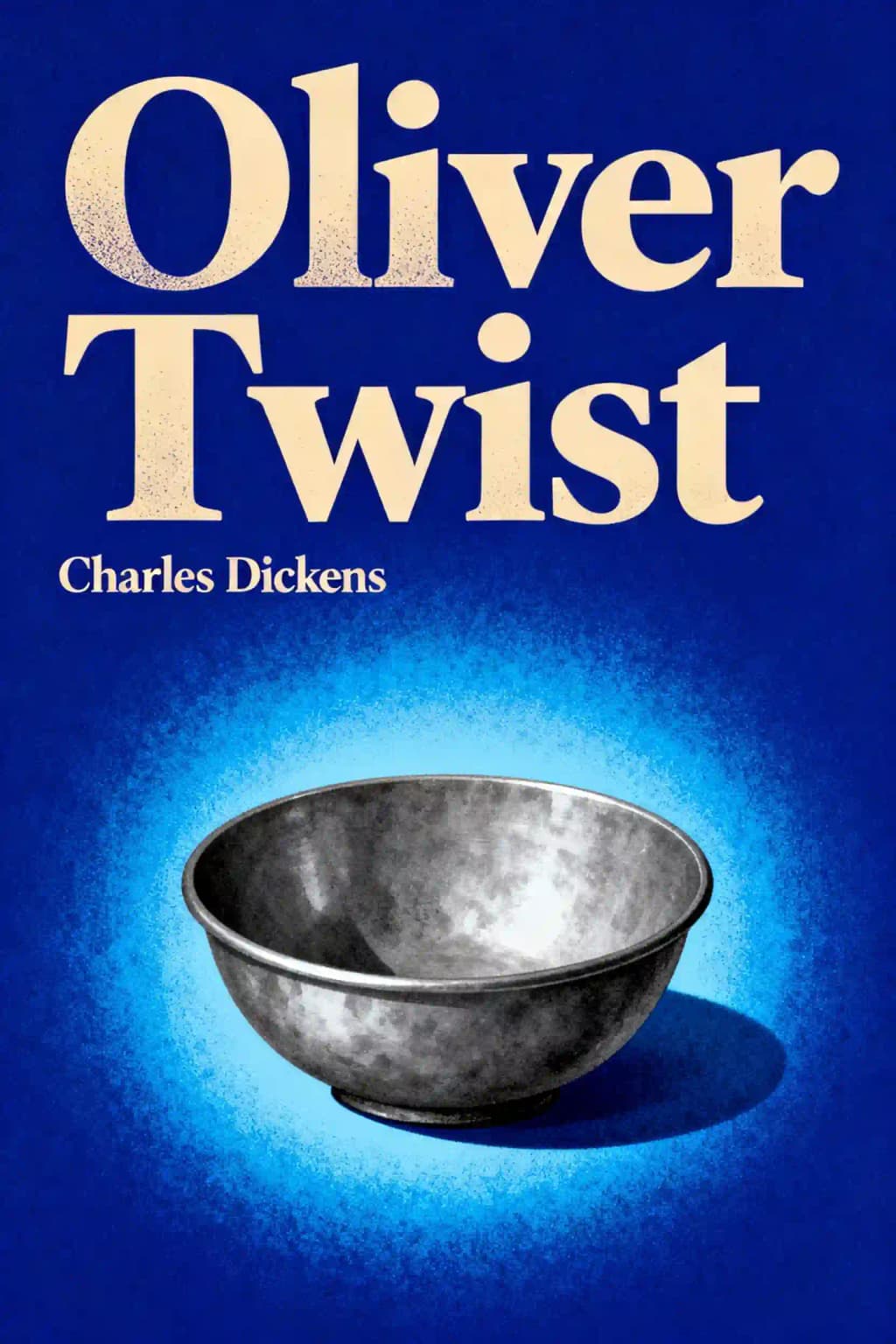
"Please, sir, I want some more." These six simple words from a small, starving orphan boy would become one of literature's most iconic lines, capturing the essence of a novel that changed how society viewed its most vulnerable members. When Charles Dickens published Oliver Twist in 1837, he wasn't just telling another story-he was igniting a social revolution. The tale of this innocent child navigating London's treacherous underworld became an immediate sensation, forcing Victorian society to confront its cruel treatment of the poor and abandoned. Today, Oliver's journey continues to resonate, with adaptations spanning from Roman Polanski's acclaimed 2005 film to countless stage productions worldwide. The novel's enduring appeal lies in its perfect balance of darkness and hope-a quality that has made it a favorite of readers from Queen Victoria (who reportedly kept a copy by her bedside) to modern literary figures like J.K. Rowling, who has cited Dickens as a profound influence on her own orphaned protagonist.
Kapitel 2
Born Into Darkness: Oliver's Early Years in Victorian Institutions
Oliver Twist enters the world under the most inauspicious circumstances-his mother dies in childbirth at a workhouse, leaving him without identity or protection. From his first breath, Oliver becomes property of the parish, thrust into a system designed not to nurture but to punish poverty. The workhouse where he spends his early years operates on principles of deliberate cruelty, where children receive just enough sustenance to prevent death but never enough to satisfy hunger. This calculated deprivation reflects the 1834 Poor Law Amendment Act, which made workhouses intentionally harsh to discourage their use-a policy Dickens vehemently opposed.
When nine-year-old Oliver, driven by unbearable hunger during a meal of thin gruel, approaches the master with his bowl and utters the famous words, "Please, sir, I want some more," his request is treated as an act of rebellion. The board members-pompous, well-fed gentlemen-react with horror at this "dangerous" display of need. Oliver's punishment is swift: he's locked in solitary confinement, publicly offered as an apprentice to anyone who will take him, and eventually sold to an undertaker, Mr. Sowerberry.
Life at Sowerberry's funeral parlor offers little improvement. Oliver becomes a "mute" at children's funerals-chosen for his naturally melancholy expression caused by constant hunger and mistreatment. Here, he endures torment from Noah Claypole, an older boy who mocks Oliver's dead mother. When Oliver finally fights back against this cruelty, the entire household turns against him. This incident reveals a key aspect of Oliver's character-despite his circumstances, he possesses an innate dignity and moral sense that refuses complete submission to injustice.
Facing severe punishment, Oliver makes a momentous decision: he will run away to London. With nothing but the clothes on his back and no concept of the dangers awaiting him, he embarks on a journey spanning seventy miles. This desperate flight represents both tremendous courage and the utter failure of the institutions meant to protect him. What kind of society, Dickens asks us, creates conditions where a small child believes his best chance lies in fleeing alone into the unknown?
Kapitel 3
London's Underworld: Fagin's Den of Thieves
After a grueling seven-day journey, Oliver reaches the outskirts of London-a sprawling, smoke-filled metropolis that simultaneously represents both hope and peril. Exhausted, starving, and with his shoes worn through, Oliver encounters Jack Dawkins, known as the Artful Dodger. With his adult mannerisms packed into a boy's frame and dressed in oversized men's clothes, the Dodger represents a distorted version of childhood-one forced into premature adulthood by poverty. When he offers Oliver lodging, the desperate boy follows without question.
The Dodger leads Oliver through a maze of filthy streets to a dilapidated building where he meets Fagin, one of literature's most memorable villains. Described with rat-like features and constantly rubbing his hands together, Fagin embodies calculated evil masked by false kindness. His den houses a group of boys whom Oliver initially believes make handkerchiefs, unaware he's entered a school for pickpockets. Dickens creates a disturbing parody of family life here-Fagin as the twisted patriarch, providing food and shelter in exchange for criminal service.
The environment Dickens paints is viscerally real: the stench of unwashed bodies, rancid food, and damp walls; the flickering candlelight casting sinister shadows; the strange jargon of thieves' cant that excludes Oliver from fully understanding his situation. When the boys play their "game"-practicing pickpocketing techniques on Fagin-Oliver laughs innocently, completely missing its true purpose. This scene powerfully illustrates his fundamental innocence amid corruption.
Oliver's naivety reaches its climax when he accompanies the Dodger and another boy, Charley Bates, into the city, believing they're going to work. Instead, he watches in horror as they steal a handkerchief from an elderly gentleman's pocket. When Oliver runs in terror, he-not the actual thieves-is pursued and captured. This cruel irony becomes a pattern in Oliver's life: his innocence repeatedly makes him vulnerable to punishment for others' crimes.
What makes this section so compelling is Dickens' refusal to romanticize criminal life. Unlike later stories that glorify pickpockets as clever heroes, Dickens shows the squalor, danger, and moral corruption of this existence. Yet he also forces readers to confront an uncomfortable truth: for many children, Fagin's den, with its guaranteed meals and roof, represented an improvement over workhouse life. What does it say about a society, Dickens asks, when a criminal's lair might be preferable to its charitable institutions?
Kapitel 4
Glimpses of Goodness: Mr. Brownlow and the Possibility of Salvation
Just when Oliver's situation seems most hopeless-falsely accused of theft and facing imprisonment-an unexpected turn occurs. Mr. Brownlow, the very gentleman whose handkerchief was stolen, notices Oliver's terror and innocent appearance. Despite the magistrate's prejudice against street children, Brownlow intervenes, taking the feverish boy to his home in Pentonville. This moment marks Oliver's first encounter with genuine kindness, introducing him to a world he never knew existed.
In Brownlow's comfortable home, Oliver experiences proper care for the first time. The housekeeper, Mrs. Bedwin, tends his fever with maternal affection. He sleeps in clean sheets, receives nourishing food, and finds himself surrounded by books rather than threats. Most significantly, he's treated with dignity-addressed as "Master Twist" rather than simply "boy" or "workhouse." When Oliver recovers enough to come downstairs, he's moved to tears by a portrait of a beautiful woman that seems strangely familiar, though he can't understand why.
Brownlow represents Victorian ideals of gentlemanly conduct-educated, principled, and compassionate. His library filled with leather-bound books symbolizes the knowledge and moral education Oliver has been denied. Yet Brownlow isn't portrayed as flawless; his friend Mr. Grimwig constantly expresses skepticism about Oliver's character, forcing Brownlow to defend his instinctive trust in the boy. This dynamic creates tension while highlighting Brownlow's moral courage in defending someone society has deemed worthless.
The relationship developing between Oliver and Brownlow offers the novel's first real hope. When Brownlow gives Oliver new clothes and burns his workhouse rags, it symbolizes the possibility of transformation-that one's origins need not determine one's future. Oliver's gratitude manifests in his eager desire to be useful, running errands and helping around the house. When Brownlow entrusts him with books and money to return to a bookseller, Oliver embarks on this mission with pride and determination, experiencing for the first time what it means to be trusted.
This brief period of happiness makes what follows all the more devastating. While on his errand, Oliver is recognized by Nancy, a young woman from Fagin's gang, who with the help of Bill Sikes forcibly drags him back to Fagin's den. Oliver's screams for help go unheeded by passersby, demonstrating how easily the vulnerable can disappear in London's vast anonymity. From Brownlow's perspective, Oliver has simply run off with valuable books and money, seemingly confirming Grimwig's suspicions.
This section creates the novel's central tension: the possibility of redemption versus the gravitational pull of circumstance. Can goodness survive when systems and structures are arranged against it? The portrait that moved Oliver to tears provides the first hint that his story contains mysteries yet to be revealed-that perhaps his origins are not as lowly as he's been led to believe.
Kapitel 5
The Criminal World: Bill Sikes, Nancy, and the Cost of Violence
With Oliver recaptured by Fagin's gang, Dickens plunges readers deeper into London's criminal underworld, introducing its most terrifying inhabitant: Bill Sikes. Where Fagin represents calculating evil masked by false joviality, Sikes embodies brute violence without pretense. With his heavy boots, scarred face, and ever-present club, Sikes rules through fear. Even his dog, Bull's-eye, bears the marks of his master's cruelty yet follows him with pathological loyalty-a relationship that foreshadows Nancy's tragic fate.
Sikes represents the endpoint of a life entirely without moral compass. Unlike Fagin, who maintains a veneer of civility, Sikes makes no attempt to justify or disguise his brutality. When Fagin suggests they might kill Oliver to protect themselves, the casual way Sikes discusses murder reveals his complete moral degradation. Dickens presents Sikes not as inherently evil but as the product of a society that creates, then punishes, such men-the ultimate result of childhood neglect, institutional failure, and poverty's dehumanizing effects.
The character of Nancy provides the novel's most complex portrait. A young woman "not yet twenty," she has grown up in Fagin's world of theft and prostitution, yet retains a moral core that Fagin and Sikes lack. When Oliver is recaptured, Nancy initially participates but soon becomes his protector, intervening when Sikes and Fagin beat him. Her internal conflict-loyalty to her criminal family versus her moral instincts-creates the novel's most psychologically nuanced character.
Fagin, recognizing Oliver's potential value, convinces Sikes to take the boy on a burglary expedition to a country house. The plan is for Oliver to be pushed through a small window to unlock the door from inside. Oliver, realizing too late the criminal nature of the enterprise, resolves to warn the household rather than facilitate the robbery. This decision-choosing right action despite personal risk-demonstrates that his inherent goodness remains uncorrupted despite exposure to criminality.
When the robbery goes awry, Oliver is shot and abandoned by Sikes. Wounded and bleeding, he crawls to the very house they attempted to rob. In a stroke of fortune that critics have sometimes labeled too convenient, this house belongs to Mrs. Maylie and her adopted niece Rose, who will become crucial to Oliver's story. Rather than turning him over to authorities, Rose persuades her aunt to nurse Oliver back to health. This act of compassion creates another island of goodness in Oliver's turbulent life.
Meanwhile, Nancy's moral awakening continues. Haunted by her role in returning Oliver to Fagin, she resolves to help him without betraying her community-an impossible balance. When she overhears Fagin and a mysterious man named Monks plotting against Oliver, she makes the fateful decision to seek help outside her world. Her midnight meeting with Rose Maylie on London Bridge represents her crossing a boundary-choosing moral action over criminal loyalty.
Nancy's character challenges Victorian assumptions about fallen women. Despite her life of prostitution and crime, she displays courage and moral clarity that many respectable characters lack. Yet Dickens doesn't allow her a conventional redemption. When Sikes discovers her betrayal, her murder scene becomes one of Victorian literature's most shocking moments-graphic in its violence and unflinching in showing domestic abuse's brutal reality.
Kapitel 6
Mysteries Unraveled: Oliver's True Identity
As Oliver recovers in the Maylie household, the novel shifts from pure social commentary to mystery, introducing questions about Oliver's origins that will drive the remaining narrative. The mysterious Monks-revealed to be Edward Leeford, Oliver's half-brother-emerges as the architect of a plot to ensure Oliver never discovers his true identity or claims his inheritance.
The countryside setting where Oliver recovers provides sharp contrast to London's dangers. Here, surrounded by nature and kindness, Oliver experiences genuine childhood for the first time. His gratitude manifests in devoted service to Rose Maylie, a young woman whose goodness matches his own. Their relationship, built on mutual affection rather than obligation, represents the family bond Oliver has always lacked. When Rose falls dangerously ill, Oliver's desperate prayers reveal the depth of his attachment-having found someone to love, he cannot bear to lose her.
Meanwhile, Nancy's conscience drives her to increasingly dangerous actions. After overhearing Monks' plot against Oliver, she arranges a secret meeting with Rose, revealing that Monks is Oliver's half-brother who seeks to destroy evidence of Oliver's identity. This meeting, conducted under cover of night while Sikes sleeps, demonstrates extraordinary courage-Nancy knows discovery means certain death yet proceeds anyway. When Rose offers her escape from her criminal life, Nancy's refusal reveals the complex psychology of victims: "I am chained to my old life. I loathe and hate it now, but I cannot leave it."
The mystery accelerates when Mr. Brownlow returns to the narrative, having spent months searching for Oliver after his disappearance. When Rose connects him with Nancy's information, Brownlow recognizes Monks as the son of his former friend Edwin Leeford. The pieces begin falling into place: Oliver is the illegitimate son of Edwin Leeford and Agnes Fleming, entitled to inheritance that Monks wants for himself. Brownlow confronts and captures Monks, forcing him to reveal the full conspiracy.
The revelation of Oliver's parentage serves multiple narrative purposes. It explains the portrait in Brownlow's house that so affected Oliver-it was his mother, Agnes Fleming. It reveals Rose Maylie as Oliver's maternal aunt, creating a blood connection between Oliver and his benefactors. Most significantly, it transforms Oliver from anonymous workhouse boy to rightful heir, challenging Victorian assumptions about bloodlines and character. Oliver's innate goodness wasn't random but inherited from parents whose love, though outside marriage, was genuine.
This section's emotional climax comes with Nancy's murder. After Noah Claypole (now working for Fagin) spies on her meeting with Brownlow and reports back, Sikes beats Nancy to death in a scene shocking for its era. The description-with Nancy's blood spattering Sikes' clothes and even his dog-forced Victorian readers to confront domestic violence's brutal reality. Nancy dies protecting Oliver while affirming her love for her murderer, a complex psychological truth that transcends melodrama.
Kapitel 7
Justice and Redemption: The Moral Accounting
As Oliver Twist reaches its conclusion, Dickens orchestrates a moral accounting where characters face consequences proportionate to their actions. This resolution satisfies the Victorian appetite for justice while reinforcing the novel's social critique. The machinery of justice that failed to protect Oliver as a powerless child now functions effectively when respectable men like Brownlow advocate for him.
Bill Sikes, haunted by Nancy's murder, becomes a man pursued not only by authorities but by his own conscience. In a masterful psychological portrait, Dickens shows Sikes unable to escape the mental image of Nancy's eyes following him. His attempt to flee London becomes a descent into paranoia, culminating in an accidental hanging that reads as cosmic justice-his death mirroring the judicial execution he would have faced. Even his dog, Bull's-eye, commits suicide by jumping off a building after his master's death, suggesting that loyalty to evil leads to destruction.
Fagin's capture and trial provide another form of justice. The criminal patriarch who corrupted countless children faces his end in Newgate Prison. Dickens creates a complex final encounter between Oliver and Fagin, where the condemned man's terror evokes momentary pity without diminishing his culpability. Fagin's execution satisfies justice while implicitly questioning capital punishment's spectacle-the crowds gathering for his hanging mirror the mobs that failed to help Oliver when he needed rescue.
For the Bumbles-the workhouse beadle and matron whose cruelty started Oliver's troubles-justice takes a different form. Their punishment is to end up inmates in their own workhouse, experiencing the same degradation they inflicted on others. This ironic reversal satisfies poetic justice while reinforcing Dickens' critique of institutional hypocrisy.
Monks receives a second chance despite his villainy. Given half the inheritance he tried to deny Oliver, he squanders it and dies in prison, demonstrating that moral character, not money, determines one's fate. This outcome reinforces the novel's theme that environment shapes character but doesn't entirely determine it-Oliver and Monks had different mothers and upbringings that influenced their moral development.
For Oliver himself, justice means not only material comfort but family connection. Adopted by Brownlow and connected to Rose (now revealed as his aunt), he gains the family he always deserved. Rose's marriage to Harry Maylie completes the family circle, creating the domestic happiness that Victorian readers valued. Oliver's modest inheritance-shared with Monks-suggests that Dickens valued moral wealth above material fortune.
The novel's epilogue reveals the characters' fates five years later, showing Oliver living in the countryside near Rose and Harry, with Brownlow nearby. This pastoral conclusion represents escape from urban corruption to rural virtue-a common Victorian ideal. Yet Dickens doesn't allow readers to forget the social issues raised. The death of Dick, Oliver's workhouse friend who prayed to die young rather than grow up in misery, reminds us that for every Oliver rescued, countless children remained trapped in poverty.
Kapitel 8
Victorian Society Exposed: Dickens' Social Critique
Beyond its compelling narrative, Oliver Twist functions as a powerful indictment of Victorian institutions and attitudes. Dickens' novel directly challenged prevailing beliefs about poverty, charity, and moral character that underpinned Victorian social policy. By giving readers an innocent child protagonist whose suffering they couldn't ignore, Dickens made abstract social problems personally affecting.
The workhouse system receives Dickens' most scathing critique. The infamous gruel scene-where starving children receive inadequate food while administrators feast-exposes the hypocrisy of institutions supposedly designed to help the poor. When board members discuss selling Oliver to anyone who'll take him, treating him as property rather than a human child, Dickens reveals how the poor were dehumanized. The parish board's language-referring to Oliver as "the item in white" during his birth-demonstrates how bureaucracy erases individual humanity.
The novel also attacks the Victorian assumption that poverty indicated moral failure. Through Oliver, who maintains his essential goodness despite every environmental pressure toward corruption, Dickens refutes the belief that the poor were inherently immoral. Oliver's innate decency-his horror at theft, his gratitude for kindness, his desire to be useful-directly contradicts Victorian prejudices about lower classes. Similarly, the moral failures of supposedly respectable characters like Bumble challenge the assumption that social position reflects moral worth.
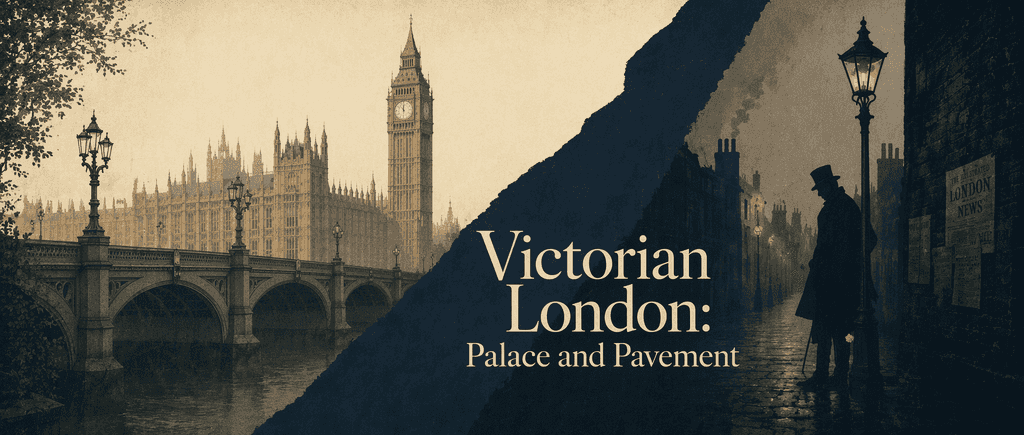
Dickens' portrayal of London itself constitutes social critique. His London is a physical manifestation of social inequality-a labyrinth where wealth and poverty exist in close proximity yet separate worlds. The ease with which Oliver disappears into criminal neighborhoods demonstrates how the vulnerable could vanish without society noticing or caring. The public's indifference when Oliver screams for help during his recapture indicts not just criminals but everyday citizens who ignore suffering.
The character of Nancy embodies Dickens' most radical social argument-that even those society deemed irredeemable could possess moral courage. By portraying a prostitute as morally superior to respectable characters, Dickens challenged Victorian sexual morality that condemned "fallen women" as beyond redemption. Nancy's declaration that she cannot escape her life-"I am chained to my old life"-recognizes social realities that moralists ignored: how poverty and lack of options trapped women in prostitution.
Through his writing style, Dickens makes these critiques accessible to readers across social classes. His use of humor-particularly in characters like Mr. Grimwig with his repeated threat to "eat my head"-lightens what could otherwise be unbearably grim material. His sentimental scenes, though sometimes criticized by modern readers, created emotional investment that made social arguments more effective. By alternating between comedy, suspense, and pathos, Dickens ensured his social critique reached and moved the widest possible audience.
Kapitel 9
The Enduring Power of Dickens' Narrative Technique
What makes Oliver Twist remain compelling nearly two centuries after publication is not just its social message but Dickens' masterful storytelling techniques. His narrative innovations created a template that continues to influence literature, film, and television today. Understanding these techniques helps explain why Oliver's story continues to resonate with audiences across generations and cultures.
Dickens' use of an omniscient narrator allows him extraordinary flexibility. The narrator sometimes adopts a journalistic distance, reporting events objectively; elsewhere, it becomes passionately involved, directly addressing readers to provoke moral outrage. This shifting perspective creates an intimate relationship with readers, making them active participants rather than passive observers. When the narrator asks, "What have paupers to do with the feelings?" after describing Oliver's hunger, readers are forced to examine their own attitudes toward poverty.
The novel's vivid sensory details create an immersive experience that makes Victorian London tangibly real. Readers can smell the fetid air of Jacob's Island where Sikes dies, hear the cacophony of street vendors, and feel the bitter cold that penetrates Oliver's inadequate clothing. This sensory richness explains why filmmakers from David Lean to Roman Polanski have been drawn to adapting the novel-Dickens' prose already creates cinematic imagery.
Character development through distinctive speech patterns and physical mannerisms was another Dickensian innovation. Each character has unique verbal tics-Fagin's repeated "my dear," Grimwig's "I'll eat my head," the Artful Dodger's precocious slang-that make them instantly recognizable. Physical details like Fagin's "greasy" appearance or Sikes' perpetual scowl externalize internal moral states, creating visual shorthand for character.
Perhaps most significantly, Dickens pioneered the social novel that could simultaneously entertain and advocate for change. By embedding social criticism within a compelling narrative filled with humor, suspense, and sentiment, he created a form that could reach across class boundaries. This technique-making social problems personally affecting through fictional characters-remains a powerful advocacy tool today.
The novel's structure, originally published in monthly installments, created narrative techniques still used in serialized storytelling. Each installment needed to resolve some tensions while creating new ones to maintain reader interest-a formula now familiar from television series. Dickens' cliffhangers, character arcs, and interweaving plotlines established narrative patterns that contemporary storytellers continue to employ.
Kapitel 10
A Legacy of Compassion: Why Oliver Still Matters
Oliver Twist's enduring relevance stems from how it addresses timeless questions about society's responsibility to its most vulnerable members. While specific institutions like workhouses have disappeared, the underlying issues Dickens identified-childhood poverty, institutional callousness, and social inequality-remain pressing concerns worldwide. The novel continues to challenge readers to examine how their own societies treat those without power or voice.
The character of Oliver himself represents a powerful moral argument that transcends his historical context. His ability to maintain innate goodness despite environmental pressures suggests an optimistic view of human nature-that circumstances may shape but need not determine character. This hopeful message, that goodness can survive even the harshest conditions, explains why readers continue to invest emotionally in Oliver's journey.
Dickens' portrayal of childhood as a distinct and valuable phase of life, rather than merely preparation for adulthood, was revolutionary for its time and remains relevant. Oliver's deprivation of normal childhood-play, education, security, affection-is presented as a moral wrong requiring remedy. This perspective helped establish the modern concept of childhood as a protected period deserving special consideration, a principle now enshrined in international human rights conventions.
The novel's exploration of identity-how we become who we are-speaks to universal human concerns. Oliver's discovery of his parentage provides narrative resolution but raises deeper questions about what truly constitutes identity. Is Oliver Twist the workhouse orphan, or Edwin Leeford's son? Does his "true" identity lie in his blood inheritance or his lived experience? These questions about the relationship between origin, environment, and identity continue to resonate in contemporary discussions of nature versus nurture.
Perhaps most importantly, Oliver Twist demonstrates literature's power to create empathy across social boundaries. By making readers care deeply about a workhouse orphan's fate, Dickens bridged the empathy gap that allowed Victorian society to ignore suffering in plain sight. This reminder of fiction's capacity to expand moral imagination-to make us care about those whose experiences differ from our own-may be the novel's most valuable legacy in our increasingly divided world.
When we close the final page of Oliver Twist, we're left with more than just satisfaction at a Victorian orphan's happy ending. We carry forward Dickens' fundamental challenge: to see the Oliver Twists in our own world, to recognize systemic injustice rather than blaming its victims, and to understand that social problems require not just individual charity but collective action. In this sense, Oliver's story remains unfinished-a continuing call to create societies worthy of our children.