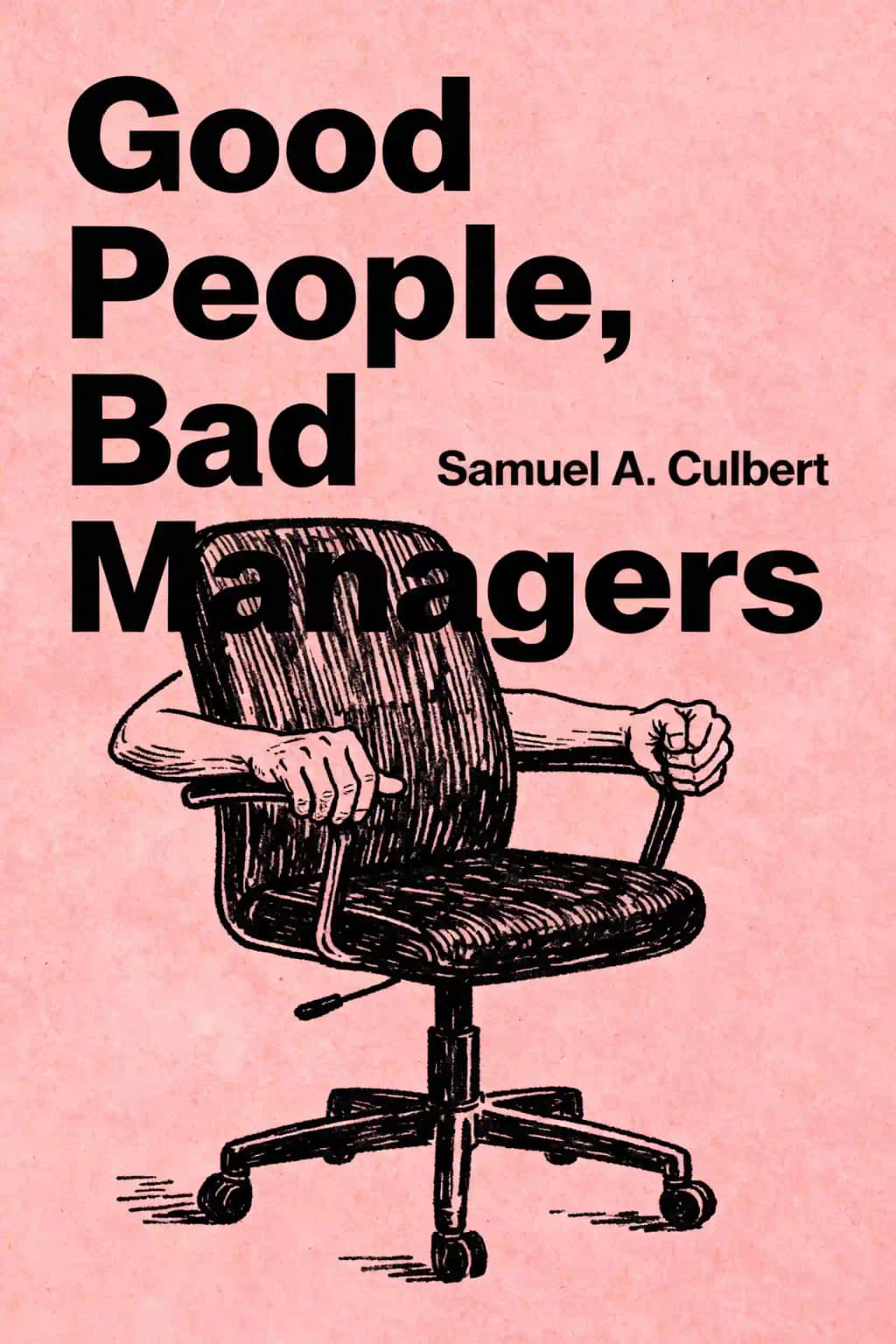
Ever wonder why good people become terrible managers? Samuel Culbert's provocative manifesto exposes how work culture corrupts intentions. Endorsed by Starbucks executives and praised by Marshall Goldsmith, this straight-talking guide reveals the uncomfortable truth about management that nobody dares discuss.
Samuel A. Culbert, author of Good People, Bad Managers: How Work Culture Corrupts Good Intentions, is an organizational behavior expert and award-winning professor at UCLA’s Anderson School of Management.
With a PhD in clinical psychology and a systems engineering background, Culbert combines clinical insight with corporate critique to expose dysfunctional workplace dynamics. His book, a sharp analysis of management culture, argues that even well-intentioned leaders are often constrained by hierarchical systems that prioritize self-interest over team success.
Culbert’s influential works include Get Rid of the Performance Review!—a Wall Street Journal and Harvard Business Review-featured critique of corporate evaluation systems—and Beyond Bullsht*, a guide to fostering candid workplace communication.
A McKinsey Award winner for his Harvard Business Review research, he frequently contributes to major media outlets and advises executives on trust-based leadership. His frameworks are widely cited in MBA programs and corporate training initiatives.
Good People, Bad Managers builds on his 50-year career studying how organizations undermine human potential, offering actionable strategies for cultural reform.
Good People, Bad Managers by Samuel A. Culbert explores why well-intentioned professionals often struggle as managers, blaming organizational cultures that prioritize individual success over teamwork. The book identifies systemic issues like inadequate training and pressure to meet targets, offering solutions to align management practices with employee well-being and productivity.
This book is essential for mid- to senior-level managers, CEOs, and HR professionals seeking to improve workplace culture. It’s also valuable for employees navigating toxic management or business students studying leadership pitfalls.
Culbert’s paradox describes skilled employees promoted to management without training, causing them to adopt counterproductive habits. Their technical expertise and moral intent clash with the demands of leading teams, often resulting in micromanagement or poor communication.
Culbert argues that profit-driven, hierarchical cultures force managers to prioritize short-term goals over team development. Metrics like quarterly targets and individual bonuses discourage collaboration, incentivizing authoritarian or detached leadership styles.
Key recommendations include:
Culbert condemns “success theater” — superficial metrics like meeting quotas that ignore employee morale. He argues conventional practices like annual reviews and rigid hierarchies foster fear, not innovation.
Examples include a tech manager whose focus on coding deadlines eroded team trust, and a retail executive who improved retention by involving employees in scheduling decisions. These illustrate balancing task mastery with human-centric leadership.
He defines it as creating psychologically safe environments where teams critique ideas freely. This requires humility, active listening, and sharing credit — traits often stifled by traditional corporate structures.
Unlike tactical guides, Culbert focuses on systemic fixes rather than individual habits. It complements The Messy Middle’s team-building strategies but targets organizational flaws more directly.
Some reviewers note Culbert oversimplifies corporate resistance to change and underemphasizes small-business challenges. Others praise his cultural analysis but want more onboarding-specific tools.
With remote work and AI reshaping roles, Culbert’s emphasis on adaptability and trust-building remains critical. His framework helps managers navigate hybrid teams and ethical AI integration.
He advocates for immersive mentorship programs and “failure-safe” simulations where managers practice tough conversations without real-world consequences.
Erlebe das Buch durch die Stimme des Autors
Verwandle Wissen in fesselnde, beispielreiche Erkenntnisse
Erfasse Schlüsselideen blitzschnell für effektives Lernen
Genieße das Buch auf unterhaltsame und ansprechende Weise
Bad management is the norm, not the exception.
People aren't surprised by bad management; they expect it!
Managers prioritize personal advancement over meaningful assistance.
Organizations often promote top individual contributors...overlooking crucial leadership capabilities.
Zerlegen Sie die Kernideen von Good People, Bad Managers in leicht verständliche Punkte, um zu verstehen, wie innovative Teams kreieren, zusammenarbeiten und wachsen.
Destillieren Sie Good People, Bad Managers in schnelle Gedächtnisstützen, die die Schlüsselprinzipien von Offenheit, Teamarbeit und kreativer Resilienz hervorheben.

Erleben Sie Good People, Bad Managers durch lebhafte Erzählungen, die Innovationslektionen in unvergessliche und anwendbare Momente verwandeln.
Fragen Sie alles, wählen Sie die Stimme und erschaffen Sie gemeinsam Erkenntnisse, die wirklich bei Ihnen ankommen.

Von Columbia University Alumni in San Francisco entwickelt
"Instead of endless scrolling, I just hit play on BeFreed. It saves me so much time."
"I never knew where to start with nonfiction—BeFreed’s book lists turned into podcasts gave me a clear path."
"Perfect balance between learning and entertainment. Finished ‘Thinking, Fast and Slow’ on my commute this week."
"Crazy how much I learned while walking the dog. BeFreed = small habits → big gains."
"Reading used to feel like a chore. Now it’s just part of my lifestyle."
"Feels effortless compared to reading. I’ve finished 6 books this month already."
"BeFreed turned my guilty doomscrolling into something that feels productive and inspiring."
"BeFreed turned my commute into learning time. 20-min podcasts are perfect for finishing books I never had time for."
"BeFreed replaced my podcast queue. Imagine Spotify for books — that’s it. 🙌"
"It is great for me to learn something from the book without reading it."
"The themed book list podcasts help me connect ideas across authors—like a guided audio journey."
"Makes me feel smarter every time before going to work"
Von Columbia University Alumni in San Francisco entwickelt

Erhalten Sie die Good People, Bad Managers-Zusammenfassung als kostenloses PDF oder EPUB. Drucken Sie es aus oder lesen Sie es jederzeit offline.
Ever wondered why Sunday evenings bring that familiar knot of dread? For millions of workers, it's not just about ending the weekend - it's about returning to workplaces led by well-intentioned but ineffective managers. In "Good People, Bad Managers," Samuel Culbert delivers a provocative wake-up call: bad management is the norm, not the exception. What makes his perspective so compelling is that he doesn't blame individual managers but exposes the systemic forces that transform good people into bad managers. The most alarming revelation? People aren't surprised by bad management - they expect it! Employees arrive wanting to feel valued and grow professionally but instead find themselves putting as much energy into getting their boss to recognize their contributions as into the work itself. The root cause lies in American work culture, which leads managers to implement practices that contradict basic facts of human nature. They become so consumed with their own advancement that they lack capacity to focus on others' needs.