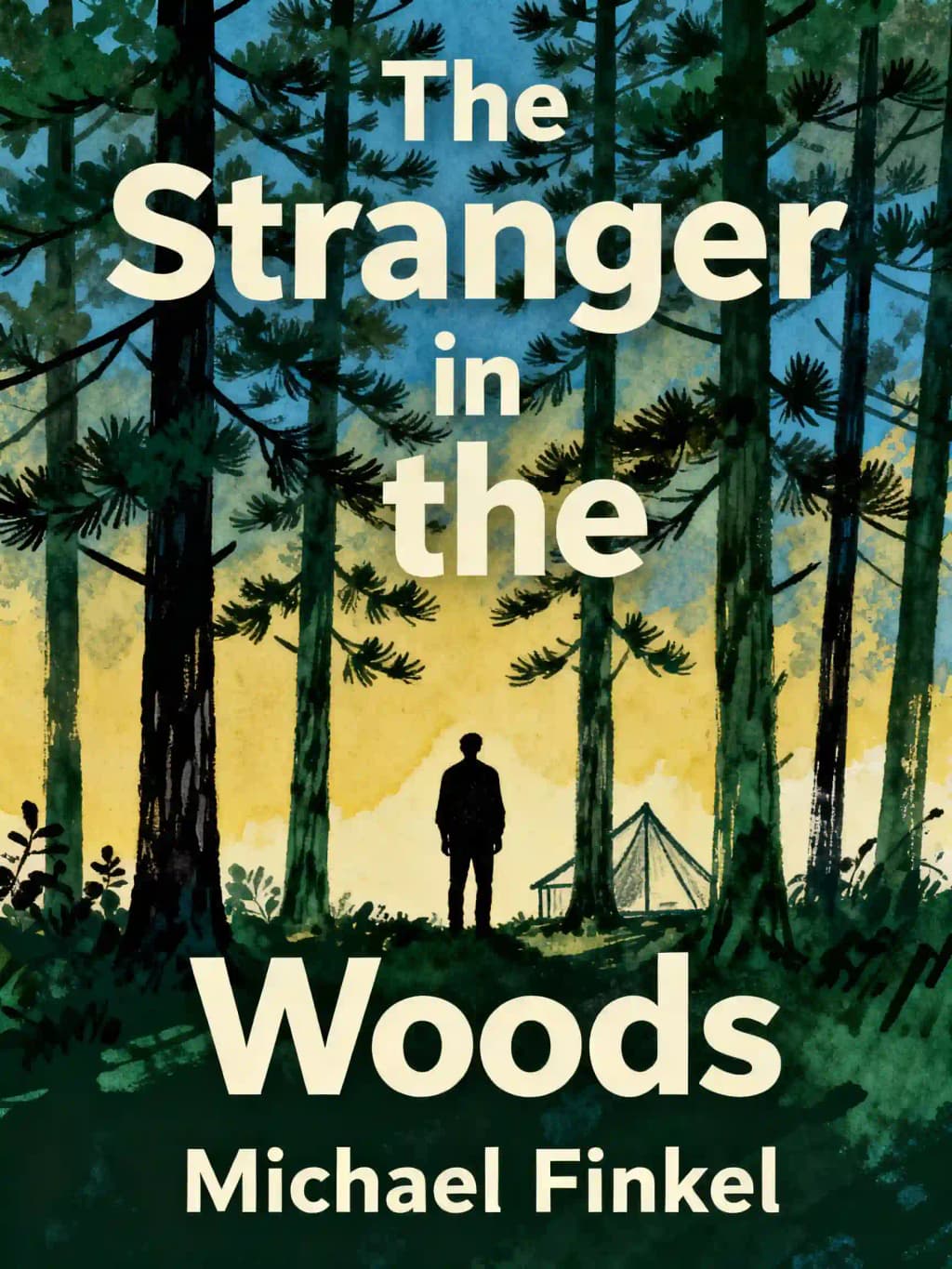
The Stranger in the Woods
Overview of The Stranger in the Woods
For 27 years, Christopher Knight vanished into Maine's wilderness, becoming America's last true hermit. This extraordinary true story, with 34,000+ Goodreads ratings, explores solitude's power and society's pull. What would drive someone to abandon humanity completely - and could you?

Key Themes in The Stranger in the Woods
- radical solitude
- extreme survivalism
- social withdrawal
- hermit lifestyle
- ethical isolation
Quotes from The Stranger in the Woods
I am not crazy, he insisted. I am simply not… domesticated.
Knight was not interested in acquiring things.
He was, in effect, a missing person who did not want to be found.
He said he never felt lonely. He enjoyed his own company.
He had no mental-health issues, no drug or alcohol problems, no family trauma.
Characters in The Stranger in the Woods
- Christopher KnightThe North Pond Hermit who lived alone for 27 years
- Michael FinkelThe author who explores Knight's life and exile
About the Author
About the Author of The Stranger in the Woods
Michael Finkel, bestselling author of The Stranger in the Woods: The Extraordinary Story of the Last True Hermit, is a journalist renowned for immersive investigative storytelling and gripping narratives rooted in true crime and human psychology.
A former writer for The New York Times Magazine and contributor to National Geographic, GQ, and The Atlantic, Finkel’s work explores themes of isolation, identity, and the extremes of human behavior. His debut book, True Story: Murder, Memoir, Mea Culpa—a memoir detailing his surreal relationship with a murderer who impersonated him—was adapted into a 2015 film starring Jonah Hill and James Franco, produced by Brad Pitt’s Plan B Entertainment.
With reporting experience spanning six continents, Finkel’s adventures include crossing the Sahara on a truck and skiing Mount Kilimanjaro. The Stranger in the Woods became a New York Times bestseller, praised for its empathetic portrayal of solitude, and solidified his reputation for transforming obscure, real-life mysteries into cultural touchstones. He lives in Montana and southern France.
Download Summary of The Stranger in the Woods
Get the The Stranger in the Woods summary as a free PDF or EPUB. Print it or read offline anytime.
FAQs About This Book
The Stranger in the Woods chronicles Christopher Knight, who lived alone in Maine’s wilderness for 27 years, surviving by stealing supplies from nearby cabins. Journalist Michael Finkel explores Knight’s motivations, survival tactics, and the ethical dilemmas of his isolation. The book blends biography, psychological analysis, and themes of solitude, offering insights into a modern hermit’s extraordinary life.
True crime enthusiasts, psychology buffs, and readers fascinated by human resilience will find this book compelling. It appeals to those interested in survival stories, introverts exploring solitude, and fans of nonfiction that examines societal norms. Outdoor adventurers and mental health advocates may also value its exploration of isolation.
Yes, for its gripping narrative and unique subject matter. Finkel’s vivid storytelling captures Knight’s enigmatic life, though some critics note repetitive passages and limited depth due to Knight’s reticence. The book’s blend of true crime, psychology, and nature writing makes it a standout read despite its flaws.
Knight survived by stealing food, clothing, and gear from seasonal cabins, meticulously timing raids to avoid detection. He built a hidden campsite, endured harsh winters with layered clothing and stolen propane heaters, and passed time reading stolen books. His strict routine and minimalistic habits sustained him for decades.
Yes. Finkel examines Knight’s potential Asperger’s traits, social anxiety, and possible schizophrenia, citing psychologists’ analyses. The book debates whether Knight’s isolation stemmed from mental illness or a deliberate rejection of societal norms, offering nuanced perspectives on mental health and solitude.
Knight pleaded guilty to theft, receiving probation, community service, and counseling. He initially complied but later cut contact with Finkel and contemplated suicide. Despite briefly reintegrating, he remained estranged from society, symbolizing the tension between freedom and conformity.
Michael Finkel is a disgraced New York Times journalist turned bestselling author. Known for True Story (adapted into a film), he specializes in profiling complex figures. His controversial past—including fabricating a story—adds layers to his exploration of Knight’s ethics and isolation.
The book grapples with Knight’s theft vs. survival needs and Finkel’s journalistic ethics in exploiting his story. It questions societal judgments of hermits and the moral ambiguity of “harmless” crimes, inviting readers to reconsider boundaries between freedom and responsibility.
Unlike typical true crime, it focuses less on violence and more on solitude’s psychological toll. Similar to Into the Wild, it examines societal rejection but contrasts starkly with Knight’s prolonged, deliberate isolation and ethical complexities.
Critics note Knight’s limited dialogue leaves gaps in his psyche, and Finkel’s speculative passages feel repetitive. Some argue the narrative romanticizes theft, while others wanted deeper analysis of mental health or survival techniques.
Knight’s “Lady of the Woods” symbolizes death, a coping mechanism for his isolation. This metaphorical relationship highlights his psychological struggle and acceptance of mortality, offering a poignant lens into his mental state during extreme solitude.
While the book inspired widespread media coverage, no major documentaries exist as of 2025. Finkel’s work remains the primary source, though Knight’s story has been featured in podcasts and articles exploring hermits and survival.





