Proust and the squid: The story and science of the reading brain book cover

Proust and the squid

The story and science of the reading brain

Maryanne Wolf
3.85 (8078 Reviews)

Overview of Proust and the squid

Discover how your brain rewires itself to read, in this groundbreaking exploration of neuroscience and literature. Wolf reveals the shocking 32-million-word gap between privileged and underprivileged children by age 5, forever changing how we understand literacy in the digital age.

Key Themes in Proust and the squid

  • neural plasticity
  • reading brain evolution
  • dyslexia research
  • alphabetic literacy
  • digital reading transition

Quotes from Proust and the squid

  • Reading isn't just about receiving information; it's about going beyond what's written.

  • Reading represents one of humanity's most remarkable cognitive achievements.

  • The brain was never designed for it, yet somehow we've managed to transform visual symbols into meaning.

  • The development of the alphabet represents one of humanity's most profound intellectual achievements.

  • Modern neuroimaging studies have revealed that learning to read actually reshapes the brain's anatomical structure.

Characters in Proust and the squid

  • Maryanne WolfAuthor and neuroscientist studying the brain
  • Marcel ProustFrench author whose views on reading frame the book
  • Stanislas DehaeneNeuroscientist who identified the brain's letterbox

About the Author

About the Author of Proust and the squid

Maryanne Wolf, acclaimed neuroscientist and literacy advocate, is the author of Proust and the Squid: The Story and Science of the Reading Brain, a groundbreaking exploration of how literacy transforms the human brain.

A professor at Tufts University and founding director of UCLA’s Center for Dyslexia, Diverse Learners, and Social Justice, Wolf merges decades of cognitive research with insights into dyslexia intervention.

Her work bridges neuroscience, education, and classics, examining reading’s evolution from ancient texts to digital screens. A frequent speaker on PBS programs and at institutions like the Vatican’s Pontifical Academy of Sciences, Wolf also authored Reader, Come Home and Tales of Literacy for the 21st Century, further dissecting how technology impacts cognition.

Proust and the Squid has been translated into 15 languages, cementing its status as essential reading for educators and neuropsychology enthusiasts.

Download Summary of Proust and the squid

Get the Proust and the squid summary as a free PDF or EPUB. Print it or read offline anytime.

FAQs About This Book

Proust and the Squid by Maryanne Wolf explores how the human brain evolved to read, blending neuroscience, history, and education. It examines reading’s cognitive development in children, dyslexia’s unique challenges, and how digital culture impacts deep reading. Wolf argues that reading reshapes neural pathways, fostering critical thinking and empathy, but warns of fragmented attention in screen-heavy societies.

Educators, parents, neuroscience enthusiasts, and anyone interested in literacy or dyslexia will benefit. Wolf’s insights help teachers design better reading instruction and empower parents to support struggling readers. It’s also valuable for those concerned about digital media’s effects on focus and comprehension.

Yes—it offers a groundbreaking look at reading’s neuroscience and cultural significance. Wolf’s analysis of how digital habits alter cognition is particularly timely. The book balances academic rigor with accessibility, making it essential for understanding literacy in the 21st century.

Reading triggers neuroplasticity, creating new neural networks that integrate visual, linguistic, and cognitive processes. Wolf explains that literacy restructures the brain over time, enhancing abilities like abstract reasoning and empathy. Dyslexic brains adapt differently, often excelling in creative problem-solving.

Proust represents deep, immersive reading and its capacity to expand imagination. The squid, with its complex communication systems, symbolizes alternative forms of intelligence that humans cannot decode. Together, they highlight reading’s uniqueness in human evolution.

Wolf frames dyslexia as a brain variation with both challenges and strengths. Her research shows dyslexic individuals often excel in big-picture thinking and innovation. She advocates for teaching methods that leverage these strengths while addressing reading difficulties.

Wolf argues that skimming digital texts reduces deep comprehension and critical analysis. She proposes a “biliterate brain” approach—training people to switch between screen-based efficiency and slower, reflective print reading to preserve analytical skills.

The title itself is a metaphor: Proust’s literary depth contrasts with the squid’s non-linguistic intelligence. Wolf also uses the “reading brain” as a dynamic organ shaped by cultural tools, evolving from ancient scribes to modern screens.

Wolf warns that constant digital distraction erodes attention spans, making sustained focus on complex texts harder. This threatens democratic societies reliant on informed, critical citizens.

It lays the foundation for her follow-up Reader, Come Home, which delves deeper into digital reading’s effects. Both books advocate balancing technological benefits with the preservation of deep reading.

Wolf encourages explicit instruction in phonological skills and comprehension strategies. She also recommends balancing digital tools with print-based reading to nurture analytical thinking.

A cognitive neuroscientist and dyslexia expert, Wolf directs UCLA’s Center for Dyslexia. Her 40+ years of research inform interventions like RAVE-O, a program for struggling readers.

As digital media dominates, Wolf’s work underscores the urgency of cultivating intentional reading practices. The book equips readers to navigate technological changes without losing critical literacy skills.

Explore Your Way of Learning

Proust and the squid isn't just a book — it's a masterclass in Science. To help you absorb its lessons in the way that works best for you, we offer five unique learning modes. Whether you're a deep thinker, a fast learner, or a story lover, there's a mode designed to fit your style.

Quick Summary Mode

Read or listen to Proust and the squid Summary in 9 Minutes

Break down key ideas from Proust and the squid into bite-sized takeaways to understand how innovative teams create, collaborate, and grow.

play
00:00
00:00

Fun Mode

Proust and the squid Lessons Told Through 25-Min Stories

Experience Proust and the squid through vivid storytelling that turns innovation lessons into moments you'll remember and apply.

play
00:00
00:00

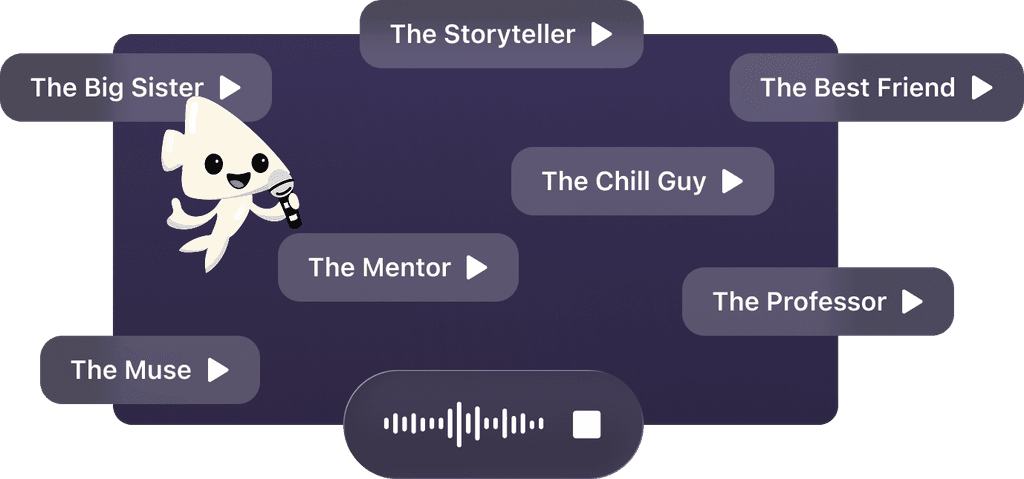
Personalize Mode

Experience Proust and the squid in your own learning style

Ask anything, choose your learning style, and co-create insights that truly resonate with you.

Personalize Mode

From Columbia University alumni built in San Francisco

BeFreed Brings Together A Global Community Of 1,000,000 Curious Minds

"Instead of endless scrolling, I just hit play on BeFreed. It saves me so much time."

@Moemenn
platform
star
star
star
star
star

"I never knew where to start with nonfiction—BeFreed’s book lists turned into podcasts gave me a clear path."

@Chloe, Solo founder, LA
platform
comments
12
likes
117

"Perfect balance between learning and entertainment. Finished ‘Thinking, Fast and Slow’ on my commute this week."

@Raaaaaachelw
platform
star
star
star
star
star

"Crazy how much I learned while walking the dog. BeFreed = small habits → big gains."

@Matt, YC alum
platform
comments
12
likes
108

"Reading used to feel like a chore. Now it’s just part of my lifestyle."

@Erin, Investment Banking Associate , NYC
platform
comments
254
likes
17

"Feels effortless compared to reading. I’ve finished 6 books this month already."

@djmikemoore
platform
star
star
star
star
star

"BeFreed turned my guilty doomscrolling into something that feels productive and inspiring."

@Pitiful
platform
comments
96
likes
4.5K

"BeFreed turned my commute into learning time. 20-min podcasts are perfect for finishing books I never had time for."

@SofiaP
platform
star
star
star
star
star

"BeFreed replaced my podcast queue. Imagine Spotify for books — that’s it. 🙌"

@Jaded_Falcon
platform
comments
201
thumbsUp
16

"It is great for me to learn something from the book without reading it."

@OojasSalunke
platform
star
star
star
star
star

"The themed book list podcasts help me connect ideas across authors—like a guided audio journey."

@Leo, Law Student, UPenn
platform
comments
37
likes
483

"Makes me feel smarter every time before going to work"

@Cashflowbubu
platform
star
star
star
star
star

"Instead of endless scrolling, I just hit play on BeFreed. It saves me so much time."

@Moemenn
platform
star
star
star
star
star

"I never knew where to start with nonfiction—BeFreed’s book lists turned into podcasts gave me a clear path."

@Chloe, Solo founder, LA
platform
comments
12
likes
117

"Perfect balance between learning and entertainment. Finished ‘Thinking, Fast and Slow’ on my commute this week."

@Raaaaaachelw
platform
star
star
star
star
star

"Crazy how much I learned while walking the dog. BeFreed = small habits → big gains."

@Matt, YC alum
platform
comments
12
likes
108

"Reading used to feel like a chore. Now it’s just part of my lifestyle."

@Erin, Investment Banking Associate , NYC
platform
comments
254
likes
17

"Feels effortless compared to reading. I’ve finished 6 books this month already."

@djmikemoore
platform
star
star
star
star
star

"BeFreed turned my guilty doomscrolling into something that feels productive and inspiring."

@Pitiful
platform
comments
96
likes
4.5K

"BeFreed turned my commute into learning time. 20-min podcasts are perfect for finishing books I never had time for."

@SofiaP
platform
star
star
star
star
star

"BeFreed replaced my podcast queue. Imagine Spotify for books — that’s it. 🙌"

@Jaded_Falcon
platform
comments
201
thumbsUp
16

"It is great for me to learn something from the book without reading it."

@OojasSalunke
platform
star
star
star
star
star

"The themed book list podcasts help me connect ideas across authors—like a guided audio journey."

@Leo, Law Student, UPenn
platform
comments
37
likes
483

"Makes me feel smarter every time before going to work"

@Cashflowbubu
platform
star
star
star
star
star

"Instead of endless scrolling, I just hit play on BeFreed. It saves me so much time."

@Moemenn
platform
star
star
star
star
star

"I never knew where to start with nonfiction—BeFreed’s book lists turned into podcasts gave me a clear path."

@Chloe, Solo founder, LA
platform
comments
12
likes
117

"Perfect balance between learning and entertainment. Finished ‘Thinking, Fast and Slow’ on my commute this week."

@Raaaaaachelw
platform
star
star
star
star
star

"Crazy how much I learned while walking the dog. BeFreed = small habits → big gains."

@Matt, YC alum
platform
comments
12
likes
108

"Reading used to feel like a chore. Now it’s just part of my lifestyle."

@Erin, Investment Banking Associate , NYC
platform
comments
254
likes
17

"Feels effortless compared to reading. I’ve finished 6 books this month already."

@djmikemoore
platform
star
star
star
star
star

"BeFreed turned my guilty doomscrolling into something that feels productive and inspiring."

@Pitiful
platform
comments
96
likes
4.5K

"BeFreed turned my commute into learning time. 20-min podcasts are perfect for finishing books I never had time for."

@SofiaP
platform
star
star
star
star
star

"BeFreed replaced my podcast queue. Imagine Spotify for books — that’s it. 🙌"

@Jaded_Falcon
platform
comments
201
thumbsUp
16

"It is great for me to learn something from the book without reading it."

@OojasSalunke
platform
star
star
star
star
star

"The themed book list podcasts help me connect ideas across authors—like a guided audio journey."

@Leo, Law Student, UPenn
platform
comments
37
likes
483

"Makes me feel smarter every time before going to work"

@Cashflowbubu
platform
star
star
star
star
star

See More Stories?

How people are talking about BeFreed across the web
1.5K Ratings4.7
Start your learning journey, now