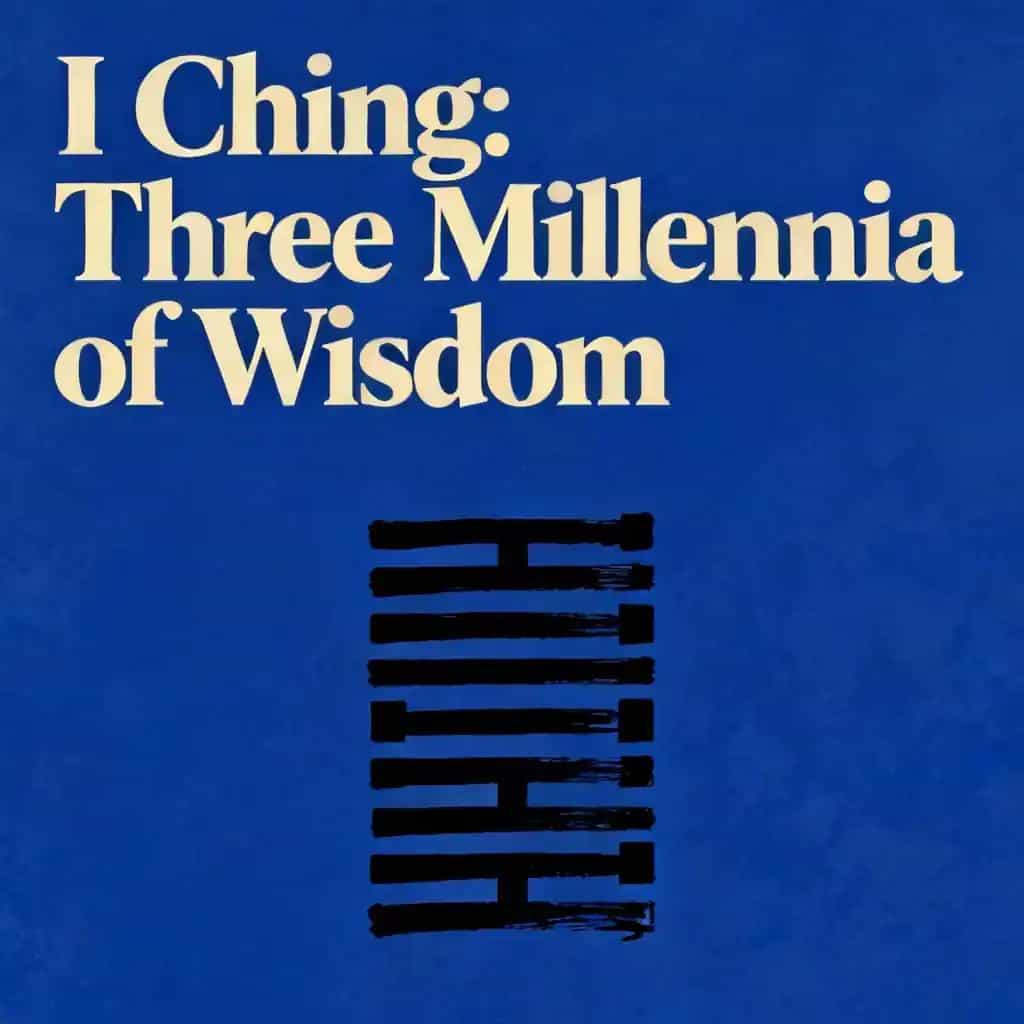
Living I Ching: Using Ancient Chinese Wisdom to Shape Your Life

Overview of Living I Ching
Deng Ming-Dao's "Living I Ching" transforms ancient Chinese wisdom with breathtaking personal watercolor paintings and accessible language. What if 3,000 years of philosophy could reshape your modern life? Translated into fifteen languages, this artist-philosopher's approach makes timeless divination finally feel... alive.
- Ming-Dao Deng presents the I Ching as a manual for living.
- The Living I Ching translates hexagrams into modern decision-making tools.
- Change is inevitable and adapting to it creates personal harmony.
- Each of the sixty-four hexagrams represents unique human experiences.
- Balance yin and yang energies to achieve life harmony and peace.
- The Eight Circles of Change provide structured understanding of transformation.
- Divination with coins or yarrow stalks reveals inner wisdom and guidance.
- Inner confidence and moral integrity define effective leadership in life.
- Meditation cultivates stillness necessary for understanding I Ching teachings.
- All endings are transitions in the cyclical nature of existence.
- The Five Phases connect with hexagrams for holistic personal growth.
- Rituals reinforce cultural wisdom and facilitate personal transformation effectively.
About the Author of Living I Ching
Ming-Dao Deng is a Chinese American author, Taoist philosopher, and martial artist best known for The Living I Ching: Using Ancient Chinese Wisdom to Shape Your Life, a comprehensive guide that transforms the ancient divination text into a practical spiritual manual. Born in 1954 in San Francisco, Deng brings over four decades of expertise in Taoist philosophy, having studied qigong, meditation, and internal martial arts with Taoist master Kwan Saihung for thirteen years.
Deng is the author of eight books exploring Taoist wisdom and practice, including the internationally acclaimed 365 Tao: Daily Meditations, Chronicles of Tao, Everyday Tao, and Scholar Warrior. Beyond writing, he is an award-winning graphic designer whose artwork appears in prestigious collections, including the Brooklyn Museum.
His work seamlessly blends ancient Chinese philosophy with contemporary application, making timeless wisdom accessible to modern readers. His books have been translated into fifteen languages and have established him as a leading voice in Taoist thought since 1983, helping readers worldwide integrate Eastern philosophy into daily life.
FAQs About Living I Ching
What is The Living I Ching by Deng Ming-Dao about?
The Living I Ching is a modern translation of the ancient Chinese Book of Changes that combines divination, Taoist philosophy, and practical wisdom for navigating life's transitions. Deng Ming-Dao presents the I Ching not merely as a fortune-telling tool but as a comprehensive manual for understanding change, balancing yin and yang forces, and cultivating inner harmony. The book includes hexagram interpretations, meditation practices, and watercolor artwork to make three thousand years of Chinese wisdom accessible for contemporary readers.
Who is Deng Ming-Dao and why did he write The Living I Ching?
Deng Ming-Dao is a prolific author and leading authority on Taoist practice and philosophy, best known for his bestselling works like 365 Tao and Chronicles of Tao. He wrote The Living I Ching because he was dissatisfied with existing translations that either followed tradition blindly or offered superficial fortune-cookie platitudes. Ming-Dao conceived this book as a pilgrimage to help readers hear the Changes speak directly, blending scholarly depth with accessible, engaging language that recovers the true wisdom of this ancient classic.
Who should read The Living I Ching?
The Living I Ching is ideal for spiritual seekers interested in Taoist philosophy, individuals navigating major life transitions, and anyone looking for practical wisdom on embracing change. The book appeals to both I Ching beginners seeking an accessible introduction and experienced practitioners wanting deeper philosophical understanding beyond traditional translations. It's particularly valuable for those interested in meditation, self-cultivation, and applying ancient Eastern wisdom to modern decision-making challenges in career, relationships, and personal growth.
Is The Living I Ching worth reading?
The Living I Ching is worth reading for anyone seeking a balanced, holistic approach to the I Ching that goes beyond simple divination. Unlike dense scholarly translations or superficial interpretations, Deng Ming-Dao's version offers engaging poetry, practical meditation techniques, and clear philosophical explanations that make ancient wisdom immediately applicable to modern life. Reviewers praise its clarity, respectful treatment of tradition, and ability to illuminate the I Ching's deeper meanings, making it a worthy addition to any spiritual library.
What are the main concepts in The Living I Ching?
The Living I Ching centers on several core concepts: the inevitability of change and cyclical transformation, the balance of yin and yang as opposing yet complementary forces, and the importance of harmonizing with natural rhythms. The book emphasizes cultivating inner confidence and moral integrity, practicing meditation for clarity and stillness, and understanding hexagrams as symbolic representations of life situations. Ming-Dao also explores the interconnection between the I Ching and the Five Phases (Wood, Fire, Earth, Metal, Water) to provide a comprehensive framework for personal growth.
How does The Living I Ching explain yin and yang?
The Living I Ching presents yin and yang as impersonal forces that drive all change in the universe, representing complementary opposites like darkness and light, receptive and active, stillness and movement. Understanding and integrating these opposing forces is fundamental to achieving harmony and balance in life. The book teaches that wisdom comes from recognizing how yin and yang interact dynamically within hexagrams, and that mastering change requires accepting both forces rather than favoring one over the other.
How do you use The Living I Ching for divination?
The Living I Ching outlines a simple divination method using three coins or traditional yarrow stalks to create hexagrams through seemingly random combinations of heads and tails or odd and even numbers. Each toss produces either a solid line (yang) or broken line (yin), and six tosses create a complete hexagram. The resulting hexagram provides guidance for decision-making on topics like career, relationships, and personal challenges. The divination process encourages personal reflection and meditation to connect with inner wisdom and interpret the hexagram's meaning.
What are hexagrams in The Living I Ching and what do they represent?
Hexagrams are six-line symbols composed of broken and solid lines that represent 64 unique situations or states of being in The Living I Ching. Each hexagram encapsulates specific human experiences, natural phenomena, and archetypal life patterns observed over three thousand years of Chinese wisdom. They illustrate dynamic interactions between yin and yang forces, providing insights and guidance for navigating challenges. Hexagrams emphasize life's cyclical nature and help individuals understand where they are in the great cycles of change and transformation.
What are the Eight Circles of Change in The Living I Ching?
The Eight Circles of Change in The Living I Ching represent a structured learning approach to understanding the I Ching's philosophy, starting from the origin of change itself. Each circle addresses different themes including yin and yang principles, the Four Images, the development of hexagrams, and their interpretations. Together, these circles provide a holistic perspective on change and transformation, emphasizing the interconnectedness of all life events. This framework helps readers progressively deepen their understanding of how change operates in both nature and human experience.
How does The Living I Ching approach meditation and self-cultivation?
The Living I Ching emphasizes meditation as essential for achieving inner stillness, clarity, and self-understanding needed to apply I Ching wisdom effectively. Deng Ming-Dao provides practical meditation techniques that readers can incorporate into daily routines, linking these practices directly to hexagram interpretations and Taoist philosophy. The book teaches that meditation facilitates greater insight into the Changes, allowing individuals to internalize teachings and navigate life transitions with composure. Self-cultivation involves developing moral integrity, patience, and inner confidence through regular contemplative practice.
What does The Living I Ching teach about leadership and personal growth?
The Living I Ching teaches that effective leadership stems from cultivating a calm, composed character that inspires trust and respect in others. Leaders must develop insight and adaptability to remain attuned to changing dynamics and their followers' needs, while maintaining moral integrity through honest and fair action. The book emphasizes self-restraint during hardship, learning from wise mentors, and recognizing that personal growth comes from embracing change rather than resisting it. All endings are merely transitions, and the noble person navigates challenges by harmonizing with natural cycles.
How is The Living I Ching different from other I Ching translations?
The Living I Ching distinguishes itself from traditional translations like Wilhelm-Baynes by offering accessible, engaging language without dense scholarly commentary or fortune-cookie platitudes. Deng Ming-Dao blends divination practice with meditation, philosophy, history, and original watercolor artwork to create a holistic experience. Unlike interpretations that simply follow tradition or question without engagement, this version asks what the Changes truly mean and how readers can hear it speak directly. The book balances respect for ancient wisdom with modern, practical application for contemporary life challenges.
Feel the book through the author's voice
Turn knowledge into engaging, example-rich insights
Capture key ideas in a flash for fast learning
Enjoy the book in a fun and engaging way
Characters in Living I Ching
- Ming-Dao DengAuthor and teacher of Taoist philosophy
- Bob DylanMusician inspired by the I Ching's pages
- Philip K. DickWriter who drew inspiration from the text
Key Themes in Living I Ching
- yin yang balance
- hexagram symbolic interpretation
- navigating life transitions
- taoist cosmic patterns
- natural cycle alignment
Quotes from Living I Ching
The I Ching doesn't merely predict the future-it reveals the underlying patterns.
Nothing remains static-every peak inevitably leads to decline.
Yin contains a seed of yang, and yang contains a seed of yin.
The symbols adapt to each reader's situation.
By surrendering to chance, we temporarily suspend our ego's control.
Explore Your Way of Learning
 Quick Summary Mode
Read or listen to Living I Ching Summary in 9 Minutes
Break down key ideas from Living I Ching into bite-sized takeaways to understand how innovative teams create, collaborate, and grow.

 Fun Mode
Living I Ching Lessons Told Through 19-Min Stories
Experience Living I Ching through vivid storytelling that turns innovation lessons into moments you'll remember and apply.
 Personalize Mode
Experience Living I Ching in your own learning style
Ask anything, choose your learning style, and co-create insights that truly resonate with you.

From Columbia University alumni built in San Francisco
"Instead of endless scrolling, I just hit play on BeFreed. It saves me so much time."


"I never knew where to start with nonfiction—BeFreed’s book lists turned into podcasts gave me a clear path."


"Perfect balance between learning and entertainment. Finished ‘Thinking, Fast and Slow’ on my commute this week."
"Crazy how much I learned while walking the dog. BeFreed = small habits → big gains."
"Reading used to feel like a chore. Now it’s just part of my lifestyle."

"Feels effortless compared to reading. I’ve finished 6 books this month already."
"BeFreed turned my guilty doomscrolling into something that feels productive and inspiring."

"BeFreed turned my commute into learning time. 20-min podcasts are perfect for finishing books I never had time for."
"BeFreed replaced my podcast queue. Imagine Spotify for books — that’s it. 🙌"

"It is great for me to learn something from the book without reading it."
"The themed book list podcasts help me connect ideas across authors—like a guided audio journey."
"Makes me feel smarter every time before going to work"
From Columbia University alumni built in San Francisco
"Instead of endless scrolling, I just hit play on BeFreed. It saves me so much time."
"I never knew where to start with nonfiction—BeFreed’s book lists turned into podcasts gave me a clear path."
"Perfect balance between learning and entertainment. Finished ‘Thinking, Fast and Slow’ on my commute this week."
"Crazy how much I learned while walking the dog. BeFreed = small habits → big gains."
"Reading used to feel like a chore. Now it’s just part of my lifestyle."
"Feels effortless compared to reading. I’ve finished 6 books this month already."
"BeFreed turned my guilty doomscrolling into something that feels productive and inspiring."
"BeFreed turned my commute into learning time. 20-min podcasts are perfect for finishing books I never had time for."
"BeFreed replaced my podcast queue. Imagine Spotify for books — that’s it. 🙌"
"It is great for me to learn something from the book without reading it."
"The themed book list podcasts help me connect ideas across authors—like a guided audio journey."
"Makes me feel smarter every time before going to work"
"Instead of endless scrolling, I just hit play on BeFreed. It saves me so much time."
"I never knew where to start with nonfiction—BeFreed’s book lists turned into podcasts gave me a clear path."
"Perfect balance between learning and entertainment. Finished ‘Thinking, Fast and Slow’ on my commute this week."
"Crazy how much I learned while walking the dog. BeFreed = small habits → big gains."
"Reading used to feel like a chore. Now it’s just part of my lifestyle."
"Feels effortless compared to reading. I’ve finished 6 books this month already."
"BeFreed turned my guilty doomscrolling into something that feels productive and inspiring."
"BeFreed turned my commute into learning time. 20-min podcasts are perfect for finishing books I never had time for."
"BeFreed replaced my podcast queue. Imagine Spotify for books — that’s it. 🙌"
"It is great for me to learn something from the book without reading it."
"The themed book list podcasts help me connect ideas across authors—like a guided audio journey."
"Makes me feel smarter every time before going to work"
"Instead of endless scrolling, I just hit play on BeFreed. It saves me so much time."
"I never knew where to start with nonfiction—BeFreed’s book lists turned into podcasts gave me a clear path."
"Perfect balance between learning and entertainment. Finished ‘Thinking, Fast and Slow’ on my commute this week."
"Crazy how much I learned while walking the dog. BeFreed = small habits → big gains."
"Reading used to feel like a chore. Now it’s just part of my lifestyle."
"Feels effortless compared to reading. I’ve finished 6 books this month already."
"BeFreed turned my guilty doomscrolling into something that feels productive and inspiring."
"BeFreed turned my commute into learning time. 20-min podcasts are perfect for finishing books I never had time for."
"BeFreed replaced my podcast queue. Imagine Spotify for books — that’s it. 🙌"
"It is great for me to learn something from the book without reading it."
"The themed book list podcasts help me connect ideas across authors—like a guided audio journey."
"Makes me feel smarter every time before going to work"

Download Summary of Living I Ching
Get the Living I Ching summary as a free PDF or EPUB. Print it or read offline anytime.