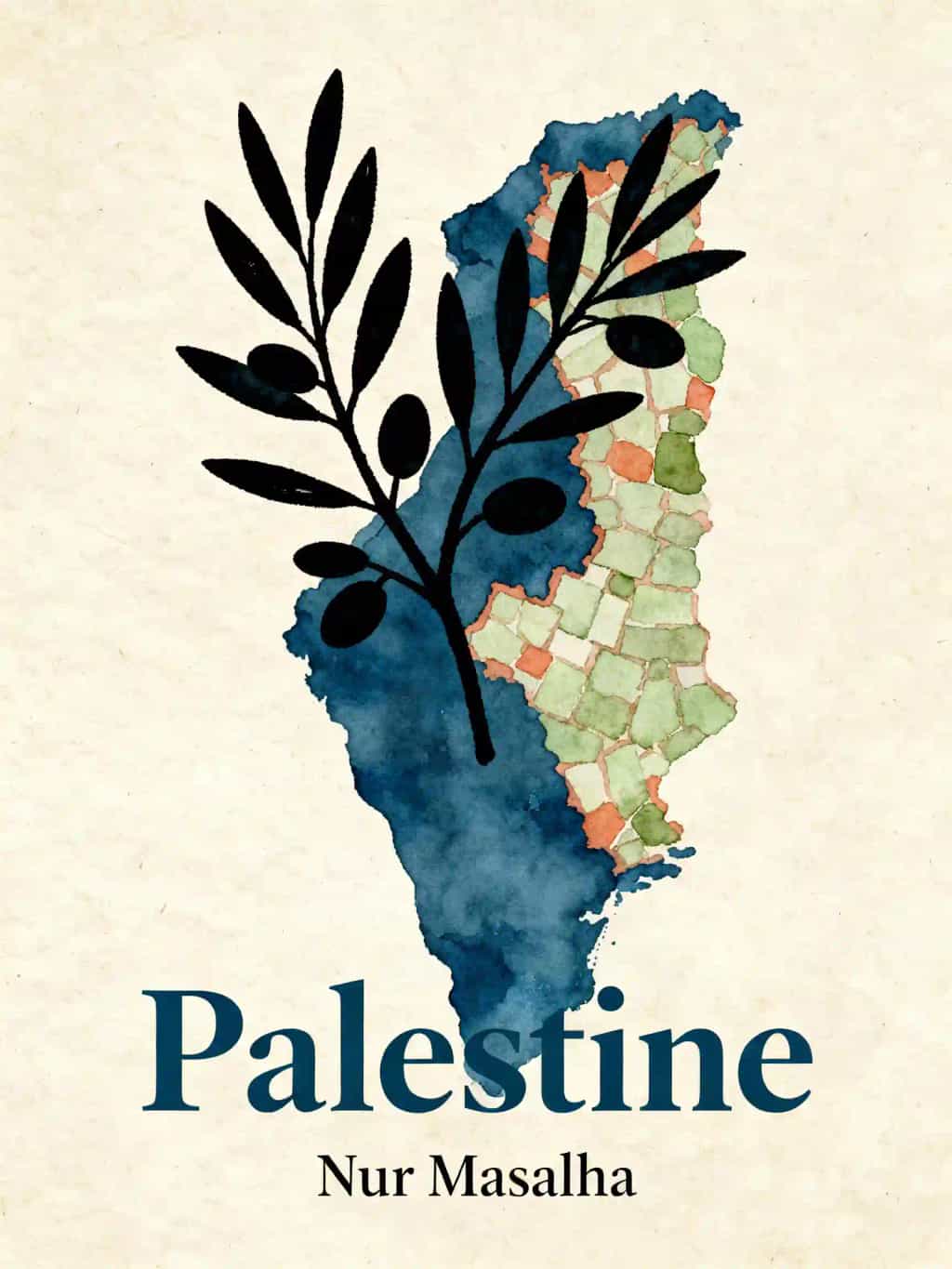
Overview of Palestine
Masalha's groundbreaking history shatters myths by weaving architecture, epigraphy, and cartography to reveal Palestine's 4,000-year multicultural heritage. Praised by scholars yet controversial, it challenges dominant narratives while asking: whose stories get erased when history is colonized?
- Palestine’s identity spans millennia, rooted in ancient multicultural civilizations beyond biblical narratives
- “Cities of Learning” in Byzantine Palestine laid foundations for cosmopolitan education and civil society
- Khalil Sakakini’s “philosophy of joy” revolutionized early 20th-century Palestinian pedagogy and student empowerment
- Women’s education flourished in Palestinian madrasas during Ayyubid and Mamluk rule (1187–1517)
- Ancient Kingdom of Israel is a literary myth, not historical fact, per Masalha’s analysis
- Palestinian-Crusader cultural exchange introduced arabesque art and technology to medieval Europe
- British colonialism and Zionism systematically erased Palestine’s diverse heritage to justify displacement
- Karima ‘Abboud pioneered Arab photojournalism, documenting Palestinian life before 1948 Nakba
- Khalil Beidas bridged Russian and Arabic literature through translations of Tolstoy and Dostoevsky
- Plan Dalet (1948) formalized Zionist ethnic cleansing via population expulsion and village destruction
- Post-1908 Ottoman reforms triggered Palestine’s newspaper boom and intellectual renaissance
- Masalha redefines indigeneity: Palestinians descend from ancient Canaanites, not 7th-century Arabs
About the Author of Palestine
Nur ad-Din Masalha, author of Palestine: A Four Thousand Year History, is a renowned Palestinian historian and scholar specializing in decolonizing Middle Eastern historiography.
A former Director of the Centre for Religion and History at St. Mary’s University and Professorial Research Associate at SOAS University of London, Masalha combines rigorous academic research with a focus on Palestinian cultural identity, the Nakba, and critiques of Zionist narratives.
His works, including The Palestine Nakba: Decolonising History and Expulsion of the Palestinians, redefine Palestine’s multicultural legacy through ancient texts, archaeology, and indigenous perspectives. Masalha serves as editor of the Journal of Holy Land and Palestine Studies and a judge for the Palestine Book Award.
Palestine: A Four Thousand Year History has been praised by the New York Times for its "authoritative account" of the region’s heritage and has been translated into multiple languages.
FAQs About Palestine
What is Palestine: A Four Thousand Year History about?
Palestine: A Four Thousand Year History by Nur Masalha traces the region’s multicultural heritage from ancient civilizations to modern conflicts, challenging myths shaped by biblical narratives and Zionism. Masalha argues Palestine’s identity predates modern political struggles, using archaeological and textual evidence to highlight its continuous cultural and social evolution. The book reframes Palestinian history as distinct from the Israel-Palestine conflict, emphasizing its ancient roots.
Who should read Palestine: A Four Thousand Year History?
This book is essential for historians, Middle East scholars, and readers seeking to understand Palestine’s complex legacy beyond modern geopolitics. It appeals to supporters of Israel or Palestine, students of decolonization, and those interested in critiques of biblical historiography. Palestinians exploring their heritage and scholars analyzing nationalist narratives will find it particularly insightful.
Is Palestine: A Four Thousand Year History worth reading?
Yes—Masalha’s rigorous research and synthesis of ancient sources offer a rare perspective on Palestine’s premodern identity. While criticized for disputing Jewish historical ties to the region, the book provides a counterpoint to Zionist narratives and underscores Palestine’s enduring multiculturalism. Its blend of archaeology, linguistics, and political analysis makes it a seminal resource.
How does the book challenge the Zionist narrative?
Masalha rejects the idea of ancient Jewish sovereignty in Palestine, calling biblical accounts mythologized fiction. He argues Zionism fabricated a “land without a people” narrative, erasing Palestine’s Arab majority and their millennia-old ties to the region. Archaeological evidence, he claims, shows minimal Jewish presence compared to later Arab-Islamic civilizations.
What is the significance of the term “Nakba” in the book?
While focusing on ancient history, Masalha links the 1948 Nakba (Palestine’s catastrophic displacement) to broader patterns of colonial erasure. He emphasizes how Israeli state-building systematically destroyed Palestinian material culture, place names, and historical memory—a process he compares unfavorably to earlier invasions like the Crusades.
How does Nur Masalha use archaeological evidence?
Masalha cites Bronze Age Egyptian texts, Assyrian records, and Byzantine-era artifacts to prove Palestine’s multicultural continuity. He highlights Arab-Islamic contributions to agriculture, architecture, and place names, arguing these findings undermine claims of Jewish exclusivity. Critics note his selective interpretation of biblical archaeology.
What role does Palestinian identity play in the book?
The book asserts Palestinian identity emerged organically over centuries, not as a 20th-century reaction to Zionism. Masalha traces this identity to ancient Philistine, Canaanite, and Arab civilizations, emphasizing linguistic, culinary, and agrarian traditions preserved despite foreign rule.
How does the book address the impact of British colonialism?
Masalha critiques British Mandate policies (1917–1948) for enabling Zionist land purchases and marginalizing Palestinian self-determination. He ties this to broader European colonial practices, arguing Britain’s “divide and rule” tactics exacerbated sectarian tensions ahead of Israel’s creation.
What criticisms exist about Palestine: A Four Thousand Year History?
Scholars accuse Masalha of downplaying Jewish historical connections to Palestine and overstating Arab continuity. Some argue his dismissal of biblical accounts as “mythology” oversimplifies nuanced archaeological debates. Pro-Israeli reviewers claim the book’s pro-Palestinian lens undermines objectivity.
How does the book compare to Masalha’s The Palestine Nakba?
While The Palestine Nakba focuses on 1948’s aftermath, Four Thousand Year History contextualizes it within millennia of cultural resilience. Both works emphasize erasure of Palestinian heritage but differ in scope: one analyzes modern trauma, the other ancient roots.
What key archaeological sites does the book highlight?
Masalha references ancient Gaza, Jericho, and Jerusalem as hubs of Palestinian Arab culture. He discusses Philistine pottery, Umayyad palaces, and Crusader-era architecture to illustrate adaptive reuse of landscapes, challenging narratives of foreign “restoration”.
How does the book redefine Palestine’s historical boundaries?
It conceptualizes “Greater Palestine” as a fluid region stretching from Sinai to Lebanon, influenced by Egyptian, Roman, and Ottoman administrations. Masalha argues this geographic elasticity underpins Palestine’s identity as a crossroads of empires, not a fixed nation-state.
Feel the book through the author's voice
Turn knowledge into engaging, example-rich insights
Capture key ideas in a flash for fast learning
Enjoy the book in a fun and engaging way
Key Themes in Palestine
Quotes from Palestine
Palestine is a land that makes life worth living.
Palestine has been continuously documented for over three millennia.
Gaza earned its reputation as the Athens of Asia.
Palestine maintained its distinct identity as Jund Filastin.
Characters in Palestine
Quick Summary Mode - Read or listen to Palestine Summary in 10 Minutes

Break down key ideas from Palestine into bite-sized takeaways to understand how innovative teams create, collaborate, and grow.

Flash Card Mode - Top 7 Insights from Palestine in a Nutshell

Distill Palestine into rapid-fire memory cues that highlight key principles of candor, teamwork, and creative resilience.

Fun Mode - Palestine Lessons Told Through 22-Min Stories

Experience Palestine through vivid storytelling that turns innovation lessons into moments you'll remember and apply.
Personalize Mode - Read or listen to Palestine Summary in 0 Minutes

Ask anything, pick the voice, and co-create insights that truly resonate with you.

From Columbia University alumni built in San Francisco
"Instead of endless scrolling, I just hit play on BeFreed. It saves me so much time."


"I never knew where to start with nonfiction—BeFreed’s book lists turned into podcasts gave me a clear path."


"Perfect balance between learning and entertainment. Finished ‘Thinking, Fast and Slow’ on my commute this week."
"Crazy how much I learned while walking the dog. BeFreed = small habits → big gains."
"Reading used to feel like a chore. Now it’s just part of my lifestyle."

"Feels effortless compared to reading. I’ve finished 6 books this month already."
"BeFreed turned my guilty doomscrolling into something that feels productive and inspiring."

"BeFreed turned my commute into learning time. 20-min podcasts are perfect for finishing books I never had time for."
"BeFreed replaced my podcast queue. Imagine Spotify for books — that’s it. 🙌"

"It is great for me to learn something from the book without reading it."
"The themed book list podcasts help me connect ideas across authors—like a guided audio journey."
"Makes me feel smarter every time before going to work"
From Columbia University alumni built in San Francisco
"Instead of endless scrolling, I just hit play on BeFreed. It saves me so much time."
"I never knew where to start with nonfiction—BeFreed’s book lists turned into podcasts gave me a clear path."
"Perfect balance between learning and entertainment. Finished ‘Thinking, Fast and Slow’ on my commute this week."
"Crazy how much I learned while walking the dog. BeFreed = small habits → big gains."
"Reading used to feel like a chore. Now it’s just part of my lifestyle."
"Feels effortless compared to reading. I’ve finished 6 books this month already."
"BeFreed turned my guilty doomscrolling into something that feels productive and inspiring."
"BeFreed turned my commute into learning time. 20-min podcasts are perfect for finishing books I never had time for."
"BeFreed replaced my podcast queue. Imagine Spotify for books — that’s it. 🙌"
"It is great for me to learn something from the book without reading it."
"The themed book list podcasts help me connect ideas across authors—like a guided audio journey."
"Makes me feel smarter every time before going to work"
"Instead of endless scrolling, I just hit play on BeFreed. It saves me so much time."
"I never knew where to start with nonfiction—BeFreed’s book lists turned into podcasts gave me a clear path."
"Perfect balance between learning and entertainment. Finished ‘Thinking, Fast and Slow’ on my commute this week."
"Crazy how much I learned while walking the dog. BeFreed = small habits → big gains."
"Reading used to feel like a chore. Now it’s just part of my lifestyle."
"Feels effortless compared to reading. I’ve finished 6 books this month already."
"BeFreed turned my guilty doomscrolling into something that feels productive and inspiring."
"BeFreed turned my commute into learning time. 20-min podcasts are perfect for finishing books I never had time for."
"BeFreed replaced my podcast queue. Imagine Spotify for books — that’s it. 🙌"
"It is great for me to learn something from the book without reading it."
"The themed book list podcasts help me connect ideas across authors—like a guided audio journey."
"Makes me feel smarter every time before going to work"
"Instead of endless scrolling, I just hit play on BeFreed. It saves me so much time."
"I never knew where to start with nonfiction—BeFreed’s book lists turned into podcasts gave me a clear path."
"Perfect balance between learning and entertainment. Finished ‘Thinking, Fast and Slow’ on my commute this week."
"Crazy how much I learned while walking the dog. BeFreed = small habits → big gains."
"Reading used to feel like a chore. Now it’s just part of my lifestyle."
"Feels effortless compared to reading. I’ve finished 6 books this month already."
"BeFreed turned my guilty doomscrolling into something that feels productive and inspiring."
"BeFreed turned my commute into learning time. 20-min podcasts are perfect for finishing books I never had time for."
"BeFreed replaced my podcast queue. Imagine Spotify for books — that’s it. 🙌"
"It is great for me to learn something from the book without reading it."
"The themed book list podcasts help me connect ideas across authors—like a guided audio journey."
"Makes me feel smarter every time before going to work"

Get the Palestine summary as a free PDF or EPUB. Print it or read offline anytime.