

Overview of The Order of Time
Time isn't what you think. Carlo Rovelli's mind-bending journey through physics reveals how time flows differently across the universe. Einstein's relativity comes alive in this 15-minute Blinkist favorite, challenging our perception of reality through events, not things.
- Carlo Rovelli reveals time’s illusion: no universal present exists beyond human perception
- Gravity warps time—clocks tick slower near massive objects like Earth or black holes
- Entropy’s arrow explains why we remember the past but can’t predict the future
- Reality comprises events not objects—mountains and kisses exist on temporal continuums
- Quantum gravity suggests time emerges from microscopic interactions rather than fundamental laws
- Human identity forms through memory, perspective, and brain-filtered approximations of reality
- Relativity proves simultaneity is relative—no privileged “now” across cosmic distances
- The sun’s energy flow enables Earth’s temporal structures and human historical consciousness
- Time’s granularity disappears at Planck scale—reality becomes probabilistic quantum interactions
- Ancient time concepts fail: Newton’s absolute time versus Einstein’s spacetime fabric
- Brain constructs time’s flow through sensory lag and neural processing delays
- Rovelli redefines existence: we’re temporary processes in an event-based universe
About the Author of The Order of Time
Carlo Rovelli, theoretical physicist and bestselling author of The Order of Time, is renowned for translating complex scientific concepts into accessible narratives.
A pioneer of loop quantum gravity, Rovelli bridges physics and philosophy in his exploration of time’s elusive nature. His insights draw from decades of research at Aix-Marseille University and previous roles at the University of Pittsburgh and Yale.
His works, including Seven Brief Lessons on Physics and Reality Is Not What It Seems, have sold millions worldwide, with Seven Brief Lessons translated into 41 languages.
Recognized as one of Foreign Policy’s 100 Most Influential Global Thinkers (2019), Rovelli frequently contributes to major publications like The New York Times and The Guardian. The Order of Time has been a global bestseller since its 2018 release, praised for merging scientific rigor with poetic reflection.
FAQs About The Order of Time
What is The Order of Time by Carlo Rovelli about?
The Order of Time explores the illusory nature of time through physics and philosophy, arguing that time isn’t fundamental but emerges from quantum interactions. Rovelli dismantles concepts like chronological flow, explaining entropy, quantum gravity, and relativity. The book blends scientific rigor with poetic reflections on human temporality, proposing a “thermal time” hypothesis where time arises from thermodynamic processes.
Who should read The Order of Time?
This book suits readers fascinated by theoretical physics, philosophy, or accessible science writing. It’s ideal for those seeking insights into quantum gravity, spacetime, or existential questions about reality. Fans of Rovelli’s Seven Brief Lessons on Physics or works by Stephen Hawking will appreciate its balance of clarity and depth.
Is The Order of Time worth reading?
Yes—it’s a New York Times bestseller praised for making complex physics engaging. While some critics dispute Rovelli’s conclusions, the book’s exploration of time’s subjectivity and its ties to human emotion offers profound interdisciplinary value. Over 500,000 copies sold globally attest to its impact.
What is Carlo Rovelli’s thermal time hypothesis?
Rovelli argues time isn’t inherent to reality but emerges from thermodynamic entropy (“thermal time”). This framework suggests time flows because we perceive irreversible heat dispersion, not from fundamental laws. It’s central to his work reconciling quantum mechanics and general relativity.
How does The Order of Time explain entropy?
Entropy—the measure of disorder—drives time’s arrow. Rovelli illustrates how low-entropy early universe conditions create the illusion of time’s unidirectional flow. He links this to quantum gravity, showing entropy’s role in shaping spacetime structure.
What are key quotes from The Order of Time?
- “The world is made of events, not things.”
- “Time is ignorance.”
- “We are processes… events linked in memory and anticipation.”
These lines encapsulate Rovelli’s view of time as a human-constructed narrative.
How does The Order of Time compare to Seven Brief Lessons on Physics?
While Seven Brief Lessons introduces foundational physics concepts, The Order of Time delves deeper into quantum gravity and temporal philosophy. Both blend lyrical prose with science, but The Order of Time offers more technical detail suited for advanced readers.
What criticisms exist about The Order of Time?
Some physicists argue Rovelli overstates time’s illusory nature, dismissing phenomenological experiences. Critics also note his thermal time hypothesis remains speculative, lacking experimental proof. Philosophers challenge his rejection of objective temporality.
How does The Order of Time address human perception of time?
Rovelli argues our brains construct time’s flow by stitching fragmented quantum events into narratives. Emotional experiences like anticipation or memory reinforce this illusion, making time feel personal despite its physical absence.
What is loop quantum gravity in The Order of Time?
Rovelli, a founder of loop quantum gravity theory, describes spacetime as a granular “spin network” of quantized loops. This framework replaces smooth continuity with discrete quantum interactions, challenging classical views of time.
Why does The Order of Time claim “the present is an illusion”?
Rovelli explains relativity shows no universal “now”—simultaneity depends on observers’ motion. Quantum interactions further fragment locality, making the present a subjective construct rather than an objective reality.
How can The Order of Time influence daily life perspectives?
By reframing time as emergent, the book encourages mindfulness about temporal anxieties. It suggests embracing life’s transient events rather than fixating on chronological progress, aligning with Stoic and Buddhist philosophies.
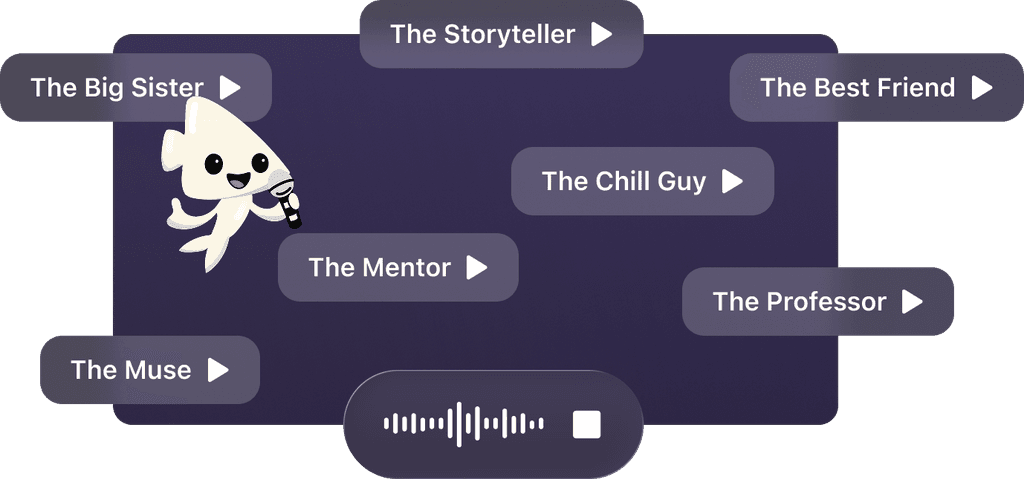
Feel the book through the author's voice
Turn knowledge into engaging, example-rich insights
Capture key ideas in a flash for fast learning
Enjoy the book in a fun and engaging way
Characters in The Order of Time
- Carlo RovelliAuthor and physicist exploring the nature of time
- Ludwig BoltzmannPhysicist who linked entropy to time's arrow
- Rudolf ClausiusPhysicist who formulated the law of entropy
- AnaximanderGreek philosopher who intuited the order of time
Key Themes in The Order of Time
- thermal time hypothesis
- entropy and arrow of time
- quantum gravity
- loop quantum gravity
- nature of reality
Quotes from The Order of Time
The difference between past and future, between cause and effect, between memory and hope, between regret and intention… in the elementary laws that describe the mechanisms of the world, there is no such difference.
The world isn't a collection of things, it's a collection of events.
Time is perhaps humanity's greatest enigma.
The world isn't a platoon marching to one commander's pace but a network of events.
Explore Your Way of Learning
 Quick Summary Mode
Read or listen to The Order of Time Summary in 12 Minutes
Break down key ideas from The Order of Time into bite-sized takeaways to understand how innovative teams create, collaborate, and grow.

 Fun Mode
The Order of Time Lessons Told Through 23-Min Stories
Experience The Order of Time through vivid storytelling that turns innovation lessons into moments you'll remember and apply.
 Personalize Mode
Experience The Order of Time in your own learning style
Ask anything, choose your learning style, and co-create insights that truly resonate with you.
From Columbia University alumni built in San Francisco
"Instead of endless scrolling, I just hit play on BeFreed. It saves me so much time."


"I never knew where to start with nonfiction—BeFreed’s book lists turned into podcasts gave me a clear path."


"Perfect balance between learning and entertainment. Finished ‘Thinking, Fast and Slow’ on my commute this week."
"Crazy how much I learned while walking the dog. BeFreed = small habits → big gains."
"Reading used to feel like a chore. Now it’s just part of my lifestyle."

"Feels effortless compared to reading. I’ve finished 6 books this month already."
"BeFreed turned my guilty doomscrolling into something that feels productive and inspiring."

"BeFreed turned my commute into learning time. 20-min podcasts are perfect for finishing books I never had time for."
"BeFreed replaced my podcast queue. Imagine Spotify for books — that’s it. 🙌"

"It is great for me to learn something from the book without reading it."
"The themed book list podcasts help me connect ideas across authors—like a guided audio journey."
"Makes me feel smarter every time before going to work"
From Columbia University alumni built in San Francisco
"Instead of endless scrolling, I just hit play on BeFreed. It saves me so much time."
"I never knew where to start with nonfiction—BeFreed’s book lists turned into podcasts gave me a clear path."
"Perfect balance between learning and entertainment. Finished ‘Thinking, Fast and Slow’ on my commute this week."
"Crazy how much I learned while walking the dog. BeFreed = small habits → big gains."
"Reading used to feel like a chore. Now it’s just part of my lifestyle."
"Feels effortless compared to reading. I’ve finished 6 books this month already."
"BeFreed turned my guilty doomscrolling into something that feels productive and inspiring."
"BeFreed turned my commute into learning time. 20-min podcasts are perfect for finishing books I never had time for."
"BeFreed replaced my podcast queue. Imagine Spotify for books — that’s it. 🙌"
"It is great for me to learn something from the book without reading it."
"The themed book list podcasts help me connect ideas across authors—like a guided audio journey."
"Makes me feel smarter every time before going to work"
"Instead of endless scrolling, I just hit play on BeFreed. It saves me so much time."
"I never knew where to start with nonfiction—BeFreed’s book lists turned into podcasts gave me a clear path."
"Perfect balance between learning and entertainment. Finished ‘Thinking, Fast and Slow’ on my commute this week."
"Crazy how much I learned while walking the dog. BeFreed = small habits → big gains."
"Reading used to feel like a chore. Now it’s just part of my lifestyle."
"Feels effortless compared to reading. I’ve finished 6 books this month already."
"BeFreed turned my guilty doomscrolling into something that feels productive and inspiring."
"BeFreed turned my commute into learning time. 20-min podcasts are perfect for finishing books I never had time for."
"BeFreed replaced my podcast queue. Imagine Spotify for books — that’s it. 🙌"
"It is great for me to learn something from the book without reading it."
"The themed book list podcasts help me connect ideas across authors—like a guided audio journey."
"Makes me feel smarter every time before going to work"
"Instead of endless scrolling, I just hit play on BeFreed. It saves me so much time."
"I never knew where to start with nonfiction—BeFreed’s book lists turned into podcasts gave me a clear path."
"Perfect balance between learning and entertainment. Finished ‘Thinking, Fast and Slow’ on my commute this week."
"Crazy how much I learned while walking the dog. BeFreed = small habits → big gains."
"Reading used to feel like a chore. Now it’s just part of my lifestyle."
"Feels effortless compared to reading. I’ve finished 6 books this month already."
"BeFreed turned my guilty doomscrolling into something that feels productive and inspiring."
"BeFreed turned my commute into learning time. 20-min podcasts are perfect for finishing books I never had time for."
"BeFreed replaced my podcast queue. Imagine Spotify for books — that’s it. 🙌"
"It is great for me to learn something from the book without reading it."
"The themed book list podcasts help me connect ideas across authors—like a guided audio journey."
"Makes me feel smarter every time before going to work"

Download Summary of The Order of Time
Get the The Order of Time summary as a free PDF or EPUB. Print it or read offline anytime.


