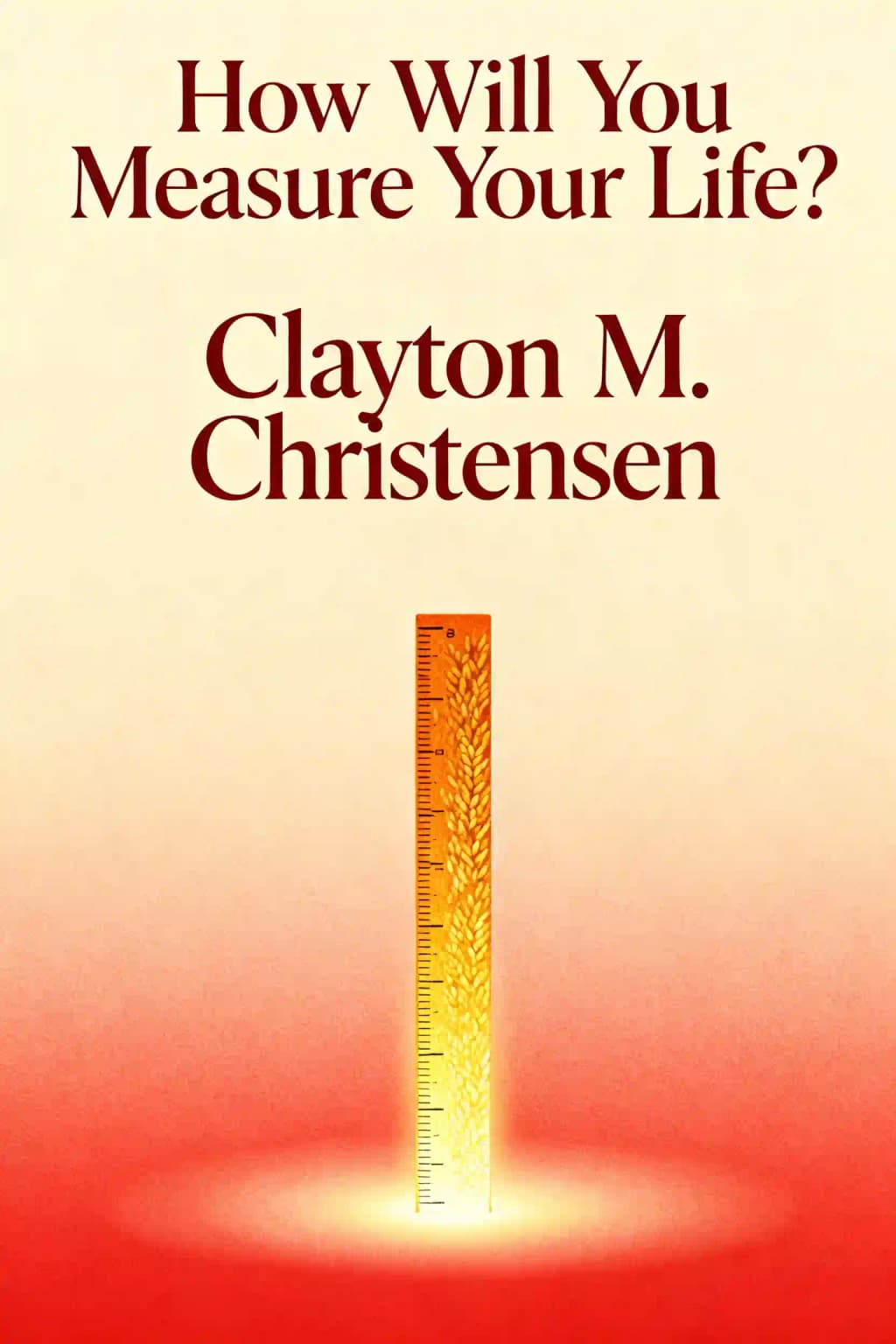
How Will You Measure Your Life?
Overview of How Will You Measure Your Life?
Harvard professor Christensen's life-changing guide asks: What metrics truly define success? Twice-ranked #1 on Thinkers50, his cancer battle inspired this Wall Street Journal bestseller that challenges you to measure achievement beyond wealth - a book that transforms careers into legacies.

Key Themes in How Will You Measure Your Life?
- disruptive innovation theory
- hygiene factors vs motivators
- resource allocation
- causal decision making
- marginal cost trap
Quotes from How Will You Measure Your Life?
Compensation is merely a hygiene factor.
True motivation comes from meaningful work.
Strategy isn't a single analytical event.
Money becomes a byproduct of being happy.
Many of us lose sight of childhood dreams.
Characters in How Will You Measure Your Life?
- Clayton M. ChristensenAuthor and Harvard Business School professor
- DianaAnalytical chemist used as a case study
- Frederick HerzbergPsychologist and developer of motivation theory
- Jensen and MecklingEconomists who developed agency theory
About the Author
About the Author of How Will You Measure Your Life?
Clayton M. Christensen, acclaimed Harvard Business School professor and pioneer of disruptive innovation theory, authored How Will You Measure Your Life?, blending business strategy with introspective life guidance.
A Rhodes Scholar and five-time McKinsey Award winner, Christensen reshaped modern business thinking through works like The Innovator’s Dilemma—a foundational text in technology and management studied in MBA programs worldwide.
His career spanned academia, consulting (Boston Consulting Group), and entrepreneurship as co-founder of Ceramics Process Systems and Innosight. Christensen’s unique ability to apply corporate strategy frameworks to personal fulfillment emerged from his dual focus on organizational success and ethical leadership, themes echoed in his Harvard Business Review articles and executive education teachings.
His books, including The Innovator’s Solution, have collectively sold millions of copies, with The Innovator’s Dilemma alone surpassing 1 million sales and being named one of the 100 most influential books by TIME.
Download Summary of How Will You Measure Your Life?
Get the How Will You Measure Your Life? summary as a free PDF or EPUB. Print it or read offline anytime.
FAQs About This Book
How Will You Measure Your Life? explores how to achieve fulfillment by balancing career satisfaction, meaningful relationships, and personal integrity. Clayton Christensen applies business strategies—like resource allocation and disruptive innovation—to life decisions, arguing that long-term happiness requires intentional planning, adaptable goals, and avoiding ethical compromises.
This book is ideal for career-driven individuals, parents, and anyone seeking work-life balance. It’s particularly valuable for professionals navigating career transitions, leaders aiming to align personal and organizational values, and readers interested in applying business frameworks to personal growth.
Yes. The book offers actionable insights for aligning daily choices with long-term goals. By blending business theories with personal anecdotes, Christensen provides a unique lens to evaluate career paths, family dynamics, and ethical decisions, making it a practical guide for holistic success.
Christensen introduces three core frameworks:
- Likeness, Commitment, Metrics: Define your ideal self (likeness), commit to decisions that align with it, and establish metrics to track progress.
- Jobs to Be Done: Prioritize relationships by understanding the emotional "jobs" loved ones need you to fulfill.
- Marginal Cost Fallacy: Avoid unethical shortcuts by recognizing how small compromises can lead to significant consequences.
Christensen argues that career happiness stems from aligning work with intrinsic motivators—not external rewards. He urges readers to proactively seek roles that offer growth, mastery, and purpose, rather than passively accepting prestigious but unfulfilling paths.
The book compares nurturing family bonds to building a successful business. Christensen emphasizes investing time in relationships early, fostering shared values (a "family culture"), and adapting to loved ones’ evolving needs—much like companies innovate to stay relevant.
Christensen warns against rationalizing small ethical breaches (the "marginal cost fallacy"), noting that repeated compromises can derail lives. He advocates for defining non-negotiable principles upfront to avoid slippery slopes.
The quote—“The only way to do great work is to love what you do”—underscores Christensen’s belief that passion drives sustained success. He expands this idea, urging readers to align careers with personal values rather than societal expectations.
While Atomic Habits focuses on incremental behavior change, Christensen’s book emphasizes strategic life planning using business frameworks. Both stress intentionality, but How Will You Measure Your Life? uniquely integrates corporate strategy with personal ethics and relationships.
Some reviewers note the book lacks step-by-step guides for implementing its theories. Others argue its business metaphors oversimplify complex emotional decisions, though most praise its thought-provoking approach to life planning.
In an era of remote work and rapid technological change, Christensen’s emphasis on purposeful career choices and resilient relationships remains vital. The book’s focus on ethical decision-making also resonates amid increasing scrutiny on corporate and personal integrity.
- Define success holistically (career, relationships, ethics).
- Allocate resources intentionally to match priorities.
- Build adaptable strategies for life’s uncertainties.
- Avoid short-term compromises that undermine long-term happiness.