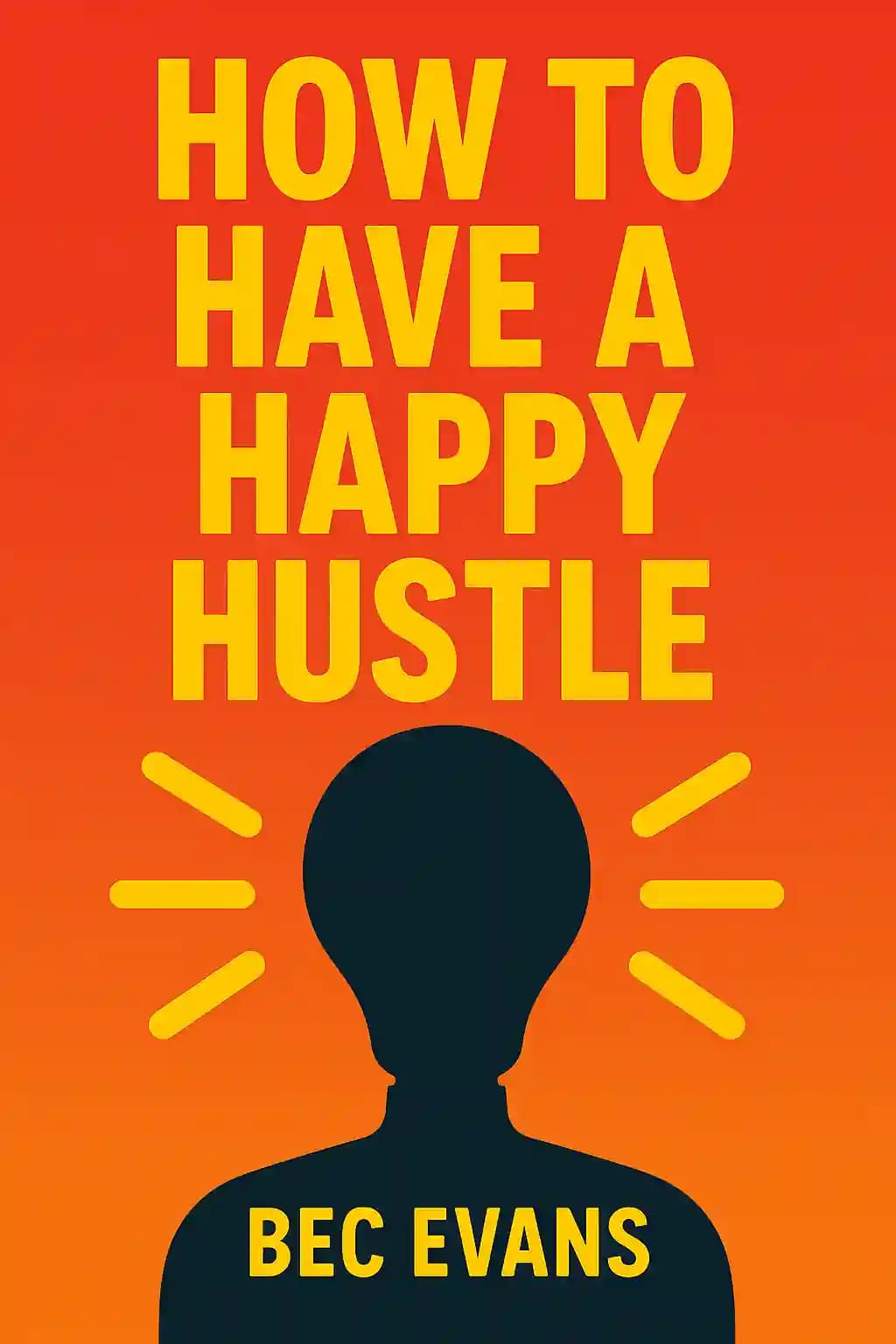
How to Have a Happy Hustle
The Complete Guide to Making Your Ideas Happen
Overview of How to Have a Happy Hustle
Transform your startup dreams without burnout: "How to Have a Happy Hustle" - the Business Book Award winner challenging hustle culture with joyful entrepreneurship. "Essential reading for any entrepreneur" - Alison Jones, offering life-changing balance the Financial Times calls "genuinely fresh."

Key Themes in How to Have a Happy Hustle
- problem seeking
- empathy-driven design
- side project management
- sustainable productivity
- user persona development
Quotes from How to Have a Happy Hustle
A problem well-stated is half-solved.
Innovation requires understanding your audience through empathy, not just technical brilliance.
People generally enjoy discussing what matters to them.
Empathy is an innovation superpower.
Fall in love with the problem long before thinking about solutions.
Characters in How to Have a Happy Hustle
- Bec EvansAuthor and creator of the Happy Hustle framework
- Anne-Marie ImafidonFounder of Stemettes and STEM advocate
- Jo CaleyEntrepreneur who identified vanity sizing issues
- Dr. Mohammad Al-UbaydliFounder of Patients Know Best
- Nicole RabyBiology student and university event innovator
About the Author
About the Author of How to Have a Happy Hustle
Bec Evans is the award-winning author of How to Have a Happy Hustle and a leading expert in habit formation, creative persistence, and entrepreneurial productivity.
A seasoned writer and startup founder, Evans draws from her diverse career in publishing, managing Arvon’s Lumb Bank writing retreat, and co-founding Prolifiko, a digital coaching platform for writers. Her work bridges self-help and business genres, offering actionable strategies for balancing ambition with well-being.
Evans also co-authored Written: How to Keep Writing and Build a Habit That Lasts (2023), a research-backed guide to sustainable creativity, and contributes to Substack’s Breakthroughs & Blocks newsletter. Her insights have been featured on The Creative Penn podcast and in the Mslexia Diary and Planner.
How to Have a Happy Hustle won the 2020 Business Book Award, cementing Evans’ reputation for transforming hustle culture into purposeful, joyful work.
Download Summary of How to Have a Happy Hustle
Get the How to Have a Happy Hustle summary as a free PDF or EPUB. Print it or read offline anytime.
FAQs About This Book
How to Have a Happy Hustle provides actionable strategies for balancing ambition with well-being, offering frameworks to build sustainable side hustles or creative projects without burnout. The book combines productivity research, habit-forming techniques, and real-world examples to help readers navigate uncertainty, manage time effectively, and maintain motivation during long-term ventures. Key themes include goal-setting, resilience, and aligning work with personal values.
This book targets entrepreneurs, freelancers, and creatives seeking to monetize passions while preserving mental health. It’s ideal for side hustlers transitioning to full-time ventures, writers struggling with consistency, or anyone balancing multiple priorities. Beck Evans’ advice is particularly relevant for those in fast-paced industries like tech, publishing, or content creation.
Yes—the book won a 2020 Business Book Award for its evidence-based approach to productivity and well-being. Unlike generic hustle-culture guides, it addresses common pitfalls like perfectionism, comparison traps, and resource limitations. Readers gain practical tools like the “Sustainable Success Framework” and time-blocking strategies tailored for irregular schedules.
- The 70% Rule: Prioritize progress over perfection by aiming for “good enough” outcomes.
- Habit Stacking: Anchor new productivity habits to existing routines for consistency.
- Energy Mapping: Align tasks with peak mental/physical energy levels throughout the day.
- Guilt-Free Pausing: Structured breaks to prevent burnout while maintaining momentum.
Bec Evans advocates for “boundary rituals”—like designated workspaces or shutdown routines—to separate hustle activities from personal time. The book emphasizes celebrating micro-wins and using “creative constraints” (e.g., limited time blocks) to enhance focus, reducing overwork.
Some reviewers note the advice leans toward solo entrepreneurs vs. team-based ventures. Others suggest the habit-forming strategies require high self-discipline, which may challenge readers in chaotic environments. However, the book mitigates this with adaptable “minimum viable habit” templates.
While both emphasize habit formation, Evans’ book specifically targets creators and side hustlers, offering niche tactics like “portfolio productivity” (balancing multiple projects) and leveraging community support. Atomic Habits provides broader behavioral science, whereas Happy Hustle applies these principles to entrepreneurial contexts.
- “Your hustle should energize, not exhaust—if it’s unsustainable, it’s not success.”
- “Done is better than perfect, but better done than rushed.”
- “The happiest hustlers are gardeners, not hunters—they nurture growth over time.”
Yes—the book includes a “Transition Roadmap” with steps to test ideas risk-free, calculate financial runways, and repurpose existing skills. Case studies feature writers and consultants who gradually shifted to full-time self-employment using Evans’ phased approach.
Drawing on 15+ years in publishing, retreat management (Arvon), and coaching writers via Prolifiko, Evans blends creative persistence strategies with business realism. Her experience debunking “overnight success” myths informs the book’s focus on incremental, joy-driven progress.
With remote work and AI reshaping careers, the book’s emphasis on adaptability, niche skill-building, and “anti-hustle” pacing aligns with modern challenges. Updated editions address AI-assisted productivity and mitigating digital burnout in gig economies.
Bec Evans offers a Sustainable Hustle Assessment on Prolifiko’s website to diagnose burnout risks, plus a “Micro-Habit Tracker” template. The book references Arvon’s writing retreat techniques and time-management tools from Evans’ Written podcast series.