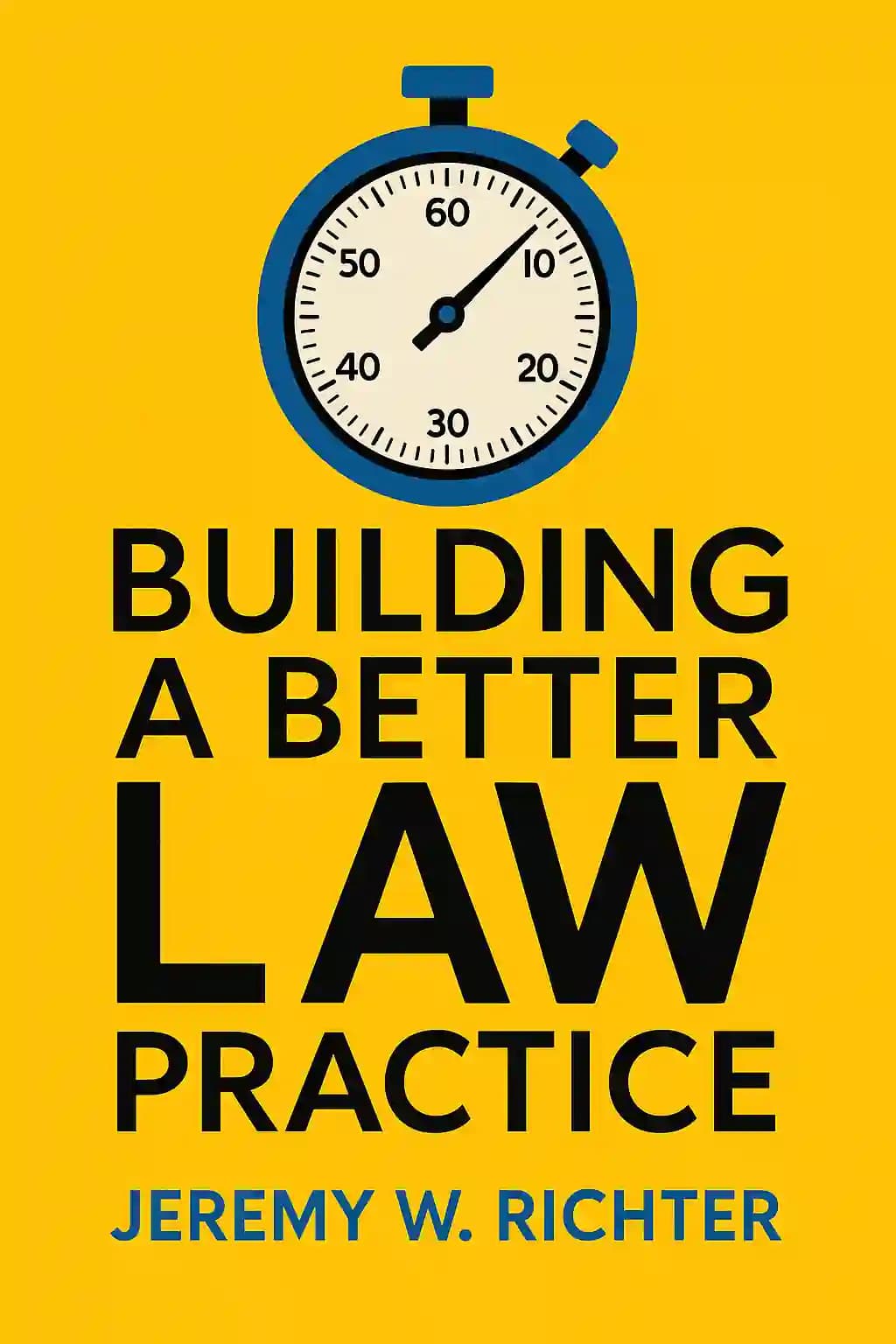
Building a Better Law Practice
Become a Better Lawyer in Five Minutes a Day
Overview of Building a Better Law Practice
Struggling attorneys, take note: Richter's guide transforms chaotic law practices into streamlined success stories. Endorsed by practice management experts and featured on ABA's Modern Law Library Podcast, this actionable playbook reveals the counterintuitive secrets top firms use to maximize profitability while maintaining client relationships.

Key Themes in Building a Better Law Practice
- legal client management
- law firm efficiency
- attorney-client trust
- legal billing strategies
- case management systems
Quotes from Building a Better Law Practice
Clients don't hire "trial lawyers"; they hire problem solvers.
Efficient lawyers starve to death? Efficiency builds stronger client relationships.
Trust doesn't emerge from cold outreach-it develops through providing value.
Never take witnesses at their word without documentation.
Knowing when to stop arguing can be the difference between winning and losing.
Characters in Building a Better Law Practice
- Jeremy W. RichterAuthor and attorney providing practice strategies
- Anthony IannarinoAuthor of 'The Lost Art of Closing'
- Portia PorterFamily law attorney sharing payment wisdom
About the Author
About the Author of Building a Better Law Practice
Jeremy W. Richter is the author of Building a Better Law Practice and a recognized authority on law practice management and civil defense litigation.
A partner at Gordon Rees Scully Mansukhani, LLP, Richter leverages over a decade of experience handling commercial litigation, insurance disputes, and transportation cases across Alabama. His book, published by the American Bar Association, distills practical strategies for improving legal efficiency, client relations, and firm profitability.
These themes are rooted in his daily work as a trial attorney and his acclaimed blog, www.jeremywrichter.com, where he shares insights on legal trends and practice optimization. Richter’s expertise extends to additional works like Stop Putting Out Fires: Building a More Efficient and Profitable Law Practice and Level Up Your Law Practice: The Ultimate Guide to Being a Successful Lawyer, both acclaimed for their actionable advice.
A 2022 Super Lawyers® Rising Star, he regularly contributes to For the Defense and other legal publications. Building a Better Law Practice has become a trusted resource for attorneys nationwide, endorsed for its blend of tactical guidance and real-world applicability.
Download Summary of Building a Better Law Practice
Get the Building a Better Law Practice summary as a free PDF or EPUB. Print it or read offline anytime.
FAQs About This Book
Building a Better Law Practice by Jeremy W. Richter provides actionable strategies for attorneys to improve client relationships, streamline workflows, and build sustainable legal careers. It emphasizes practical skills like time management, effective communication, and aligning client objectives with legal tactics. The book also addresses self-care and nontraditional marketing methods for lawyers seeking long-term success.
This book is ideal for new lawyers, solo practitioners, and mid-career attorneys aiming to refine their practice management. It offers value to those struggling with client retention, burnout, or inefficiency. Seasoned lawyers will also find insights on modernizing their approach to mentoring and intergenerational collaboration.
Yes—the book distills Richter’s decade-plus litigation experience into concise, five-minute daily lessons. It balances theoretical frameworks (like performance metrics) with real-world examples, such as managing insurance company clients versus individual stakeholders. Readers praise its no-fluff advice on avoiding common career pitfalls.
Richter advocates collaborative goal-setting and proactive communication:
- Set expectations early: Clarify roles, legal processes, and decision-making authority during initial consultations.
- Regular touchpoints: Use scheduled updates and preferred client communication channels to build trust.
- Transparent billing: Track time rigorously to justify costs and demonstrate value.
Key methods include:
- Template systems: Standardize pleadings, discovery requests, and objections to reduce repetitive tasks.
- Time-blocking: Allocate specific periods for research, client calls, and administrative work using digital tools.
- Performance reviews: Audit time logs monthly to identify inefficiencies or underperforming cases.
Absolutely. Richter addresses introvert-friendly marketing, like writing blog posts or LinkedIn articles instead of traditional networking. He also emphasizes substance over schmoozing—for example, leveraging case victories to demonstrate expertise subtly.
Notable insights include:
- “Efficiency rewards us by freeing time to focus on non-cookie-cutter case aspects”.
- “Your clients need education, not just representation” (emphasizing proactive guidance).
- “Self-care isn’t indulgence—it’s malpractice prevention” (highlighting burnout risks).
Richter ties self-care to professional sustainability, advising:
- Boundary-setting: Designate “no-email” hours and delegate low-value tasks.
- Skill diversification: Rotate between litigation, research, and writing to maintain engagement.
- Mentorship: Seek peer support to navigate high-stakes cases and ethical dilemmas.
Yes, with nontraditional approaches:
- Content marketing: Write analysis of recent court decisions to attract organic search traffic.
- Client education: Host free webinars on topics like “How Insurance Companies Evaluate Claims”.
- Reputation building: Encourage satisfied clients to leave detailed Google reviews highlighting specific strengths.
Unlike broader management textbooks, this focuses on daily actionable steps rather than abstract theory. It uniquely combines insurance defense insights (e.g., balancing corporate and individual client interests) with solo-practitioner efficiency hacks.
Some note it prioritizes individual habit-building over systemic firm-wide changes. While ideal for solo/small practices, large-firm lawyers may need supplemental resources on team collaboration and institutional workflows.
With AI automating routine tasks, Richter’s emphasis on client-centric soft skills and strategic case evaluation remains critical. The book’s time-blocking methods align with hybrid work trends, helping lawyers manage dispersed teams and virtual hearings.
While both stress incremental improvement, Richter’s work tailors habit-building to legal contexts—like using metrics to track settlement negotiation outcomes. Atomic Habits offers general psychology; this book provides field-tested adaptations for courtroom deadlines and client pressures.