Building Your Systems and Scaling Your Business

Overview of Building Your Systems and Scaling Your Business
"Scaling Smart" reveals the winning formula for sustainable business growth without burnout. 2024 Goody Award winner for entrepreneurship, it delivers the automation secrets and culture-building strategies that have transformed countless businesses. What's the one scaling mistake costing entrepreneurs millions?
- Scaling Smart prioritizes self-managing systems over micromanagement for sustainable business growth.
- Rich Fettke teaches how to convert "time-sucking monsters" into automated income-generating machines.
- Strategic scaling requires customized organizational charts and AI-powered workflows according to your vision.
- The Fettkes' "why grow" framework prevents expansion traps through intentional growth roadmaps.
- Build teams using their "A-player matrix" to delegate 90% of operational tasks.
- Replace reactive hiring with cultural alignment strategies that attract self-sufficient problem solvers.
- Implement "meeting elimination audits" to reclaim 20+ hours monthly from unproductive discussions.
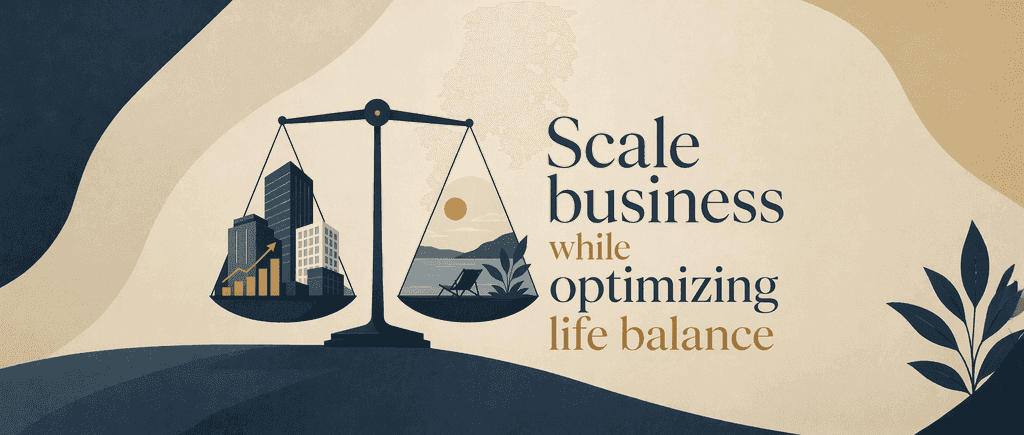
- Their four-phase scaling blueprint balances financial targets with personal lifestyle design goals.
- Smart scaling uses technology stacks to automate 80% of repetitive business processes.
- The book reveals how top performers leverage partnerships with written accountability covenants.
- Fettke's "operating system" approach creates businesses that thrive without owner intervention.
- Avoid growth plateaus by institutionalizing knowledge through documented systems and cross-training.
About the Author of Building Your Systems and Scaling Your Business
Rich Fettke and Kathy Fettke, bestselling authors of Scaling Smart: Strategies for Sustainable Business Growth, are renowned real estate investment experts and co-founders of RealWealth®, a leading education platform that has empowered over 60,000 investors since 2003. Drawing from Rich’s background as a Master Certified Business Coach and Kathy’s specialization in creative finance and market cycle analysis, the book merges decades of entrepreneurial experience with actionable frameworks for scaling companies without sacrificing stability.
The Fettkes have authored multiple influential works, including The Wise Investor (Rich) and Retire Rich with Rentals (Kathy), both of which emphasize financial freedom through strategic asset building. Their insights are regularly featured on major media outlets like CNN, NPR, and The Wall Street Journal, and they host the top-rated Real Wealth Show podcast.
RealWealth®, a three-time Inc. 5000 honoree, reflects their mission to democratize access to wealth-building strategies. Their collaborative approach in Scaling Smart distills 40+ years of combined expertise into a guide praised for its balance of practicality and vision.
FAQs About Building Your Systems and Scaling Your Business
What is Scaling Smart by Rich Fettke about?
Scaling Smart provides a blueprint for transforming profitable businesses into self-managing enterprises that prioritize efficiency over unchecked growth. Rich and Kathy Fettke emphasize frameworks for sustainable scaling, leadership development, and systems that reduce operational strain, illustrated by case studies like WeWork’s missteps. The book combines strategic planning, cultural alignment, and actionable steps to help entrepreneurs achieve financial independence without micromanagement.
Who should read Scaling Smart?
This book targets established entrepreneurs and investors seeking to transition from hands-on management to scalable, passive income models. It’s ideal for business owners facing growth plateaus, leaders aiming to build autonomous teams, or anyone prioritizing long-term stability over rapid expansion.
Is Scaling Smart worth reading?
Yes—the Fettkes offer actionable strategies for delegation, organizational design, and cultural alignment, backed by 20+ years of real estate and coaching experience. While some advice may seem intuitive (e.g., “hire great people”), the structured takeaways on systems-building and failure analysis (e.g., WeWork vs. successful scalers) provide practical value.
How does Scaling Smart define sustainable growth?
The book distinguishes growth (increasing revenue and costs) from scaling (boosting revenue with minimal cost hikes). Sustainable scaling relies on purpose-driven frameworks, streamlined systems, and empowered teams—not just resource expansion. Examples include automating workflows and decentralizing decision-making to reduce leadership bottlenecks.
What leadership principles does Scaling Smart emphasize?
Key principles include clarity of vision, delegation through organizational charts, and fostering accountability. The authors stress aligning leadership behaviors with company values, such as using AI for repetitive tasks to free up creative problem-solving.
How does Scaling Smart address company culture?
Culture is framed as the “operating system” for scaling, with tactics like hiring for cultural fit, defining core values in onboarding, and eliminating toxic behaviors (e.g., an employee misusing company emails for personal gain). The Fettkes advocate for transparency and recognition to sustain morale during growth phases.
What frameworks does Scaling Smart provide for delegation?
The book outlines steps like mapping all responsibilities into an org chart before hiring, creating detailed role playbooks, and using metrics to track autonomy. For example, structured onboarding plans reduce training time while clarifying expectations.
How does Scaling Smart use WeWork as a case study?
Wework exemplifies growth without scaling—expanding offices and staff drove revenue but ignored efficiency, leading to unsustainable costs. Contrasted with disciplined scalers, it underscores the need for PMV (purpose, mission, vision) alignment and financial safeguards during expansion.
What role does AI play in Scaling Smart’s strategies?
AI is recommended for automating repetitive tasks (e.g., data entry, customer service) to reduce human error and free teams for high-impact work. The authors caution against over-reliance, advising AI as a tool to enhance—not replace—human judgment.
How does Scaling Smart compare to Atomic Habits or The E-Myth?
Unlike Atomic Habits’ focus on personal routines, Scaling Smart targets business systems. It expands on The E-Myth’s delegation themes by adding modern templates for remote teams and AI integration.
What are common criticisms of Scaling Smart?
Some advice may feel basic to seasoned entrepreneurs (e.g., “write agreements to avoid disputes”). However, the specificity of its frameworks (e.g., org chart templates) and real-world examples offset broader concepts.
How can readers apply Scaling Smart to service-based businesses?
The book advises standardizing service delivery through checklists, training hubs, and client feedback loops. For example, a coaching business might use AI schedulers to manage appointments, allowing owners to focus on high-value sessions.
Feel the book through the author's voice
Turn knowledge into engaging, example-rich insights
Capture key ideas in a flash for fast learning
Enjoy the book in a fun and engaging way
Characters in Building Your Systems and Scaling Your Business
- Rich FettkeCo-author and co-founder of RealWealth
- Kathy FettkeCo-author who founded RealWealth for time freedom
- Barbara CorcoranShark Tank investor who provides business wisdom
Key Themes in Building Your Systems and Scaling Your Business
- operational efficiency
- passive income generation
- business automation
- sustainable scaling
- lifestyle design
Quotes from Building Your Systems and Scaling Your Business
Scaling allows businesses to make more money without significantly increasing resources.
The ultimate goal should be building a business that serves your life, not vice versa.
Real wealth is the ability to live life on your own terms.
Money is merely a tool to design a fulfilling life.
Vision isn't about 'How will we do this?' but rather 'How does it look and feel as we do this?'
Explore Your Way of Learning
 Quick Summary Mode
Read or listen to Building Your Systems and Scaling Your Business Summary in 9 Minutes
Break down key ideas from Building Your Systems and Scaling Your Business into bite-sized takeaways to understand how innovative teams create, collaborate, and grow.

 Fun Mode
Building Your Systems and Scaling Your Business Lessons Told Through 19-Min Stories
Experience Building Your Systems and Scaling Your Business through vivid storytelling that turns innovation lessons into moments you'll remember and apply.
 Personalize Mode
Experience Building Your Systems and Scaling Your Business in your own learning style
Ask anything, choose your learning style, and co-create insights that truly resonate with you.
From Columbia University alumni built in San Francisco
"Instead of endless scrolling, I just hit play on BeFreed. It saves me so much time."


"I never knew where to start with nonfiction—BeFreed’s book lists turned into podcasts gave me a clear path."


"Perfect balance between learning and entertainment. Finished ‘Thinking, Fast and Slow’ on my commute this week."
"Crazy how much I learned while walking the dog. BeFreed = small habits → big gains."
"Reading used to feel like a chore. Now it’s just part of my lifestyle."

"Feels effortless compared to reading. I’ve finished 6 books this month already."
"BeFreed turned my guilty doomscrolling into something that feels productive and inspiring."

"BeFreed turned my commute into learning time. 20-min podcasts are perfect for finishing books I never had time for."
"BeFreed replaced my podcast queue. Imagine Spotify for books — that’s it. 🙌"

"It is great for me to learn something from the book without reading it."
"The themed book list podcasts help me connect ideas across authors—like a guided audio journey."
"Makes me feel smarter every time before going to work"
From Columbia University alumni built in San Francisco
"Instead of endless scrolling, I just hit play on BeFreed. It saves me so much time."
"I never knew where to start with nonfiction—BeFreed’s book lists turned into podcasts gave me a clear path."
"Perfect balance between learning and entertainment. Finished ‘Thinking, Fast and Slow’ on my commute this week."
"Crazy how much I learned while walking the dog. BeFreed = small habits → big gains."
"Reading used to feel like a chore. Now it’s just part of my lifestyle."
"Feels effortless compared to reading. I’ve finished 6 books this month already."
"BeFreed turned my guilty doomscrolling into something that feels productive and inspiring."
"BeFreed turned my commute into learning time. 20-min podcasts are perfect for finishing books I never had time for."
"BeFreed replaced my podcast queue. Imagine Spotify for books — that’s it. 🙌"
"It is great for me to learn something from the book without reading it."
"The themed book list podcasts help me connect ideas across authors—like a guided audio journey."
"Makes me feel smarter every time before going to work"
"Instead of endless scrolling, I just hit play on BeFreed. It saves me so much time."
"I never knew where to start with nonfiction—BeFreed’s book lists turned into podcasts gave me a clear path."
"Perfect balance between learning and entertainment. Finished ‘Thinking, Fast and Slow’ on my commute this week."
"Crazy how much I learned while walking the dog. BeFreed = small habits → big gains."
"Reading used to feel like a chore. Now it’s just part of my lifestyle."
"Feels effortless compared to reading. I’ve finished 6 books this month already."
"BeFreed turned my guilty doomscrolling into something that feels productive and inspiring."
"BeFreed turned my commute into learning time. 20-min podcasts are perfect for finishing books I never had time for."
"BeFreed replaced my podcast queue. Imagine Spotify for books — that’s it. 🙌"
"It is great for me to learn something from the book without reading it."
"The themed book list podcasts help me connect ideas across authors—like a guided audio journey."
"Makes me feel smarter every time before going to work"
"Instead of endless scrolling, I just hit play on BeFreed. It saves me so much time."
"I never knew where to start with nonfiction—BeFreed’s book lists turned into podcasts gave me a clear path."
"Perfect balance between learning and entertainment. Finished ‘Thinking, Fast and Slow’ on my commute this week."
"Crazy how much I learned while walking the dog. BeFreed = small habits → big gains."
"Reading used to feel like a chore. Now it’s just part of my lifestyle."
"Feels effortless compared to reading. I’ve finished 6 books this month already."
"BeFreed turned my guilty doomscrolling into something that feels productive and inspiring."
"BeFreed turned my commute into learning time. 20-min podcasts are perfect for finishing books I never had time for."
"BeFreed replaced my podcast queue. Imagine Spotify for books — that’s it. 🙌"
"It is great for me to learn something from the book without reading it."
"The themed book list podcasts help me connect ideas across authors—like a guided audio journey."
"Makes me feel smarter every time before going to work"

Download Summary of Building Your Systems and Scaling Your Business
Get the Building Your Systems and Scaling Your Business summary as a free PDF or EPUB. Print it or read offline anytime.