Chapter 1
Divine Madness: The Search for Truth in a Fractured Reality
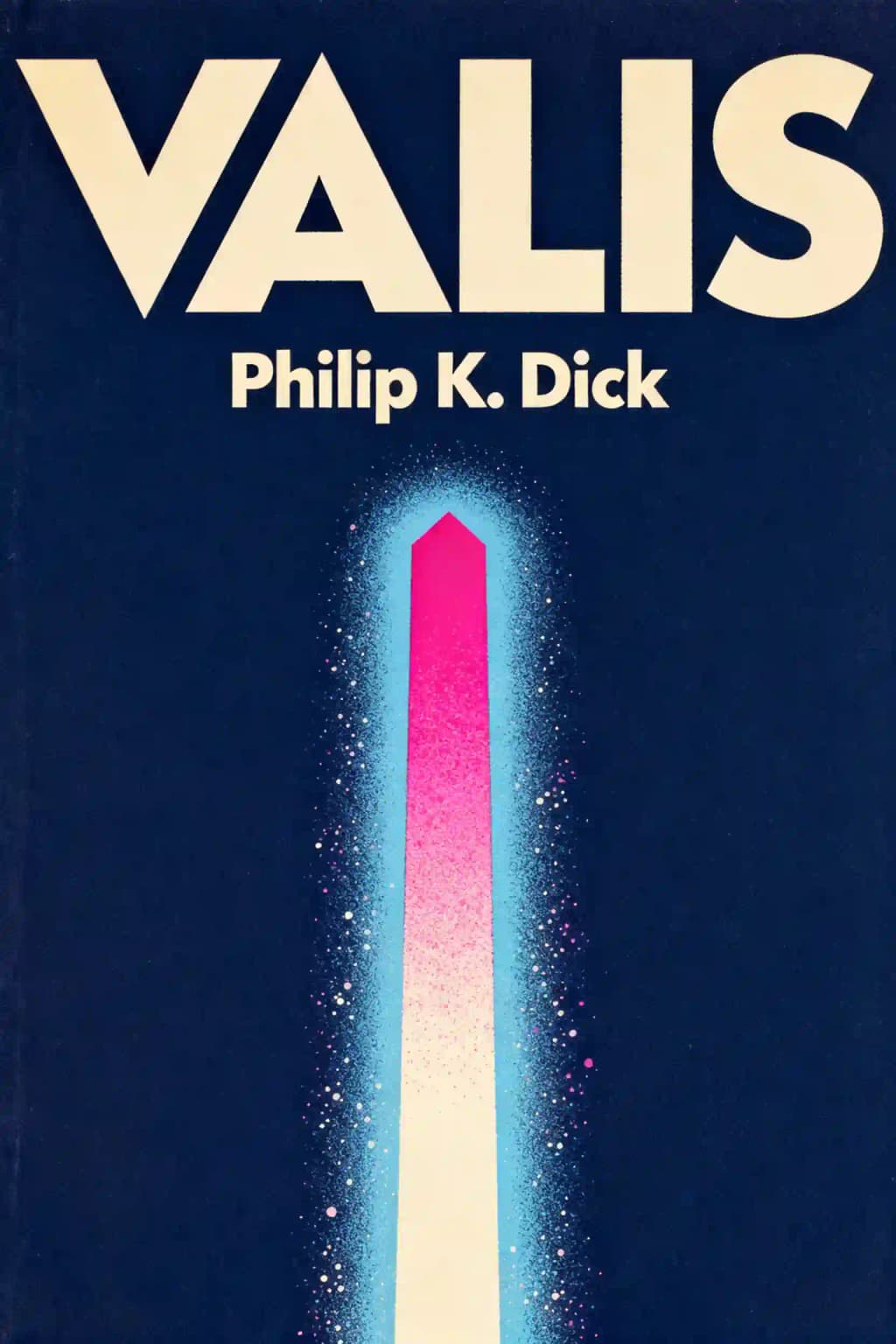
Philip K. Dick's "VALIS" isn't just another science fiction novel-it's a mind-bending exploration of reality, divinity, and mental illness that continues to captivate readers decades after its publication. Written during Dick's later years following his own mystical experiences in 1974, the novel has become a cult classic that influenced everything from The Matrix films to the music of Radiohead. When David Bowie was asked about books that shaped his worldview, "VALIS" topped his list. The semi-autobiographical work blends theology, philosophy, and science fiction in ways that feel eerily prescient in our age of virtual realities and information overload. As Dick's reputation has grown from pulp writer to literary prophet, "VALIS" stands as his most personal and challenging testament-a window into a brilliant mind grappling with the fundamental questions of existence.
Chapter 2
The Divided Self: Horselover Fat and Philip K. Dick
"VALIS" opens with one of literature's most ingenious and psychologically complex narrative devices: the protagonist Horselover Fat exists as an alter ego of the narrator, Philip K. Dick himself. This intricate division represents the author's desperate attempt to make sense of his own mental breakdown following a series of traumatic events in the 1970s. The name "Horselover Fat" operates as a cleverly encoded version of "Philip Dick" - "Philip" derives from the Greek philos (lover) and hippos (horse), while "Dick" corresponds to the German "dick," meaning fat or thick.
The novel begins with the devastating suicide of Fat's friend Gloria, who takes an overdose of pills after Fat fails to convince her that life is worth living. This tragedy catalyzes Fat's descent into psychological instability, rendered with brutal authenticity through Dick's unflinching prose: "The first step toward going insane is to realize that you are going insane." This observation illuminates the paradoxical trap at the heart of mental illness - where awareness of one's deteriorating condition becomes part of the pathology itself, creating a recursive loop of self-consciousness and doubt. The novel poses a fundamental epistemological question: How can one determine what's real when the very instrument of perception - consciousness itself - has become unreliable?
Fat and the narrator navigate the same social world, interacting with an identical group of friends - the pragmatic Kevin, the scholarly David, and Sherri, a cancer patient whose relationship with illness mirrors Fat's own psychological struggles. Yet they exist simultaneously as separate characters while being two aspects of the same fractured consciousness. This narrative technique brilliantly captures the dissociative experience of mental illness, where the self splinters as a psychological defense mechanism against overwhelming reality. The other characters' acceptance of this duality - treating Fat and Phil as distinct individuals - adds another layer of complexity to the novel's exploration of reality versus delusion.
The divided self serves as more than just a psychological device - it functions as a powerful metaphor for the novel's deeper theological and philosophical concerns. Just as Fat/Dick exists in a state of bifurcation, Dick presents a universe potentially governed by competing divine forces - a rational, benevolent God in eternal conflict with an irrational, malevolent demiurge. This Gnostic worldview becomes the conceptual framework through which Fat attempts to understand his experiences, suggesting that perhaps the universe itself suffers from a form of cosmic schizophrenia. The parallel between personal psychological fragmentation and universal spiritual division creates a resonant metaphysical dimension to Fat's struggle for coherence and meaning.
This narrative structure allows Dick to explore multiple levels of reality simultaneously - the psychological, the social, and the metaphysical - while maintaining a constant tension between competing interpretations of events. Is Fat/Dick mentally ill, or has he glimpsed a profound truth about the nature of reality? The novel refuses to provide easy answers, instead inviting readers to navigate these overlapping possibilities alongside its divided protagonist.
Chapter 3
The Pink Beam of Information: Divine Revelation or Delusion?
At the heart of "VALIS" lies Fat's mystical experience-a pink beam of light that he believes transmitted vast amounts of information directly into his brain. This experience mirrors Dick's own reported encounter in February-March 1974, which he spent the rest of his life trying to understand through his 8,000-page "Exegesis."
The beam's information download leads Fat to develop increasingly complex theories about reality. He becomes convinced that we are all actually living in ancient Rome around 70 CE, but a "Black Iron Prison" of false reality-what the Greeks called "dokos"-has been constructed to hide this truth. The Roman Empire never ended; it merely evolved into the modern power structures that control our lives.
Fat's theories grow more elaborate: the universe is composed of information that we concretize through perception; a "cosmic Brain" thinks us into existence; portions of his brain are being stimulated by energy beams from afar, creating mental holograms. He develops the concept of "Zebra"-a living information system that camouflages itself by mimicking our reality while working to liberate humanity.
The novel brilliantly maintains ambiguity about these experiences. Are they genuine contact with the divine, symptoms of psychosis, or perhaps both simultaneously? Dick refuses simple answers, instead exploring how religious experience and mental illness might be different interpretations of the same phenomena. When Fat sees the ancient Roman world superimposed over 1974 California, is he experiencing a psychotic break or glimpsing the true nature of reality?
This ambiguity extends to the novel's treatment of theology. Fat's friends represent different religious perspectives: Kevin is the cynical atheist who lost faith after his cat's death; David is the orthodox Catholic who quotes C.S. Lewis; Sherri is the cancer patient whose piety masks a deep resentment; and Fat himself represents mystical Gnosticism. Their theological debates reveal the inadequacy of any single perspective to encompass the complexity of existence.
Chapter 4
The Tractatus: A Cosmology of Information
Throughout the novel, Fat compiles his theories into a document called the "Tractatus: Cryptica Scriptum," which serves as both symptom and potential solution to his mental crisis. This collection of numbered propositions outlines a complex cosmology that blends Gnostic Christianity, information theory, and science fiction.
The Tractatus proposes that the universe consists of two "hyperuniverses"-the upper realm (Yang) which is sentient and volitional, and the lower realm (Yin) which is mechanical and deterministic. Humans are trapped in the lower realm but can be liberated through sacraments that connect them to the higher reality. Fat identifies these realms with the cosmic twins from Dogon mythology: Nommo (the healthy hyperuniverse) and Yurugu (the damaged one).
Central to Fat's cosmology is the concept of the "plasmate"-living information or Logos that reproduces as information, not through it. This plasmate can join with humans in symbiosis, creating "homoplasmates" who carry divine knowledge. Fat believes this is what Jesus meant in the parable of the mustard seed-the kingdom of heaven is like information that grows within the human mind.
The Tractatus also introduces the idea that our world is secretly governed by a race descended from the Egyptian pharaoh Ikhnaton, who passed wisdom to Moses, then to Elijah the Immortal Man who became Christ-all manifestations of a single Immortal Man who, ultimately, "is us." This strange mythology reflects Dick's fascination with hidden histories and secret knowledge, suggesting that conventional religious narratives are merely surface stories concealing deeper truths.
Fat's theories may seem delusional, but they contain profound insights about information as the fundamental substance of reality-an idea that anticipates contemporary theories in physics and computer science about the informational nature of the universe. The Tractatus serves as both symptom of madness and potentially revolutionary understanding of reality.
Chapter 5
Suffering and Salvation: The Search for Healing
"VALIS" is fundamentally a novel about suffering and the search for salvation. Fat's mental breakdown follows a series of traumatic events: Gloria's suicide, his failed marriage, his own suicide attempt, and his friend Sherri's terminal cancer. These experiences of suffering drive his theological quest-if God exists and is good, why does he allow such pain?
Fat's encounter with psychiatrist Dr. Stone provides a crucial turning point. Unlike other doctors who dismissed Fat's experiences as mere psychosis, Stone takes his spiritual quest seriously, discussing the Dogon myths, Japanese cosmology, and the Gnostic texts from Nag Hammadi. Stone shows Fat a text about Samael, the "blind god" who erroneously believes himself to be the only god-a perfect metaphor for the limited, irrational deity that Fat believes rules our world.
At the moment of Fat's discharge, Stone speaks the words that spiritually save him: "You are the authority." With this simple phrase, Stone returns the soul that Gloria had taken from Fat through her "psychological death game." This validation of Fat's subjective experience as potentially meaningful, rather than merely pathological, allows him to continue his quest for understanding.
The novel explores various approaches to suffering: Kevin's bitter atheism, Sherri's masochistic piety, David's orthodox faith, and Fat's mystical seeking. None provides complete answers. Even Fat's healing through divine intervention raises troubling questions-why would God heal Fat's son Christopher but allow Sherri to die horribly of cancer?
Dick draws parallels to Wagner's "Parsifal" and the myth of the Holy Grail, where Amfortas's wound can only be healed by the same spear that caused it. Similarly, Fat believes that only the divine force that created our damaged world can heal it. The novel suggests that we are all wounded like Amfortas, carrying a toxic metal splinter within us, in need of a cosmic physician.
This search for healing leads Fat to the concept of the "salvator salvandus" (the savior saved)-the paradoxical idea that the one who seeks salvation is ultimately the same as the savior. When Fat searches for the Savior, he may be seeking himself.
Chapter 6
VALIS: The Film Within the Novel
The novel reaches a pivotal turning point when Fat and his friends discover a science fiction film called "VALIS" that appears to mirror Fat's mystical experiences with uncanny precision. This independent film, seemingly obscure yet profound, serves as a crystallizing moment where Fat's private visions find external correspondence. The film features Eric Lampton playing a mysterious rock musician called Mother Goose, alongside his wife Linda Lampton - both of whom appear to be vessels for the same divine information system that had previously contacted Fat.
The film's narrative centers on a thinly veiled critique of American politics through the character of Ferris F. Fremont, whose initials (FFF) numerologically translate to 666 - the number of the beast in Christian mythology. The parallel to Richard Nixon is deliberate and multifaceted, extending beyond mere physical resemblance to suggest a deeper cosmic significance. The film explicitly presents VALIS - the Vast Active Living Intelligence System - as an interventionist force that orchestrated Nixon's downfall in August 1974, precisely when Fat experienced his own profound metaphysical awakening. This synchronicity becomes one of many layers suggesting a grand design behind seemingly random historical events.
Throughout the film, careful viewers can spot anachronistic Roman architecture subtly embedded within contemporary California settings. These visual cues echo Fat's own experience of temporal slippage, where ancient Rome seemed to bleed through into the present day. The film employs sophisticated cinematographic techniques to achieve this effect, using careful composition and lighting to suggest the simultaneous existence of multiple historical periods - a visual representation of what Fat calls "orthogonal time."
The film-within-a-novel structure functions on multiple levels, serving both narrative and philosophical purposes. It demonstrates how artistic expression can communicate transcendent truths that elude conventional discourse or rational explanation. The medium of film itself becomes a metaphor for reality's multiple layers, where truth can be encoded in symbols and images rather than direct statements. The shared symbolism between Fat's experiences and the film's imagery suggests a universal transmission network, accessible to multiple recipients who are properly attuned.
The film's impact proves transformative for Fat's friend Kevin, who transitions from skeptic to believer after viewing it. This conversion leads to the formation of the Rhipidon Society - named after the Greek word "rhipidos" meaning "fin," inspired by Fat's dream of being a fish. Their chosen motto, "Fish don't carry guns," encapsulates their rejection of violence and embrace of a new spiritual paradigm. The society becomes a small but dedicated group of seekers, united by their shared recognition of VALIS's reality and their commitment to understanding its implications.
The film serves as a validation mechanism for Fat's experiences, transforming what might have been dismissed as individual delusion into potentially shared reality. This external confirmation through art suggests that truth can manifest through multiple channels simultaneously, challenging conventional notions of both sanity and consensus reality.
Chapter 7
The Lampton Connection: Meeting the Savior
Contact with the Lamptons marks a pivotal turning point that propels the novel toward its climactic revelation. Eric Lampton's unexpected phone call to Fat demonstrates an uncanny knowledge of Fat's true identity - not just his current self, but his deeper, hidden nature. Lampton's assured declaration that Fat's suffering has reached its end carries both comfort and an air of mystery that draws Fat and his friends to the Lamptons' secluded compound in Sonoma's rolling hills.
At the compound, they encounter Maurice "Mini" Archer, a figure whose brilliant mind exists in stark contrast to his deteriorating physical form. Mini's presence serves as a living paradox - a man whose expanding consciousness seems to accelerate his body's decay. His understanding of VALIS transcends mere theoretical knowledge; he speaks of it with the intimacy of direct experience, describing it as "a constructed object" that exists both within and beyond conventional space-time boundaries.
Mini's explanation of VALIS reveals its sophisticated mechanism: it functions as an information delivery system, implanting complex data structures into infant minds that remain dormant until triggered by specific life experiences. These transmissions manifest as microsecond bursts of pure information, crossing the corpus callosum to filter through the right hemisphere of the brain - the seat of intuition and pattern recognition. The information emerges in fragments, like pieces of an ancient puzzle reassembling themselves in moments of clarity.
The Lamptons' revelation about their origins on Albemuth adds another layer to the mystery. Their confession of being essentially extraterrestrial refugees provides context for their deteriorating health - Earth's atmosphere acts as a slow poison, gradually eroding both their physical bodies and their sanity. VALIS, they explain, was created by their more fortunate kindred who remained in the Albemuth system, serving as a lifeline of rational thought in an increasingly irrational world.
Mini's discourse on humanity's self-constructed maze illuminates a profound historical tragedy: humans, having lost both their memory and their "third eye" - an organ of spiritual perception - became trapped in a labyrinth of their own making. VALIS represents an attempt to reactivate this dormant capability, to restore humanity's lost connection to higher consciousness.
The narrative reaches its emotional and spiritual apex with the introduction of Sophia, the Lamptons' remarkable two-year-old daughter. Born in 1976, she demonstrates an impossible linguistic ability - speaking not just multiple languages, but every language that has ever existed on Earth. Mini's declaration of Sophia as VALIS incarnate - the first female manifestation of the Savior - carries revolutionary theological implications.
Sophia's presence affects Fat profoundly. Her wisdom, flowing through the vessel of a child's form, transcends age and time. In her presence, Fat experiences anamnesis - a complete dissolution of spiritual amnesia that reconnects him to ancient memories, including a vivid recollection of being present at the Last Supper. This moment represents the culmination of Fat's search for meaning, suggesting that divine wisdom hasn't merely entered the world but has done so in an unexpected and transformative way.
Chapter 8
The Cycle of Loss and Seeking
The novel's final act deals with loss and the persistence of seeking. Shortly after meeting Sophia, Fat learns that she has died-accidentally killed by Mini with a laser during an attempt at "information transfer." This devastating news shatters Fat's newfound hope and sends him on a worldwide quest to find the Savior again.
The narrator confronts Fat brutally, telling him there is no Savior, that Sophia will not be reborn, that Apollo will not return. He accuses Fat of projecting his unfulfilled desires after Gloria's suicide, filling an empty and painful life with fantasy. When Fat insists that "Zebra" wouldn't lie to him, the narrator responds that Zebra doesn't exist-it's only himself.
Fat leaves the United States, sending postcards from Iceland, then Metz in France, where he has a romance with a girl who ends up stealing half his money and his camera. His letters become rare and then cease altogether. A year later, a telegram informs his friends that he's returned to the United States, to New York, where he's recovering from mononucleosis.
The cycle continues when the narrator notices strange coincidences on television-subliminal messages forming the secret code "KING FELIX," visible only to children watching. Linda Lampton calls to say she's eight months pregnant, and VALIS says it will be another girl. Fat calls from Tokyo, announcing he's heading to Micronesia-over two thousand Pacific islands-following the directions of the A.I. voice. He'll start from Guam and continue his search, still full of hope.
The novel ends with Fat continuing his quest while the narrator remains at home watching television: sitting, waiting, watching, keeping himself awake-faithful to his mission, as they were told to do long ago. This ending suggests that the search for meaning and transcendence continues despite disappointment and loss, that the human spirit persists in seeking connection with something beyond itself.
Chapter 9
The Fusion of Autobiography and Fiction
"VALIS" stands as one of literature's most remarkable fusions of autobiography and fiction, blending personal experience with metaphysical speculation in ways that challenge traditional narrative boundaries. The events that trigger Fat's breakdown - Gloria's suicide, his failed marriage, his own suicide attempt - parallel traumatic events in Dick's own life with haunting precision. Most significantly, the pink beam experience that forms the novel's theological center mirrors Dick's reported mystical experience in February-March 1974, when he claimed to have been contacted by a divine intelligence he variously called VALIS, Zebra, or the Vast Active Living Intelligence System.
Dick's genius lies in his ability to transform personal trauma into universal questions about reality, divinity, and mental health. By creating the character of Horselover Fat as his alter ego (the name itself a playful encoding of Philip Dick - "Philip" means "horse lover" in Greek, while "Dick" translates to "fat" in German), Dick achieves both emotional distance from and intimate connection with his own experiences. This narrative strategy allows him to examine his mystical encounters from multiple perspectives - as potentially genuine divine contact, as symptoms of mental illness, or as something that transcends this binary. The splitting of the narrator into both "Phil Dick" and "Horselover Fat" creates a complex dialogue between skepticism and belief, sanity and madness.
The novel's theological explorations reflect Dick's lifelong fascination with Gnosticism, Christianity, and Eastern philosophy, drawing particularly from his intensive study of religious texts during the 1970s. His concept of the "Black Iron Prison" - the false reality that traps humanity - resonates with Gnostic ideas about the material world as a prison created by a flawed demiurge. Similarly, the idea of salvation through knowledge (gnosis) rather than faith aligns with Gnostic traditions that emphasize direct mystical experience over institutional religion. Dick weaves these ancient concepts with modern concerns about technology, consciousness, and political control.
What makes "VALIS" so powerful is Dick's refusal to provide easy answers or settle for simple explanations. The novel maintains a productive tension between rational skepticism and mystical faith, between psychological explanation and theological revelation. This ambiguity reflects Dick's own lifelong struggle to understand his experiences, documented in his massive "Exegesis" - over 8,000 pages of philosophical and religious speculation - that continued until his death in 1982. Through Fat's journey, Dick explores how personal crisis can lead to both breakdown and breakthrough, suggesting that madness and mysticism might be two sides of the same coin.
The book's structure mirrors its thematic concerns, shifting between straightforward narrative, philosophical discourse, and theological speculation. Dick incorporates elements from his extensive reading - everything from ancient Greek philosophy to modern physics - while grounding these intellectual explorations in deeply personal experiences of loss, confusion, and transformation.
Chapter 10
The Legacy of VALIS: Information, Reality, and Transcendence
"VALIS" anticipates many contemporary concerns about information, reality, and consciousness. Fat's theory that the universe consists of information that we concretize through perception foreshadows current debates in physics and philosophy about the informational nature of reality. His experience of overlapping timelines-ancient Rome superimposed on 1974 California-anticipates theories about parallel universes and the subjective nature of time.
The novel's exploration of mental illness challenges simplistic distinctions between sanity and madness. Fat's visions may be symptoms of psychosis, but they also contain profound insights about reality that "sane" perspectives miss. Dick suggests that what society labels as mental illness might sometimes be alternative ways of perceiving reality that threaten conventional understanding.
Perhaps most significantly, "VALIS" addresses the human need for meaning in a seemingly meaningless universe. Fat's desperate search for the Savior represents the universal human quest for connection with something beyond ourselves-whether we call it God, transcendence, or simply meaning. The novel suggests that this quest continues despite disappointment and loss, that seeking itself may be what defines our humanity.
In our current age of virtual realities, information overload, and widespread questioning of what constitutes "truth," "VALIS" feels more relevant than ever. Its fusion of theology, philosophy, and science fiction provides a framework for thinking about our relationship with technology, information, and ultimate reality. As we increasingly live in worlds constructed of information, Dick's vision of reality as an information system that can be manipulated, hacked, or transcended speaks directly to contemporary experience.
The novel's final image-of Fat continuing his worldwide search while the narrator remains faithfully watching-captures the dual nature of human spirituality: the active quest for transcendence and the patient vigilance that awaits revelation. In this sense, "VALIS" is not just a novel about madness and divinity but about the fundamental human condition-caught between knowing and not-knowing, between seeking and waiting, between the mundane world and the possibility of something beyond.